
HMS Prince of Wales: Royal Navy's £3 Billion Flagship Breaks Down Again in Norway
When a £3 billion warship can't make it through a deployment without breaking down, that's not just bad luck — that's a systemic failure. And the HMS Prince of Wales, the Royal Navy's flagship aircraft carrier, has done it again. For the second time in less than four years, this 65,000-ton Queen Elizabeth-class carrier has suffered a major mechanical failure while on active dep
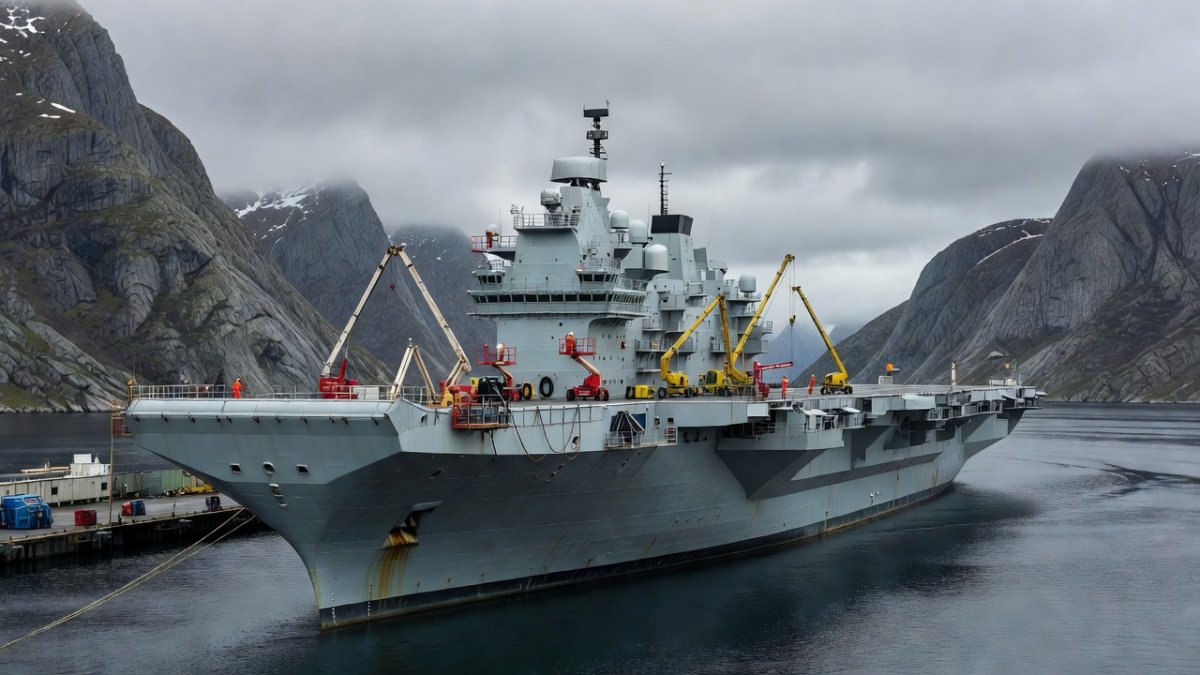
When a £3 billion warship can't make it through a deployment without breaking down, that's not just bad luck — that's a systemic failure. And the HMS Prince of Wales, the Royal Navy's flagship aircraft carrier, has done it again. For the second time in less than four years, this 65,000-ton Queen Elizabeth-class carrier has suffered a major mechanical failure while on active deployment, leaving it stranded in Norwegian waters and raising serious questions about the state of Britain's naval readiness.
What Happened to HMS Prince of Wales in Norway?
According to reports from The Telegraph, Navy Lookout, and GB News, the carrier suffered what's being described as a "significant mechanical failure" while deployed to lead the UK Carrier Strike Group. Navy Lookout — a respected defense analysis outlet — broke the news that the HMS Prince of Wales "remains in Norway for repairs" as of late May. By June 5, The Telegraph was reporting that the "Navy's £3bn flagship carrier breaks down again."
The Daily Express described the flagship as "left stranded before key journey," while GB News went further, calling the carrier "marooned." The ship had been on a high-profile deployment designed to demonstrate NATO's naval capabilities in Northern Europe. Instead of projecting power, it's now projecting vulnerability — sitting in a Norwegian port while engineers scramble to diagnose and fix the problem.
Britain's £3 Billion Warship Has a History of Breakdowns
This is not an isolated incident. The HMS Prince of Wales has a documented pattern of reliability failures stretching back years. In August 2022, just days after departing Portsmouth for a deployment to the United States, the ship suffered a catastrophic starboard propeller shaft failure. That breakdown forced the carrier to divert to Scotland for emergency repairs, and it ultimately missed its scheduled F-35 Lightning II jet trials with the U.S. Navy — the entire purpose of the deployment.
The BBC extensively covered the 2022 failure, noting that the HMS Queen Elizabeth — the Prince of Wales's sister ship — had to step in and take its place for the U.S. deployment. Now, roughly three and a half years later, history has repeated itself. Same ship. Same type of deployment. Same embarrassing result.
Defense analysts point to the ship's integrated electric propulsion system as a potential ongoing vulnerability. The Queen Elizabeth-class carriers use a complex hybrid electric drive system — a design that, while innovative, has proven challenging to maintain reliably in service. The U.S. Navy's Ford-class carriers faced similar teething problems, but those were largely resolved during the testing phase. The Prince of Wales, by contrast, keeps breaking down in the operational phase.
Why This Matters for NATO and the United States
The United Kingdom is America's closest military ally. When the Royal Navy's flagship goes down, it directly impacts NATO's collective defense posture. The UK Carrier Strike Group was meant to signal alliance strength in the North Atlantic and Arctic regions — areas of increasing strategic importance as Russia expands its military presence in the Arctic and continues its war in Ukraine.
Navy Lookout published a broader analysis asking whether the Royal Navy is at "a breaking point or a turning point." It's a question that defense officials in London, Washington, and Brussels should be taking seriously. Because while the Prince of Wales sits in dry dock, the threats the alliance faces are not pausing for repairs.
China's naval buildup continues at a breathtaking pace. Russia, despite significant losses in the Black Sea, maintains a formidable submarine fleet. Iran continues to threaten shipping in the Persian Gulf and Strait of Hormuz. In this environment, losing an aircraft carrier — even temporarily — creates a strategic gap that adversaries are quick to note.
The Financial Cost: £3 Billion and Counting
The HMS Prince of Wales and its sister ship HMS Queen Elizabeth represent the largest naval investment in British history. The total program cost for both carriers was approximately £6.2 billion — roughly $7.9 billion USD. These ships were designed to serve as the centerpiece of Britain's maritime strategy for the next five decades.
But here's the uncomfortable reality: the Royal Navy's surface fleet has shrunk significantly since the Cold War. The number of frigates and destroyers has been cut repeatedly. In that context, losing your most expensive and capable warship to a breakdown — even temporarily — is a disproportionately severe blow. Repair costs are significant, but the bigger cost is lost operational availability. Every day the Prince of Wales is out of action is a day the UK's defense commitments are not being fully met.
The Human Toll on the Crew
Behind the budget numbers and strategic analysis are real people. The crew of the HMS Prince of Wales — hundreds of Royal Navy sailors who trained extensively for this deployment, who said goodbye to their families, who prepared for months of high-stakes operations — are now sitting in a Norwegian port dealing with the fallout of yet another mechanical failure. Morale suffers. Trust in the equipment erodes. And when a ship develops a reputation for unreliability, it affects recruitment and retention across the service branch.
This human dimension often gets lost in the defense policy debates. But it matters. The sailors on that ship did everything right. They trained. They prepared. They deployed. And the ship let them down.
What Happens Next and What Needs to Change
The HMS Prince of Wales will be repaired — modern warships can be fixed, and the Royal Navy has capable engineers. The real question is whether the Ministry of Defence will conduct a thorough investigation into what went wrong and implement systemic fixes rather than temporary patches.
There will be parliamentary inquiries. There will be defense committee hearings. And there should be. Because when you spend £3 billion of taxpayer money on a single naval vessel, you have a duty to ensure it can actually perform its mission. Anything less is a failure of accountability.
But beyond the immediate fixes, the UK and its NATO allies need an honest conversation about naval readiness. The alliance cannot afford to have its flagships breaking down in port at a time when global threats are multiplying. Whether it's investing in more robust maintenance infrastructure, redesigning vulnerable propulsion components, or rethinking deployment schedules, something fundamental has to change.
Here's what you can do: stay informed. Share this story. These decisions affect global security, and the more people who are paying attention, the harder it is for defense officials to sweep systemic failures under the rug. The HMS Prince of Wales will sail again. The question is whether the lessons of this breakdown will finally be learned — or whether we'll be having this same conversation in another three years.
HMS Prince of Wales: Royal Navy's £3 Billion Flagship Breaks Down Again in Norway
Atlanta, GA — The HMS Prince of Wales, the Royal Navy's £3 billion Queen Elizabeth-class aircraft carrier, has suffered a major mechanical failure during its deployment in Norwegian waters, leaving the flagship stranded and awaiting repairs. The breakdown marks the latest in a series of high-profile reliability issues for the carrier, which previously suffered a propeller shaft failure in 2022 that forced it to abort a deployment to the United States. The Telegraph and Navy Lookout have confirmed that the carrier remains in Norway for repairs. The exact nature of the failure has not been officially disclosed by the Ministry of Defence, but defense analysts point to ongoing concerns about the ship's propulsion system.
By Jessica Ali, Lead Anchor — Global 1 News
This article was produced with AI-assisted research and editorial support. Reporting is based on sources cited in the article.
What's Your Reaction?
 Like
0
Like
0
 Dislike
0
Dislike
0
 Love
0
Love
0
 Funny
0
Funny
0
 Wow
0
Wow
0
 Sad
0
Sad
0
 Angry
0
Angry
0

Editor-in-Chief at Global1.News. Atlanta-based journalist who cuts through the BS and tells it like it is. Lead anchor, host, and the voice you hear when the spin stops and the truth starts.














Comments (0)