
Hind Rajab Foundation has 'no confidence' in planned Israeli probe into girl's killing
The Hind Rajab Foundation on Wednesday declared it has "no confidence" in the Israeli army's reported decision to open a criminal investigation into the killing of six-year-old Hind Rajab and six of her relatives in Gaza in January 2024, calling the move "little more than a masquerade meant to defle
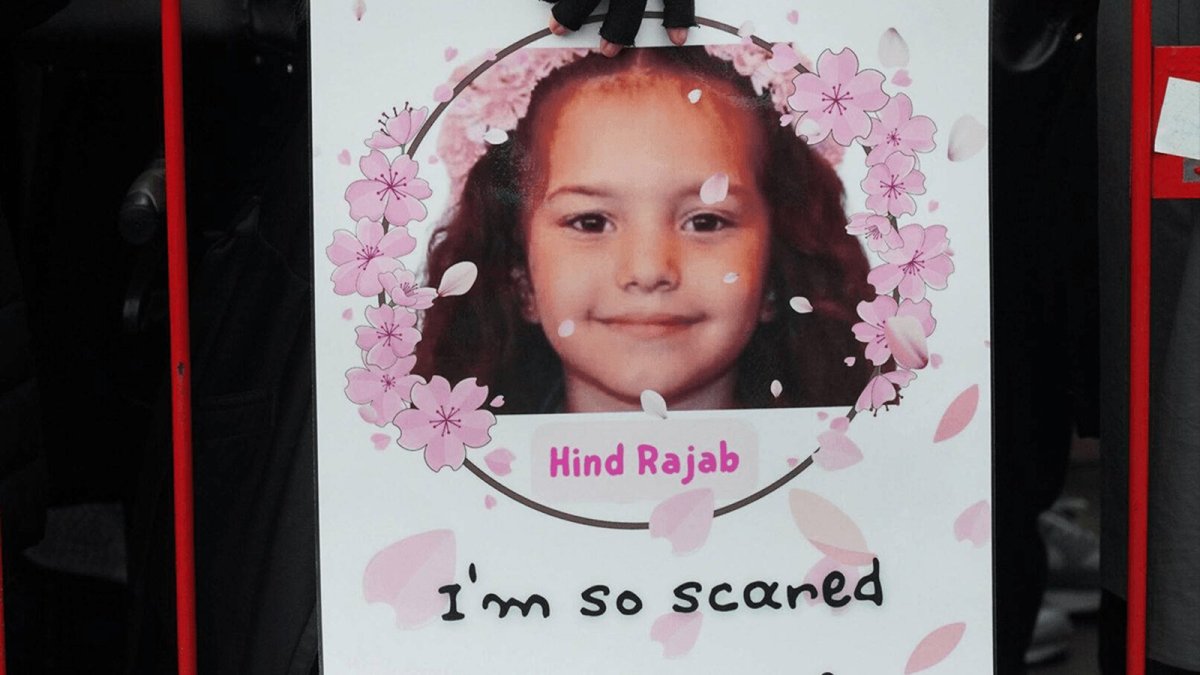
The Hind Rajab Foundation on Wednesday declared it has "no confidence" in the Israeli army's reported decision to open a criminal investigation into the killing of six-year-old Hind Rajab and six of her relatives in Gaza in January 2024, calling the move "little more than a masquerade meant to deflect accountability and preserve its impunity."
The statement, issued via the foundation's social media channels, came in response to reports that Israel's military advocate general had authorized a probe into the deaths. The foundation, named after the young girl whose final, desperate phone calls to emergency dispatchers were heard around the world, dismissed the investigation as a public-relations exercise rather than a genuine pursuit of justice.
Hind Rajab's death became a defining symbol of the human cost of Israel's military campaign in Gaza. On 29 January 2024, the young girl was traveling with her family in a car in Gaza City when it came under Israeli fire. For nearly two weeks, her fate remained unknown, with her last recorded words — pleas for help to the Palestine Red Crescent Society — circulating widely on social media. Two medics dispatched to rescue her were also found dead alongside her, their bodies discovered in the same vehicle.
A Child's Last Call and a Global Symbol
The circumstances of Hind's death resonated far beyond the boundaries of the Gaza Strip. Her voice, captured in a phone call to the Palestine Red Crescent Society's emergency dispatch, became a haunting artifact of the war. In the recording, the young girl can be heard saying she is scared and that the shooting has not stopped. The call lasted for hours, with dispatcher Lina Al-Khatib staying on the line, trying to comfort the child while coordinating a rescue attempt.
When the Palestine Red Crescent Society dispatched an ambulance to retrieve Hind, the crew — including medics Yousef Zeino and Ahmed Al-Madhoun — never returned. Their bodies were later found in the same area, alongside the charred remains of the family's car. Hind's body was discovered on 10 February 2024, nearly two weeks after the initial attack. The delay in recovering her remains, and the harrowing audio of her final moments, turned her story into a rallying point for ceasefire protests across the globe.
Photographs of demonstrators holding her image — including a notable rally outside the Israeli embassy in London on 17 February 2024, where a woman carried a portrait of Hind amid hundreds of thousands of marchers — underscored how her death had transcended statistics. She was no longer just a number in a mounting casualty count; she was a face, a voice, and a name that demanded a response.
The Foundation's Rejection of the Israeli Probe
The Hind Rajab Foundation, established in the aftermath of her death to pursue legal accountability, was unequivocal in its response to the reported Israeli investigation. In its statement, the foundation argued that the probe was not designed to uncover the truth but to shield the Israeli military from international scrutiny.
"This decision is little more than a masquerade meant to deflect accountability and preserve its impunity," the foundation said. The group pointed to Israel's historical record of investigating its own military conduct, noting that such inquiries have rarely resulted in prosecutions or meaningful disciplinary action. The foundation's leadership has repeatedly called for an independent, international investigation into Hind's killing, arguing that a self-directed Israeli probe cannot be considered credible given the structural biases inherent in the system.
The foundation's skepticism is rooted in precedent. Over the course of decades of occupation and repeated military operations in Gaza and the West Bank, Israeli military investigations have overwhelmingly concluded with closed files or findings of no wrongdoing. Human rights organizations, including B'Tselem and Amnesty International, have documented this pattern, noting that soldiers who have been implicated in killings of civilians have rarely faced trial, and even fewer have been convicted.
The Wider Toll on Gaza's Children
Hind Rajab's death is one among thousands of similar tragedies. Since Israel launched its war on the Gaza Strip in October 2023, more than 73,000 Palestinians have been killed, according to figures from the Gaza health ministry. A significant proportion of those killed have been children. The United Nations has repeatedly documented that children account for a substantial share of the casualties, with many killed in their homes, schools, and hospitals.
The psychological and physical toll on Gaza's surviving children is incalculable. Aid agencies on the ground have reported widespread malnutrition, untreated injuries, and the near-total collapse of the enclave's healthcare system. Many children have been orphaned, displaced multiple times, and forced to endure conditions that humanitarian workers have described as among the worst seen in any conflict in recent memory.
The case of Hind Rajab, however, stands apart because of the documentation surrounding it. The audio recordings of her final hours, the GPS coordinates of the ambulance dispatched to save her, and the testimony of dispatchers who listened helplessly as the line went silent — all of this created a rare, verifiable record of a single child's death. That record has made it more difficult for Israel to dismiss the incident as an unfortunate accident of war, and it has fueled demands for a transparent accounting.
The Broader Accountability Debate
The foundation's rejection of the Israeli probe comes amid a wider, intensifying debate over accountability for alleged war crimes in Gaza. The International Criminal Court (ICC) has been investigating the situation in the Palestinian territories since 2021, and in May 2024, the court's chief prosecutor, Karim Khan, applied for arrest warrants against Israeli Prime Minister Benjamin Netanyahu and Defense Minister Yoav Gallant, as well as Hamas leaders, on charges of war crimes and crimes against humanity. The ICC's jurisdiction over the matter has been contested by Israel, which is not a party to the Rome Statute, but the court has asserted its authority over the Palestinian territories.
In addition to the ICC, several countries have invoked the principle of universal jurisdiction to investigate alleged crimes committed in Gaza. Legal proceedings have been initiated in courts in Spain, Belgium, and the United Kingdom, among others, targeting Israeli officials and soldiers suspected of involvement in specific incidents. The Hind Rajab Foundation has said it is cooperating with some of these efforts, providing documentation and testimony to support potential prosecutions.
Israel has consistently denied committing war crimes in Gaza, arguing that its military operations are directed at Hamas and that it takes steps to avoid civilian casualties. The government has also rejected the authority of the ICC, describing the court's actions as biased and politically motivated. The reported decision to open a criminal probe into Hind's killing may be seen, in this context, as an attempt to demonstrate that Israel's own legal system is capable of addressing such cases — a claim the Hind Rajab Foundation and many human rights groups reject.
What a Credible Investigation Would Require
For the Hind Rajab Foundation, a credible investigation would need to be independent, transparent, and empowered to compel testimony and evidence. It would need to examine not only the actions of the soldiers who fired on the car but also the chain of command that authorized the operation, the rules of engagement in place at the time, and the decisions that delayed the recovery of Hind's body and the bodies of the two medics.
The foundation has also called for the release of all military communications and drone footage from the area on the day of the attack. Without such evidence, the foundation argues, any investigation is operating in the dark. The group has further demanded that Israel account for the killing of the two Palestine Red Crescent medics, whose deaths constitute a potential violation of international humanitarian law, which explicitly protects medical personnel in conflict zones.
The international community, the foundation says, has a responsibility to ensure that the investigation is not a whitewash. "The world heard Hind's voice," the foundation's statement read. "The world saw her picture. The world must now see justice."
The Stakes of Impunity
The outcome of this case, whatever form it takes, will have implications that extend far beyond the fate of one investigation. For Palestinians, the failure to hold anyone accountable for Hind's death would reinforce a long-standing perception that Israeli lives are valued more highly than Palestinian lives — a perception that has fueled anger and despair across the occupied territories. For the international legal order, it would signal that the mechanisms designed to protect civilians in conflict are toothless when applied to powerful states.
For the family of Hind Rajab, and for the families of the thousands of other children killed in Gaza, the demand is simpler. They want the truth. They want the world to acknowledge what happened. And they want those responsible to face consequences. Whether the Israeli military's reported probe will deliver any of that remains deeply uncertain. The Hind Rajab Foundation, for its part, has made clear that it will not hold its breath.
This article was produced with AI-assisted research and editorial support. Sources: Middle East Monitor, Anadolu Agency.
By Fatima Al-Rashid, Staff Writer
What's Your Reaction?
 Like
0
Like
0
 Dislike
0
Dislike
0
 Love
0
Love
0
 Funny
0
Funny
0
 Wow
0
Wow
0
 Sad
0
Sad
0
 Angry
0
Angry
0

Gulf/MENA Correspondent at Global1.News. Based in Doha, covering Gulf politics, energy markets, diplomacy, and development across the Middle East and North Africa. Tracks the economic transformation of the Gulf states.















Comments (0)