
IDF Admits Firing on Car Carrying 5-Year-Old Hind Rajab, Opens Criminal Probe
In a recent i24NEWS English report, the Israeli military acknowledged for the first time that its troops fired on the car carrying five-year-old Hind Rajab in Gaza City in January 2024, reversing years of denials and announcing a criminal investigation into the incident that became a global symbol of civilian suffering in the war.
In a recent i24NEWS English report, the Israeli military acknowledged for the first time that its troops fired on the car carrying five-year-old Hind Rajab in Gaza City in January 2024, reversing years of denials and announcing a criminal investigation into the incident that became a global symbol of civilian suffering in the war.
IDF Admits Troops Fired on Car Carrying Five-Year-Old Hind Rajab, Opens Criminal Investigation
Jerusalem – This week — The Israeli military confirmed on Wednesday that its forces opened fire on the vehicle carrying five-year-old Hind Rajab in Gaza City on 29 January 2024, marking a dramatic reversal of its earlier account that troops were "not present near the vehicle or within firing range." The admission, buried in a comprehensive report on exceptional incidents during the Gaza war, triggered a criminal investigation by the Military Police Criminal Investigation Division into what the IDF described as "alleged failures in the co-ordination of the movement of the Palestine Red Crescent ambulance" dispatched to rescue the child.
The acknowledgment comes more than two years after Hind's desperate phone calls to the Palestine Red Crescent Society (PRCS) operator Rana Faqih drew worldwide attention, and after her story was immortalized in the Oscar-nominated documentary short "The Voice of Hind Rajab." The IDF's statement said troops fired at a vehicle that was approaching them, travelling "contrary to the advanced notice that had been published in an announcement by the IDF Spokesperson to residents of the area."
The Tel al-Hawa Killing: A Timeline of Desperation
On the morning of 29 January 2024, Hind Rajab was travelling with relatives in a family car attempting to flee Gaza City's Tel al-Hawa neighbourhood during an Israeli military advance. The vehicle came under fire, killing five occupants instantly. Hind and her cousin Layan Hamada survived the initial attack and contacted the PRCS emergency line, pleading for help.
Recordings of those calls, later released by the PRCS, captured the terror of two children trapped in a bullet-riddled car as Israeli tanks manoeuvred nearby. Operator Rana Faqih stayed on the line with Hind for hours. In the recordings, Hind described seeing tanks directly in front of the car moving towards her. Faqih instructed the children: "Hide under the seats. Don't let anyone see you." Hind asked how far away the operator's house was, and noted that it was getting dark.
An ambulance carrying two PRCS paramedics — Yusuf al-Zeino and Ahmed al-Madhoun — was dispatched after its movement was coordinated with the Israeli army. The vehicle was shelled after dark as the crew neared Hind's location, killing both paramedics. It was the last contact anyone had with them or with Hind. Her body was recovered 12 days later from the bullet-riddled car in Gaza City, alongside the bodies of her relatives.
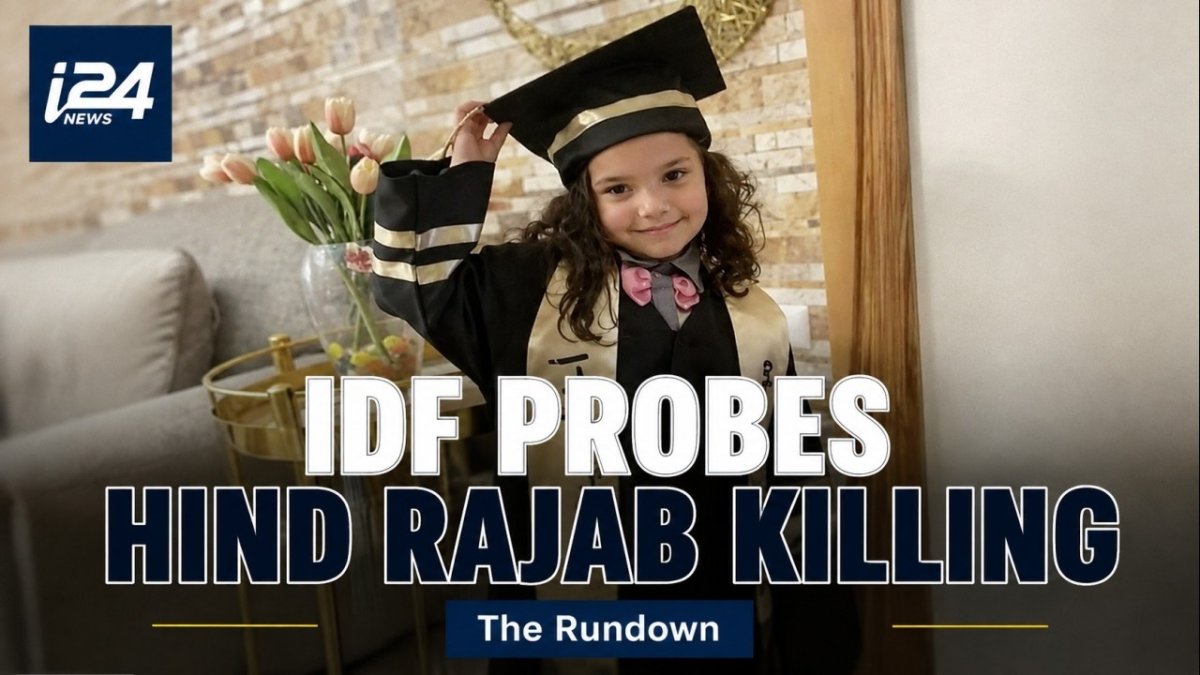
An independent investigation cited by Wikipedia concluded that an Israeli tank had likely fired 335 rounds at the car, and that tank operators would have been able to see the vehicle contained civilians including children. The UN cited Hind's case in a commission of inquiry, accusing Israel of war crimes — allegations Israel denies.
The IDF's Reversal and the Criminal Investigation
The IDF's acknowledgment this week represents a significant shift in its public posture. For months following the incident, the military insisted its troops were not in the area and could not have been responsible. Wednesday's statement confirmed that IDF troops did fire at the vehicle, attributing the action to the car's movement "contrary to the advanced notice" published by the IDF Spokesperson to residents of the area.
The military said the decision to open a criminal investigation stems from "alleged failures in the co-ordination of the movement of the Palestine Red Crescent ambulance." The Military Police Criminal Investigation Division will examine whether the coordination process between the IDF and the PRCS broke down, and whether that breakdown contributed to the deaths of the two paramedics and the child they were sent to rescue.
This is the first time a comprehensive IDF report on alleged war crimes has been published since the start of the Gaza war triggered by the Hamas-led attacks on 7 October 2023. The IDF statement noted: "For more than a thousand days, the IDF has been conducting intensive combat across numerous fronts... As part of the IDF's obligations under international law and Israeli domestic law, the IDF examines exceptional incidents that occurred during combat."
The Rafah Tal al-Sultan Case: Ambulances, a UN Vehicle, and Shallow Graves
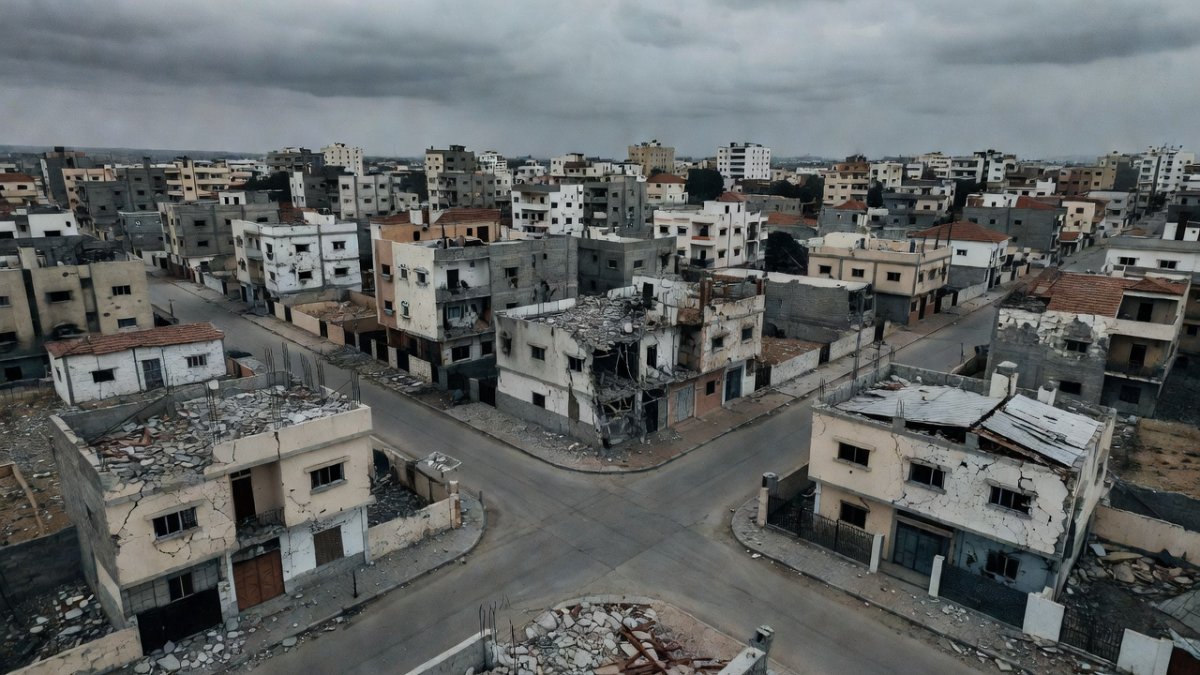
The same IDF report announced a criminal investigation into the killing of 15 Palestinians, including medics and a UN worker, in the Tal al-Sultan area of Rafah in southern Gaza on 23 March 2025. An IDF unit fired on ambulances, a fire engine and a marked UN vehicle during an emergency call-out. Bodies were found buried in shallow graves a week later.
The IDF initially said troops fired on "suspicious vehicles" driving in darkness, but later said that account was "mistaken" after video from a dead paramedic's phone — belonging to Rifaat Radwan — showed the convoy using emergency lights. The IDF said the firing in that incident "raises a reasonable suspicion of criminal misconduct."
The Rafah case carries particular weight because it involved multiple vehicles with clear emergency markings, and because the IDF's own internal review found its initial explanation untenable. The decision to open a criminal investigation in this case, alongside the Hind Rajab matter, signals that the Military Advocate General's office is under pressure to demonstrate that the self-investigation mechanism can produce meaningful accountability.
Other Incidents: No Grounds for Investigation
In three other cases examined in the report, the IDF said it had not found grounds for criminal investigations. These include the killing of seven World Central Kitchen (WCK) employees in Deir al-Balah, and four Médecins Sans Frontières (MSF) employees killed in two separate incidents. The IDF's decision not to open investigations in these cases drew sharp international criticism.
Australia's Foreign Minister Penny Wong said she was "outraged" and called in the Israeli ambassador over the WCK decision. WCK "strongly" condemned the IDF's account and demanded an independent investigation. The MSF cases similarly drew condemnation from the medical humanitarian organization, which has repeatedly documented attacks on its staff in Gaza.
The contrast between the cases where investigations were opened and those where they were not is likely to fuel criticism that the IDF's self-investigation process is selective. The Hind Rajab Foundation, a Brussels-based organization named after the slain child, said it had "no confidence" in the investigation: "These reported investigations, even if they do occur, should not be mistaken for a genuine step toward justice... fundamentally flawed and cannot be regarded as credible mechanisms of accountability."
International and Legal Pressure: ICC, UN, and the Credibility Gap
The IDF's decision to publish this report and open criminal investigations comes amid mounting international legal pressure. The International Criminal Court (ICC) has been examining allegations of war crimes in Gaza, and Israel has sought to demonstrate that its own legal mechanisms are capable of addressing alleged misconduct by its forces.
Israeli human rights group Yesh Din has long questioned the effectiveness of the military's self-investigation system. Executive director Ziv Stahl told the BBC that "almost no indictments are filed in relation to the number of complaints against soldiers and commanders," and that convictions are rare with disproportionately lenient sentences. This pattern, Stahl argued, undermines the credibility of the entire mechanism.
The UN has cited Hind's case in its commission of inquiry, accusing Israel of war crimes. More than 73,000 people have been killed in Gaza since Israel launched its military campaign, including about 1,200 since a ceasefire was announced last October, according to the territory's Hamas-run health ministry — figures considered reliable by the UN. The sheer scale of the death toll, combined with the visibility of cases like Hind's, has made it increasingly difficult for Israel to argue that its investigations are keeping pace with alleged violations.
Domestic Israeli Politics: The Accountability Dilemma
Within Israel, the IDF's acknowledgment and the decision to open criminal investigations carry significant political weight. The military has long prided itself on operating according to international law and maintaining a robust internal accountability system. The admission that troops fired on a car carrying a five-year-old child, even if the IDF frames it as a tragic error in a complex combat zone, challenges that narrative.
The timing of the report is also notable. Israel is navigating a fragile ceasefire, ongoing hostage negotiations, and intense domestic debate over the conduct of the war and the government's handling of the 7 October failures. The IDF's willingness to publish a comprehensive report on exceptional incidents may be aimed at preempting international legal action while demonstrating to domestic audiences that the military takes accountability seriously.
However, the political right in Israel has historically resisted what it views as excessive scrutiny of soldiers, and any indictments that emerge from these investigations could trigger a domestic backlash. The Military Advocate General's office will be walking a tightrope between international pressure for accountability and domestic political sensitivities.
What This Means Going Forward
The criminal investigations into the Hind Rajab case and the Tal al-Sultan incident will be closely watched by international legal bodies, human rights organizations, and the families of the victims. The Military Police Criminal Investigation Division's track record will be scrutinized for whether it produces indictments, convictions, and sentences that are proportionate to the alleged crimes.
For the Hind Rajab Foundation and other advocacy groups, the investigation is unlikely to satisfy demands for independent accountability. The foundation's statement made clear that it views the IDF's self-investigation as inherently flawed. International bodies, including the ICC, may continue to pursue their own examinations regardless of the outcome of the Israeli military's internal process.
The IDF's acknowledgment that it fired on Hind's car, and its decision to investigate, represents a significant moment in the war's legacy. Whether it leads to genuine accountability or is seen as a public relations exercise will depend on the transparency and rigor of the investigations. For the family of Hind Rajab, for the families of the two PRCS paramedics, and for the dozens of aid workers killed in Gaza, the question is whether any investigation can deliver justice after so much loss.
The ceasefire announced last October has held in parts of Gaza, but the underlying conflict remains unresolved. The IDF's report acknowledges that "for more than a thousand days" it has been conducting intensive combat across numerous fronts. The investigations announced this week are a recognition that even in the fog of war, some incidents demand answers. Whether those answers will satisfy the international community, or even Israel's own human rights organizations, remains an open question.
By Hannah Berg, Staff Writer
This article was produced with AI-assisted research and editorial support. Reporting is based on sources cited in the article.
What's Your Reaction?
 Like
0
Like
0
 Dislike
0
Dislike
0
 Love
0
Love
0
 Funny
0
Funny
0
 Wow
0
Wow
0
 Sad
0
Sad
0
 Angry
0
Angry
0
Israel Correspondent at Global1.News. Based in Tel Aviv, covering Israeli politics, security, technology, and society. Provides balanced, deeply-sourced reporting on one of the most closely-watched regions in the world.














Comments (0)