
Russia, US, Ukraine to resume peace talks in Abu Dhabi
In the broader tapestry of great‑power rivalry that continues to shape the Middle East, the forthcoming trilateral peace talks in Abu Abd i on Tuesday mark a rare convergence of three major actors—Russia, the United States and Ukraine—each pursuing divergent strategic aims.
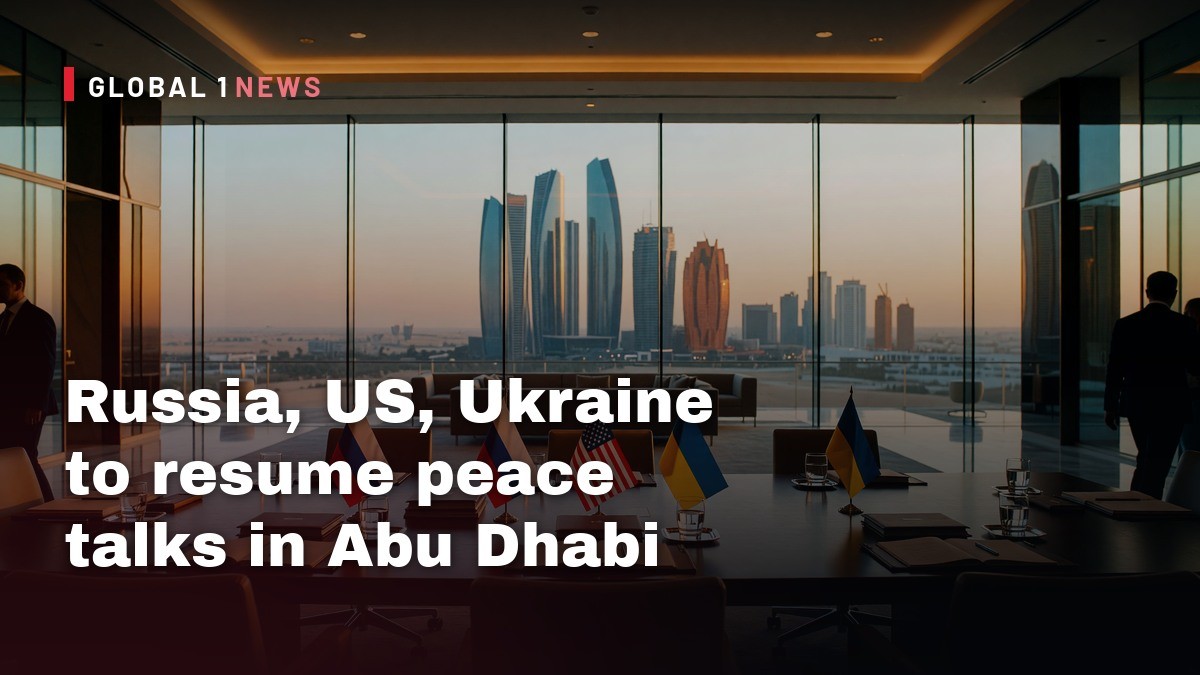
In the broader tapestry of great‑power rivalry that continues to shape the Middle East, the forthcoming trilateral peace talks in Abu Abd i on Tuesday mark a rare convergence of three major actors—Russia, the United States and Ukraine—each pursuing divergent strategic aims. While the negotiations are framed as a humanitarian and security endeavour, they also reflect deeper currents of Sunni‑Shia competition, energy security considerations and the persistent quest for influence in a region where the war in Ukraine reverberates through oil markets and diplomatic alignments.
Backdrop of the Abu Abd i Initiative
The announcement by President Vladimir Putin on Friday that a new round of talks will commence in the United Arab Emirates underscores Moscow’s determination to keep diplomatic channels open despite the ongoing conflict on the Ukrainian front. According to Russian state news agency Tass, the talks are scheduled for Tuesday and will span two days, indicating a concise agenda focused on immediate de‑escalation steps.
U.S. Special Envoy Steve Witkoff has previously outlined the core topics: security guarantees, de‑escalation, humanitarian concerns and further steps toward a peaceful settlement. This framing aligns with Washington’s broader strategy of coupling military pressure with diplomatic outreach, a balance that seeks to maintain leverage over Moscow while addressing the humanitarian fallout that fuels regional instability.
Composition of the Russian Delegation
Putin’s invitation to members of Russia’s Security Council to join the Abu Abd i delegation signals the Kremlin’s intent to bring senior decision‑makers into the process. The meeting, as reported by Tass, included Vladimir Medinsky, Igor Kostyukov, Yuri Ushakov, Mikhail Galuzin and Sergei Ryabkov. Their presence suggests that the talks will not be limited to technical experts but will involve officials with direct access to Moscow’s strategic calculations.
Notably, the delegation will be headed by presidential aide Vladimir Medinsky, a figure known for his close ties to the Kremlin’s inner circle. His leadership of the Russian team indicates that the talks will carry significant weight within Moscow’s policy apparatus, potentially shaping the Kremlin’s negotiating posture in the days to come.
U.S. and Ukrainian Expectations
While the source material does not detail the composition of the U.S. or Ukrainian delegations, the prior statements by Special Envoy Witkoff provide insight into the priorities of the Western side. Emphasis on security guarantees reflects Washington’s desire to secure a credible framework that can deter further Russian aggression, a concern that resonates across the Gulf where security arrangements are a cornerstone of foreign policy.
Humanitarian issues, another focal point, carry particular relevance for the Middle East, where the influx of refugees and the broader impact of the war on food security have already strained regional stability. By foregrounding these concerns, the United States and Ukraine aim to frame the talks within a moral narrative that could garner broader international support, including from Gulf states that have been navigating a delicate balance between Russian energy ties and Western security partnerships.
Strategic Implications for Gulf Energy Markets
The choice of Abu Abd i as the venue is itself a strategic signal. The United Arab Emirates, a key OPEC‑plus member, has maintained a pragmatic relationship with Russia, particularly in the energy sector. Hosting the talks allows the UAE to position itself as a diplomatic bridge, enhancing its stature as a neutral ground for conflict resolution—a role that dovetails with its broader ambition to be a regional hub for dialogue.
For Gulf energy markets, any progress toward a ceasefire or settlement in Ukraine could reverberate through oil price dynamics. While the source material does not provide specific market forecasts, the anticipation of a two‑day negotiation cycle suggests that participants are aware of the potential for rapid shifts in sentiment that could affect supply expectations and, by extension, regional revenue streams.
Geopolitical Calculus of the Security Council Attendees
The inclusion of Security Council members such as Igor Kostyukov and Sergei Ryabkov points to the multidimensional nature of Russia’s approach. Kostyukov, known for his work on foreign policy, and Ryabkov, a senior official in the foreign ministry, bring expertise that spans diplomatic negotiation and strategic planning. Their presence indicates that Moscow intends to address not only immediate ceasefire mechanisms but also longer‑term security architectures that could reshape the post‑war order.
Yuri Ushakov and Mikhail Galuzin, both seasoned diplomats, add further depth to the delegation, suggesting that the talks may also touch on issues beyond the battlefield—potentially including the status of contested territories, the future of NATO‑Russia relations, and the broader security environment in Eastern Europe, all of which have indirect implications for Middle Eastern security calculations.
Potential Outcomes and Regional Repercussions
Given the limited timeframe of two days, the talks are unlikely to produce a comprehensive settlement, but they could lay groundwork for incremental confidence‑building measures. A plausible scenario, based on the outlined agenda, would be an agreement on humanitarian corridors and a provisional de‑escalation mechanism, steps that could ease the immediate suffering of civilians and reduce the risk of spill‑over incidents that might affect neighboring regions.
For the Middle East, any reduction in hostilities in Ukraine could free diplomatic bandwidth for Gulf states to re‑engage more actively in other theaters, such as the Israeli‑Palestinian conflict or the ongoing tensions in the Red Sea. Moreover, a perceived success of the Abu Abd i talks could reinforce the UAE’s role as a mediator, encouraging other regional powers to seek similar neutral venues for conflict resolution.
Looking Ahead: The Intersection of Diplomacy and Power Politics
The Abu Abd i negotiations underscore how diplomatic overtures are intertwined with broader strategic contests. While the immediate focus is on ending the war in Ukraine, the involvement of senior Russian Security Council officials, the United States’ emphasis on security guarantees, and Ukraine’s push for humanitarian relief all reflect deeper calculations about influence, legitimacy and the future balance of power.
As the talks unfold, observers will watch closely for signals—whether in the language of any provisional agreements or in the composition of the delegations—that hint at the next phase of great‑power interaction. For the Middle East, the outcome will be another variable in a complex equation where energy security, sectarian dynamics and great‑power rivalry intersect, shaping the region’s trajectory in the years to come.
This article was produced with AI-assisted research and editorial support. Reporting is based on the source material cited below. Sources: Daily Sabah Middle East; dailysabah.com; Global1.News (07 November 2026).
By Malik Hassan, Staff Writer
What's Your Reaction?
 Like
0
 Dislike
0
 Love
0
 Funny
0
 Wow
0
 Sad
0
 Angry
0
Middle East Correspondent at Global1.News. Based in Beirut, covering politics, conflict, energy, and society across the Middle East. Brings context and depth to a region often reduced to headlines.










Comments (0)