
Who Will Disarm Settlers Storming West Bank Villages?
In a recent Middle East Eye video report, British Tunisian writer and Middle East politics expert Soumaya Ghannoushi poses a question that cuts to the heart of the international community's approach to the occupied West Bank: "The West asks Palestinians to disarm.
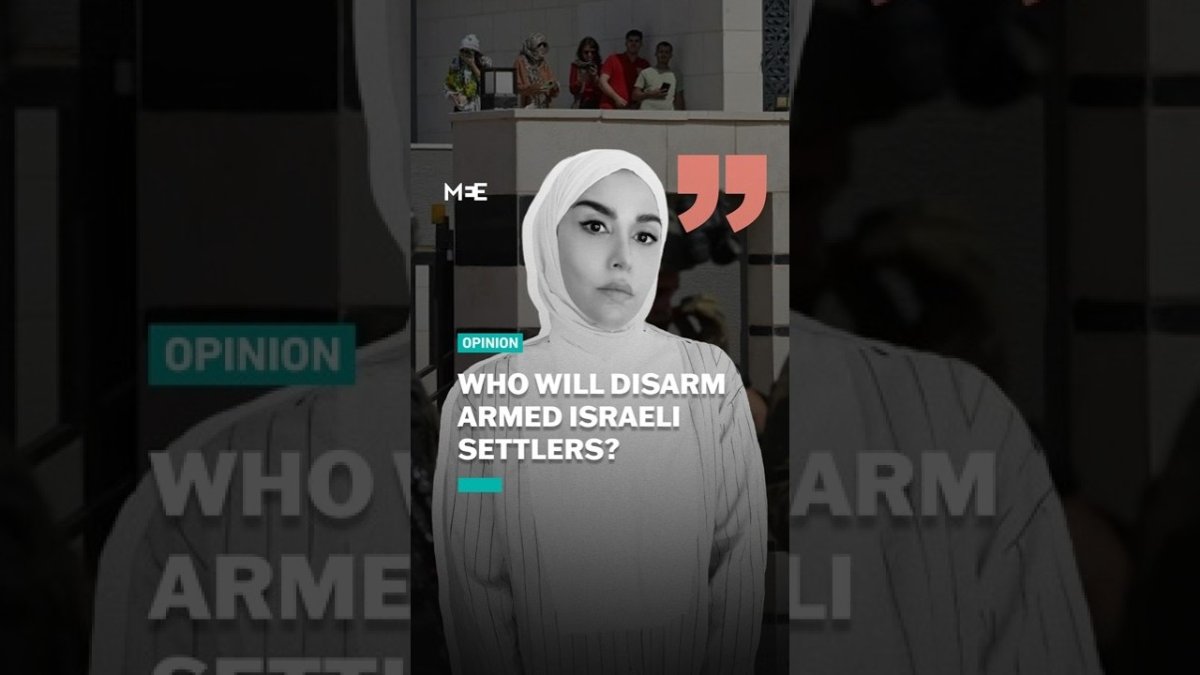
In a recent Middle East Eye video report, British Tunisian writer and Middle East politics expert Soumaya Ghannoushi poses a question that cuts to the heart of the international community's approach to the occupied West Bank: "The West asks Palestinians to disarm. But who will disarm the armed settlers storming their villages?" The report, published on 18 August 2026, examines the growing militarisation of Israeli settlers and the accelerating expansion of settlements, arguing that "the machinery of annexation is advancing" across the territory.
Ghannoushi's analysis arrives at a moment of acute crisis for Palestinian communities in the West Bank, where the distinction between settler violence and state policy has all but collapsed. As she notes, the West Bank exposes the weakness of claims that Israel's violence against Palestinians is simply a response to Hamas, because Hamas does not govern there, yet Palestinians are still being killed, displaced and stripped of their land. The question she raises is not rhetorical; it is a demand for accountability that the international community has so far failed to provide.
Who will disarm the settlers storming West Bank villages?
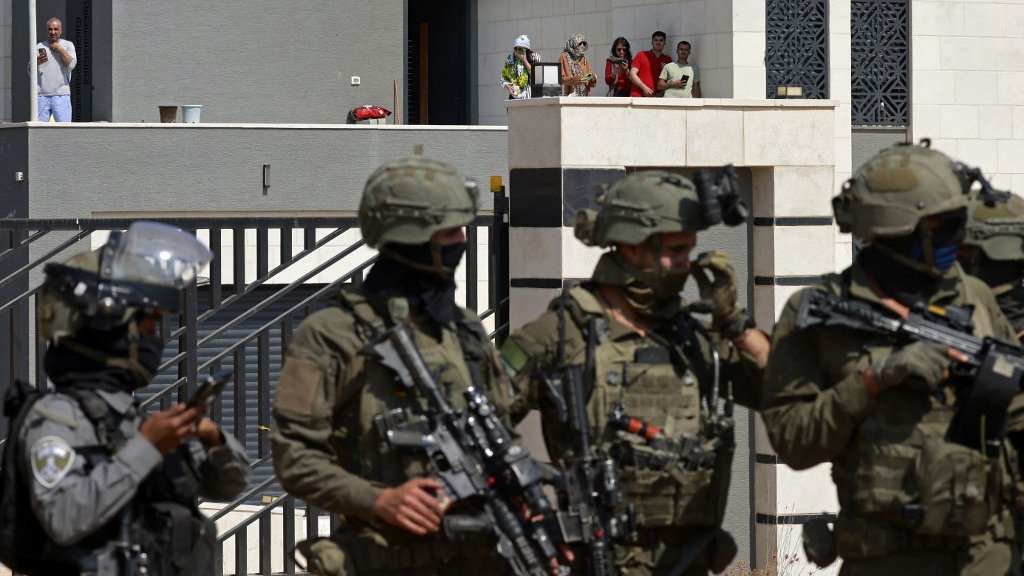
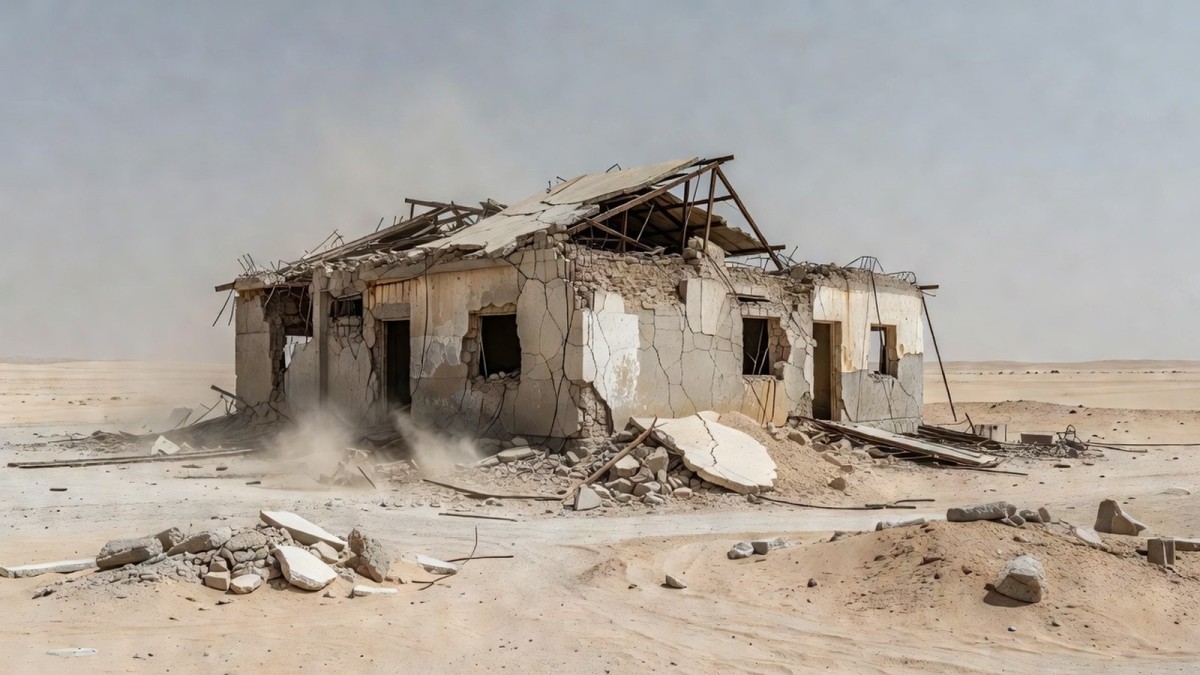
Nablus, occupied West Bank - 20 August 2026 - In the village of Qusra, south of Nablus, Palestinian families spent the month of August imprisoned in their own homes. Settlers pitched tents in their yards, severed water and electricity lines, and food ran short as armed men smashed windows, threw stones and stole appliances. Fifteen Palestinians, including two children, remained besieged inside three homes in the Ras al-Ain area, according to the United Nations, which reported residents "trapped inside their homes in a state of terror, unable to attend to their basic needs and without access to water or electricity."
A Village Under Siege: Qusra's Month of Terror
The siege of Qusra is not an isolated incident but a template for what analysts describe as a coordinated campaign of displacement. The Israeli army intercepted a UNICEF aid convoy attempting to reach the besieged families and blocked a water tanker from entering the area. Qusra Mayor Abdel Azim Wadi told Al Jazeera: "Humanely, we have often heard about human rights... but today what our families in Jabal Ras al-Ain are experiencing is truly stripped of humanity."
Besieged resident Qusai Abu Reida offered a stark testament to the community's resolve: "Even if they cut off our food, nourishment, and medicine... even if we drink water and salt, we made a pact... that we will not leave here except as martyrs." The Israeli army converted a home in the village into a military barracks and declared the area a closed military zone, while refusing to execute nine eviction orders against an illegal outpost built by the Hilltop Youth militia in Area B, which under the Oslo Accords should be under full Palestinian civil and security control.
Resident Marmar Ouda caged his home with metal fencing in a desperate attempt to protect his family. Nearby, someone had spray-painted in Hebrew the words "Death to Arabs." Five months earlier, a settler shot dead his nephew and wounded his brother. Ruqaya Hassan endured the siege with her children, among them four-year-old Kinda, who should be starting kindergarten but instead spends her days in fear. Qusai Abu Rida's brother Loai watched from Ohio through security cameras until Israeli soldiers removed the camera, severing the family's only connection to their besieged relatives.
The Broader Campaign: Strategic Settler Terror
Amnesty International's Erika Guevara Rosas called Qusra "strategic settler terror, enabled, backed and funded by the State of Israel." Mustafa Barghouti, secretary-general of the Palestinian National Initiative, offered a more granular analysis: the tactical goal is to seize land and expel people, while "the strategic goal is a message to all the villages of the West Bank that this that is happening in Qusra will happen in other places."
The pattern is well documented. On 6 June, according to B'Tselem, dozens of armed settlers raided four Palestinian villages south of Nablus. At least eight Palestinians were injured, and 20-year-old Omar Abd al-Hakim Dar Muhammad was hospitalised in intensive care with a brain haemorrhage and severe facial fractures. The attackers stole at least 44 sheep, a donkey and three vehicles. At least one Israeli soldier accompanied them, according to the Israeli human rights organisation.
In Khirbet Susiya, south of Hebron, around 20 settlers armed with clubs and flammable materials attacked at night in February, setting tents, chicken coops and vehicles ablaze. Around 300 Palestinians live there, half of them children. None of the attackers were detained. In Ras Ein al-Auja in the Jordan Valley, 26 families - 124 people including 59 children - fled in January after prolonged settler harassment, joining the growing ranks of internally displaced Palestinians.
Water and Olive Trees: Instruments of Displacement
The assault on Palestinian livelihoods extends beyond physical violence to the very resources that sustain life. In Fasayil, in the Jordan Valley, farmer Saad Nemer watched settlers divert a freshwater spring; part of it now fills a pool at a settler tourist site while Palestinian fields thirst. More than 160 settler attacks involving water have been documented in 2026 alone, according to monitoring groups.
The olive harvest, a cornerstone of the Palestinian economy and identity, has become a battleground. During the 2025 harvest season, the UN documented 178 settler attacks in two months, affecting 88 Palestinian communities and damaging more than 6,000 trees and saplings. In Ein Yabrud, near Ramallah, families were granted just three days by the Israeli military to reach their olive groves, a fraction of the time needed to harvest a season's crop. Ghannoushi's question resonates here with particular force: "What security threat is posed by a shepherd and his flock? What act of terrorism is committed by a farmer trying to harvest his own olives?"
The Settler Arsenal: From Clubs to Assault Rifles
The violence is increasingly militarised. National Security Minister Itamar Ben Gvir has dramatically expanded civilian armament, with his ministry announcing the purchase of 10,000 assault rifles for civilian security teams, explicitly including West Bank settlements. By March 2024, he said 100,000 new gun licences had been issued. Settlement emergency squads are now armed with military weapons, and settler-only reserve units operate within the Israeli military structure, blurring the line between civilian militias and the state's armed forces.
This arsenal is not defensive. B'Tselem's documentation shows armed settlers raiding villages, attacking farmers and stealing livestock with impunity, often accompanied by soldiers. The Israeli military's refusal to execute eviction orders against the illegal outpost in Qusra, while simultaneously declaring the area a closed military zone and intercepting humanitarian aid, demonstrates that the state is not merely tolerating settler violence but actively facilitating it. B'Tselem's assessment is unambiguous: "Settler Violence = State Violence."
Annexation by Stages: The Machinery Advances
The violence serves a larger political project. Finance Minister Bezalel Smotrich has publicly advocated Israeli sovereignty over 82 percent of the West Bank. The Israeli government has approved 104 new settlements in the past four years, and Defence Minister Israel Katz wants to transfer policing powers over Israeli civilians in the West Bank from the military to civilian police, a move that would effectively extend Israeli law over the territory and push towards formal annexation. The Wall and Settlement Resistance Commission reports that settlers have established over 300 outposts since October 2023.
The human cost is staggering. Between 7 October 2023 and 24 July 2026, at least 1,122 Palestinians were killed by Israeli forces or settlers in the occupied West Bank including East Jerusalem, according to UN OCHA. At least 246 of those killed were children. In the first seven months of 2026 alone, 76 Palestinians were killed. Human Rights Watch warned in July that escalating settler violence threatened mass atrocities, while Amnesty International published an investigation describing the forcible displacement of Palestinian communities as ethnic cleansing.
The Hamas Pretext and the Right to Exist
Ghannoushi's central argument dismantles the justification often offered for this violence. The West Bank is not governed by Hamas; the Palestinian Authority, which recognises Israel and coordinates security with it, holds nominal control over limited areas. Yet the land is still taken, homes are attacked, farmers are driven from fields and olive trees are burned. The claim that Israel's actions are a response to Hamas cannot explain what is happening in Qusra, in Khirbet Susiya or in the Jordan Valley.
Western discourse, Ghannoushi argues, invokes Israel's right to exist and defend itself while denying Palestinians the same. "Do Palestinians have a right to exist?" she asks. The question is not abstract. It is answered daily in the besieged homes of Qusra, in the burned tents of Khirbet Susiya, in the diverted springs of Fasayil and in the 246 children killed in the West Bank since October 2023. The international community's calls for Palestinians to disarm ring hollow when the armed settlers storming their villages operate with state backing, military accompaniment and impunity.
Analysis and Implications: A Reckoning Deferred
The situation on the ground points towards a grim trajectory. The combination of expanding settlements, armed settler militias integrated into the military structure, and political leadership openly advocating annexation suggests that the current violence is not a temporary escalation but a deliberate strategy. The siege of Qusra, with its closed military zone and intercepted aid convoys, bears the hallmarks of a pilot project for the forced displacement of Palestinian communities across the West Bank.
International responses have been largely rhetorical. Statements of concern from Western capitals have not translated into consequences for Israel, which continues to receive military aid and diplomatic cover. The United Nations has documented the abuses, but its resolutions remain unimplemented. Human rights organisations have issued increasingly urgent warnings, but the machinery of annexation advances regardless. The question Ghannoushi poses to the West is not merely about disarmament; it is about whether the international community is willing to confront the reality of what is happening in the West Bank or will continue to look away.
Closing Outlook: The People of Qusra and Beyond
As the siege of Qusra enters its third week, the families of Ras al-Ain remain inside their homes, surviving on dwindling supplies and an unshakeable determination not to be driven out. Their stand is a testament to Palestinian resilience, but it is also a warning. If the international community cannot answer Ghannoushi's question - who will disarm the armed settlers storming Palestinian villages? - then the people of Qusra will not be the last to face this choice between displacement and death. The machinery of annexation is advancing, and the world is running out of time to stop it.
By Fatima Al-Rashid, Staff Writer
This article was produced with AI-assisted research and editorial support. Reporting is based on sources cited in the article.
What's Your Reaction?
 Like
0
Like
0
 Dislike
0
Dislike
0
 Love
0
Love
0
 Funny
0
Funny
0
 Wow
0
Wow
0
 Sad
0
Sad
0
 Angry
0
Angry
0
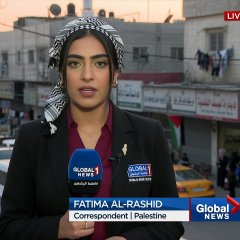
Gulf/MENA Correspondent at Global1.News. Based in Doha, covering Gulf politics, energy markets, diplomacy, and development across the Middle East and North Africa. Tracks the economic transformation of the Gulf states.










Comments (0)