
Aid sector calls out omission of foreign aid in federal budget
Canada’s aid community is sounding the alarm after the federal budget presented on Thursday failed to mention any form of foreign assistance, development cooperation or humanitarian action.
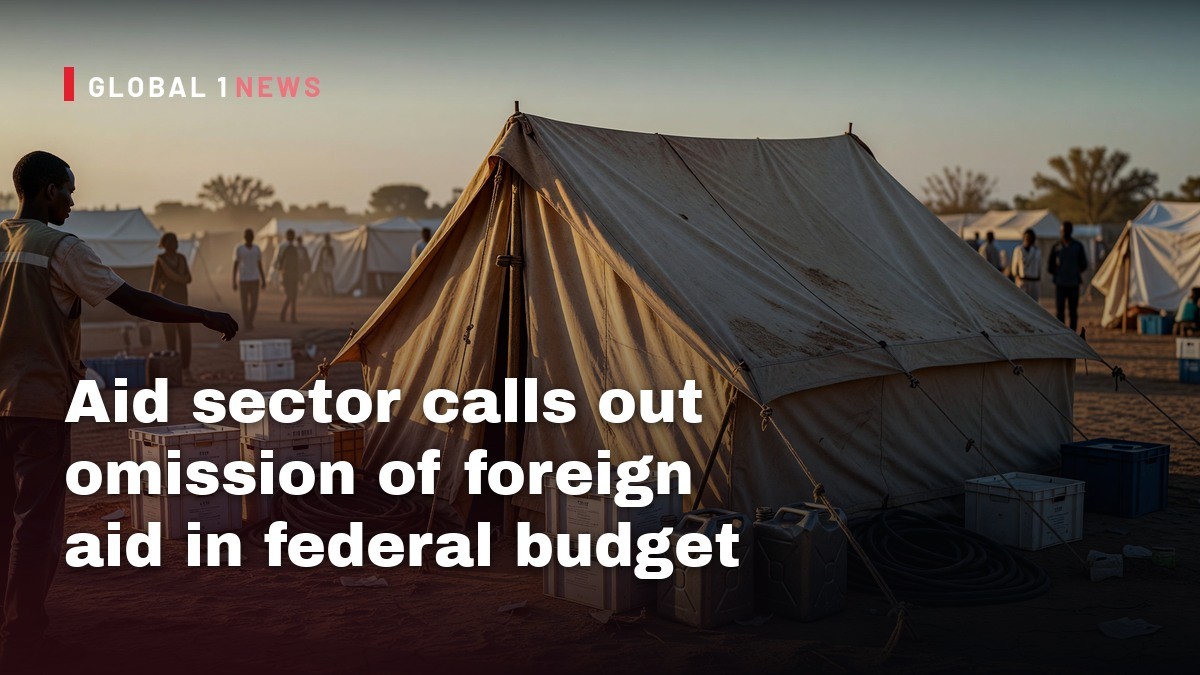
Canada’s aid community is sounding the alarm after the federal budget presented on Thursday failed to mention any form of foreign assistance, development cooperation or humanitarian action. The omission, noted by a coalition of NGOs and echoed by senior officials, has prompted calls for Ottawa to clarify its strategy in an upcoming foreign‑policy review. The concern is not merely symbolic; it touches on how Canada positions itself on the global stage, from security and trade to the health of vulnerable populations abroad.
Budget silence on international development
The budget tabled by Prime Minister Mark Carney’s government contains no reference to “foreign aid,” “international development” or “humanitarian assistance.” A review of every federal budget since 2010 by the Canadian Press shows that each previous document included at least one of those terms, making this the first such omission in more than a decade.
Co‑operation Canada’s head, Kate Higgins, described the silence as “largely silent on issues of international development co‑operation and humanitarian action.” She added that the timing is especially problematic given the heightened stakes worldwide, from conflict zones to health crises. The budget does mention Ukraine, but only in the context of drone production, and references aid workers only fleetingly within a section on permits for organisations operating in territories designated as terrorist‑controlled.
Assumed cuts and sector reactions
Higgins noted that the aid sector assumes Ottawa will continue with its previously announced plan to reduce foreign aid spending by $2.7 billion over four years. While the budget did not announce further reductions, the lack of any discussion about the ongoing cuts left many advocates uneasy. “We were relieved the government did not announce further cuts,” Higgins said, “but we still need a clear articulation of the role development funding plays in addressing crises abroad.”
Advocates highlighted specific emergencies, such as the humanitarian plight of Palestinians in Gaza and the Ebola outbreak in the Democratic Republic of Congo, to underline the importance of sustained development financing. They argue that without explicit budgetary acknowledgment, it becomes difficult to hold the government accountable for meeting its commitments to vulnerable populations.
Government’s stated commitment
Foreign Affairs Minister Anita Anand addressed the issue at a news conference on Friday, assuring that a foreign‑policy update will be released “in a matter of weeks” and will include “our approach on development.” She emphasized that development assistance remains a priority for Global Affairs Canada, citing recent humanitarian aid deliveries to Cuba, Lebanon, Gaza and Sudan as evidence of ongoing engagement.
Minister Anand’s remarks suggest the government intends to separate the foreign‑policy review from the budget process, but the timing raises questions about whether the forthcoming document will provide the transparency and strategic direction the aid sector is demanding.
International praise and domestic disappointment
Just days before the budget, Tom Fletcher, the United Nations’ global head of humanitarian issues, praised Canada as a “humanitarian superpower” for its work with the world’s most vulnerable. His commendation underscored Canada’s reputation for generous contributions to global health, education and protection systems. The budget’s silence therefore appears at odds with the country’s international standing.
UNICEF Canada echoed this sentiment, stating that any discussion of Canada’s response to global threats should at least mention international development. The organization argued that development assistance is essential for helping children survive and thrive, and for strengthening the health, education and protection systems that underpin stable societies.
Advocacy groups demand clearer commitments
Results Canada, an anti‑poverty advocacy group, posted a stark image of a deflated balloon on social media after the budget’s release, symbolising the perceived emptiness of the document regarding aid. Policy director Lindsay Sheridan explained that her team searched the budget for terms such as “international assistance,” “vaccines,” “tuberculosis” and “famines,” finding none. “We were surprised,” she told supporters, noting that the budget offered no context for the sector’s future direction.
The One Campaign, which promotes partnerships with African nations, called on Ottawa to commit to spending $5.5 billion annually on development. It urged the government to align development, trade and investment institutions to foster coordinated, mutually beneficial relationships with African countries, arguing that such alignment safeguards global health and underpins long‑term economic stability.
Parliamentary calls for transparency
The House of Commons finance committee has previously urged the government to increase transparency about where Canadian aid dollars are allocated and to focus funding on the world’s most vulnerable. The committee’s recommendations echo the sector’s demand for a more robust, well‑rounded strategy that links aid spending to broader foreign‑policy goals.
Critics argue that the Carney government missed an opportunity to present a cohesive plan that ties together defence, stability, diplomacy, economic partnerships, trade diversification and a rules‑based international order. By not mentioning aid at all, the budget leaves the public and Parliament without a clear picture of how Canada intends to uphold democracy and human rights abroad through development assistance.
Looking ahead: the foreign‑policy review
The upcoming foreign‑policy review, expected later this month, is poised to become the focal point for the aid sector’s demands. Higgins expressed hope that the review will provide “more details of its plans for international development assistance and humanitarian action.” Stakeholders will be watching closely to see whether the government will articulate specific priorities, funding levels and mechanisms for accountability.
In the meantime, the budget’s silence has sparked a broader conversation about Canada’s role on the world stage. As the nation grapples with domestic challenges—housing affordability, health‑care pressures and climate change—its ability to maintain a credible and transparent commitment to global development will remain a litmus test for both foreign‑policy credibility and the values that Canadians expect their government to uphold.
This article was produced with AI-assisted research and editorial support. Reporting is based on the source material cited below. Sources: Global News Canada; globalnews.ca; Global1.News (07 November 2026).
By Alex Thompson, Staff Writer
What's Your Reaction?
 Like
0
 Dislike
0
 Love
0
 Funny
0
 Wow
0
 Sad
0
 Angry
0
Canada Correspondent at Global1.News. Based in Toronto, covering Canadian politics, energy, trade, and US-Canada relations. Provides the Canadian perspective on North American and global affairs.










Comments (0)