
Paraguay’s Ousted Leader Faces Attorney General Questioning Over Bank Collapse
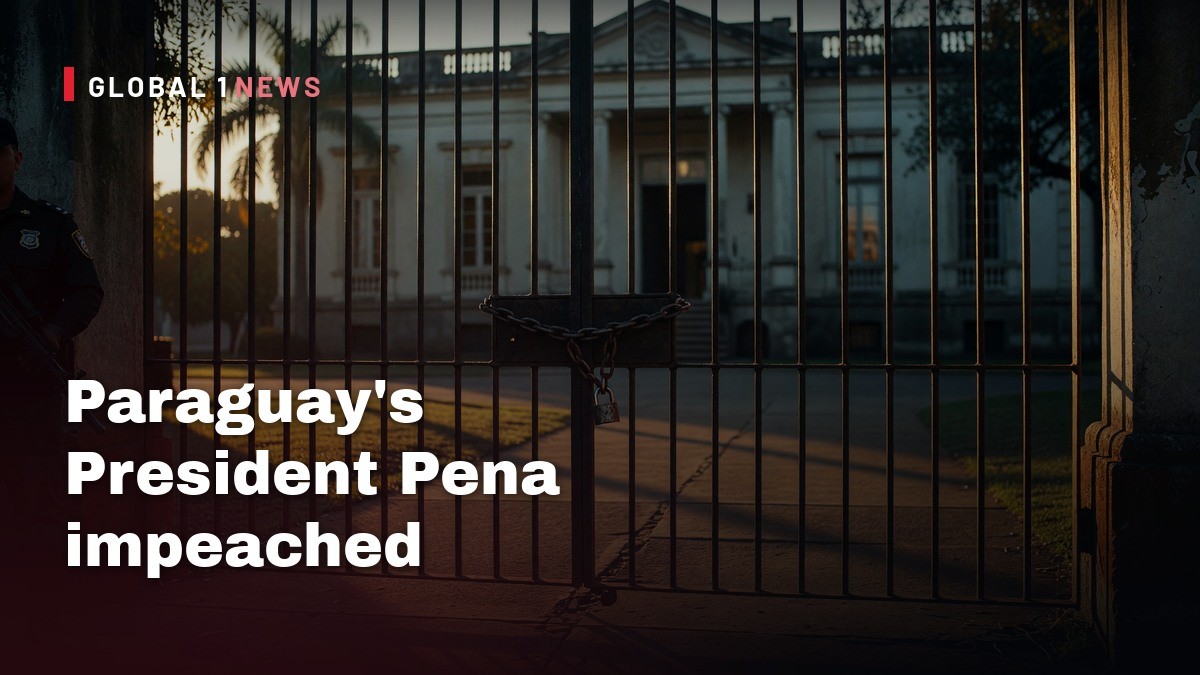
In a dramatic turn of events that underscores the volatility of Paraguayan politics, the former president was hauled to the attorney general’s office for questioning on Saturday, mere hours after Congress moved to oust him.
In a dramatic turn of events that underscores the volatility of Paraguayan politics, the former president was hauled to the attorney general’s office for questioning on Saturday, mere hours after Congress moved to oust him. The swift legal action follows a Friday order by prosecutors to arrest both the former president and the ex‑head of the Central Bank, a move tied directly to the implosion of Ueno Bank. The CNN footage captured the tense atmosphere as authorities escorted the former leader to the investigative facility, signaling a decisive, if contentious, step toward accountability in a nation still reeling from financial shock.
Congressional Ouster Amid Financial Turmoil
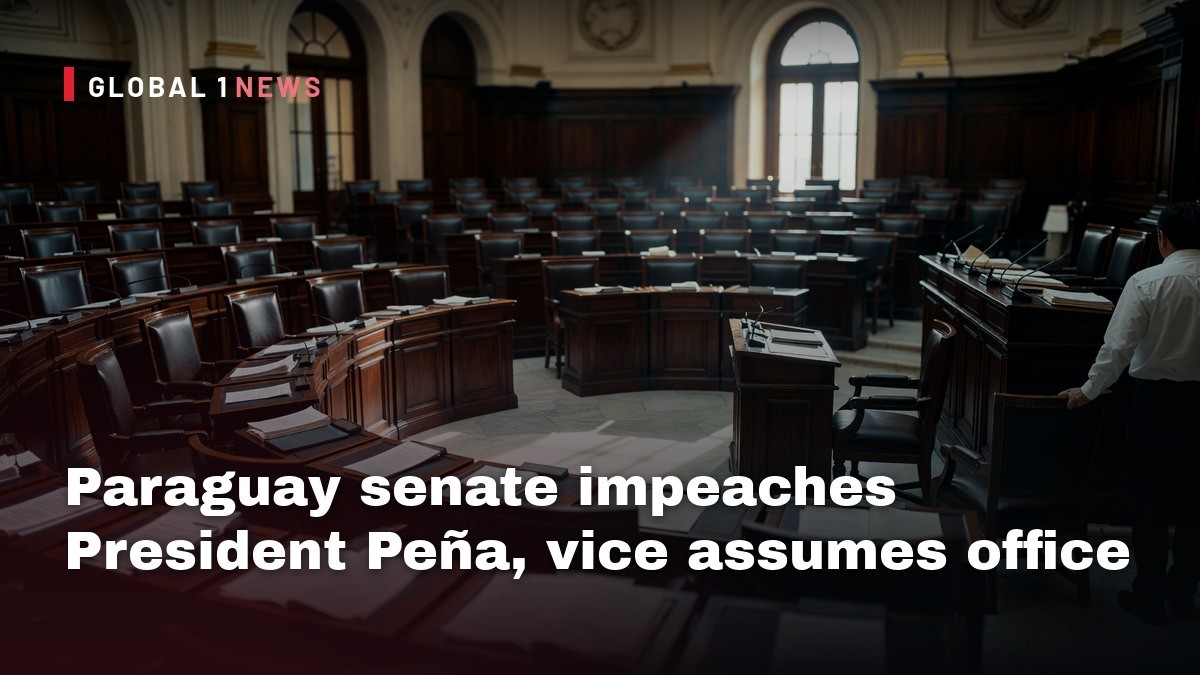
The ousting of the former president by Paraguay’s Congress was not a routine political reshuffle; it was a direct response to the collapse of Ueno Bank, a major financial institution whose failure sent ripples through the country’s economy. Lawmakers framed the removal as a necessary act to restore confidence in the government’s stewardship of the financial system. By invoking the constitutional mechanism for impeachment, they aimed to demonstrate that no individual, regardless of office, is above scrutiny when national stability hangs in the balance.
While the specific vote count and procedural details were not disclosed in the video report, the rapidity of the congressional action suggests a broad consensus among legislators that the former president’s continued tenure would exacerbate public distrust. The decision reflects a growing trend in Latin America where legislative bodies intervene decisively when economic mismanagement threatens to spiral into broader social unrest.
Observers noted that the ouster was accompanied by a surge of public protests demanding transparency and justice. Though the footage did not capture the size of the crowds, the palpable tension in the capital hinted at a populace unwilling to tolerate perceived negligence. This public pressure likely accelerated Congress’s resolve, aligning political maneuvering with a grassroots demand for accountability.
Prosecutors Order Arrests: A Legal Escalation
On Friday, Paraguayan prosecutors issued an arrest order for the former president and former Central Bank chief Carlos Carvallo, signaling a formal escalation from political censure to criminal investigation. The charges, as outlined in the report, revolve around alleged breach of trust and other offenses linked to the Ueno Bank collapse. By targeting both the political head and the monetary authority, prosecutors are constructing a narrative that implicates the highest echelons of power in the financial debacle.
The legal basis for the arrest stems from Paraguay’s criminal code provisions that address fiduciary misconduct and abuse of public office. Although the video did not enumerate the exact statutes, the reference to “breach of trust” aligns with established legal terminology used in similar cases across the region, where officials are held liable for decisions that jeopardize public assets.
Importantly, the timing of the arrest order—issued just before the congressional vote—suggests a coordinated effort between the legislative and judicial branches. This coordination, while not explicitly confirmed, reflects a broader institutional push to demonstrate that the government is taking decisive action to address the crisis and prevent further erosion of confidence in the nation’s financial system.
The Role of the Attorney General’s Office
The attorney general’s office, tasked with overseeing the nation’s legal prosecutions, acted swiftly in bringing the former president in for questioning. The video captured the moment of his arrival, underscoring the seriousness with which the office is treating the allegations. By conducting the interrogation promptly after the congressional decision, the attorney general’s team signaled an intent to move beyond political rhetoric into concrete legal inquiry.
Questioning in such high‑profile cases typically focuses on establishing a timeline of decisions, communications, and actions that may have contributed to the bank’s failure. While the specific line of questioning was not disclosed, it is reasonable to infer that investigators probed the former president’s involvement in any policy directives, regulatory approvals, or financial guarantees that could have influenced Ueno Bank’s stability.
The attorney general’s office also faces the delicate task of balancing thorough investigation with respect for due process. The public’s demand for swift justice must be weighed against the legal rights of the accused, a tension that has historically shaped the conduct of high‑stakes investigations in Paraguay and elsewhere in the region.
Implications for Paraguay’s Financial System
The collapse of Ueno Bank, the catalyst for the political and legal upheaval, has broader implications for Paraguay’s banking sector and overall economic health. A major bank’s failure can trigger a loss of depositor confidence, tightening of credit, and a slowdown in investment—all of which threaten growth prospects. The video’s focus on the political fallout highlights how intertwined governance and financial stability are in emerging markets.
In the wake of the crisis, regulators are likely to scrutinize the oversight mechanisms that failed to prevent the bank’s downfall. Although the report does not detail specific regulatory lapses, the involvement of the former Central Bank chief in the investigation points to potential shortcomings in monetary policy supervision or risk assessment practices.
International observers will be watching closely to see how Paraguay restores confidence among foreign investors and multilateral lenders. The swift legal actions against top officials may be interpreted as a positive sign of accountability, but the ultimate effectiveness will depend on the depth of reforms implemented to shore up the banking system and prevent a repeat of the Ueno Bank scenario.
Political Fallout and Future Governance
The dual blows of congressional ouster and criminal investigation have left the former president’s political future in limbo. While the video does not provide details on his party affiliation or the composition of his support base, the rapid loss of official standing suggests a severe erosion of political capital. This development could reshape the balance of power within Paraguay’s political landscape, opening space for opposition forces to assert greater influence.
Moreover, the involvement of former Central Bank chief Carlos Carvallo in the probe adds another layer of complexity. Central banks often serve as apolitical institutions, and the targeting of their leadership may raise concerns about the politicization of monetary authority. However, the allegations of breach of trust indicate that the investigation is not merely about political rivalry but about alleged misconduct with tangible economic consequences.
Looking ahead, Paraguay’s legislative body will need to address the vacuum left by the former president’s removal. The selection of a successor, the formation of a new executive agenda, and the handling of pending legislation will all be influenced by the ongoing legal proceedings. The country’s ability to navigate this transition smoothly will be a key test of its democratic resilience.
Accountability and the Road Ahead
The events captured in the CNN report illustrate a moment when legal and political mechanisms converge to confront alleged wrongdoing at the highest levels. By ordering arrests, conducting questioning, and leveraging congressional powers, Paraguay is signaling a commitment to hold leaders accountable for decisions that jeopardize national stability. This approach aligns with a broader regional trend where citizens demand greater transparency and responsibility from their governments.
Nevertheless, the ultimate success of these efforts will hinge on the integrity of the investigative process and the fairness of any subsequent trials. The attorney general’s office must ensure that evidence is gathered meticulously, that due process is observed, and that any convictions are based on clear legal standards rather than political expediency.
For Paraguay’s citizens, the outcome of this saga will shape public trust in institutions for years to come. A thorough, transparent investigation could restore confidence and lay the groundwork for stronger governance reforms. Conversely, perceived miscarriages of justice could deepen cynicism and fuel unrest. As the nation watches the former president and former Central Bank chief navigate the legal gauntlet, the world watches Paraguay’s commitment to the rule of law in the face of crisis.
By Jessica Ali, Staff Writer
This article was produced with AI-assisted research and editorial support. Reporting is based on the source material cited below. Sources: CNN video report (07 November 2026); CNN; Global1.News
What's Your Reaction?
 Like
0
 Dislike
0
 Love
0
 Funny
0
 Wow
0
 Sad
0
 Angry
0

Editor-in-Chief at Global1.News. Atlanta-based journalist who cuts through the BS and tells it like it is. Lead anchor, host, and the voice you hear when the spin stops and the truth starts.










Comments (0)