
From the front row to the hot seat — what the midterms mean for Big Tech
Midterm elections have thrown a fresh wrench into the already tangled relationship between Big Tech and Washington. PR washing or genuine pivot? The optics game OpenAI’s recent hire of Jessica Schumer—daughter of Democratic Senate leader Chuck Schumer—was a textbook optics move.
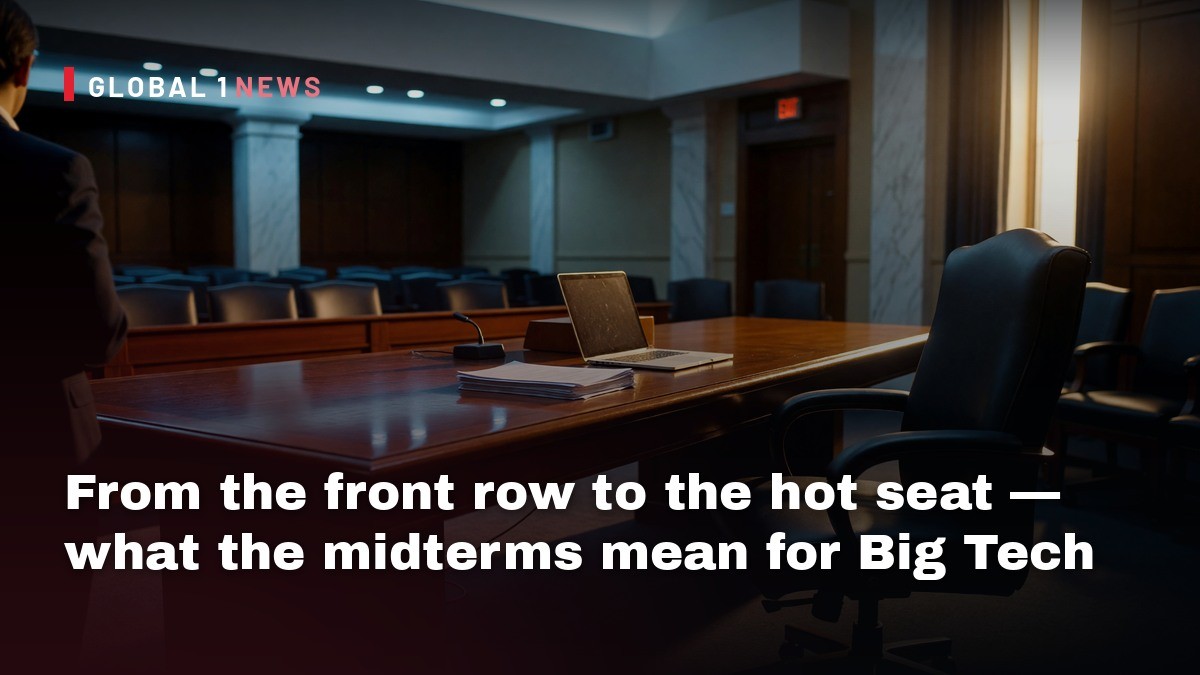
Midterm elections have thrown a fresh wrench into the already tangled relationship between Big Tech and Washington. After two years of cozying up to the Trump administration—enjoying tax breaks, paused investigations and a lax regulatory stance—companies like OpenAI, Meta and Anthropic are now scrambling to re‑brand and re‑align with a Congress that looks set to tighten the screws on AI. From a founder’s seat, the real story isn’t about PR spin; it’s about where the battles will be fought: state capitols, local community votes on data‑center siting, and the market’s reaction to an AI hype bubble that could burst at any moment.
PR washing or genuine pivot? The optics game
OpenAI’s recent hire of Jessica Schumer—daughter of Democratic Senate leader Chuck Schumer—was a textbook optics move. The same press release that announced the hire also rebranded its facilities as “compute campuses,” a thinly veiled attempt to soften the image of massive power‑hungry data farms. J.B. Branch of Public Citizen called this “PR washing,” noting that similar gestures have been made by Meta, Anthropic and even the American Federation of Teachers partnership announced last year. The pattern is clear: after a period of aligning with a Trump‑friendly agenda, the tech giants are now courting Democrats with public‑private partnership promises.
But optics won’t shield them from real policy pressure. As Branch warned, the next two years could see a “very strong likelihood” of an AI bubble pop, and the market’s reaction will be swift. The midterm results have already sent a trillion‑dollar market sell‑off rattling investors, prompting doubts about Anthropic’s lofty IPO ambitions. In short, the PR spin may buy a few headlines, but it won’t change the fact that regulators are gearing up to look harder at AI‑driven data centers and their impact on local communities.
State‑level firestorms: data‑center moratoriums and AI bills
While Washington debates broad AI oversight, the real legislative heat is coming from the states. Aryan Ranjan, founder of Baraza, points out that many states have already sued tech firms and passed their own AI regulations, from chatbot disclosures to deep‑fake bans. The emerging “data‑center moratorium” movement is especially concerning for hosting providers. Communities are beginning to question whether the promised “enormous amount of benefit” from a new data center outweighs the strain on local electricity grids and the risk of becoming a target for activist opposition.
Ranjan’s insight that “a coalition built on newer, working‑class voters is likely to push Democrats to frame AI around electricity bills, data‑center siting and jobs” signals a shift from abstract AI safety debates to concrete, bill‑impact concerns. For independent hosting providers, this means the regulatory landscape will vary dramatically from one jurisdiction to the next, and a one‑size‑fits‑all compliance strategy will be dead on arrival.
Federal uncertainty: executive orders and the AI Litigation Task Force
The Trump administration’s last‑minute executive order establishing an AI Litigation Task Force was meant to shield the industry from state‑level restrictions. The Task Force’s mandate is to challenge state AI laws, arguing that U.S. AI firms must be “free to innovate without cumbersome regulations.” Yet the order came at a time when states were already moving forward with their own measures, creating a legal tug‑of‑war that could drag on for years.
Even with the Task Force in place, the White House’s own statements—emphasising “American leadership in super intelligence” and a willingness to work with anyone—don’t guarantee protection. The administration’s future actions remain uncertain, especially if Trump decides to veto any AI‑focused legislation that could be seen as anti‑AI. For founders, the takeaway is simple: federal policy may swing like a pendulum, but the day‑to‑day operational risk will be dictated by local permitting and community sentiment.
The market’s nervous pulse: bubble fears and investor pull‑back
Branch’s warning that the AI market could “pop on Trump’s hands” reflects a broader investor fatigue. After a massive sell‑off the day after the midterms, capital is flowing more cautiously into AI ventures. The hype that once drove trillion‑dollar valuations is now being tempered by a sober reassessment of revenue models and regulatory exposure.
For independent hosting firms, this market chill translates into tighter financing conditions. Venture capitalists who were once throwing money at any data‑center‑adjacent play are now demanding clearer paths to profitability and demonstrable compliance frameworks. The era of “grow fast, break things” is over; the new mantra is “grow smart, stay compliant.”
Community pushback: the real cost of “compute campuses”
OpenAI’s rebranding to “compute campuses” tries to mask the fact that these facilities are massive power consumers. Communities that host data centers are increasingly aware of the trade‑off: a promise of jobs and tax revenue versus the strain on local grids and the environmental footprint of jet‑engine‑style cooling solutions. As Aditya Mehta notes elsewhere, data centers are already turning to old jet engines to meet power demands, a stop‑gap that raises both noise and emissions concerns.
When Meta’s Dina Powell McCormick told the WSJ that communities “will see an enormous amount of benefit” from hosting investments, she was echoing a script that many founders have heard before. In practice, the benefit narrative often falls short when local residents organize against new projects, citing rising electricity rates and environmental justice issues. Independent providers must therefore engage early with community stakeholders, offering transparent impact assessments and genuine benefit‑sharing plans, not just glossy PR.
Strategic takeaways for founders and independent providers
Given the shifting political sands, what should a founder doing real hosting infrastructure actually do? First, map your footprint against state‑level AI and data‑center regulations. If you’re eyeing a new site, prioritize jurisdictions with clear, supportive policies and a track record of collaborative community engagement. Second, build compliance into your architecture from day one—automated reporting, energy‑efficiency metrics and audit trails are no longer optional add‑ons; they’re baseline expectations.
Third, diversify your funding sources. Relying on hype‑driven VC money is a recipe for trouble when the market cools. Look to strategic partners, perhaps even local municipalities, who can provide both capital and political goodwill. Finally, keep an eye on the federal horizon but don’t let it dominate your risk model. As Ranjan put it, “for the next two years, a company’s AI rules may depend more on where it operates rather than on anything Washington passes.” In other words, the battle is won or lost on the ground, not in the Capitol.
Bottom line: the midterms have turned the AI arena into a patchwork of local battles
The post‑midterm landscape is a mosaic of state‑level regulations, community sentiment and a jittery market. Big Tech’s PR blitz—rebranding data centers, hiring political scions, touting public‑private partnerships—won’t mask the fact that the real constraints are being set at the municipal level. For independent hosting providers, the path forward is clear: understand the local regulatory terrain, embed compliance and sustainability into your core operations, and cultivate genuine community relationships. Those who can navigate this patchwork will survive the coming storm; those who rely on hype and headline‑grabbing PR will find their compute campuses shuttered before they even break ground.
— Allan Ali, Founder
This article was produced with AI-assisted research and editorial support. Reporting is based on the source material cited below. Sources: TechCrunch; techcrunch.com; Global1.News (08 November 2026).
By Allan Ali, Global1.News
What's Your Reaction?
 Like
0
 Dislike
0
 Love
0
 Funny
0
 Wow
0
 Sad
0
 Angry
0

Publisher of Global1.News. Automation architect, systems builder, and the guy making sure the truth gets published.












Comments (0)