
Fuel Discount Subsidy for Jeepney and UV Express Drivers Increases to P12 per Liter
The fuel discount subsidy for jeepney and UV Express drivers rises to P12 per liter starting August 15, building on the P10 discount that has helped over 93,000 PUV drivers since April. MANIBELA welcomed the move but renewed its demand for a fare hike amid rising oil prices.
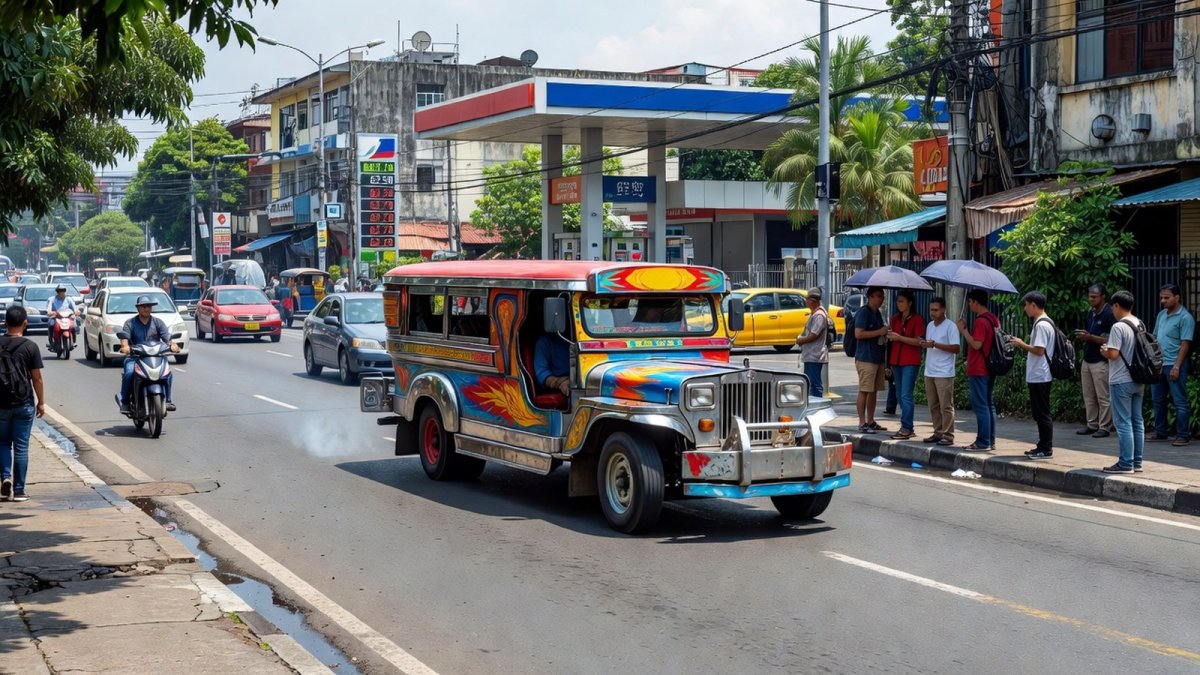
In the bustling streets of Manila and beyond, where jeepney drivers navigate daily challenges with the spirit of bayanihan, a welcome boost in fuel support arrives just as oil prices tighten their grip. The government's decision to raise the fuel discount subsidy offers real relief to thousands of public utility vehicle operators and their families who keep communities moving. Yet questions linger about whether this step fully addresses the rising costs squeezing their livelihoods.
Fuel Discount Subsidy for Jeepney and UV Express Drivers Increases to P12 per Liter
Manila, Philippines — The Office of the Executive Secretary announced on August 5, 2026, that the fuel discount subsidy for public utility jeepney and UV Express drivers will rise to P12 per liter beginning August 15, 2026. This adjustment stems from a Cabinet meeting held at Malacañang on August 4 and led by Executive Secretary Ralph Recto. Drivers stand to save as much as P1,800 each week once the higher subsidy takes effect, providing meaningful support amid ongoing fuel price pressures.
Announcement Details from Malacañang
The increase builds directly on earlier government efforts to ease burdens for transport workers. Executive Secretary Ralph Recto confirmed the change after the Cabinet session, signaling Malacañang's recognition of the sector's vulnerability to global oil fluctuations. This measured step reflects the administration's ongoing efforts to support PUV operators without immediate changes to fare structures.
The Cabinet meeting at Malacañang on August 4 brought together key economic officials to review how global oil pressures were affecting everyday transport workers. The discussion focused on practical ways to deliver immediate help without disrupting the daily routines of drivers who rely on steady earnings to keep their households running. By announcing the outcome through the Office of the Executive Secretary, the administration signaled that transport relief remains a priority on its economic agenda.
In practice the fuel discount works at the pump, giving drivers a direct reduction that adds to their take-home pay each week. This approach recognizes the tight margins many operators face and offers relief that reaches families quickly. Communities across the country benefit when these workers can continue serving routes without added financial strain.
Previous P10 Discount and Its Reach
Since April, an initial P10 per liter discount has already assisted more than 93,000 PUV drivers across the country. That program delivered steady weekly savings and helped many families cover basic needs despite volatile pump prices. The new P12 rate extends this assistance, showing how incremental policy adjustments can accumulate into tangible daily support for drivers who often operate on thin margins.
For many operators, the savings from the April program went straight into household budgets, covering everything from school supplies to daily meals while keeping their jeepneys roadworthy. Drivers who once skipped maintenance to save money found a little more room to breathe, which in turn meant safer, more reliable service for passengers. The reach of the program, touching more than 93,000 drivers nationwide, shows how widely fuel support is felt across the country.
The subsidy is applied directly at gasoline stations, removing the need for extra negotiations and letting drivers focus on their routes. Building on this foundation, the increase to P12 per liter continues the same simple delivery method. Incremental adjustments like these demonstrate how policy can accumulate into meaningful daily support for workers who often operate on thin margins.
MANIBELA's Response and Call for Fare Hikes
Transport group MANIBELA welcomed the additional fuel discount but emphasized that it falls short of a lasting solution. "We gladly accept any step that can ease the burden of drivers, including the fuel discount to be implemented starting August 15," the group stated. "But we want to stress that this is not enough and is not a replacement for our long-standing call for a just fare increase." MANIBELA further noted that only raising the minimum fare can truly help drivers cope with continued rises in local oil and fuel prices tied to tensions in West Asia.
MANIBELA welcomed the added fuel discount as a helpful step that eases immediate burdens for drivers, yet the group stressed that only a fare adjustment can provide lasting stability amid rising oil costs tied to tensions in West Asia. Drivers note that subsidies alone cannot replace the reliable income that comes from a fair minimum fare, which would better reflect ongoing expenses.
The petition process through the LTFRB allows transport groups to present their case for adjustments that balance driver needs with commuter affordability. Government efforts to offer subsidies while considering fare reviews reflect the challenge of supporting both operators and the riding public. MANIBELA continues to urge that fuel discounts should not be used to set aside calls for a just fare increase.
Daily Savings and Practical Benefits for Drivers
MANIBELA highlighted how the subsidy adds directly to drivers' income without the need for negotiations at gasoline stations. "This immediately adds to their daily income and they no longer need to plead or argue at gasoline stations to get the benefit," the group said. Many jeepney and UV Express operators live day to day, relying on consistent earnings to support households and maintain their vehicles. The P12 rate promises to ease some of that pressure starting mid-August.
Broader Oil Price Situation and Recent Pump Trends
Renewed tensions in West Asia have pushed oil prices higher in recent weeks, affecting Filipino transport workers who feel every centavo increase at the pump. This week, local prices fell by only a few centavos after two consecutive weeks of larger jumps. Such modest relief underscores why the subsidy increase matters, even as drivers continue to face unpredictable global market forces that ripple through Philippine communities.
Global events move quickly into Philippine gas stations through the weekly pump price adjustment cycle, and transport workers feel those changes almost immediately. Because this week's rollback was so small, operators still felt the cumulative squeeze of the previous two weeks of larger increases, leaving many households to budget around uncertainty.
The cycle of price reviews keeps transport workers closely watching market movements, as even small shifts can influence household budgets. The higher subsidy provides a buffer during these uncertain periods, yet drivers remain aware that global events can quickly reverse modest rollbacks. Communities that depend on reliable PUV service benefit when such support helps maintain steady operations.
Supporting Families and Commuters Through Reliable Transport
Jeepney drivers and their families represent some of the most fuel-price-sensitive workers in the nation, and the subsidy helps sustain the vital role these vehicles play in daily commutes. Communities depend on these operators not just for transport but as neighbors who embody the bayanihan spirit of mutual support. While the fuel discount provides immediate help, transport groups continue to urge authorities to consider fare adjustments that could secure long-term stability for both drivers and the riding public.
For commuters, the stakes are just as real. Jeepneys and UV Express units carry millions of passengers every day across Metro Manila and the provinces, and when drivers struggle to make ends meet, routes can thin out and waiting times can grow. The coming weeks will show whether the higher subsidy, combined with any fare review, can keep the country's most essential transport network moving steadily. What is clear is that Filipino workers continue to watch global oil markets with one eye and their daily earnings with the other, hoping that the relief now promised reaches those who need it most.
By Bella Reyes, Staff Writer
This article was produced with AI-assisted research and editorial support. Reporting is based on sources cited in the article.
What's Your Reaction?
 Like
0
Like
0
 Dislike
0
Dislike
0
 Love
0
Love
0
 Funny
0
Funny
0
 Wow
0
Wow
0
 Sad
0
Sad
0
 Angry
0
Angry
0

Philippines/Southeast Asia Correspondent at Global1.News. Manila-based journalist covering Philippine politics, environment, maritime security, and social issues. Passionate about marine conservation and the communities protecting the Philippines' natural heritage.














Comments (0)