
Everyone's Renting AI Compute Now — Even the Giants Building It
Moonshot rents 20,000 Nvidia GPUs from Alibaba Cloud. Anthropic commits $10 billion to Volta Infra, a startup six months old. The AI buildout is becoming a rental economy — and the landlords are winning.
Everyone's Renting AI Compute Now — Even the Giants Building It
Let me tell you something that's been sitting wrong with me all week. I've spent the last decade of my life preaching the opposite of what the AI industry is finally figuring out — that you don't need to own everything to run a serious infrastructure business. For years, the hyperscalers and the AI labs have been telling us the only way to play this game is to spend $100 billion on your own data centers, your own chips, your own power plants. Own it all. Borrow until your balance sheet screams.
Then this week happened. Three announcements landed within days of each other, and if you were paying attention, they told a completely different story. The biggest names in AI — the ones with the trillion-dollar valuations and the government summits — are renting their compute. Not building it. Renting. From landlords. And the landlords are the ones laughing all the way to the bank.
The Moonshot Story — A $35 Billion AI Lab That Doesn't Own Its GPUs
Let's start with Moonshot, the Chinese AI lab behind the Kimi models — the same outfit that crashed global markets a few weeks back when it released Kimi K3, a 2.8-trillion-parameter open-weight monster that made everyone question whether the US AI capex thesis still holds. Bloomberg reported late last month, and Data Center Dynamics confirmed this week, that Moonshot runs its Kimi models on around 20,000 Nvidia chips it doesn't own. It rents them from Alibaba Cloud.
Read that again. A company reportedly valued at $35 billion after raising $3.5 billion in its Series F, a company eyeing a $50 billion valuation and a Hong Kong IPO, does not own the iron that runs its flagship model. Alibaba is both Moonshot's investor and its compute landlord. That's the entire Chinese AI ecosystem in one relationship: the model maker rents, the cloud owner collects.
And there's a geopolitical layer here that nobody in the West wants to admit. The White House has accused Moonshot of getting its hands on banned Blackwell chips through Southeast Asia. Whether that's true or not, the fact that China's hottest AI lab depends on Western silicon — rented through a domestic cloud — tells you everything about who actually controls the compute layer of this industry. The chips are American. The landlord is Chinese. The renter is a startup with a $50 billion dream.
The Anthropic Story — $10 Billion, Six Years, and a Landlord That's Six Months Old
Now look at the other side of the world, same week. Anthropic — the AI lab that Amazon and Google have both poured billions into, the company people treat as the safe, responsible face of frontier AI — signed a $10 billion, six-year computing agreement with a company called Volta Infra Holdings. Volta is not a hyperscaler. It is not a data center giant. Volta was incorporated in January of this year. It is six months old.
Six. Months. Old. And it just signed a ten-billion-dollar deal with one of the most important AI companies on the planet.
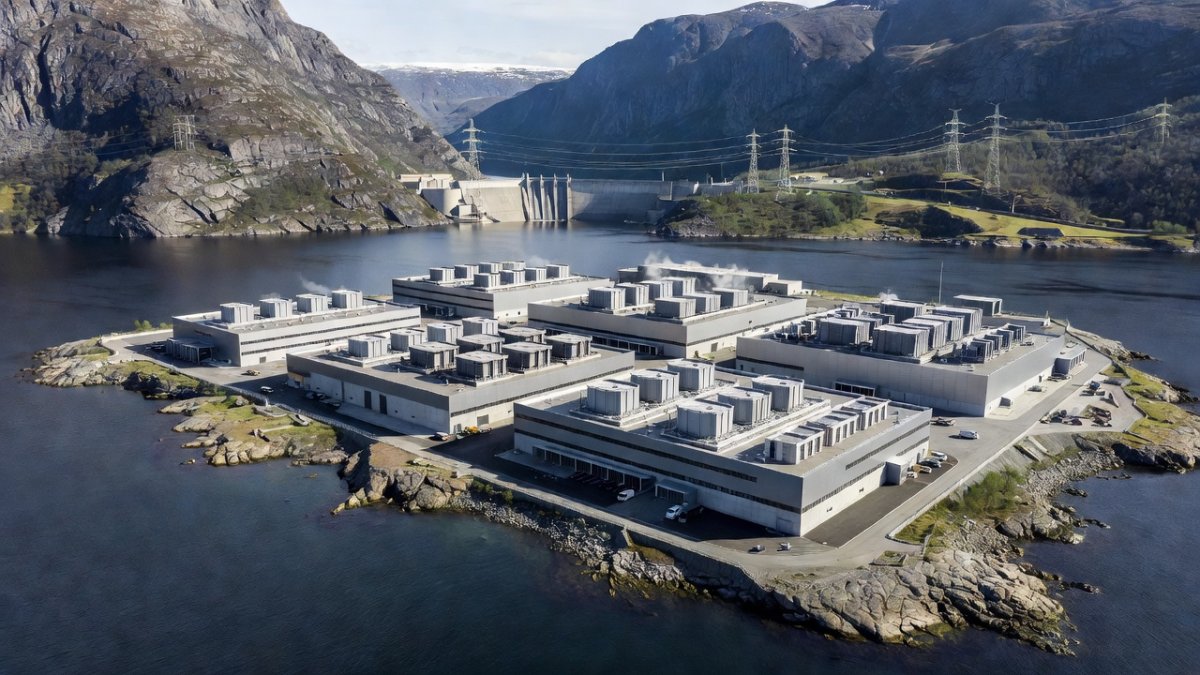
Here's the financial engineering, because this is where it gets interesting. Volta raised about $300 million from Andreessen Horowitz, Nvidia, and Michael Dell at a reported $2.4 billion valuation. A $2.4 billion company signed a $10 billion contract. How? With a JPMorgan credit backstop of around $1.3 billion — debt structured to finance the buildout of a 133-megawatt Norwegian hydroelectric data center running Nvidia's Vera Rubin chips. The deal is delivered in partnership with Bitdeer, which brings us to story number three.
The Bitdeer Story — The Bitcoin Miner Who Just Became an AI Landlord
Bitdeer Technologies is a Bitcoin miner. It owns a hydro-powered campus at Tydal, Norway — the kind of asset that was basically worthless for AI a year ago. This week it signed a 16-year colocation lease and services agreement with Volta Tydal AS for 121 megawatts of IT capacity. The contracted payments: roughly $4.7 billion, with an optional eight-year extension that takes the potential total to about $8 billion over 24 years.
Do the math on that. About $202 per kilowatt per month — the highest disclosed rate in any miner-to-AI conversion to date. No equity given away. No warrants. Just a straight lease from a company that mined Bitcoin last year and is now an AI landlord this year. The stock jumped 23 percent on the news.
That's the whole story of AI infrastructure in 2026, compressed into one week: a Chinese lab renting GPUs from its investor's cloud, an American frontier lab renting a Norwegian hydro plant from a six-month-old shell with a credit backstop, and a Bitcoin miner collecting $202 per kilowatt from both of them.
The Secondary Bottleneck Nobody's Talking About — Credit Backstops and Off-Balance-Sheet Compute
Here's the part that keeps me up at night, and it's the part Wall Street isn't modeling. When Anthropic signs a $10 billion rental agreement, that cost does not hit its balance sheet as capex. It hits as operating expense — rent. The $10 billion of GPUs and power that keep Claude alive are someone else's debt. Volta's debt. Bitdeer's buildout. JPMorgan's backstop.
This is the same off-balance-sheet shadow debt I've been warning about for weeks — the $662 billion in hidden obligations, the $1.65 trillion in off-balance-sheet commitments the market keeps pretending doesn't exist. The rental economy makes it worse, because now the debt isn't even attached to the company that needs the compute. It's scattered across a chain of landlords, each one more leveraged than the last, each one one credit downgrade away from freezing the pipeline.
And here's the kicker: the rental model means the AI labs can churn. When the next model doesn't perform, when the next funding round stalls, they simply don't renew the lease. The landlord eats the empty racks. The GPU glut I predicted in the overbuild story? This is how it starts — not with cancellations at the hyperscaler level, but with renters walking away from leases and leaving the landlords holding the hardware.
What This Actually Means for Independent Hosting Providers
If you run hosting infrastructure like I do, this week's news is the most validating thing you've seen in a year. Let me give you the playbook.
First — you don't need to own everything to be in this game. Moonshot is worth $35 billion and rents its compute. Anthropic rents $10 billion worth. If they can rent, your customers can rent from you. The capital-light model I've been preaching isn't a compromise anymore. It's what the giants are doing.
Second — power and space are the moat, not chips. Bitdeer is collecting $202 per kilowatt per month for hydro power in Norway. You don't need to beat Nvidia's roadmap. You need a lease on a building with a fat power allocation and a landlord-friendly credit profile. That's the whole game now.
Third — watch the churn. Renters leave. When the AI cycle cools, the leases don't renew, and the hardware floods the secondary market. Don't sign your own 16-year leases on the assumption that AI demand is infinite. Structure your contracts with exit clauses, and keep your utilization flexible enough to survive a renter's market.
Fourth — the credit backstop is the real competitive weapon. Volta won a $10 billion deal because JPMorgan stood behind it. If you want to play landlord to the AI economy, your financing matters more than your cooling. A $1.3 billion backstop beat every well-capitalized data center company on earth. Think about what your own financing structure looks like.
The Structural Reality — Renters Stay Flexible, Landlords Eat the Risk
Here's the truth nobody in this industry wants to say out loud: the rental economy is a risk transfer. The labs get the upside of AI with the flexibility of a renter. The landlords — Bitdeer, Volta, Alibaba, and every colo operator who signs a 16-year lease — get the guaranteed payments and all the downside when the tenant walks.
That's not a criticism. That's the business. But you need to know which side of the lease you're on, because the two sides have completely different risk profiles. The renter can pivot when the model war turns. The landlord is married to the building, the power contract, and the debt service — for 16 years.
For the last eighteen months, I've been telling you the AI buildout was a structural shift, not a bubble. I still believe that. But this week clarified something important: the buildout isn't being financed by the people who need the compute. It's being financed by the people who own the land, the power, and the credit lines. When that structure gets tested — and it will — the landlords are the ones holding the bag.
The Bottom Line
Three stories. One week. $35 billion lab renting from its investor. $10 billion deal with a six-month-old landlord. Bitcoin miner collecting record rent. If you think the AI infrastructure story is about who builds the biggest data center, you're reading it wrong. It's about who owns the iron, who owns the power, and who's willing to sign the lease.
The giants are renters now. The landlords are winning. And if you're an independent hosting provider, that means the exact model you've been running for years — capital-light, flexible, customer-first — is suddenly the model the whole industry is being forced into. Stop apologizing for not having a $10 billion balance sheet. The people with $10 billion balance sheets are paying rent to people who don't.
Stay liquid. Lock your power. Know your tenant. And for God's sake, read the lease before you sign it.
-- Allan Ali, Founder
This article was produced with AI-assisted research and editorial support. Reporting is based on sources cited in the article.
What's Your Reaction?
 Like
0
Like
0
 Dislike
0
Dislike
0
 Love
0
Love
0
 Funny
0
Funny
0
 Wow
0
Wow
0
 Sad
0
Sad
0
 Angry
0
Angry
0

Publisher of Global1.News. Automation architect, systems builder, and the guy making sure the truth gets published.















Comments (0)