
Feds Tell Provinces to Get Ready to Put U.S. Booze Back on Shelves
In a recent CBC News report on Power & Politics , federal officials revealed that Ottawa has quietly instructed provincial and territorial governments to prepare for the possibility of lifting retaliatory measures against American goods — including putting U.S. booze back on liquor store shelves — even as negotiators concede that a comprehensive tariff deal with Washington remains elusive.
In a recent CBC News report on Power & Politics, federal officials revealed that Ottawa has quietly instructed provincial and territorial governments to prepare for the possibility of lifting retaliatory measures against American goods — including putting U.S. booze back on liquor store shelves — even as negotiators concede that a comprehensive tariff deal with Washington remains elusive. The 9:58-minute segment, featuring an interview with former Conservative leader Erin O'Toole, painted a picture of a Canadian negotiating team bracing for what one source described as a "cliff-type moment" ahead of U.S. President Donald Trump's Aug. 19 deadline for 50 per cent tariffs on hundreds of Canadian products.
The federal directive, delivered during a Friday briefing by Canada-U.S. Trade Minister Dominic LeBlanc, signals that Ottawa is preparing for multiple scenarios — including a last-minute breakthrough that would require provinces to move quickly to restore normal trade flows. But sources familiar with the talks say the two countries remain "far apart" on core issues, and optimism on the Canadian side is eroding as American negotiators refuse to budge from their latest offer.
Feds tell provinces to be ready to put U.S. booze back on shelves as tariff deadline looms
Ottawa – Friday — The federal government has told provinces and territories to be ready "as soon as possible" to put American alcohol back on store shelves and to drop retaliatory procurement rules that favour Canadian suppliers, in the event a tariff deal is reached with the United States before next Wednesday's deadline. The request came during a Friday briefing by Trade Minister Dominic LeBlanc, who also held a separate session with members of the prime minister's advisory committee on Canada-U.S. economic relations, according to multiple sources familiar with the discussions.
The directive does not mean a deal is imminent — in fact, federal officials do not believe one is close. Rather, it reflects the logistical reality that provincial liquor boards and procurement agencies need lead time to reverse the bans that have been in place since Trump returned to the White House last year. "There is still no agreement; in fact, they are quite far from reaching one," Quebec's Economy Minister Bernard Drainville said after the briefing. "At the moment, there is no indication that Mr. Trump might postpone the application of the 50 per cent tariffs."
The Story: A Deal That Isn't There Yet
Trump has threatened to impose 50 per cent tariffs on hundreds of Canadian goods starting Aug. 19, citing three specific grievances: provincial bans on American liquor, Canada's dairy import quotas under supply management, and the existing sectoral tariffs on Canadian autos. The U.S. president's threat is the latest escalation in a trade war that began last year when Trump first returned to the White House and immediately targeted Canadian steel, aluminum, autos and forest products with sectoral levies.
Canada responded with retaliatory tariffs and provincial measures, including the removal of U.S. alcohol from government-run liquor stores — a move that has hit American producers hard. U.S. exports of wine, beer and spirits to Canada fell sharply, with American wine sales in Canada plummeting $343 million US in 2025 alone. U.S. spirit-makers have called the provincial bans "devastating" to their industry.
The current deal under discussion would see the U.S. refrain from imposing the new 50 per cent levies while lowering — but not fully eliminating — sectoral tariffs on Canadian steel, aluminum, autos and forest products. In exchange, Canada would make concessions on the three areas cited in Trump's threat. But sources say the American offer, which includes halving sectoral tariffs on autos to 12.5 per cent, is one Canada believes is not good enough.

What Ottawa Is Asking of the Provinces
The federal request to provinces is twofold. First, Ottawa wants provincial liquor boards to be operationally ready to restock American products within days of a deal being announced. Second, the federal government has asked provinces and territories to prepare to drop retaliatory procurement rules that currently favour Canadian suppliers over American ones in government contracts.
These measures were part of Canada's initial response when Trump returned to the White House last year, and they have been a sticking point in negotiations ever since. The provincial bans on U.S. alcohol, in particular, have infuriated Trump, who cited them directly in his threat of new tariffs. U.S. Trade Representative Jamieson Greer told reporters in Iowa on Friday that the 50 per cent duties slated for Aug. 19 are "in response to Canadian retaliatory measures" like banning U.S. liquor. Greer called Canada's actions "the kind of things that China would do."
Greer described the talks as "constructive" but offered little comfort to Canadian negotiators. "My sense is the Canadians, they want to have a more conciliatory approach. But we'll see. At the end of the day, we're going to do what's best for America," he said. LeBlanc has met Greer multiple times in recent weeks, and Greer said Thursday they are aiming to have "options" available for both Prime Minister Mark Carney and Trump after the latest round of talks. LeBlanc is expected to stay in Washington over the weekend for continued discussions.
The Sticking Points: Booze, Dairy and Autos
The three issues at the heart of the dispute are deeply intertwined with Canadian domestic politics. The provincial liquor bans were a visible, immediate response to Trump's tariffs — a way for premiers to show Canadians they were fighting back. But they have also become a symbol of the broader trade war, and Trump has seized on them as evidence of Canadian bad faith.
Dairy supply management is an even more sensitive file. The system of production quotas and import controls has been a cornerstone of Canadian agricultural policy for decades, and it enjoys strong support in Quebec and Ontario. Quebec Premier Christine Fréchette was unequivocal on Friday: supply management is "a red line that must not be crossed." She said there will be no concessions on dairy supply management, period.
On autos, the American offer to halve sectoral tariffs to 12.5 per cent is seen in Ottawa as insufficient. Canadian negotiators argue that any deal must respect Canadian workers and protect the integrated North American auto industry, which relies on parts crossing the border multiple times during assembly. "We shouldn't make any agreement unless it respects all our workers and comes up with a deal that we can both live with," said Erin O'Toole, the former Conservative leader who now sits on the prime minister's advisory committee on Canada-U.S. economic relations.
O'Toole told CBC News that the positions are "still very far apart" and predicted the negotiations could go down to the wire. "It may come down to the final days. It may be only in the last hours when you start to see the real final position the Americans have. Right now, what [the U.S. is] offering is not sufficient," he said.
Canadian Context: Federal-Provincial Tensions
The federal request to provinces highlights the unique challenge of Canadian trade negotiations: while Ottawa holds the constitutional authority over international trade, the provinces control liquor distribution, procurement and agricultural marketing boards. This division of powers means any deal with the U.S. requires provincial cooperation — and that cooperation is not guaranteed.
Ontario Premier Doug Ford has signalled he would be "more than happy" to bring U.S. booze back if a fair deal protects Ontario's steel, auto, forestry, agriculture and manufacturing sectors. But Ford, who has been one of the most vocal critics of Trump's tariffs, also struck a defiant tone. "A tariff on Canada is a tax on the American people," he said, adding that with U.S. midterm elections approaching, "you have to get that bully and send him a message."
The federal-provincial dynamic adds another layer of complexity to an already difficult negotiation. Ottawa cannot simply sign a deal and expect provinces to fall in line — it must persuade premiers that the concessions are worth the political cost. The request to prepare for the return of U.S. booze is, in part, an attempt to build momentum toward a deal by making it clear that the endgame is a return to normal trade, not a permanent state of retaliation.
But there are limits to what Ottawa can ask. The dairy file, in particular, is a federal-provincial minefield. Supply management is enshrined in Canadian law and supported by a powerful lobby. Any concession on dairy imports would face fierce opposition in Quebec and Ontario, and could threaten the political stability of the Liberal government. Fréchette's statement on Friday was a clear warning to Ottawa: do not cross this line.
Impact on Canadians
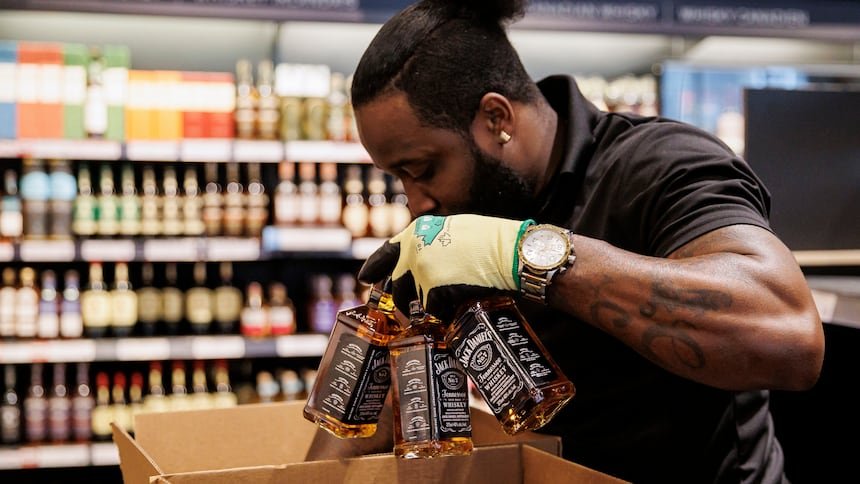
For ordinary Canadians, the tariff dispute has already had tangible consequences. The provincial liquor bans have changed what's available at government-run stores, with American wines, beers and spirits disappearing from shelves in most provinces. Some Canadians have welcomed the change, seeing it as a patriotic stand against unfair U.S. trade practices. Others have simply found alternatives, whether from Canadian producers or other countries.
Even if American alcohol returns to shelves, a number of Canadians told CBC News they have no intention of buying it. The boycott has taken on a life of its own, with some consumers saying they will continue to avoid U.S. products regardless of what governments decide. This consumer sentiment is a wildcard for negotiators: even a successful deal may not fully restore the pre-tariff trade relationship if Canadians have permanently changed their buying habits.
The broader economic stakes are significant. Canada sends roughly 75 per cent of its exports to the United States, and the sectoral tariffs already in place have cost Canadian businesses billions of dollars. The threat of new 50 per cent tariffs on hundreds of additional goods would be a major blow to the Canadian economy, potentially pushing the country into a recession. Industry sources say Canadian negotiators see Aug. 19 as a "cliff-type moment" — there is no political appetite in Canada to keep talks going if the 50 per cent tariffs come into force.
Reactions and Analysis
Lana Payne, national president of Unifor, Canada's largest private-sector union, delivered a blunt message to the federal government on Friday: Canada "can't afford to give any more concessions." Payne said that if a deal cannot be reached on acceptable terms, Canada must be prepared to retaliate further. "If in the end, we can't get a deal that is acceptable for Canada, we have to look at these other options. And that means retaliating against the U.S. because we cannot sustain any more of these tariffs, and we have to draw a line in the sand," she said. Her advice to negotiators: "Hold your nerve. Hold the line."
Payne's comments reflect a growing sentiment among Canadian labour and business groups that the country has already made enough concessions and that further capitulation would set a dangerous precedent. The U.S. offer to halve auto tariffs to 12.5 per cent, while significant, would still leave Canadian manufacturers at a competitive disadvantage compared to their American counterparts, who face no such levies on their domestic sales.
O'Toole echoed this view, arguing that Canada should not rush into a bad deal simply to meet an artificial deadline. "We shouldn't make any agreement unless it respects all our workers and comes up with a deal that we can both live with," he said. The former Conservative leader's presence on the prime minister's advisory committee is notable — it signals that Carney is seeking input from across the political spectrum as he navigates the most consequential trade negotiation in a generation.
What Happens Next
The coming days will be critical. LeBlanc is expected to remain in Washington over the weekend for continued talks with Greer and other U.S. officials. The two negotiators have met multiple times in recent weeks, and Greer said Thursday they are aiming to have "options" available for both Carney and Trump after the latest round of discussions.
But the fundamental disagreements remain. The U.S. is demanding concessions on provincial liquor bans, dairy import quotas and auto tariffs — all politically sensitive areas for Canada. The American offer to halve sectoral tariffs on autos to 12.5 per cent is seen in Ottawa as insufficient, and there is no indication the U.S. is willing to improve it. Meanwhile, Trump's threat of 50 per cent tariffs on hundreds of Canadian goods looms over the negotiations like a sword of Damocles.
If the tariffs do come into force on Aug. 19, the consequences would be severe. Canadian negotiators have made clear there is no appetite to continue talks under those conditions, meaning the dispute could escalate further. Canada would likely respond with additional retaliatory measures, potentially targeting U.S. agricultural products, manufactured goods and services. The result would be a full-blown trade war between two of the world's closest economic partners.
For now, the federal government is preparing for both scenarios: a last-minute deal that would require provinces to quickly restore normal trade, or a breakdown that would trigger a new round of retaliation. The request to provinces to be ready to put U.S. booze back on shelves is a sign that Ottawa still hopes for a deal — but the lack of progress in negotiations suggests that hope may be fading.
As the Aug. 19 deadline approaches, Canadians are watching closely. The outcome of these negotiations will shape the country's economic relationship with its largest trading partner for years to come. Whether the result is a deal that protects Canadian workers and industries, or a trade war that inflicts pain on both sides of the border, the decisions made in the coming days will have lasting consequences.
By Alex Thompson, Staff Writer
This article was produced with AI-assisted research and editorial support. Reporting is based on sources cited in the article.
What's Your Reaction?
 Like
0
Like
0
 Dislike
0
Dislike
0
 Love
0
Love
0
 Funny
0
Funny
0
 Wow
0
Wow
0
 Sad
0
Sad
0
 Angry
0
Angry
0

Canada Correspondent at Global1.News. Based in Toronto, covering Canadian politics, energy, trade, and US-Canada relations. Provides the Canadian perspective on North American and global affairs.













Comments (0)