
Cottage Cheese Crisis Ends as Tnuva Restocks Shelves Across Israel
After nearly two months of frustrating empty shelves, Israeli consumers can finally breathe a collective sigh of relief. Over the past two days, retail chains across the country report that cottage cheese and white cheese are once again available even in the evening hours — a stark contrast to recen
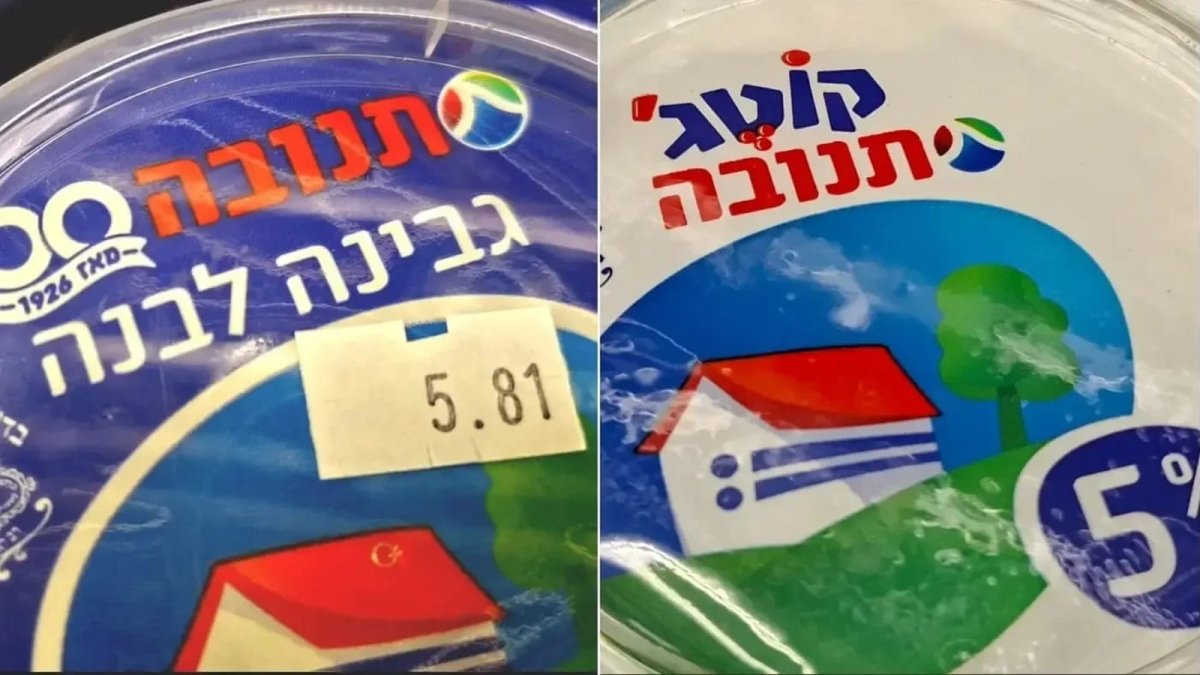
After nearly two months of frustrating empty shelves, Israeli consumers can finally breathe a collective sigh of relief. Over the past two days, retail chains across the country report that cottage cheese and white cheese are once again available even in the evening hours — a stark contrast to recent weeks when these beloved staples were snatched directly from stockers' crates, sometimes before they even reached the refrigerated displays.
Cottage Cheese Crisis Ends as Tnuva Restocks Shelves Across Israel
Jerusalem, Israel — After two months of shortages caused by a technical glitch at Tnuva's dairy and a surge in demand, regular supplies have returned to retail chains and inventories have been rebuilt, according to market sources cited by Walla. The development brings relief to consumers across the country who have spent weeks hunting for the familiar white tubs on supermarket shelves.
A Return to Normalcy on the Shelves
The change on the ground has been gradual but unmistakable. Over the past two weeks, Tnuva has returned to supplying retail chains with normal quantities of its dairy products. Market sources told Walla that rebuilding inventory and filling the vacuum created during the shortage took considerable time. The tangible improvement has only been felt in recent days, with goods remaining on shelves throughout the day and still available for evening shoppers.
For consumers in Tel Aviv, Jerusalem, Haifa, and beyond, this marks the end of a frustrating period that saw cottage cheese — a staple of the Israeli breakfast table — vanish from stores even before the Shavuot holiday. In some branches, the product disappeared within hours of arrival, leaving shoppers to scour multiple supermarkets in search of the familiar white tubs.
How the Shortage Began
The ordeal began with cottage cheese, which started disappearing from shelves in the weeks leading up to Shavuot. For long weeks, retail chains struggled to receive the quantities they ordered from Tnuva, and in many branches, the product vanished shortly after it arrived. As the shortage persisted, consumers pivoted to white cheese, causing demand for that product to surge rapidly.
Within a short time, a shortage of white cheese developed as well. The shelves usually filled with tubs of cottage and white cheese were instead stocked with labneh, sour cream, and other dairy products — a visible reminder of the disruption rippling through Israel's dairy supply chain.
The Technical Failure at Alon Tavor
The root of the crisis lay in a malfunction in the automated warehouse system at Tnuva's Alon Tavor dairy, located in the Lower Galilee near Afula. As revealed by Walla, the issue was not on the production line itself. The cottage cheese was produced, packaged, and ready for distribution, but some of it could not leave the dairy and reach distribution trucks due to disruptions in the system managing pallet movement in the warehouse.
The automated warehouse system is operated by the German company Dematic, a global leader in logistics automation. The situation was complicated by the security environment: a visit by the Dematic team scheduled to arrive at Tnuva during Operation Roaring Lion was canceled due to the war. Instead, the company's staff attempted to assist Tnuva teams remotely via phone and Zoom calls, while Tnuva employees operated part of the system manually.
This manual operation allowed goods to be dispatched, though not at the usual supply pace. The result was a bottleneck that rippled through the entire distribution network, affecting retail chains from Shufersal to smaller independent grocers across the country.
Demand Surge Compounds the Problem
Compounding the logistical problem was a roughly 4% increase in demand for dairy products since the beginning of the year. This surge was driven in part by a drop in the number of Israelis traveling abroad due to the security situation. With more Israelis staying home, eating at home, and maintaining their regular consumption patterns, demand for dairy products — already a cornerstone of the Israeli diet — climbed steadily.
High demand and the gaps created since Shavuot made restocking difficult, and any additional delay was felt immediately in retail stores. The disruption in cottage cheese supply eventually spilled over to white cheese. Consumers unable to find cottage cheese switched to white cheese, and the growing demand began clearing those shelves as well.
Tnuva's Dominant Market Position
The shortage was especially noticeable due to the market structure of Israel's dairy sector. Tnuva is Israel's largest producer in the white cheese category, a position that gives it outsized influence over the availability of these products. Strauss, Tnuva's main competitor, holds about 30% of the market, but Tnuva's share is significantly larger, making any disruption in its supply chain immediately visible to consumers.
This market concentration has long been a point of discussion in Israel's food economy. The dairy sector is one of the most regulated in the Israeli economy, with government oversight of production quotas and pricing. Tnuva, which was privatized in 2007 when it was sold to Apax Partners, has since been acquired by the Chinese conglomerate Bright Food, and remains the dominant player in the Israeli dairy market.
The Broader Context of Israel's Food Supply Chain
This shortage highlights the fragility of Israel's food supply chain, particularly in the dairy sector. The Alon Tavor facility is one of Tnuva's largest production sites, and its automated warehouse system is critical to the company's distribution capabilities. When that system faltered, the impact was felt across the entire country within days.
The reliance on automated systems, while efficient under normal circumstances, creates vulnerabilities when those systems fail. The cancellation of the Dematic team's visit due to the security situation surrounding Operation Roaring Lion underscores how the war can have unexpected ripple effects on civilian infrastructure and daily life.
Consumer Behavior and the Security Situation
The 4% increase in dairy demand since the beginning of the year is directly tied to the security situation. With fewer Israelis traveling abroad, more meals are being consumed at home. This shift in behavior has boosted demand for basic food items, including dairy products. The trend is likely to continue as long as the security situation remains tense and international travel remains less attractive to Israeli families.
This is not the first time that security events have reshaped Israeli consumer behavior. During previous conflicts, similar patterns emerged — increased home consumption, stockpiling of basic goods, and shifts in demand for certain products. The dairy shortage, however, was unique in that it was triggered by a technical failure rather than a direct security event, yet the security situation played a crucial role in its duration and severity.
What This Reveals About Israel's Food Economy
The cottage cheese shortage reveals several structural characteristics of Israel's food economy. First, the high concentration of production in a few large players means that any disruption at a major facility has immediate national consequences. Second, the reliance on imported technology and expertise — in this case, the German automated warehouse system — creates dependencies that can be difficult to manage during emergencies.
Third, the episode demonstrates the resilience of Israeli industry. Tnuva employees operated parts of the system manually, keeping goods flowing even without the full automation. This adaptability, while not perfect, prevented the shortage from becoming even more severe.
Looking Ahead: Lessons and Rebuilding
Now, after two weeks of supply at normal levels, the gaps finally appear to be closed. Retail chains report that cottage cheese and white cheese are once again available throughout the day, and the frantic scenes of shoppers grabbing products from stockers' crates have subsided.
The question now is what lessons Tnuva and the broader dairy industry will draw from this experience. The company will likely review its contingency plans for automated system failures, and may consider ways to reduce its dependence on remote technical support from overseas. For the Israeli food economy as a whole, the episode serves as a reminder of the importance of supply chain resilience in a country that faces unique security challenges.
For consumers, the return of cottage cheese to the shelves is a welcome sign of normalcy. In a period marked by uncertainty, the simple pleasure of finding a familiar white tub in the dairy aisle carries more weight than usual. The crisis may be over, but its lessons will linger — for Tnuva, for the retail chains, and for a country that has learned once again that even the most basic products can become precious when supply chains falter.
This article was produced with AI-assisted research and editorial support. Sources: The Jerusalem Post (Walla).
By Hannah Berg, Staff Writer
What's Your Reaction?
 Like
0
Like
0
 Dislike
0
Dislike
0
 Love
0
Love
0
 Funny
0
Funny
0
 Wow
0
Wow
0
 Sad
0
Sad
0
 Angry
0
Angry
0

Israel Correspondent at Global1.News. Based in Tel Aviv, covering Israeli politics, security, technology, and society. Provides balanced, deeply-sourced reporting on one of the most closely-watched regions in the world.















Comments (0)