
Hundreds more prisoners being freed in second phase of early release scheme
The mechanics of the second phase The latest batch focuses on prisoners sentenced to up to two and a half years. The exclusions also cover members of child‑grooming gangs convicted of indecent assault, meaning the most severe offenders remain behind bars.
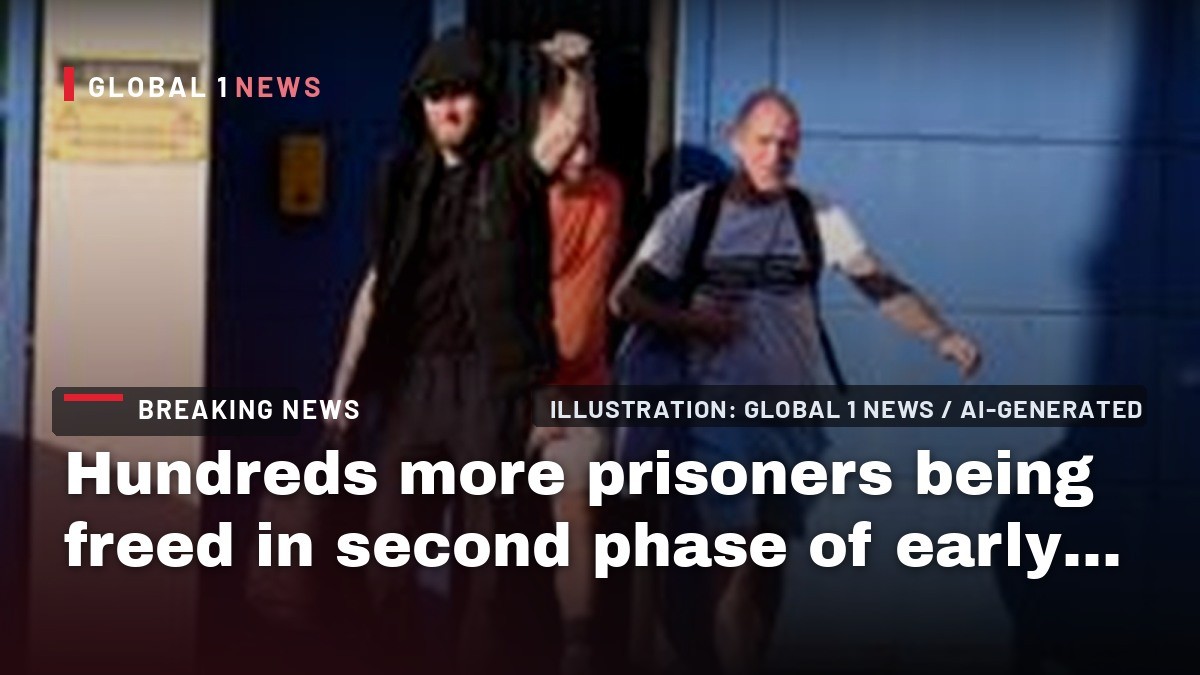
From Tuesday, around 650 offenders are leaving prison in England and Wales as part of the second tranche of the government’s early‑release scheme, a move that has reignited a fierce debate over public safety, the capacity of the probation service and the wider agenda of criminal‑court reform.
The mechanics of the second phase
The latest batch focuses on prisoners sentenced to up to two and a half years. Unlike the first wave, which freed those serving less than 19 months after completing a third of their term, this stage releases inmates after serving the same proportion of a slightly longer sentence. The plan is designed to gradually increase the length of sentences from which early release is permitted, with the final phase slated for next June and targeting prisoners serving more than 12 years.
Overall, the scheme aims to free roughly 5,000 inmates – a reduction from an earlier target of 6,000 after ministers excluded rapists, the most serious child‑sex offenders and those convicted of manslaughter. The exclusions also cover members of child‑grooming gangs convicted of indecent assault, meaning the most severe offenders remain behind bars.
Survivor groups warn of heightened risk
Charities representing survivors of domestic abuse have voiced alarm. Alice Russell‑Harris of Refuge highlighted that many of those being released are domestic‑abuse perpetrators, warning that “this will put survivors at serious risk of harm”. She noted that, even with licence conditions such as electronic tagging and geographic restrictions, breaches are common.
Veronica Oakeshott of Women’s Aid described the scheme as “terrifying for survivors”, pointing to documented failures in the electronic‑tagging system. Both organisations argue that the safety net – electronic tags, curfew orders and supervision – is insufficient to protect vulnerable individuals.
Probation services stretched to the limit
The National Association of Probation Officers (NAPO) has warned that the surge in releases is overwhelming its members. General secretary Ian Lawrence told the BBC that officers are “absolutely overwhelmed with work”, stressing that the newly released offenders require “intensive supervision”. He added that the sheer volume of cases is creating “pressure” that could compromise public safety.
A recent His Majesty’s Inspectorate of Probation (HMIP) report found that almost half of the electronic tags intended to monitor released prisoners are not fitted on time, with some individuals waiting up to five months for a tag. The delay hampers the ability of probation officers to enforce curfews and other licence conditions, a shortfall that will not be quantified publicly for several months.
Financial and staffing promises from the Ministry of Justice
In response to the strain on probation, the Ministry of Justice has offered a 5 % pay rise to probation officers, far short of the 12 % demanded by NAPO to offset the impact of cuts dating back to 2010. The Ministry argues that the offer is “fair” and has already been accepted by two other unions.
Alongside the modest pay increase, the MoJ has pledged a £700 million investment to recruit 1,300 additional probation officers and to roll out artificial‑intelligence tools intended to reduce the monitoring workload. Whether these measures will arrive in time to alleviate the current pressure remains uncertain.
Early releases already prompting re‑offences
Police data suggest that the first tranche of the scheme may have been premature. Within days of their release, eight men were re‑arrested by Greater Manchester Police. Five faced breaches of criminal orders, including domestic‑abuse prevention orders, while the others were suspected of robbery, drug offences and further domestic violence.
These arrests have been seized upon by critics as evidence that the scheme is “dangerous and should not go ahead”, a sentiment echoed by Women’s Aid’s Oakeshott. The re‑offences also raise questions about the adequacy of the monitoring mechanisms that were supposed to accompany each release.
Parallel reforms in the criminal courts
The early‑release programme is unfolding alongside the government’s broader push to overhaul the criminal‑court system. After abandoning the most controversial element – a judge‑alone Crown Court for cases carrying up to three years’ imprisonment – the revised plan retains a move to limit jury trials for the most complex fraud cases and to strip defendants of the right to a jury in 5,500 lower‑magistrates cases.
Proponents argue that “blitz” or “short‑trial” courts, which group similar cases together, can accelerate case processing and reduce backlogs. A pilot at the Old Bailey reportedly halved a backlog of 500 cases involving assaults on emergency workers over the summer, suggesting potential efficiency gains.
What lies ahead for the scheme and the justice system
As the second wave of releases proceeds, the probation service is set to vote on a ballot that could trigger strike action next week. The outcome will hinge on whether the promised staffing boost and AI tools can be delivered swiftly enough to offset the workload surge.
Meanwhile, the government’s court‑reform agenda will return to Parliament for further scrutiny. The balance it seeks – between expediting justice and safeguarding the rights of victims and the public – will be tested by the practical realities of early release, tagging delays and the capacity of probation officers on the ground.
This article was produced with AI-assisted research and editorial support. Reporting is based on the source material cited below. Sources: BBC News UK; bbc.co.uk; Global1.News (13 October 2026).
By Erica Thornton, Staff Writer
What's Your Reaction?
 Like
0
Like
0
 Dislike
0
Dislike
0
 Love
0
Love
0
 Funny
0
Funny
0
 Wow
0
Wow
0
 Sad
0
Sad
0
 Angry
0
Angry
0

US Politics and Policy Correspondent at Global1.News. Based in Washington DC, covering American politics, policy, elections, and the courts. Knows how the system works and tells you what it actually means.















Comments (0)