
Fedorov Calls for Wartime Elections in Challenge to Zelensky
In a recent BBC News report, Ukraine's ousted defence minister Mykhailo Fedorov called for wartime elections in the biggest internal challenge to Volodymyr Zelensky's presidency since Russia's full-scale invasion four and a half years ago.
In a recent BBC News report, Ukraine's ousted defence minister Mykhailo Fedorov called for wartime elections in the biggest internal challenge to Volodymyr Zelensky's presidency since Russia's full-scale invasion four and a half years ago. The 35-year-old former minister, who was dismissed last month, posted a video to YouTube on Tuesday arguing that Ukraine's democracy must not be suspended indefinitely. His call comes at a moment of acute military pressure, with Russian drone strikes killing six people across Ukraine on Wednesday alone.
Fedorov's Election Gambit Shakes Kyiv as War Enters Fifth Year
Kyiv, Ukraine – 19 August 2026 — Mykhailo Fedorov, the popular former defence minister who was abruptly sacked last month, has thrown down the gauntlet to President Volodymyr Zelensky by demanding that Ukraine hold wartime elections. In a carefully scripted video posted on Tuesday, Fedorov declared that "democracy cannot be held hostage by Russia," adding that Ukraine is fighting "precisely because we want to remain a free European state." The statement marks the most significant internal political challenge to Zelensky's leadership since the full-scale invasion began in February 2022, and it has already drawn sharp rebukes from the presidential office and loyalist MPs.
The Challenge: A Wartime Election Call
Fedorov's video, which has been viewed hundreds of thousands of times across Ukrainian social media, did not mention Zelensky by name. However, the subtext was unmistakable when he called for "a state where institutions are stronger than names." He stopped short of explicitly declaring his intention to run against the president, but his language pointedly criticised the concentration of power in the presidential office. "We need a legal, safe, and realistic mechanism that will allow Ukraine to restore a full democratic process even amidst a prolonged war," he said, framing the issue as a matter of national survival rather than personal ambition.
The timing is significant. Ukraine has been under martial law since the war broke out in 2022, which legally suspends all elections. Zelensky's five-year presidential term ended in May 2024, yet he has remained in office under the martial law provisions, a situation that has drawn increasing scrutiny from both Washington and Moscow. Fedorov's intervention on Tuesday effectively broke a taboo that had held among Ukraine's political elite for over four years: the question of electoral legitimacy during wartime. A source in the presidential office told the BBC that the proposal was "highly bizarre to plan elections amidst missiles and drones. This demonstrates a complete lack of realism."
'Systemic Crisis of Governance'
Fedorov's critique went far beyond the election question, delving into what he described as a "systemic crisis of governance" that is undermining Ukraine's war effort. He complained that corruption was depriving the military of weapons and equipment, and he warned that it is "particularly dangerous when society develops the feeling that the main criterion for an appointment is not professionalism, results, or the ability to transform the country, but personal loyalty to the system." This was a direct reference to his own dismissal, which came just six months after his appointment as defence minister, amid believed tensions with army commander-in-chief Oleksandr Syrskyi. Within days of Fedorov's firing, Syrskyi was also replaced, a shake-up that many analysts interpreted as a consolidation of power by Zelensky.
Fedorov's record in government gives his words weight. Before becoming defence minister, he served as minister of digital transformation, where he built a reputation as one of Ukraine's most effective and innovative officials. He set up the volunteer "IT Army of Ukraine" for cyber-attacks against Russian targets, led the Army of Drones fundraising campaign that supplied thousands of unmanned aerial vehicles to the front lines, and introduced "gamification" that awarded military units credits for hitting Russian targets. He also famously asked SpaceX founder Elon Musk to stop Russia from using Starlink satellite internet services. His dismissal last month was met with widespread public disbelief, and he was offered other posts including deputy prime minister for military innovation, but he made clear he would only return as defence minister.
Protests and Political Pressure
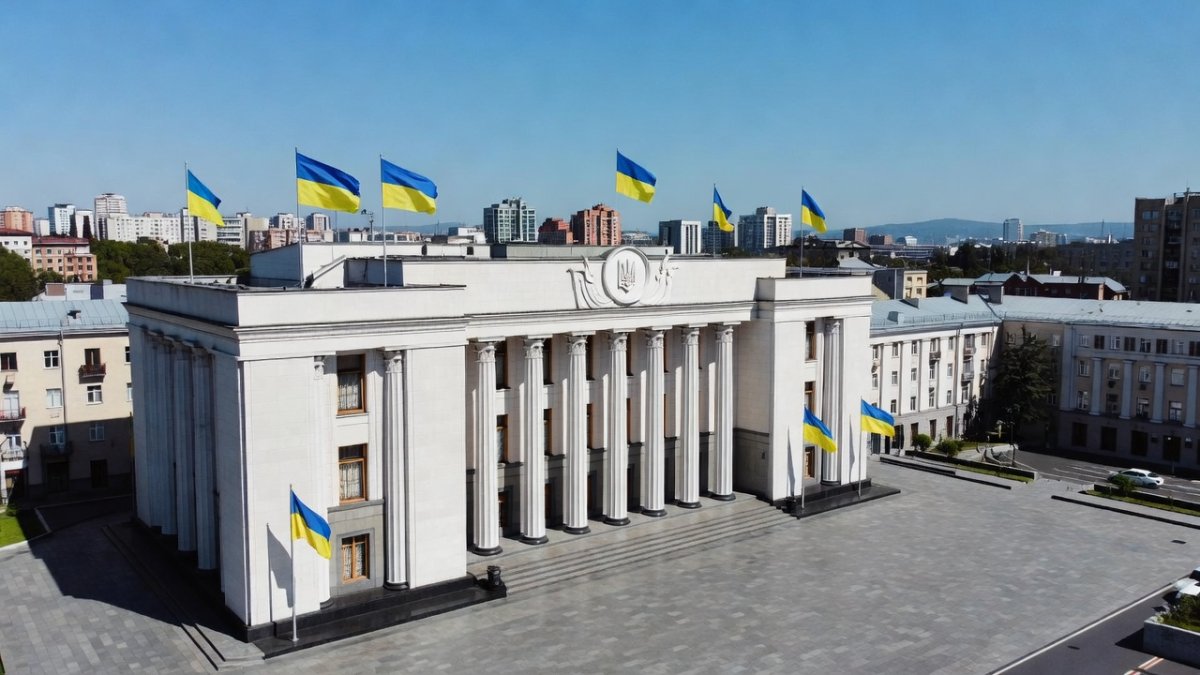
The public reaction to Fedorov's dismissal has been building for weeks, and his election call has now galvanised that discontent. On Wednesday morning, about 100 protesters gathered outside the Ukrainian parliament in Kyiv, chanting "bring back Fedorov as minister of defence" and "we are fed up, we want dialogue." The crowd was relatively small, but organisers said protests have continued weekly since his dismissal, with younger Ukrainians especially disappointed. Maya, a 24-year-old protester, told reporters that Zelensky was for now "the best choice, the safest option for all of us, but after the war ends I hope there will be a new president." Her sentiment captures the ambivalence many Ukrainians feel: a desire for change tempered by fear of instability during an existential war.
Another protester, Ivan, also 24, expressed caution about Fedorov's proposal. "Elections at this time of war wouldn't be the best thing," he said, reflecting a view that the logistical and security challenges are simply too great. The protests have not yet reached the scale of the 2013-2014 Euromaidan demonstrations, but the fact that they are occurring at all is notable. Ukraine's political opposition, which has largely remained silent since the invasion, is beginning to stir. Opposition MP Volodymyr Aryev said "we have reached a point where we must choose between elections and chaos," a statement that suggests Fedorov's call has opened a genuine debate within the political class about the country's trajectory.
Zelensky's Response and the Khmara Confirmation
Zelensky himself has yet to respond publicly to Fedorov's video, but his office moved quickly to project stability. Shortly before the video was posted on Tuesday, Zelensky asked parliament to confirm acting defence minister Yevhenii Khmara as the permanent replacement. MPs overwhelmingly backed Khmara on Wednesday afternoon, after he said he would do everything to defend Ukraine and force Russia into a "just peace." The swift confirmation was widely seen as a signal that the presidential office intends to move on from the Fedorov episode and maintain continuity in the defence ministry. A source in the presidential office told the BBC that the election proposal "demonstrates a complete lack of realism," dismissing it as a distraction from the war effort.
The political atmosphere was further complicated on Wednesday by a separate anti-corruption operation. Ukraine's two anti-corruption agencies said they were conducting a special operation targeting current and former MPs as well as an unnamed official in the presidential office. Deputy head of Zelensky's office Iryna Mudra was dismissed amid local media reports of a raid on her premises. The timing of the operation, coming just a day after Fedorov's election call, has raised questions about whether it is a genuine crackdown on graft or a warning to potential political rivals. Zelensky-loyal MP Oleksandr Merezhko called the election idea "very dangerous and unrealistic... It will weaken the country and our unity, our resilience... plays into the hands of Putin."
Elections Under Martial Law: The Hurdles
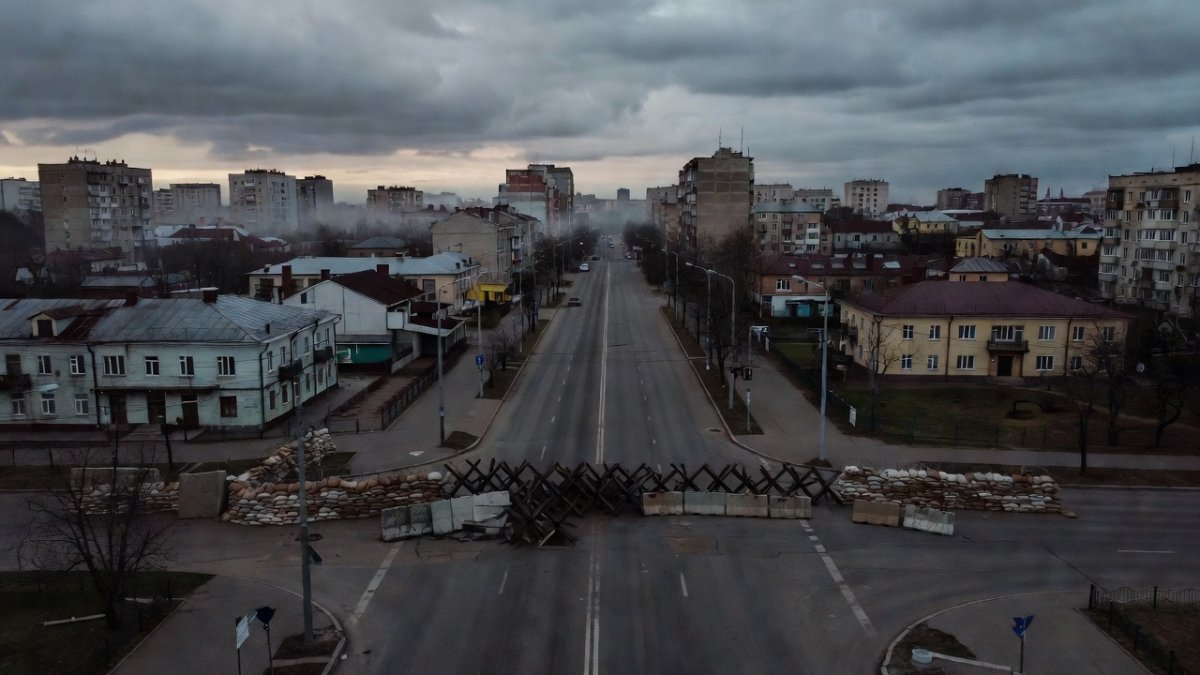
The practical obstacles to holding elections during wartime are immense, and analysts question whether voting could be organised for millions of Ukrainians who have fled the country and hundreds of thousands of soldiers on the front line. Ukraine's electoral infrastructure has been severely damaged by Russian strikes, and the security situation in frontline regions such as Kherson and Zaporizhzhia makes any large-scale gathering of voters extremely dangerous. On Wednesday, four people were killed when a drone hit a minibus in the southern city of Kherson, and in Zhytomyr, two police officers were killed and another 20 people injured in a Russian drone strike on the regional police headquarters. These attacks underscore the daily reality of the war that any election would have to contend with.
The international dimension adds another layer of complexity. When US President Donald Trump suggested last year that Kyiv was "using war" to avoid a vote, Zelensky said Ukraine was "ready for elections" within 60-90 days if allies helped guarantee security. Many Ukrainians saw Trump's remarks as reflecting Vladimir Putin's narrative that Zelensky is not a legitimate leader, a talking point the Kremlin has used consistently since the president's term expired in May 2024. Fedorov's call now puts Zelensky in a difficult position: if he rejects elections outright, he risks validating the Kremlin's narrative; if he agrees to them, he faces a logistical nightmare and the possibility of a serious political challenge from a popular former minister. The pressure from Washington and Moscow is unlikely to abate, and Fedorov has effectively made the issue unavoidable.
Analysis — Institutions Stronger Than Names
Fedorov's phrase about wanting "a state where institutions are stronger than names" is a direct challenge to the personality-centric politics that have defined Ukraine since the invasion. Zelensky has become the symbol of Ukrainian resistance, his image plastered on billboards and his nightly addresses a fixture of national life. But Fedorov's argument, framed as a defence of democratic values, taps into a growing concern among some Ukrainians that the war has allowed power to become too concentrated. Analysts suggest this could indicate a shift in the political landscape, where the wartime consensus that has held since 2022 is beginning to fray. The fact that Fedorov chose to make his case publicly, rather than through back-channel negotiations, suggests he believes he has public opinion on his side.
The implications for Ukraine's war effort are significant. A prolonged political crisis in Kyiv would be a gift to the Kremlin, which has long sought to portray Ukraine's leadership as divided and illegitimate. Russian state media has already seized on Fedorov's video, presenting it as proof that Zelensky's government is collapsing. However, the immediate reaction from Ukrainian MPs and the presidential office suggests that the political establishment is closing ranks, at least for now. The confirmation of Khmara as defence minister on Wednesday was a clear signal that the government intends to maintain continuity. But the underlying tensions that Fedorov has exposed — over corruption, over loyalty versus merit, over the legitimacy of wartime governance — are unlikely to disappear. As the war enters its fifth year, Ukraine faces not just a military challenge but a political one, and Fedorov has ensured that the question of elections will remain at the centre of that debate.
Looking ahead, the coming weeks will be critical. Zelensky must decide whether to engage with Fedorov's proposal or dismiss it outright, and whether to address the corruption concerns that have fuelled public discontent. The weekly protests show no sign of abating, and the anti-corruption operation targeting MPs and presidential officials suggests that the issue is not going away. For now, the political establishment appears united behind the war effort, but Fedorov has opened a door that will be difficult to close. Whether Ukraine can navigate this internal challenge while fighting for its survival remains an open question, but one thing is certain: the era of unquestioning unity is over. The battle for Ukraine's future is no longer just on the front lines; it is also in the corridors of power in Kyiv.
By Irina Volkov, Staff Writer
This article was produced with AI-assisted research and editorial support. Reporting is based on sources cited in the article.
What's Your Reaction?
 Like
0
Like
0
 Dislike
0
Dislike
0
 Love
0
Love
0
 Funny
0
Funny
0
 Wow
0
Wow
0
 Sad
0
Sad
0
 Angry
0
Angry
0

Russia/Eastern Europe Correspondent at Global1.News. Covering Russian politics, energy, security, and the shifting dynamics of the post-Soviet space. Provides clear-eyed analysis on one of the world's most opaque regions.









Comments (0)