
Iran says 2-day proposal stands, warns US against renewed attacks
The recent statements by Iran’s foreign minister, Abbas Araghchi, have thrust the stalled negotiations over the war in the region back into the international spotlight.
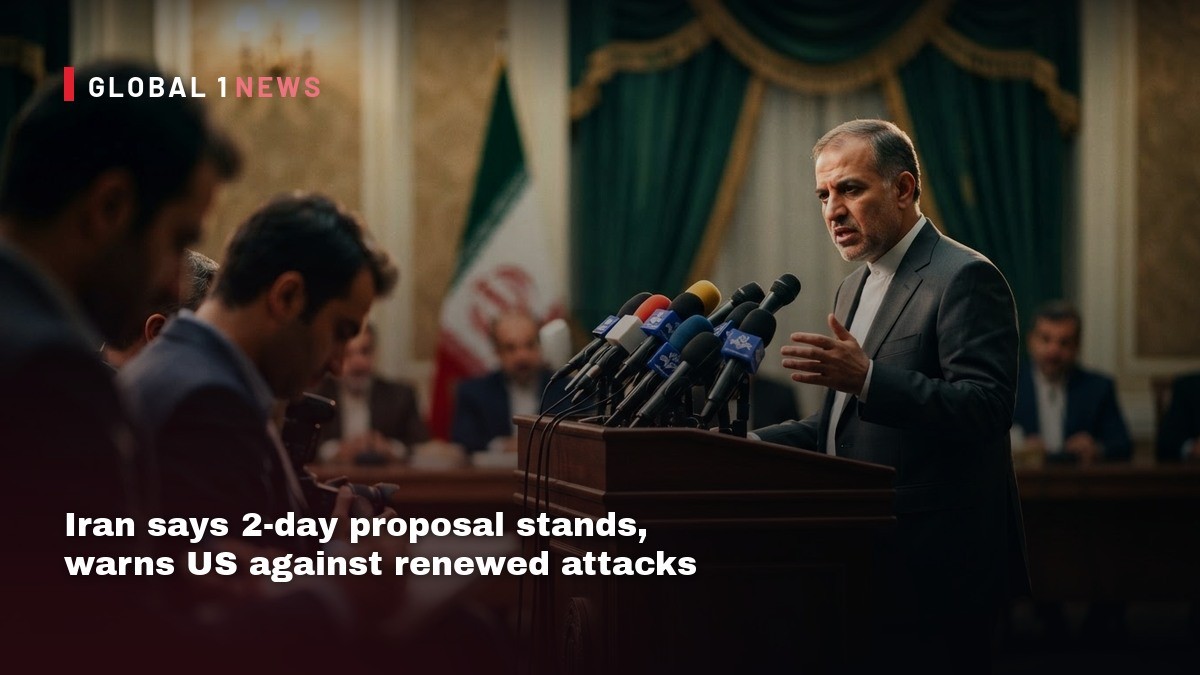
The recent statements by Iran’s foreign minister, Abbas Araghchi, have thrust the stalled negotiations over the war in the region back into the international spotlight. In a post on the U.S. platform X, Araghchi framed the ongoing diplomatic effort as a direct response to the outcome of the United States’ mid‑term elections, urging the new administration to honour a “2‑day proposal” that Tehran says could end hostilities on all fronts. The language of the message—particularly the warning that Iran would “rain down hell” if Washington resumes attacks—underscores the high stakes of a diplomatic dead‑lock that continues to exact a heavy human toll across the Middle East.
Background to Tehran’s “2‑Day” Offer
Iran’s “2‑day proposal” is a condensed version of a broader seven‑step plan first presented in September, according to a spokesman for the Foreign Ministry, Esmaeil Baghaei. The original seven‑step framework was intended to guide indirect talks with the United States, but Tehran has now packaged the core elements into a rapid‑implementation format that it claims could be executed within two days if the United States meets the stipulated conditions. While the exact contents of the seven steps are not detailed in the source material, the emphasis on an “end to war on all fronts” signals that Tehran seeks a comprehensive cessation of hostilities, rather than a limited ceasefire.
By condensing the proposal, Iran appears to be attempting to create a diplomatic lever that aligns with the urgency expressed by its leadership. The timing of the announcement—shortly after the U.S. mid‑term elections—suggests that Tehran is seeking to capitalize on a perceived shift in American political will, positioning the proposal as a pragmatic alternative to continued military engagement.
U.S. Political Context and Its Influence on the Negotiations
The reference to “American voters have made their choice” directly ties the diplomatic overture to the outcome of the U.S. mid‑term elections held on Tuesday. While the source material does not elaborate on the election results, the statement implies that the new composition of Congress could affect the White House’s approach to foreign policy, particularly regarding Iran. Araghchi’s appeal to the “White House to make its own” decision signals an expectation that the incoming administration will have the latitude to alter or reaffirm its stance on the conflict.
In the broader context, U.S. policy on Iran has historically been shaped by a mix of diplomatic engagement and strategic deterrence. The current diplomatic push from Tehran, framed as a response to electoral outcomes, underscores how domestic political cycles in Washington can reverberate across the region, influencing the calculus of both state and non‑state actors caught in the crossfire.
Human Cost of the Ongoing Conflict
Every diplomatic maneuver in this arena carries a profound human dimension. While the source material does not provide casualty figures, the continued fighting has already inflicted severe hardship on civilian populations across multiple fronts. The call for an “end to war on all fronts” reflects Tehran’s acknowledgment—whether strategic or sincere—that the conflict’s persistence deepens humanitarian crises, displaces families, and erodes basic services.
International humanitarian organisations have repeatedly warned that prolonged hostilities exacerbate food insecurity, limit access to medical care, and increase the risk of famine. The urgency expressed in the “2‑day” framework can be read as an attempt to avert further civilian suffering, even as the rhetoric of “rain down hell” threatens to reignite fears of intensified military action.
International Mediation Efforts
Qatar’s role as a mediator between Washington and Tehran remains a critical, albeit delicate, element of the diplomatic landscape. The source material notes that Qatar denied reports of a failed deal, suggesting that behind‑the‑scenes negotiations may still be progressing despite public statements of stalemate. Qatar’s diplomatic engagement has historically provided a neutral venue for indirect talks, offering both parties a channel to convey messages without direct confrontation.
The persistence of Qatar’s mediation underscores the international community’s vested interest in a resolution. Regional stability, oil market volatility, and the broader geopolitical balance hinge on whether the parties can translate proposals into actionable agreements. Qatar’s denial of a breakdown in talks signals that diplomatic momentum, however fragile, has not yet dissipated.
Potential Military Escalation and Its Implications
Araghchi’s stark warning that Iran would “rain down hell” if Washington resumes attacks introduces a sobering prospect of renewed military escalation. Such language, while rhetorically charged, conveys Tehran’s readiness to respond forcefully to any perceived aggression. The threat of a broader confrontation raises concerns about the conflict spilling over into neighboring states, drawing in regional powers, and further destabilising an already volatile environment.
From an international‑law perspective, any escalation would need to be measured against the principles of proportionality and distinction, especially given the dense civilian populations in conflict zones. The prospect of intensified hostilities would likely trigger renewed scrutiny from United Nations bodies and human‑rights organisations, potentially leading to calls for investigations into violations of the laws of armed conflict.
Legal and Diplomatic Pathways Forward
The “2‑day proposal” offers a concrete diplomatic pathway that, if accepted, could satisfy key legal criteria for a ceasefire and pave the way for a broader peace settlement. By committing to an end of hostilities on all fronts, both parties would be moving towards compliance with the UN Charter’s emphasis on the peaceful settlement of disputes. Moreover, a rapid implementation timeline could demonstrate goodwill, building confidence for subsequent negotiations on more complex issues such as sanctions relief, prisoner exchanges, and reconstruction.
However, the success of this pathway hinges on the United States’ willingness to meet the “requirements” outlined by Tehran. While the source material does not enumerate these requirements, the emphasis on an immediate cessation suggests that any delay could be interpreted as a breach of good‑faith negotiations, potentially eroding trust and prompting retaliatory posturing.
What the International Community Should Expect
In the coming weeks, observers should watch for any formal response from the White House or the State Department to Tehran’s renewed overture. A clear acceptance, conditional or otherwise, would likely be communicated through diplomatic channels rather than public statements, given the sensitivity of the issue. Conversely, a refusal or silence could embolden hard‑liners on both sides, increasing the risk of renewed strikes and further civilian casualties.
Human‑rights organisations will continue to document the impact of the conflict on civilians, pressing all parties to adhere to international humanitarian law. The diplomatic narrative, framed by Tehran as a response to American electoral choices, underscores how domestic politics can shape the prospects for peace. Ultimately, the human cost of continued fighting remains the most compelling argument for a swift and comprehensive resolution, making the “2‑day” proposal a critical juncture in the ongoing quest for stability in the region.
This article was produced with AI-assisted research and editorial support. Reporting is based on the source material cited below. Sources: Middle East Monitor; middleeastmonitor.com; Global1.News (09 November 2026).
By Fatima Al-Rashid, Staff Writer
What's Your Reaction?
 Like
0
 Dislike
0
 Love
0
 Funny
0
 Wow
0
 Sad
0
 Angry
0
Gulf/MENA Correspondent at Global1.News. Based in Doha, covering Gulf politics, energy markets, diplomacy, and development across the Middle East and North Africa. Tracks the economic transformation of the Gulf states.









Comments (0)