
State Farm's $5 Billion Dividend Is Hitting Mailboxes Right Now
State Farm is mailing checks for its record $5 billion dividend — the largest payout in the company's 100-plus-year history. Here's who qualifies, how much you'll get, and how to claim your payment before scammers do.
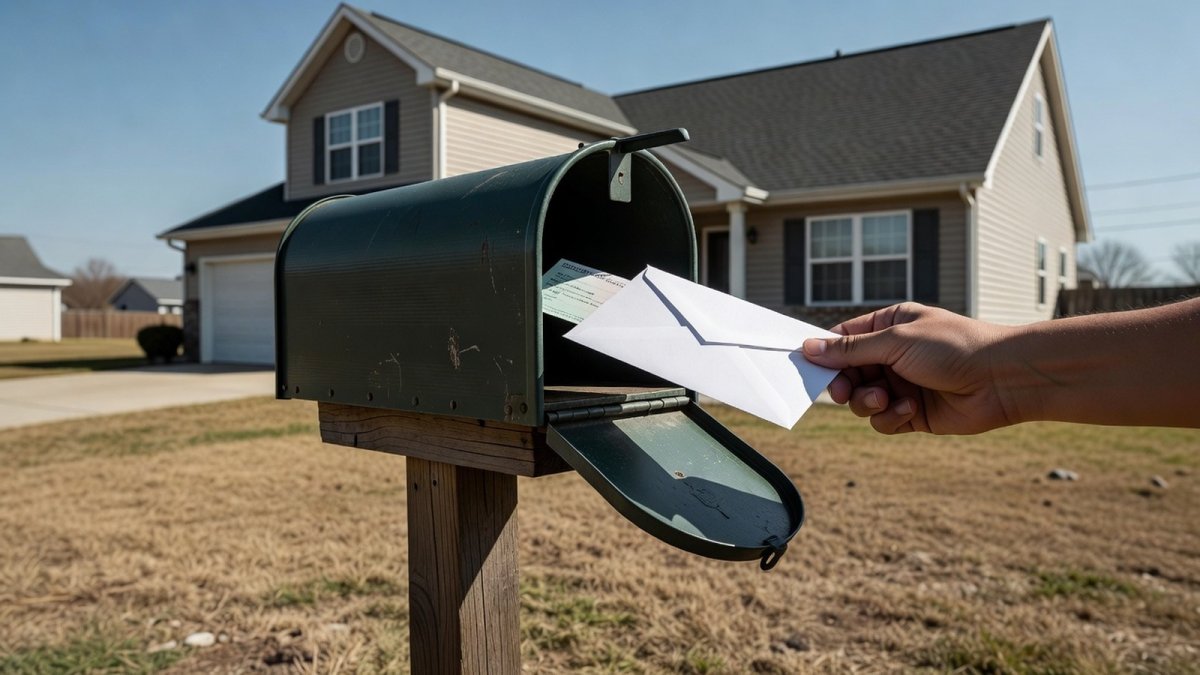
If you're a State Farm auto customer, now is the time to check your inbox and your mailbox — because a massive pile of cash is finally landing. We're talking about a record-breaking $5 billion dividend that's being paid out to millions of drivers across the country, and the checks started flowing this summer. This is real money, and it's coming back to you, the policyholder, right now.
State Farm's $5 Billion Dividend Is Hitting Mailboxes Right Now
Bloomington, Illinois — Article continues...
Who's Getting Paid: The Eligibility Checklist
Let's cut right to the chase: are you getting a piece of this? State Farm Mutual Automobile Insurance Company is issuing a one-time, $5 billion cash-back dividend to qualifying auto customers. This is the largest dividend in the company's 100-plus-year history, and it's not a small, niche program. The distribution covers more than 49 million State Farm Mutual auto vehicles nationwide.
So, what's the magic ticket? You need to have had an auto insurance policy in force between January 1, 2025, and December 31, 2025. If you were covered during that entire calendar year, you're likely in the pool. If you dropped your coverage mid-year, or just started a policy in 2026, you might be out of luck on this specific payout.
Here's the catch: this isn't a single-day drop. The payment process is rolling out in waves by state, and State Farm says it will take several months to complete the distribution nationwide. As of this week, the company has already mailed more than 7.2 million checks, with another 3.8 million set to go out this week alone, according to Steve Baldwin, a State Farm spokesperson speaking to CBS News. If you haven't seen yours yet, don't panic—your state's wave might just be coming down the pipeline.
How Much Money: Breaking Down the Average Payout
Let's talk numbers, because that's what you really want to know. The average payment is about $100 per vehicle. That might not sound like a life-changing windfall, but for a single policy with multiple cars, it adds up quickly. And remember, this is money you weren't expecting—it's a rebate on your 2025 premium.
But here's the nuance: the amount isn't a flat rate. It's calculated as a percentage of the premium you paid for each qualifying policy in 2025. That percentage varies by state, ranging from 4% to 10% of your annual premium. So, if you paid $1,500 a year in a state on the higher end of that scale, you could be looking at a $150 check. If you're in a lower-percentage state, it might be closer to $60.
This is a direct return of premium, not a discount on future bills. It's a retrospective payout based on the company's financial performance last year. The company has already moved 7.2 million payments out the door, and with 3.8 million more going out this week, we're talking about a massive logistical operation to get this cash into your hands. If you have multiple vehicles on your policy, you'll receive a payment for each one, so those checks can stack up.
How to Get Your Money: Digital Options and Mail Delivery
Alright, let's get practical. How is this money actually reaching you? It depends on how you communicate with State Farm. If you have an email address on file, you should be on the lookout for a message from [email protected]. This email will contain instructions to log into the State Farm dividend payment portal at sfdividend.com, which is powered by Verita.
Once you're in the portal, you've got choices. You can elect to receive your payment digitally via Zelle, Venmo, or PayPal—that's the fastest way to get your cash. Or, if you prefer a physical check, you can request one to be mailed to you. But here's the key: if you don't have an email on file, State Farm is automatically sending you a check in the mail. No action needed, just watch your mailbox.
Now, a serious word of caution. When you see a story about billions of dollars being handed out, the scammers come out of the woodwork. State Farm says qualifying customers will be notified only by an email from [email protected] or a letter in the mail, and the only official portal is sfdividend.com. You will only receive communication from the official email address or a physical letter. If you get a text, a call, or an email from a different address asking for your banking details, it's a scam. If you have questions, you can call the Dividend Customer Contact Center directly at 1-888-808-9532. Don't call a number from a suspicious email; use the one on State Farm's official website.
Why State Farm Is Paying It: The Mutual Company Model
Why is a massive insurance company just handing back billions of dollars? It comes down to the structure of the company itself. State Farm Mutual is a mutual company, which means the policyholders are also the owners—you're not just a customer; you're a shareholder. When the company performs well financially, that excess profit can be returned to the owners, which is you.
Jon Farney, State Farm Mutual President and CEO, explained it directly: "As a mutual company with a customer-first focus, State Farm Mutual is able to provide value directly to our customers while maintaining financial strength to keep our promises in the future. That translated this year to lower auto rates and cash back in the form of a $5 billion policyholder dividend." This isn't a marketing gimmick; it's a structural return of capital.
The dividend is possible due to what the company calls a "stronger than expected underwriting performance," which has been reported industry-wide. Essentially, they took in more in premiums than they paid out in claims and expenses, and they're sharing the surplus. It's crucial to note that this dividend is retrospective—it's based on 2025 performance and does not affect your future auto rates. Your future premiums are based on expected future costs, not past profits, so this check won't be clawed back or offset by a rate hike later.
The Bigger Picture: Insurance Rates Are Finally Falling
This dividend isn't happening in a vacuum. It's part of a broader shift in the auto insurance market that's finally favoring consumers. Alongside this one-time dividend, State Farm has also lowered its premiums by about 10% across 40 states. That translates to a staggering $4.6 billion in annual cost savings for customers. That's not a one-time check; that's a permanent reduction in your yearly bill.
This is a welcome reversal after a brutal few years. According to the Bureau of Labor Statistics, by early 2025, car insurance premiums had climbed more than 50% over three years—the highest inflation for motor vehicle insurance in 50 years. That sticker shock drove affordability to the top of consumers' minds and forced many to shop around for better deals.
But the tide is turning. CNBC reports that auto repair costs are starting to decline, and the frequency of accidents decreased in 2025. That means insurers are paying out less, and they're starting to pass those savings back to you. Patrick Foy, senior director of strategic planning for TransUnion's insurance business, told CNBC, "At this point we can safely say that regular insurance shopping is just the new normal." You're not being disloyal by shopping around; you're participating in a market that now demands competition.
For the average household, this combination of a one-time dividend and ongoing rate relief is a meaningful double win. The $5 billion dividend represents income in excess of losses and expenses, which is the definition of a mutual company returning surplus to its owners. When you pair that with the $4.6 billion in annual premium savings from the 10% rate reduction across 40 states, the total financial benefit to policyholders is substantial. For a family with two vehicles, that could mean a dividend check of $200 or more on top of hundreds of dollars in annual premium savings. Insurers can afford this because their underwriting performance has been stronger than expected—they're collecting more in premiums than they're paying out in claims and expenses, and with auto repair costs declining and accident frequency down in 2025, the claims environment has improved enough to justify both the one-time payout and the permanent rate cuts.
What This Means for You: Action Steps and Industry Trends
So, what should you do right now? First, check your email inbox and spam folder for that message from [email protected]. If you see it, log into the portal and choose your payment method. If you don't see an email, keep an eye on your physical mailbox for a check. If you're unsure about your status, call the official number at 1-888-808-9532. Don't wait; this is your money.
This move by State Farm is also putting pressure on the rest of the industry. They aren't the only ones returning cash. Progressive paid out $1 billion in dividends to its customers in Florida, where state laws require insurers to return excess profits. USAA also announced a massive $3.8 billion payout to its members across various states in 2025. This is becoming a trend, and it's a good one for consumers.
The mutual-company model is at the heart of this trend, and it's reshaping competitive dynamics across the industry. State Farm and USAA are both structured as mutuals, which means their policyholders are also owners—when these companies perform well financially, the excess profits flow back to the people who pay the premiums rather than to outside shareholders. Progressive's $1 billion dividend in Florida is particularly notable because state law there requires insurers to return excess profits—a regulatory mechanism that ensures consumers benefit directly from strong underwriting years. USAA's $3.8 billion payout to its members in 2025 shows that this isn't a one-off gesture but a broader industry pattern. For consumers, this signals a competitive market where insurers are using dividends and rate reductions as tools to retain customers and attract new ones. When the biggest players in the market are returning billions to policyholders, smaller competitors are forced to respond with their own rate cuts and value propositions, which ultimately benefits every driver shopping for coverage.
This is a significant moment for State Farm, which is a behemoth in the industry. With more than 19,200 agent offices and over 62,000 employees serving over 96 million policies and accounts, they have a massive reach. Ranked No. 32 on the 2025 Fortune 500, and with auto insurance representing 63% of their property and casualty business, this payout is a clear signal that they are prioritizing customer retention in a competitive market. It's a smart play, and it puts money directly back into the pockets of millions of Americans.
This article was produced with AI-assisted research and editorial support. Sources: State Farm newsroom, CBS News, USA Today, CNBC.
By Jessica Ali, Staff Writer
What's Your Reaction?
 Like
0
Like
0
 Dislike
0
Dislike
0
 Love
0
Love
0
 Funny
0
Funny
0
 Wow
0
Wow
0
 Sad
0
Sad
0
 Angry
0
Angry
0

Editor-in-Chief at Global1.News. Atlanta-based journalist who cuts through the BS and tells it like it is. Lead anchor, host, and the voice you hear when the spin stops and the truth starts.















Comments (0)