
Lagos varsity workers declare indefinite strike over unpaid nine-month arrears
Academic and non‑academic staff across Lagos State’s public universities have issued a stark warning: unless the state government meets a series of long‑standing financial demands, the workers will begin an indefinite strike at midnight on Saturday, 3 October 2026.
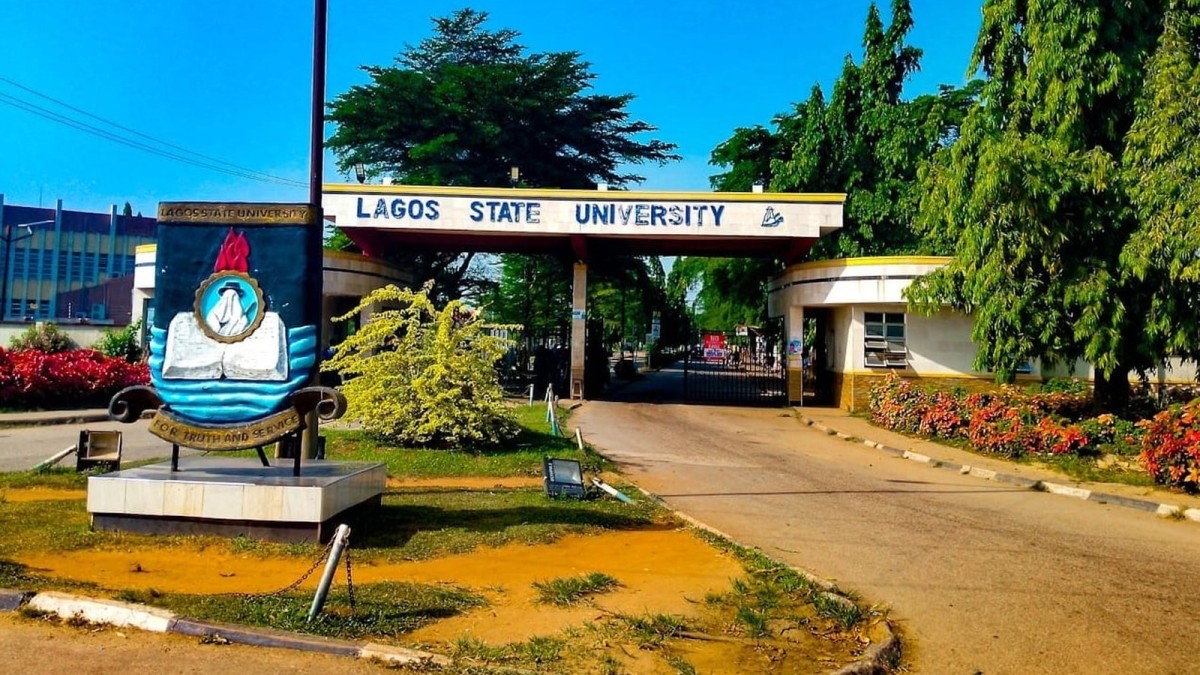
Academic and non‑academic staff across Lagos State’s public universities have issued a stark warning: unless the state government meets a series of long‑standing financial demands, the workers will begin an indefinite strike at midnight on Saturday, 3 October 2026. The threat comes from the Joint Action Committee (JAC), a coalition of four unions that represent lecturers, senior staff, non‑academic personnel and academic technologists in the state‑run institutions. Their grievance centres on nine months of unpaid arrears, unimplemented allowance reforms and unfulfilled promises that, they argue, lie well within the fiscal capacity of Governor Babajide Sanwo‑Olu’s administration.
The Joint Action Committee’s Ultimatum
During a media briefing on Friday, 2 October, JAC Chairman Professor Ibrahim Bakare outlined the steps that led to the present crisis. He reminded listeners that the unions had signed a resolution with the Lagos State government on 31 August 2026, a document that was meant to cement revised allowance structures, tax‑exempt benefits and the clearance of outstanding arrears alongside the September payroll. Yet, according to Bakare, the September salaries were disbursed without the agreed adjustments or any payment of the accumulated arrears. “We have demonstrated unprecedented patience, maturity and commitment to peaceful dialogue. However, our patience has been pushed to the absolute limit,” he declared, signalling that the seven‑day ultimatum issued to the state government would expire at midnight on Saturday.
The JAC’s composition underscores the breadth of the discontent. It brings together the Academic Staff Union of Universities (ASUU), the Senior Staff Association of Nigerian Universities (SSANU), the Non‑Academic Staff Union of Educational and Associated Institutions (NASU) and the National Association of Academic Technologists (NAAT). By uniting these bodies, the committee has amplified its bargaining power, presenting a united front that represents the full spectrum of university personnel—from lecturers and senior administrators to custodial staff and laboratory technicians.
Scope of the Affected Institutions
The strike threat spans five major campuses that form the backbone of Lagos State’s higher‑education system. These are Lagos State University (LASU), its College of Medicine (LASUCOM), the University of Science and Technology (LASUSTECH) and the University of Education (LASUED). Each of these institutions relies heavily on the combined labour of academic and support staff to deliver teaching, research and community services. A shutdown would therefore reverberate beyond lecture halls, affecting clinical training at LASUCOM, technical programmes at LASUSTECH and teacher‑training pipelines at LASUED.
Students, parents and civil‑society groups have already been called upon by the unions to hold the state government accountable for any disruption. The JAC’s appeal reflects a broader strategy: by mobilising public opinion, the unions hope to pressure Governor Sanwo‑Olu into swift action before the midnight deadline, thereby averting a full‑scale paralysis of Lagos’s university sector.
Financial Grievances: Nine‑Month Arrears
The core of the dispute lies in the nine‑month arrears that have accumulated from January to September 2026. According to Bakare, the failure to honour the August 31 resolution has left staff without the promised adjustments to their allowances and without any payment of the overdue sums. The unions contend that these arrears represent a breach of contract that not only undermines staff morale but also threatens the financial stability of the institutions, which depend on regular payroll cycles to retain qualified personnel.
While the unions acknowledge the broader economic challenges facing Lagos State, they maintain that the arrears are “within the financial capacity of the Lagos State Government.” Their argument rests on the premise that the state’s revenue streams—from oil royalties to internally generated funds—should be sufficient to meet the obligations outlined in the signed agreement. By framing the demand as a matter of fiscal responsibility rather than a request for additional funding, the unions aim to position the state’s inaction as a failure of political will.
Allowance Reforms and the “Lagos Factor”
Beyond the arrears, the unions are pressing for the full implementation of the revised allowance structures agreed in the August resolution. Central to this is the “Lagos Factor,” a 15 percent allowance intended to offset the high cost of living and working in Nigeria’s commercial hub. The factor was designed to provide a modest but meaningful boost to salaries, reflecting the unique economic pressures faced by staff stationed in Lagos compared with counterparts in other states.
In addition to the Lagos Factor, the unions demand that the allowances be recognised as non‑taxable, a provision that would increase the net take‑home pay for staff. They argue that the tax‑exempt status was a key element of the August agreement, intended to enhance the real value of the allowances and to signal the state’s commitment to supporting its public‑sector workers.
Unfulfilled Promises from 2023
The JAC also invoked commitments made by Governor Sanwo‑Olu in 2023, notably a promised 20 percent salary increase and the provision of five Marcopolo buses for the transport of students and staff. These pledges were presented at the time as part of a broader effort to improve the welfare of Lagos’s university community and to modernise the logistics of campus life. However, the unions contend that neither the salary uplift nor the bus fleet has materialised, further eroding trust between the workers and the state administration.
By linking the current demands to earlier promises, the unions are constructing a narrative of systematic neglect. They argue that the failure to deliver on the 2023 commitments is not an isolated oversight but part of a pattern of broken assurances that has culminated in the present crisis. This framing is intended to galvanise public sentiment and to underscore the urgency of a remedial response from the governor’s office.
Potential Impact on Academic Activities
Should the strike commence as warned, the immediate impact would be the suspension of teaching, research and administrative functions across the affected campuses. Lecturers would cease delivering lectures, laboratory sessions would be halted, and university hospitals would see a reduction in staff support. The ripple effects would extend to students, many of whom rely on university services for their academic progression, professional qualifications and, in the case of medical students, clinical exposure.
Moreover, the disruption could jeopardise the timing of examinations, graduation ceremonies and the intake of new cohorts. In a broader sense, a prolonged shutdown would tarnish Lagos State’s reputation as a centre of academic excellence, potentially deterring prospective students and foreign partners who view stability as a prerequisite for collaboration.
Looking Ahead: Options for Resolution
As the midnight deadline approaches, the unions have left the door open for “immediate executive action” that could forestall the strike. Professor Bakare emphasised that the unions remain “open to immediate executive action before the midnight deadline tonight,” signalling a willingness to negotiate if the state demonstrates genuine commitment to the agreed terms.
The next steps will likely involve high‑level talks between JAC representatives and the governor’s office, possibly mediated by the Federal Ministry of Labour to ensure compliance with the 2026 FGN‑unions agreement. If an accord is reached, it would need to address the arrears, implement the Lagos Factor, confirm the non‑taxable status of allowances and honour the earlier promises of salary increments and transport provisions. Failure to achieve a settlement, however, could see the indefinite strike take hold, with far‑reaching consequences for Lagos’s higher‑education landscape and for the broader discourse on workers’ rights in Nigeria’s public sector.
This article was produced with AI-assisted research and editorial support. Reporting is based on the source material cited below. Sources: Daily Post Nigeria; dailypost.ng; Global1.News (03 October 2026).
By Sarah Okafor, Staff Writer
What's Your Reaction?
 Like
0
Like
0
 Dislike
0
Dislike
0
 Love
0
Love
0
 Funny
0
Funny
0
 Wow
0
Wow
0
 Sad
0
Sad
0
 Angry
0
Angry
0

Africa Correspondent at Global1.News. Based in Lagos, covering politics, business, technology, and culture across the continent. Focused on telling African stories beyond the headlines — the innovation, entrepreneurs, and communities shaping the region's future.














Comments (0)