
Qalandiya Raid: Israeli Soldiers Beat Palestinian Man in West Bank Camp
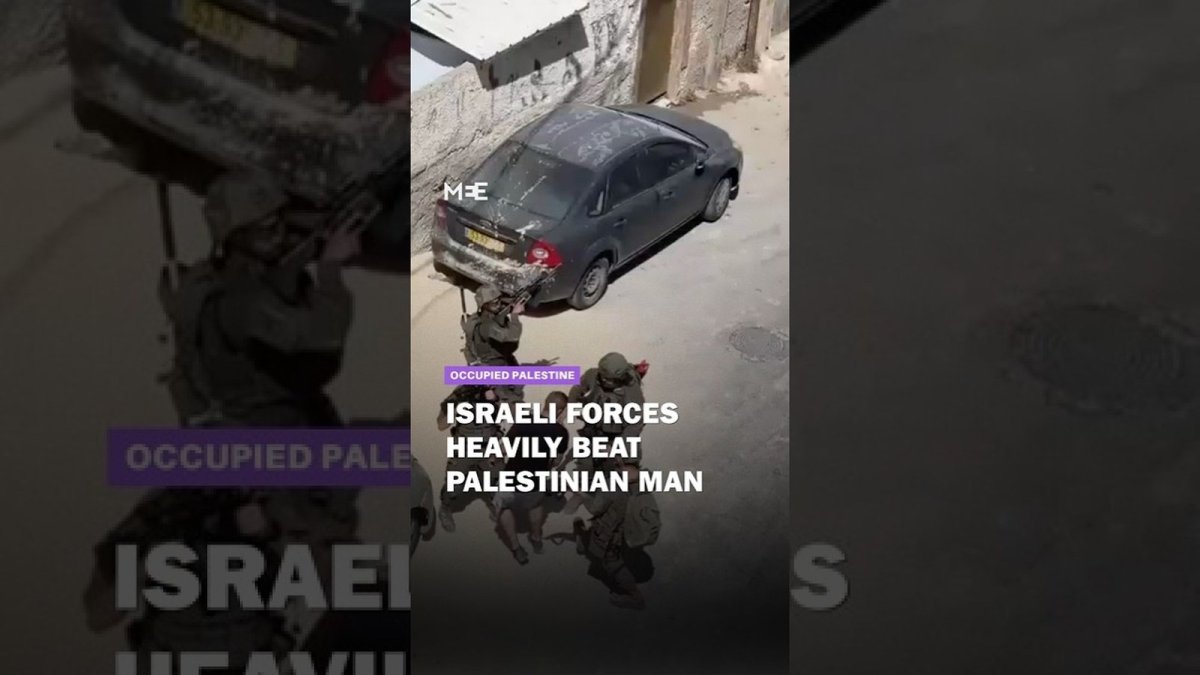
In a recent Middle East Eye report, Israeli forces were seen confronting and tackling an unarmed Palestinian man to the ground while pointing assault rifles at him, as soldiers deployed across several neighbourhoods. The footage captured part of a large-scale military operation that began before dawn on Wednesday in Qalandiya refugee camp, located in the occupied West Bank between Jerusalem and Ramallah.
In a recent Middle East Eye report, Israeli forces were seen confronting and tackling an unarmed Palestinian man to the ground while pointing assault rifles at him, as soldiers deployed across several neighbourhoods. The footage captured part of a large-scale military operation that began before dawn on Wednesday in Qalandiya refugee camp, located in the occupied West Bank between Jerusalem and Ramallah. Palestinian residents described soldiers moving through streets with maps and equipment, disrupting daily routines in the densely populated area home to more than 15,000 refugees.
Israeli Raid Hits Qalandiya Camp, Beats Journalist in West Bank
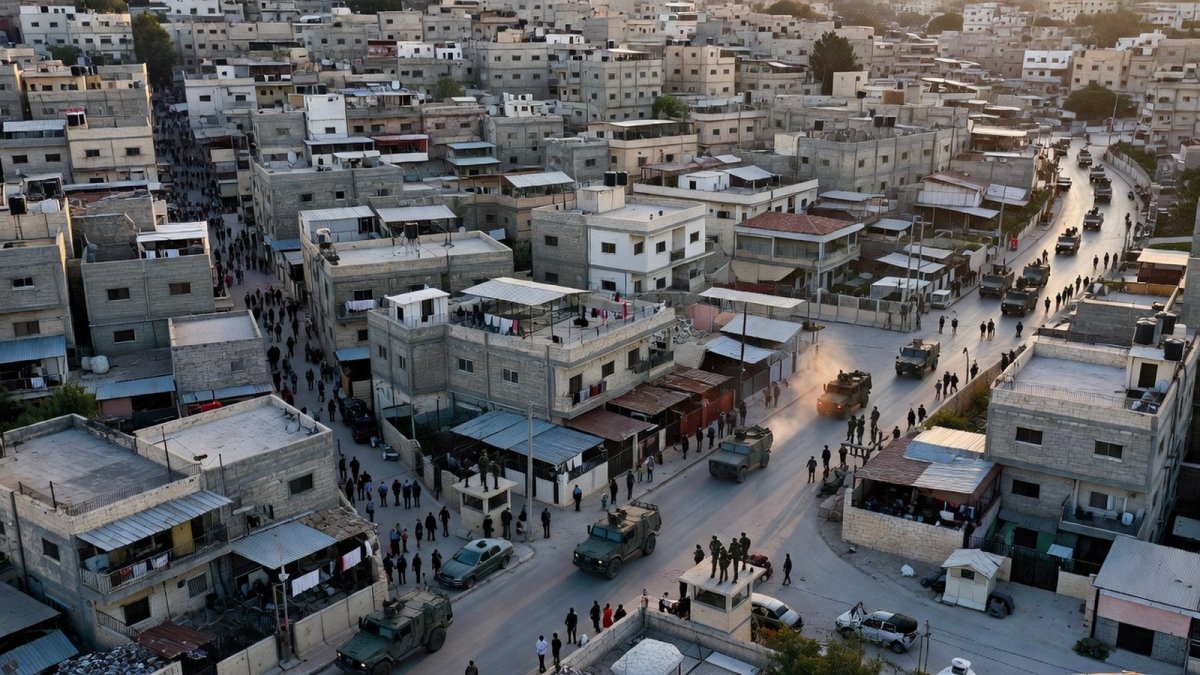
Ramallah, occupied West Bank – 5 August 2026 — Israeli forces launched the operation in the early hours, deploying dozens of military vehicles into the camp according to the Jerusalem Governorate. Troops conducted home raids and searches while preventing dawn prayers at all mosques. The action follows similar operations in other West Bank areas and comes amid instructions from Israeli Defence Minister Israel Katz to expand control over refugee camps.
The Raid at Dawn
Jerusalem Governorate officials reported that military vehicles entered Qalandiya refugee camp carrying boxes, equipment and maps before dawn on 5 August 2026. Soldiers spread across multiple neighbourhoods and raided the headquarters of the camp's Popular Committee. Palestinian sources stated that troops forcibly removed several residents from their homes, with one family ordered to evacuate its house entirely. Movement became restricted as forces breached a wall near the camp to allow bulldozers entry.
The machinery later demolished a carwash on Almatar Street. Dawn prayers were blocked in every mosque inside the camp, affecting residents who normally gather for the early prayer. Nearby Kafr Aqab also faced a raid, with strict movement restrictions and a curfew imposed on the town. Troops there arrested the father of Laith al-Shawani, who had been killed previously.
The pre-dawn deployment of dozens of military vehicles into Qalandiya camp disrupted the routines of more than 15,000 residents living in a densely populated area established after the 1948 displacement. By ordering one family to evacuate entirely and preventing dawn prayers at all mosques, the operation removed basic religious and domestic functions at the start of the day. The demolition of a carwash on Almatar Street and the breaching of a wall to allow bulldozer access further eliminated local economic assets and physical barriers that residents rely on for daily movement between Jerusalem and Ramallah.
The leaflets and direct messages distributed during the operation, combined with the physical destruction, convey an intent to control information and movement in a camp already hemmed in by settlements and the Qalandiya checkpoint, which routinely restricts access to work and medical care in both directions.
Beating of a Journalist and Assaults on Residents
Soldiers severely beat journalist Muhammad Sumrin while he covered the raid and fired stun grenades at other journalists attempting to document events. The Palestinian Red Crescent reported that a 53-year-old man suffered injuries after being beaten during the operation. A Palestinian man was wounded after being struck by a military vehicle near the camp, sustaining leg injuries. Separately, a young man was run over by another military vehicle, with his condition not immediately known.
Al Jazeera correspondent Nida Ibrahim, reporting from Qalandiya, described an average of 50 raids occurring daily across the West Bank in recent weeks. She noted that forces used stun grenades to disperse journalists and assaulted young men and bystanders with no connection to the operation. Ibrahim stated that such actions form part of daily life under Israel's occupation. Soldiers also distributed leaflets warning residents against harming the security and lives of Israelis, with similar messages sent directly to phones.
'No Known Recent Attacks' — the Military's Justification
The Israeli military's coordinator for activities in the West Bank, known as Cogat, posted on Facebook that the operation targeted terrorist elements, terrorist infrastructure, and the phenomenon of weapons possession and trafficking. The statement claimed these posed a threat to the security of the entire region. It remained unclear what specific activity the military referenced in Qalandiya camp.
No known recent attacks against Israelis have originated from Qalandiya refugee camp. Palestinian officials have recorded more than 1,182 Palestinians killed in the West Bank, around 13,000 injured and nearly 24,000 arrested since October 2023. These figures reflect the broader pattern of operations that Palestinian sources link to collective pressure on communities rather than isolated incidents.
Cogat described the operation as targeting terrorist elements, infrastructure, and weapons possession that threaten regional security. Yet no recent attacks against Israelis originating from Qalandiya are recorded in available information. This absence raises questions about the specific intelligence driving the choice of this camp over others, particularly when the same statement acknowledges the broader phenomenon of weapons trafficking without linking it to documented incidents from the site itself.
The gap between the stated rationale and the lack of recent attacks from Qalandiya affects how residents interpret the raid. Families already facing movement restrictions at the checkpoint between Jerusalem and Ramallah now confront additional uncertainty about when similar operations might recur. The distribution of leaflets and direct messages during the incursion further signals an effort to shape local behavior without clarifying the precise threat being addressed.
Israeli media reports indicate that security sources are considering expanded actions across several refugee camps following operations in Jenin and Tulkarm. When justifications rest on general regional concerns rather than camp-specific events, the pattern suggests a wider security doctrine that treats multiple locations as interchangeable sites for infrastructure dismantling, regardless of immediate local triggers.
A Camp Under Repeated Siege
Qalandiya camp sits in a densely populated area between Jerusalem and Ramallah, close to Israeli settlements, which has made it a frequent target of raids over the years. Residents navigate daily movement through checkpoints and restricted roads that separate the camp from surrounding areas. The location places families near settlement expansion zones where settler violence has increased since the Gaza war began.
Far-right ministers Itamar Ben-Gvir and Bezalel Smotrich have faced bans from entering some European countries over their statements supporting settlement activity. Local economy in Qalandiya relies on small businesses and commuting to Jerusalem or Ramallah, both disrupted during raids when streets close and vehicles cannot pass. Families describe constant uncertainty when military vehicles enter without warning.
This repeated exposure compounds the effects of the 1948 displacement legacy that established the camp, leaving residents with limited space and constant exposure to military activity that interrupts schooling, work commutes, and access to healthcare through the nearby checkpoint.
The August 5 operation included the raid on the Popular Committee headquarters alongside home searches and the prevention of mosque access. These actions extend beyond single-day enforcement into sustained pressure on community structures that organize daily life. When combined with the Kafr Aqab curfew and movement restrictions imposed on the same day, the measures isolate neighboring areas and limit collective response to injuries or property damage.
Human rights organizations have noted that such repeated incursions contribute to making territory unliveable for Palestinians. With more than 1,182 Palestinians killed and nearly 24,000 arrested in the West Bank since October 2023, the cumulative record shows how operations in long-targeted camps like Qalandiya fit into a larger pattern of arrests and restrictions that affect entire families across generations.
Expanding the Jenin Model Across the West Bank
Israeli media quoted security sources saying the military considers expanding attacks on several refugee camps across the occupied West Bank, including Qalandiya, after operations in Jenin and Tulkarm. Last week Israel Katz instructed forces to seize control of another camp and replicate the military presence established in Jenin, Tulkarm and Nur Shams. The stated aim is to dismantle armed infrastructure in the northern and central West Bank.
Human rights groups have documented how such repeated incursions affect civilian movement and access to services. B'Tselem has stated that the plan aims to make the territory unliveable for Palestinians. Human Rights Watch has warned that these actions could amount to further acts of ethnic cleansing and war crimes. Palestinian officials continue to track the cumulative impact on communities already facing high arrest numbers and injuries.
Defence Minister Israel Katz instructed the military last week to seize control of another refugee camp and replicate the military presence already established in Jenin, Tulkarm, and Nur Shams. Israeli media indicate that security sources are weighing similar expansions to Qalandiya and additional sites, framing the approach as a broader effort to dismantle armed infrastructure and weapons networks across the northern and central West Bank. This replication transfers tactics from one area to others without requiring evidence of identical local conditions.
Al Jazeera correspondent Nida Ibrahim reported an average of 50 raids daily across the West Bank in recent weeks, accompanied by stun grenades used to disperse journalists and assaults on individuals unrelated to the operations. These practices, described as part of living under occupation, normalize intimidation across multiple camps and towns, extending the Jenin model into routine enforcement rather than exceptional measures.
Regional implications include heightened settler violence since the Gaza war and travel restrictions imposed on far-right ministers Ben-Gvir and Smotrich by some European countries. When military control is extended through repeated raids and curfews, the resulting restrictions on movement and assembly affect daily access to Jerusalem and Ramallah, while Palestinian officials document the broader toll of injuries and arrests that accumulate across the territory.
Analysis and Implications
The operation in Qalandiya fits a pattern of intensified military activity that Palestinian residents experience as sustained pressure on daily life. With an average of 50 raids reported weekly across the West Bank, families in camps like Qalandiya face repeated home searches, movement limits and damage to local infrastructure. The involvement of heavy machinery and leaflet distribution signals an effort to shape resident behaviour through direct warnings.
Human rights documentation from organisations such as B'Tselem and Human Rights Watch places these raids within wider concerns over territorial control and displacement risks. Palestinian voices from the camp emphasise that operations affect people with no involvement in security incidents, including journalists and ordinary residents. The location of Qalandiya between major cities amplifies the reach of restrictions into surrounding areas like Kafr Aqab.
Looking ahead, continued expansion of this approach risks deepening restrictions on movement, access to work and community stability for the more than 15,000 residents of Qalandiya camp. Palestinian officials and local committees will likely document further incidents as operations proceed in additional camps, shaping the immediate reality for families navigating occupation conditions.
By Fatima Al-Rashid, Staff Writer
This article was produced with AI-assisted research and editorial support. Reporting is based on sources cited in the article.
What's Your Reaction?
 Like
0
Like
0
 Dislike
0
Dislike
0
 Love
0
Love
0
 Funny
0
Funny
0
 Wow
0
Wow
0
 Sad
0
Sad
0
 Angry
0
Angry
0

Gulf/MENA Correspondent at Global1.News. Based in Doha, covering Gulf politics, energy markets, diplomacy, and development across the Middle East and North Africa. Tracks the economic transformation of the Gulf states.












Comments (0)