
Shooting in Krakow Market Square Leaves Six Dead and Dozens Injured
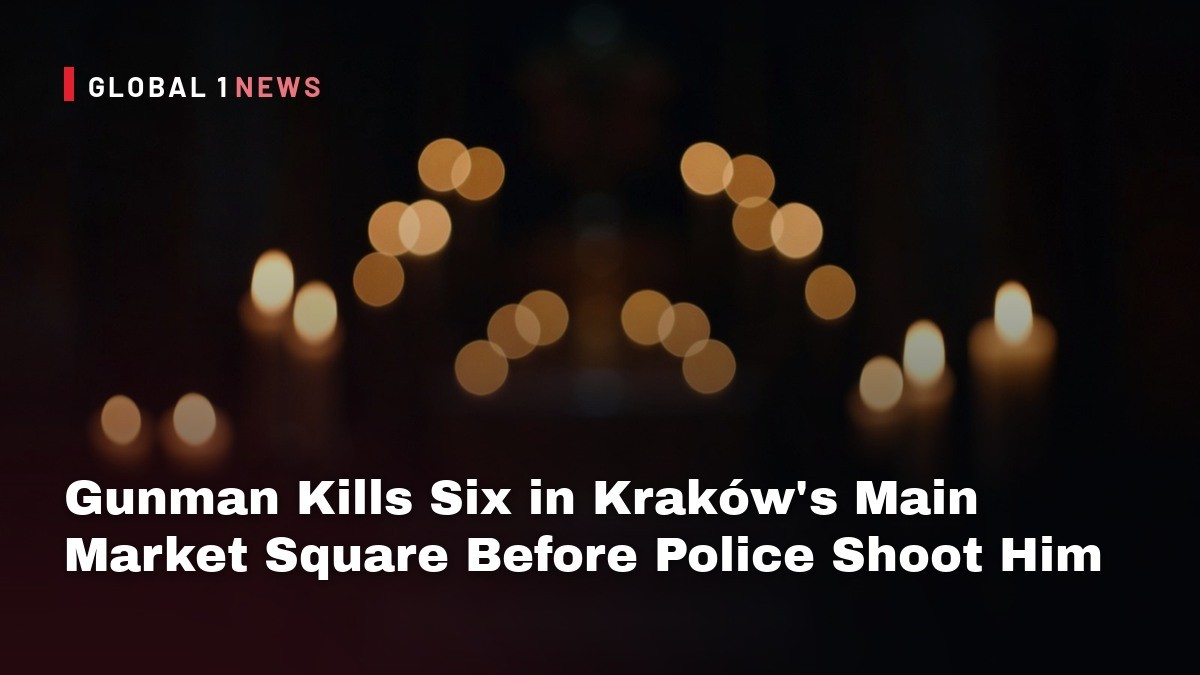
In a stark reminder of the threat posed by gun violence in public spaces, a gunman opened fire on Saturday afternoon in the Main Market Square of Krakow, Poland, killing six people and wounding fifteen others, according to local police.
In a stark reminder of the threat posed by gun violence in public spaces, a gunman opened fire on Saturday afternoon in the Main Market Square of Krakow, Poland, killing six people and wounding fifteen others, according to local police. The incident unfolded in a bustling tourist hub, catching passers‑by and visitors off guard as the shooter drove through the square and fired at random members of the crowd. While the tragedy occurred thousands of kilometres from Canada, the reverberations of such an event touch on issues that are increasingly part of the Canadian public discourse, from public safety and gun control to the responsibilities of municipal authorities in protecting crowded public spaces.
Details of the Attack and Immediate Response
The CBC News footage captured the chaos that erupted after the gunman, identified as a Polish citizen, entered the Main Market Square in a vehicle and began firing indiscriminately. Witnesses described hearing a series of gunshots followed by panic as people scrambled for cover. Emergency services arrived swiftly, establishing a perimeter and providing first aid to the injured while police worked to secure the area and locate the shooter.
Police statements confirmed that the gunman targeted random individuals rather than a specific group or target. The motive behind the attack has not yet been disclosed, and investigators are continuing to piece together the sequence of events that led to the tragedy. The rapid response of emergency crews, however, was credited with preventing further loss of life, as they were able to evacuate many bystanders and transport the wounded to nearby hospitals.
In the aftermath, the square was cordoned off, and a thorough investigation was launched. Authorities have urged the public to remain calm while they gather evidence and conduct interviews with survivors and witnesses. The incident has prompted a surge of condolences from around the world, including messages of support from Canadian officials and citizens who expressed solidarity with the victims and their families.
Impact on the Local Community and Tourism
Krakow’s Main Market Square is not only a historic centre but also a major draw for tourists, featuring centuries‑old architecture, bustling cafés, and a vibrant cultural scene. The attack, occurring in such a high‑profile location, has inevitably shaken the sense of safety that both residents and visitors associate with the city.
Local business owners, many of whom rely on the steady flow of tourists, voiced concerns about the potential short‑term decline in visitor numbers. While the city’s tourism board has not released specific forecasts, the psychological impact of a violent episode in a beloved public space can linger, influencing travel decisions and the overall perception of safety in the region.
Community leaders have called for a measured response, emphasizing the need to support those directly affected while also preserving the city’s cultural heritage and open‑air atmosphere. Memorials and vigils are expected to be organised in the coming days, providing a space for collective mourning and reflection.
Canadian Perspectives on Gun Violence Abroad
The Krakow shooting arrives at a time when Canada continues to grapple with its own challenges related to firearms regulation and public safety. While Canada’s gun laws are generally stricter than those in many other nations, incidents of mass violence, though less frequent, still spark national conversations about the balance between individual rights and collective security.
Canadian observers often look to international incidents to gauge the effectiveness of various policy approaches. The fact that the gunman in Krakow was a Polish citizen raises questions about the accessibility of firearms in Europe and the mechanisms in place for monitoring and restricting weapon ownership. Canadian policymakers may draw parallels, considering how cross‑border cooperation and intelligence sharing can help prevent individuals with violent intentions from obtaining firearms.
Moreover, the incident underscores the importance of preparedness in public spaces, a theme that resonates with Canadian municipal authorities tasked with safeguarding crowded venues such as markets, transit hubs, and cultural festivals. The Canadian Association of Chiefs of Police frequently highlights the need for rapid response protocols, and the Krakow case provides a real‑world illustration of how swift action can mitigate the scale of tragedy.
Public Safety Measures and Urban Planning
Urban planners and city officials in Canada have long debated the design of public spaces to enhance safety without compromising openness. The Krakow attack, carried out in a densely populated square, reinforces arguments for integrating security considerations into the layout of such environments.
Potential measures include the strategic placement of barriers that can deter vehicle‑borne threats, the installation of surveillance systems that aid in rapid identification of suspicious activity, and the training of on‑site staff to respond effectively to emergencies. While the video report does not detail any specific security infrastructure present in Krakow’s market square, the incident may prompt a reassessment of existing safeguards both there and in comparable Canadian venues.
Canadian cities such as Toronto and Vancouver have experimented with “soft” security solutions, like decorative planters that double as vehicle barriers, and community policing initiatives that foster a visible presence of law enforcement during peak hours. The Krakow tragedy could serve as a catalyst for broader adoption of such practices, encouraging municipalities to balance aesthetic appeal with practical safety enhancements.
International Cooperation on Counter‑Terrorism and Crime Prevention
Although the motive behind the Krakow shooting remains under investigation, the event highlights the importance of international collaboration in addressing violent crime. Agencies across borders share intelligence on potential threats, and coordinated efforts are essential for tracking individuals who may pose a danger to public safety.
Canada’s participation in multinational law‑enforcement networks, such as INTERPOL and the European Union’s law‑enforcement liaison frameworks, facilitates the exchange of information about individuals with criminal or extremist backgrounds. The identification of the shooter as a Polish citizen suggests that national registries and background‑check systems played a role in the subsequent investigation, underscoring the value of robust data‑sharing mechanisms.
In the wake of the attack, Canadian officials may reaffirm commitments to these partnerships, emphasizing that safeguarding citizens—whether at home or abroad—requires a collective, transnational approach. The incident also serves as a reminder that violent acts in one part of the world can have ripple effects, influencing public sentiment and policy discussions in distant nations, including Canada.
Human Stories and the Path to Healing
Beyond statistics and policy implications, the Krakow shooting is fundamentally a human tragedy. Families have lost loved ones, and survivors bear both physical injuries and psychological scars. The CBC footage captured moments of anguish as bystanders rushed to aid the wounded, embodying the compassion that often emerges in the face of senseless violence.
Community support networks, both formal and informal, will play a crucial role in the healing process. In Canada, similar incidents have prompted the mobilisation of mental‑health resources, counselling services, and community‑led initiatives aimed at fostering resilience. Canadian NGOs and health authorities may extend outreach to Polish counterparts, sharing best practices for post‑trauma care and victim assistance.
As the investigation proceeds, the focus will inevitably shift from the immediate emergency response to longer‑term recovery. Memorials, public vigils, and commemorative events will provide spaces for collective mourning, while policy discussions continue to evolve. For Canadians watching the coverage, the incident reinforces the shared vulnerability of public spaces worldwide and the collective responsibility to protect them.
By Alex Thompson, Staff Writer
This article was produced with AI-assisted research and editorial support. Reporting is based on the source material cited below. Sources: CBC News video report (07 November 2026); CBC News; Global1.News
What's Your Reaction?
 Like
0
 Dislike
0
 Love
0
 Funny
0
 Wow
0
 Sad
0
 Angry
0
Canada Correspondent at Global1.News. Based in Toronto, covering Canadian politics, energy, trade, and US-Canada relations. Provides the Canadian perspective on North American and global affairs.












Comments (0)