
Massie Files Eight Articles Against Hegseth and Forces a House Vote
Rep. Thomas Massie filed eight articles of impeachment against Defense Secretary Pete Hegseth as a privileged resolution, forcing a House vote within two legislative days. The charges centre on the undeclared Iran war, a school strike in Minab, the boat-strike campaign and the capture of Nicolas Maduro.
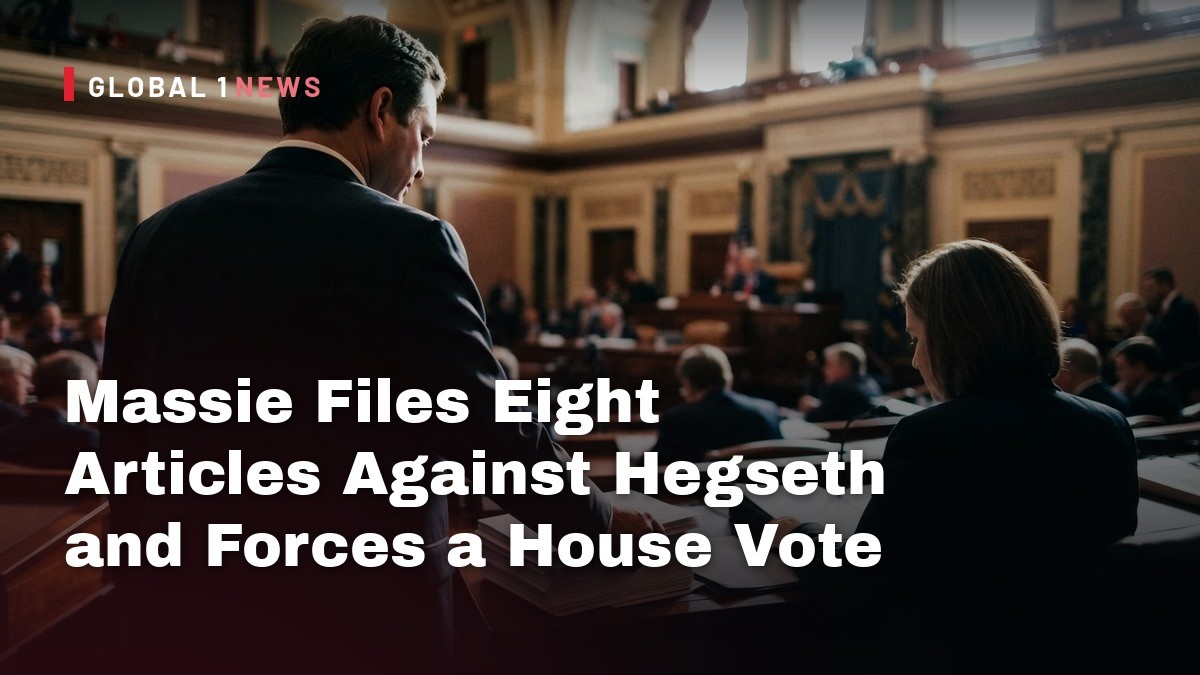
Rep. Thomas Massie forced the House to say out loud whether it meant to stop a war. On Monday he filed eight articles of impeachment against Defense Secretary Pete Hegseth as a privileged resolution, which puts a floor vote on a two-day clock.
Massie Files Eight Articles Against Hegseth and Forces a House Vote
WASHINGTON: Rep. Thomas Massie (R-Kentucky) introduced articles of impeachment against Defense Secretary Pete Hegseth on Monday, 9 November 2026, and read them aloud on the House floor. The measure's formal title is "Impeaching Peter Brian Hegseth, Secretary of Defense, for high crimes and misdemeanors." It runs 34 pages and carries eight articles, and it was referred to the Committee on the Judiciary. Hegseth denies the allegations.
A Privileged Resolution, and a Two-Day Clock
House rules gave Massie leverage he did not have in September. A privileged resolution must be scheduled for a vote within two legislative days, so leaders cannot park it in committee and let it die the way the first version did. Massie filed articles against Hegseth in September 2026. Speaker Mike Johnson called an early recess to avoid the vote, the resolution expired, and Massie refiled it Monday. A vote could come as early as Wednesday.
Massie is retiring at the end of this Congress. He lost his Republican primary earlier this year to Ed Gallrein, a candidate Hegseth campaigned for.
Reading the articles aloud, Massie said Hegseth "has demonstrated that he will remain a threat to the Constitution if allowed to remain in office, and has acted in a manner grossly incompatible with his duties and the rule of law."
The clock, more than any argument, is what puts the House on record this week.
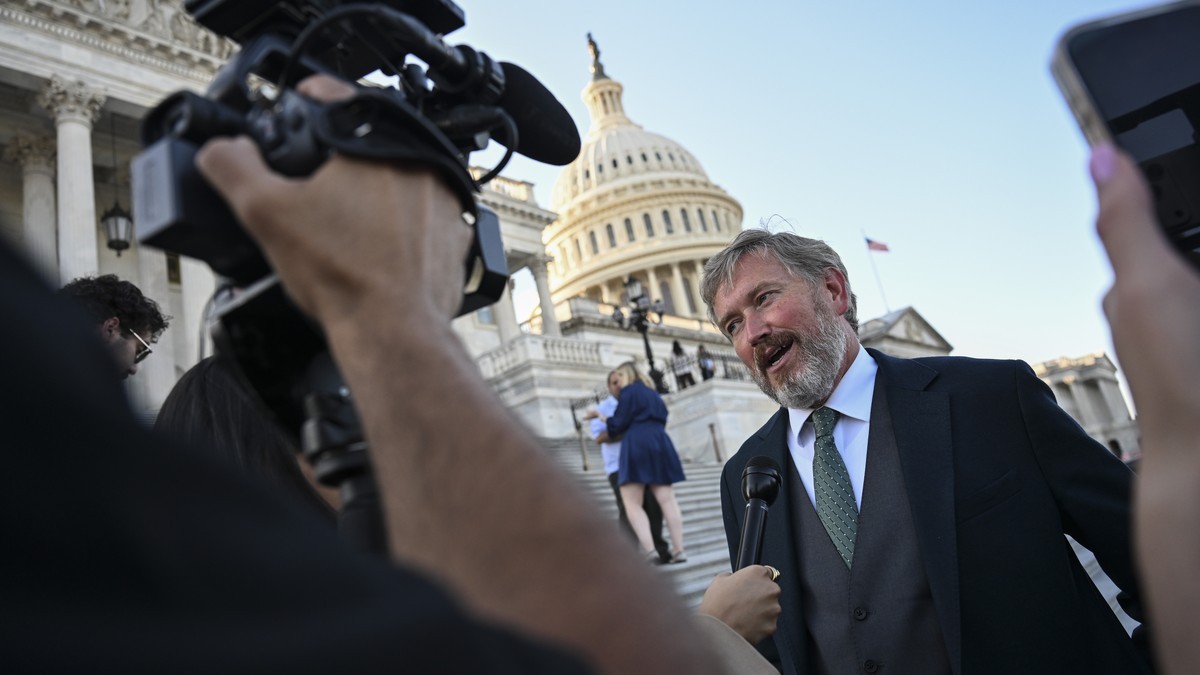
The War Congress Never Declared
The first article is the oldest fact in the case. The United States entered hostilities against Iran on 28 February 2026, opening Operation Epic Fury in partnership with Israel, with no declaration of war, no specific statutory authorization, and no national emergency created by an attack on the United States. The war is more than eight months old.
The article cites the resignation letter of Joe Kent, then director of the National Counterterrorism Center, dated 17 March 2026: "I cannot in good conscience support the ongoing war in Iran. Iran posed no imminent threat to our nation."
Massie framed the charge as a substitution, saying Hegseth "knowingly executed and implemented unlawful orders to initiate war against a foreign nation ... thereby substituting unlawful executive action for the constitutional and statutory judgment of Congress."
President Trump told CNN on Sunday that renewed strikes were "highly unlikely" while negotiations made progress, adding: "It depends on whether or not they sign a very strong agreement."
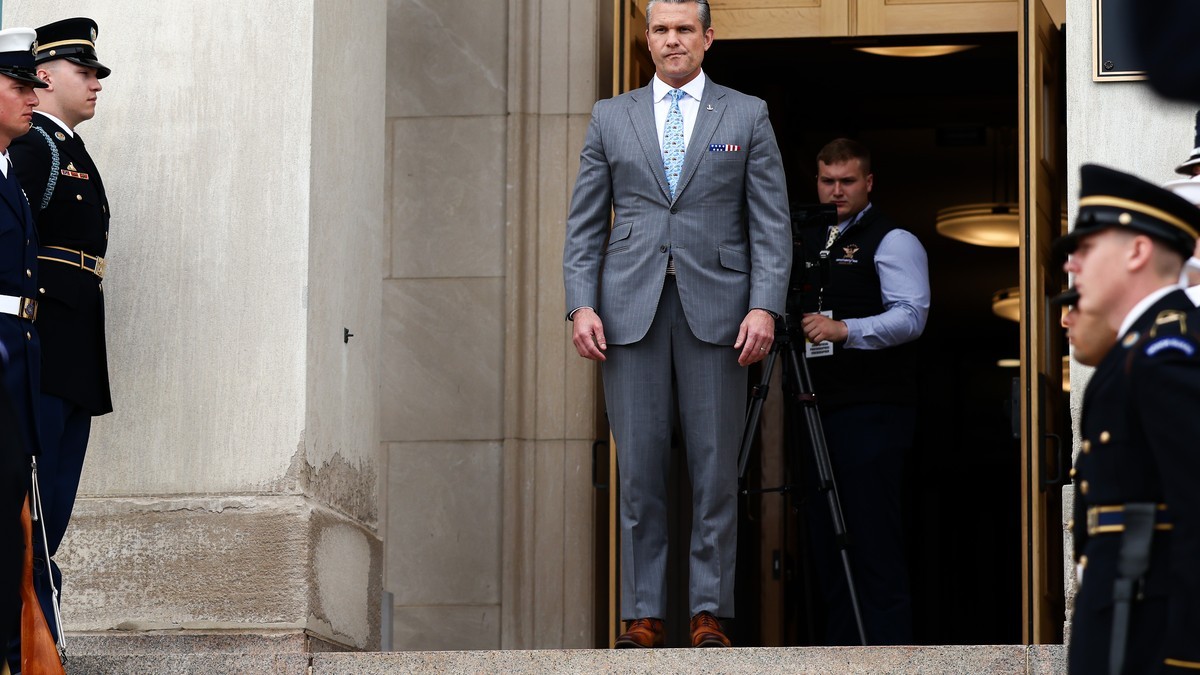
House Concurrent Resolution 86, and the Order That Outlasted It
Article II turns on a document Congress actually passed. House Concurrent Resolution 86 directed the President to remove U.S. forces from unauthorized hostilities in Iran. The House agreed to it on 3 June 2026. The Senate agreed on 23 June 2026. The resolution calls that the first successful passage of such a vehicle by both chambers in United States history.
It alleges Hegseth continued to direct hostilities on 26 June 2026, after both chambers had spoken.
The legal claim is specific. Section 5(c) of the War Powers Resolution lets Congress direct the removal of forces by concurrent resolution, and the article alleges Hegseth waged war in contravention of it. The political claim is broader: that a cabinet secretary treated a two-chamber rebuke as advice he could decline.
Both chambers had spoken. The strikes continued, and the article builds its second count on that gap.
The Sixty-Day Clock That Ran Out
Section 5(b) of the War Powers Resolution starts a clock. President Trump transmitted a letter to Congress on 2 March 2026 under 50 U.S.C. 1543(a)(3), and the 60-day period that followed expired on 1 May 2026 with no declaration, no authorization, and no extension.
The statute offers a further 30 days for withdrawal, but only on a written certification. The article states that Trump never submitted one. Even with it, that period would have expired on 1 June 2026.
This is the count that needs no judgment about targeting, intent or strategy, only a calendar and a statute. Congress set a limit. The limit arrived. The hostilities did not stop. On that reading the war became unauthorized by operation of law on a fixed date, whatever anyone inside the Pentagon intended.
Minab: A School Struck Three Times
The strike the fourth article centers on hit a school in Minab, in Hormozgan Province. Operation Epic Fury opened at about 9:45 a.m. local time, and within the first hour three BGM-109 Tomahawk cruise missiles fired from U.S. Navy warships struck the Shajareh Tayyebeh Elementary School, between 10:23 and 10:45 a.m.
Between 170 and 264 students were inside, most of them girls aged seven to twelve. Survivors of the first impact sheltered in a prayer room. A second and a third missile struck in rapid succession.
The count alleges the attack killed and injured more than 200 civilians. Reported tolls run to at least 156 civilians killed, with some reports putting the figure higher: at least 120 schoolchildren, 26 teachers, seven parents trying to evacuate their children, a school bus driver, a pharmacy technician from a nearby clinic, and the six-month-old unborn child of a teacher. About 95 others were wounded.
The count does not rest on one strike: by the end of fiscal 2025 the department had met none of the 11 objectives and completed none of the 133 actions Congress required for civilian protection.
The Boat Strikes and the Survivors Left in the Water
Article V describes a lethal campaign against vessels alleged to be smuggling narcotics in the Caribbean Sea and the Eastern Pacific, principally in international waters. Its own numbers do not agree. One posted copy of Massie's text puts the toll at "at least 221 persons" across "63 separate attack events" and 67 vessels. The copy that NPR and CBS link to as Monday's filing carries higher figures: 243 killed, 69 events, 73 vessels.
Both are Massie's own text. The numbers are cumulative, and the lower set appears to predate the higher.
On 2 September 2025 the campaign's first strike hit a vessel carrying 11 people between the coast of Venezuela and Trinidad and Tobago. The vessel capsized. About 45 minutes later, while two survivors clung to the wreckage, a secondary strike killed both.
On 30 December 2025, three vessels were struck roughly 400 nautical miles southwest of Ocos, Guatemala. Eight people were left shipwrecked with no recovery assets prepositioned, and rescue arrived about 45 hours later, by which time all eight had died.
Mark Kelly, and the Speech Hegseth Wanted Punished
Article VI is about a senator and one sentence. On 18 November 2025, Sen. Mark Kelly (D-Arizona), a retired Navy captain and former NASA astronaut who flew 39 combat missions in the First Gulf War, appeared in a video addressed to service members: "Our laws are clear. You can refuse illegal orders."
The response came quickly. On 24 November 2025 the Department of Defense posted on X threatening to recall Kelly to active duty for court-martial proceedings or administrative measures. On 25 November 2025, Hegseth directed further action. The article cites a Letter of Censure that threatened "criminal prosecution."
Kelly filed a complaint on 12 January 2026. Hegseth answered with a memorandum opposing the senator's motion for a preliminary injunction and sought to extend to retired service members the diminished First Amendment protections of Parker v. Levy (1974). The alleged offense was telling troops the law allows refusal.
Venezuela, Yemen, and the Charge of Empire
Two articles carry the charge of empire. The seventh says Hegseth directed an operation code-named ABSOLUTE RESOLVE and took the United States into hostilities in Venezuela on 3 January 2026 without a declaration of war, statutory authorization, or a national emergency created by an attack. In the article's words, he "usurped Congress's constitutional authority over war and transformed the Department of Defense into an instrument for objectives extending far beyond the apprehension of Nicolás Maduro for purposes of narcotics law enforcement, including regime change and the acquisition of foreign oil." Maduro was captured that day and is held in New York, where he has pleaded not guilty to narco-terrorism charges.
The eighth turns to Yemen, where it alleges Hegseth initiated and directed Operation Rough Rider: more than 1,100 strikes over approximately 52 days, an estimated 224 civilians killed, and roughly 500 to 600 Houthi fighters. Over those 52 days, civilian deaths there came close to the total U.S. military actions had caused in that country during the preceding twenty-three years. The resolution's own preamble notes that Hegseth is "also referred to as Secretary of War by the Administration."
The Republicans Who Have to Choose
With a narrow majority, Republican votes decide this, and none of the public signals amounts to a count.
Rep. James Comer (R-Kentucky), chair of the House Oversight Committee, said on NewsNation: "there's a lot of questions about Hegseth." He added: "We have no idea what the strategy is moving forward in Iran. No one's happy about Iran."
Rep. Don Bacon (R-Nebraska), who is retiring, told reporters he is "wrestling" with the question and that Hegseth's handling of several matters "bothers me," adding: "I don't think he's been a good secretary, but do you impeach a guy for that? It has to be a high crime or misdemeanor."
Rep. French Hill (R-Arkansas) said on CBS's "Face the Nation" that he wants to hear the debate "to see if it merits impeachment versus some other disciplinary action or action by the president if he's not getting the job done in leading the Department of War."
Hegseth's answer to the arithmetic was flat. "We're not worried about that," he told reporters, and said he would hold a news conference at the Pentagon on Tuesday morning, his first in more than 180 days, according to the Associated Press.
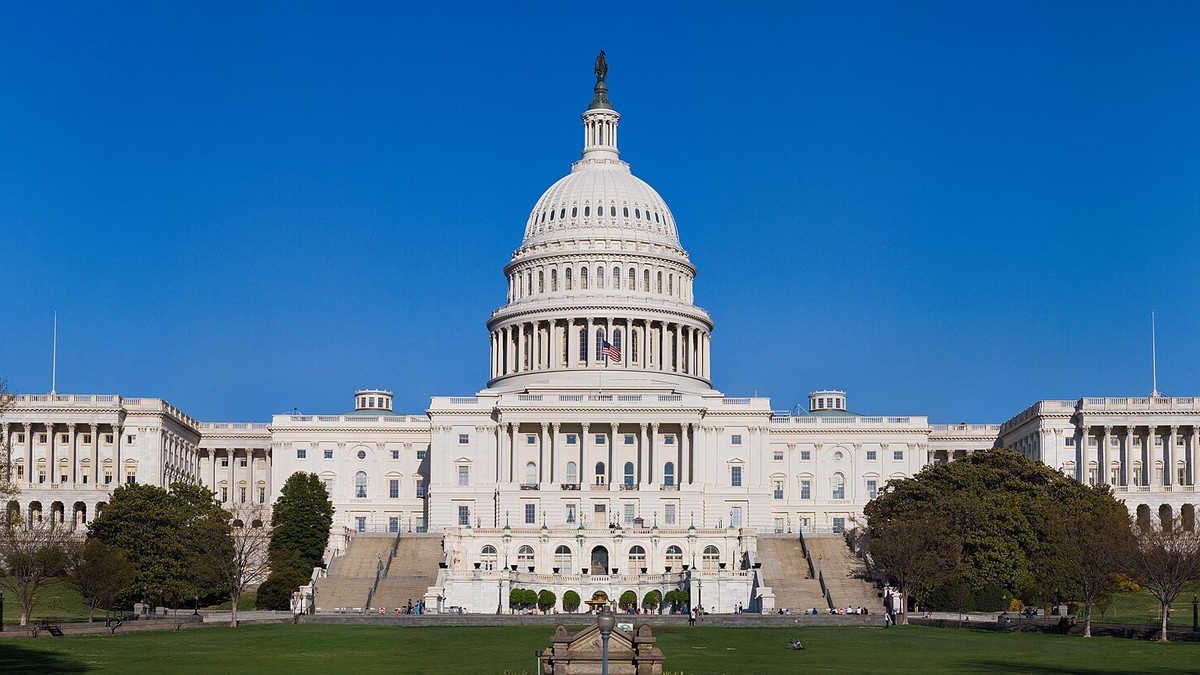
What Wednesday Would Actually Change
What a vote would change is the record, not the war. Impeachment sends the matter to the Senate, where removal requires two-thirds of the chamber, a threshold widely considered unlikely. Hegseth would be the third Cabinet secretary ever impeached, after War Secretary William Belknap in 1876, acquitted, and Homeland Security Secretary Alejandro Mayorkas in 2024, whose charges were dismissed.
House Minority Leader Hakeem Jeffries, the presumptive next Speaker, called himself a "hard yes" on ABC's "This Week," saying: "The so-called secretary of defense has abused his power, undermined our national security and engineered this reckless and costly war of choice in Iran, which has skyrocketed prices on the American people and made the country less safe."
Hegseth called the effort "sham articles of impeachment" in a video posted to X last week. "Didn't work against President Trump, and it won't work with me," he said.
The resolution is a paper trail either way: a clock that expired, a concurrent resolution both chambers passed, a school in Minab, a boat campaign, a senator threatened.
By Jessica Ali, Staff Writer
This article was produced with AI-assisted research and editorial support. Sources: Associated Press; NBC News; CBS News; NPR; Axios; CNN; Scripps News; Reuters; and the resolution text as published by Rep. Massie's office. Cover: Global 1 News editorial image. Photographs: Roberto Schmidt/Getty Images via NPR; Finn Gomez/Getty Images via NPR; Noclip, public domain via Wikimedia Commons.
What's Your Reaction?
 Like
0
 Dislike
0
 Love
0
 Funny
0
 Wow
0
 Sad
0
 Angry
0

Editor-in-Chief at Global1.News. Atlanta-based journalist who cuts through the BS and tells it like it is. Lead anchor, host, and the voice you hear when the spin stops and the truth starts.














Comments (0)