
Two suspects arrested in stone-throwing incident near Jerusalem
Israel Police announced the arrest of a 15‑year‑old resident of Ein Naqquba, a village west of Jerusalem, on suspicion of throwing stones at passing vehicles near the city’s main entrance on Thursday.
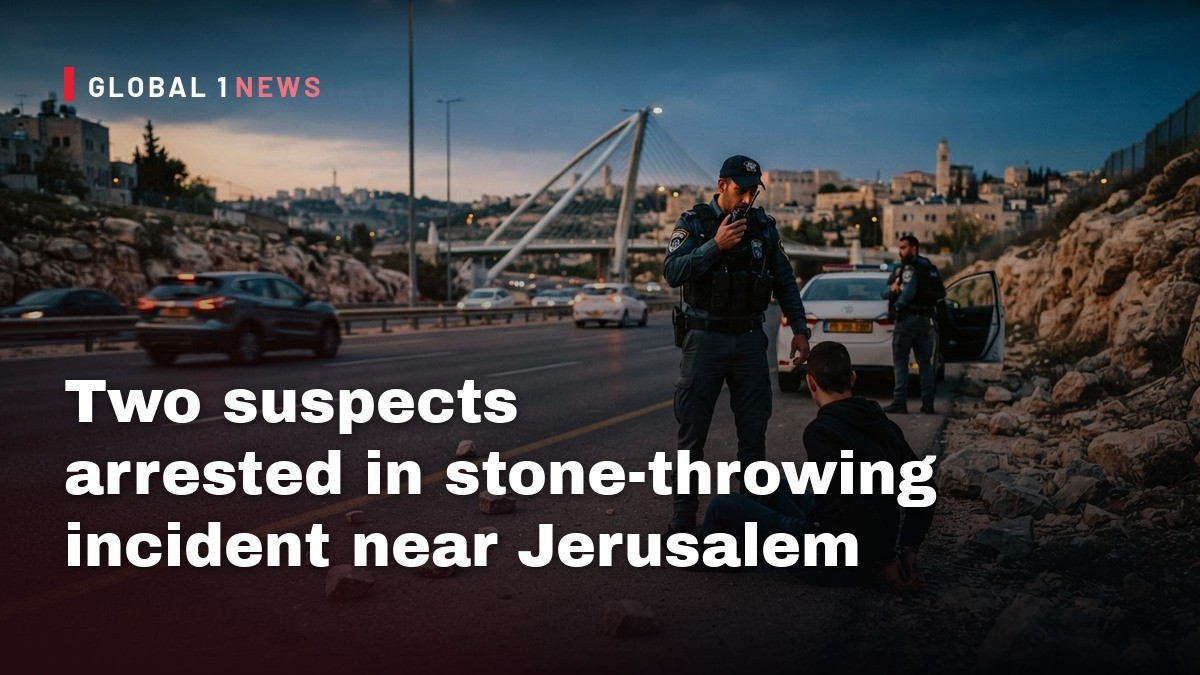
Israel Police announced the arrest of a 15‑year‑old resident of Ein Naqquba, a village west of Jerusalem, on suspicion of throwing stones at passing vehicles near the city’s main entrance on Thursday. The teenager was the second suspect taken into custody in connection with the episode, following the earlier detention of a 17‑year‑old at the scene. The Jerusalem Magistrate’s Court approved an extension of the younger suspect’s detention until Tuesday to allow investigators to complete their inquiries.
Details of the incident and police response
According to the police statement, officers on patrol observed two youths hurling stones at moving traffic near the entrance to Jerusalem. The stone‑throwing, a tactic often employed in the volatile fringe areas surrounding the capital, prompted an immediate pursuit. The 17‑year‑old was apprehended on site, while the 15‑year‑old managed to flee the immediate area.
Police later identified the fleeing teenager and secured his arrest on the following day, Friday. The force highlighted that the swift identification and capture were made possible through coordinated field work and the use of local intelligence sources. The incident underscores the ongoing security challenges that Israeli police face in managing hostile actions directed at civilians and motorists in the Jerusalem periphery.
Judicial handling of the young suspect
The Jerusalem Magistrate’s Court, sitting on Saturday night, reviewed a request from police to prolong the detention of the 15‑year‑old. The court granted the extension, setting the new release deadline for Tuesday. This procedural step reflects standard practice in cases involving minors suspected of security‑related offenses, where authorities balance investigative needs with legal safeguards for youth.
Legal analysts note that Israeli courts routinely assess the risk of flight, the seriousness of the alleged act, and the potential for further evidence gathering when deciding on pre‑trial detention extensions. In this case, the court’s decision aligns with the police’s claim that additional time was required to complete the investigation into the stone‑throwing episode.
Ein Naqquba’s community context
Ein Naqquba is a predominantly Arab town situated on the outskirts of Jerusalem. Like many communities in the region, it has experienced periodic tensions linked to the broader Israeli‑Palestinian conflict. Residents often navigate a complex security environment, where everyday life intersects with heightened police presence and occasional confrontations.
Local leaders have previously expressed concerns about youth involvement in hostile activities, emphasizing the need for social and economic initiatives to divert young people from violence. The recent arrests may prompt renewed dialogue between municipal authorities, community representatives, and security agencies to address underlying grievances and prevent recurrence.
Stone‑throwing as a security phenomenon
Throwing stones at vehicles and security forces has long been a low‑tech yet potent form of protest and intimidation in the Israeli‑Palestinian arena. While the objects are simple, the act can cause serious injury, damage to property, and heightened fear among civilians. Israeli police have therefore developed specialized response protocols, including rapid identification, pursuit, and, where necessary, the use of non‑lethal crowd‑control measures.
Security experts point out that stone‑throwing often serves as a symbolic gesture of resistance, especially among younger participants who may lack access to more sophisticated weaponry. The prevalence of such incidents in the Jerusalem vicinity reflects both the city’s symbolic significance and the proximity of densely populated Arab localities to major traffic arteries.
Impact on traffic and civilian safety
Incidents of stone‑throwing near major thoroughfares disrupt traffic flow and pose a direct threat to motorists. In the recent case, vehicles traveling near the entrance to Jerusalem were targeted, prompting drivers to brake abruptly and, in some instances, swerve to avoid injury. Such disruptions can lead to secondary accidents and contribute to broader congestion in an already busy urban corridor.
Police have reiterated that protecting civilian mobility is a core component of their mandate. Following the arrests, traffic authorities conducted safety checks on the affected routes and increased patrols to deter further attacks. The coordination between traffic management and security forces aims to restore normalcy while maintaining vigilance against repeat offenses.
Broader security implications for Jerusalem
Jerusalem remains a focal point of Israeli security planning due to its religious, political, and cultural importance. Incidents like the stone‑throwing episode near the city’s entrance are monitored closely as potential indicators of rising tensions in surrounding neighborhoods. Security agencies continuously assess patterns of unrest to allocate resources effectively.
The recent arrests demonstrate the police’s capacity to respond swiftly to localized threats. However, officials also acknowledge that preventing such acts requires a multi‑layered approach, encompassing community outreach, intelligence gathering, and, where appropriate, deterrent measures. The balance between maintaining public order and respecting the rights of residents, especially minors, remains a delicate policy challenge.
Looking ahead: prevention and community engagement
In the wake of the arrests, municipal and national authorities are likely to intensify efforts aimed at curbing youth involvement in hostile activities. Programs spearheaded by the Ministry of Economy and the Israel Innovation Authority, which focus on technology‑driven education and employment opportunities, are often cited as long‑term solutions to reduce the allure of violence.
Community leaders in Ein Naqquba and similar towns have called for expanded social services, youth centers, and vocational training to address the socioeconomic factors that can drive young people toward protest actions. By coupling security enforcement with proactive community investment, Israeli policymakers hope to foster a more stable environment around Jerusalem’s critical access points.
This article was produced with AI-assisted research and editorial support. Reporting is based on the source material cited below. Sources: JNS (Jewish News Syndicate); jns.org; Global1.News (09 November 2026).
By Hannah Berg, Staff Writer
What's Your Reaction?
 Like
0
 Dislike
0
 Love
0
 Funny
0
 Wow
0
 Sad
0
 Angry
0

Israel Correspondent at Global1.News. Based in Tel Aviv, covering Israeli politics, security, technology, and society. Provides balanced, deeply-sourced reporting on one of the most closely-watched regions in the world.














Comments (0)