
Rare Thundersnow Strikes Ural Mountains, Ripping Off Roofs and Causing Power Outages
On Friday morning, a rare thundersnow swept across the Ural Mountains, turning the city of Yekaterinburg and surrounding districts into a chaotic winter battlefield.
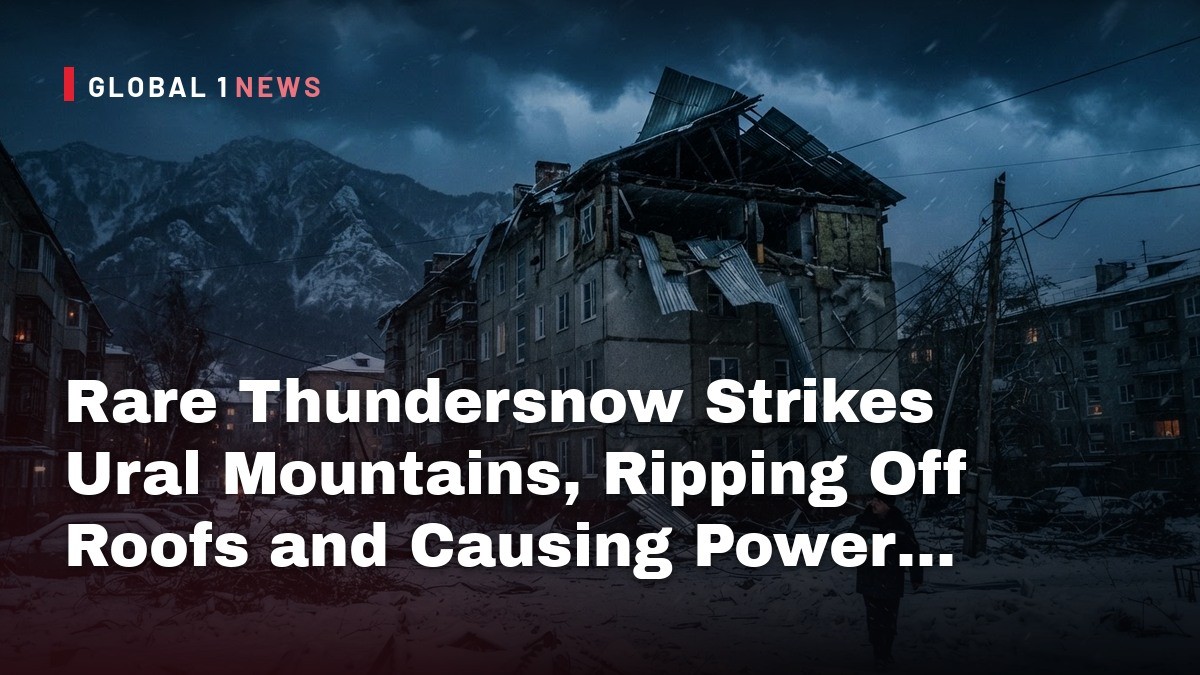
On Friday morning, a rare thundersnow swept across the Ural Mountains, turning the city of Yekaterinburg and surrounding districts into a chaotic winter battlefield. The storm combined gale‑force winds, heavy snowfall and thunder – a meteorological trifecta that ripped roofs from buildings, knocked out electricity and turned highways into death traps. While the immediate damage is evident, the event also highlights the fragility of regional infrastructure and the broader challenges facing Russian emergency services under a tightening political climate.
Nature of the storm and its meteorological origins
The Sverdlovsk region’s weather service, Uralhydromet, recorded the onset of the storm at 10 a.m. local time, noting a sudden drop in temperature that forced rain to freeze into snow. Meteorologists explained that a low‑pressure system forced a cold front through the Ural mountain range, driving temperatures below freezing and generating the thunder‑laden blizzard. The combination of low pressure and a steep temperature gradient is what produced the unusual thundersnow, a phenomenon more typical of summer convective storms than of the Russian winter.
According to the same meteorological assessment, the system is expected to track northward along the range throughout Friday, spreading blizzard conditions further into the northern part of the Sverdlovsk region before weakening over the weekend. This forecast suggests that the storm’s most severe impacts will be concentrated in the southeastern districts, where the low‑pressure core lingered longest.
Immediate physical damage and human toll
Videos and photographs circulating on social media captured the ferocity of the wind as it tore roofs from residential and commercial structures in Yekaterinburg. The debris‑laden air made navigation hazardous, and the storm’s intensity was sufficient to damage the city’s main railway station, as reported by the regional outlet Ostorozhno Novosti. Similar damage was noted in neighboring Chelyabinsk and Perm regions, where heavy snowfall and roof‑blowing winds were also reported.
In addition to structural damage, the storm caused widespread power outages. The Emergency Situations Ministry’s regional branch confirmed partial blackouts in at least twelve towns, affecting a combined population of roughly ninety thousand residents. The outages were concentrated in the southeastern part of the Sverdlovsk region, where the storm’s wind speeds were highest.
Road safety and the fatal traffic accident
One of the most tragic outcomes of the storm was a highway traffic accident that resulted in a reported death. Icy road conditions, a direct consequence of the freezing rain‑to‑snow transition, caused a vehicle to lose control on a major highway in the Sverdlovsk region. While officials have not formally confirmed the fatality, the incident underscores the lethal risk that sudden winter storms pose to motorists, especially on roads that lack adequate de‑icing equipment.
The accident also illustrates a systemic vulnerability: emergency response teams are often stretched thin during extreme weather events, limiting their ability to reach accident sites promptly. The loss of life, whether confirmed or not, adds a human dimension to the meteorological disaster and raises questions about the adequacy of regional preparedness for such rare but severe weather phenomena.
Infrastructure resilience and power grid vulnerabilities
The partial blackouts reported in twelve towns reveal a broader issue of grid fragility in Russia’s industrial heartland. The power outages, affecting roughly ninety thousand people, were directly linked to wind‑induced damage to transmission lines and substations. In a region that hosts significant industrial facilities, any prolonged loss of electricity can have cascading economic effects, from halted production lines to disrupted logistics.
Energy analysts have long warned that Russia’s power infrastructure, much of it built during the Soviet era, struggles to cope with extreme weather events. The recent storm provides a concrete example of how wind‑driven roof damage can translate into grid failures, especially when combined with heavy snowfall that hampers repair crews’ access to damaged sites.
Emergency response and the role of regional authorities
The Emergency Situations Ministry’s regional branch was quick to publicize the extent of the blackouts, indicating a level of transparency in the immediate aftermath. However, the ministry’s statements also reveal the limited scope of the response: outages were “concentrated mostly in the southeastern part of the Sverdlovsk region,” suggesting that resources were prioritized for the most severely affected areas.
Beyond the ministry, local weather services such as Uralhydromet issued warnings about the impending low‑pressure system, but the rapid development of the storm left little time for comprehensive public advisories. The combination of limited warning time, inadequate road treatment, and the sudden onset of thunder‑laden snowfall created a perfect storm of circumstances that overwhelmed regional emergency capacities.
Political context: media repression and the narrative of disaster
Amid the physical devastation, the storm occurred against a backdrop of increasing state pressure on independent media. The Moscow Times, the source of this report, has recently been labeled an “undesirable” organization by the Prosecutor General’s Office, criminalizing its operations and exposing its staff to prosecution. The outlet’s own statement frames the storm as part of “unprecedented challenges” faced by Russia, implicitly linking environmental crises to broader systemic strains.
The Kremlin’s narrative typically emphasizes resilience and the capacity of state structures to manage emergencies. Independent reporting that highlights infrastructure failures, casualties, and the human cost of such events can clash with official portrayals of competence. By documenting the storm’s impact, The Moscow Times provides a counter‑narrative that underscores the need for transparent governance and robust disaster preparedness—issues that become politically sensitive when the state seeks to project an image of unassailable stability.
Implications for future winter preparedness and policy
The thundersnow event serves as a stark reminder that rare meteorological phenomena can expose systemic weaknesses in Russia’s winter preparedness. The damage to roofs, power grids, and transport hubs indicates that existing building codes and infrastructure standards may not be sufficient to withstand extreme wind‑driven snowfall. Policymakers in the Sverdlovsk region, and potentially at the federal level, will need to reassess construction standards, especially for public buildings and critical transport facilities.
Moreover, the incident highlights the importance of coordinated emergency planning that integrates meteorological forecasting, road safety measures, and rapid power restoration protocols. As climate variability increases the likelihood of atypical weather patterns, the Russian government may face growing pressure to invest in resilient infrastructure and to improve communication channels between weather services, emergency responders, and the public.
In the longer term, the storm’s impact on industrial output and regional economies could prompt a reevaluation of energy security strategies, particularly in the Ural industrial belt. Strengthening the grid’s resistance to wind damage, expanding backup power solutions, and ensuring that critical facilities such as railway stations are fortified against extreme weather will be essential steps to mitigate future disruptions.
This article was produced with AI-assisted research and editorial support. Reporting is based on the source material cited below. Sources: The Moscow Times; themoscowtimes.com; Global1.News (09 November 2026).
By Irina Volkov, Staff Writer
What's Your Reaction?
 Like
0
 Dislike
0
 Love
0
 Funny
0
 Wow
0
 Sad
0
 Angry
0

Russia/Eastern Europe Correspondent at Global1.News. Covering Russian politics, energy, security, and the shifting dynamics of the post-Soviet space. Provides clear-eyed analysis on one of the world's most opaque regions.













Comments (0)