
French officials accuse Iran of being behind fridge cyberattacks
France’s foreign ministry announced on Monday that it would pursue European‑wide sanctions against Iran in response to a series of cyberattacks that targeted supermarket refrigeration units across the country in early October.
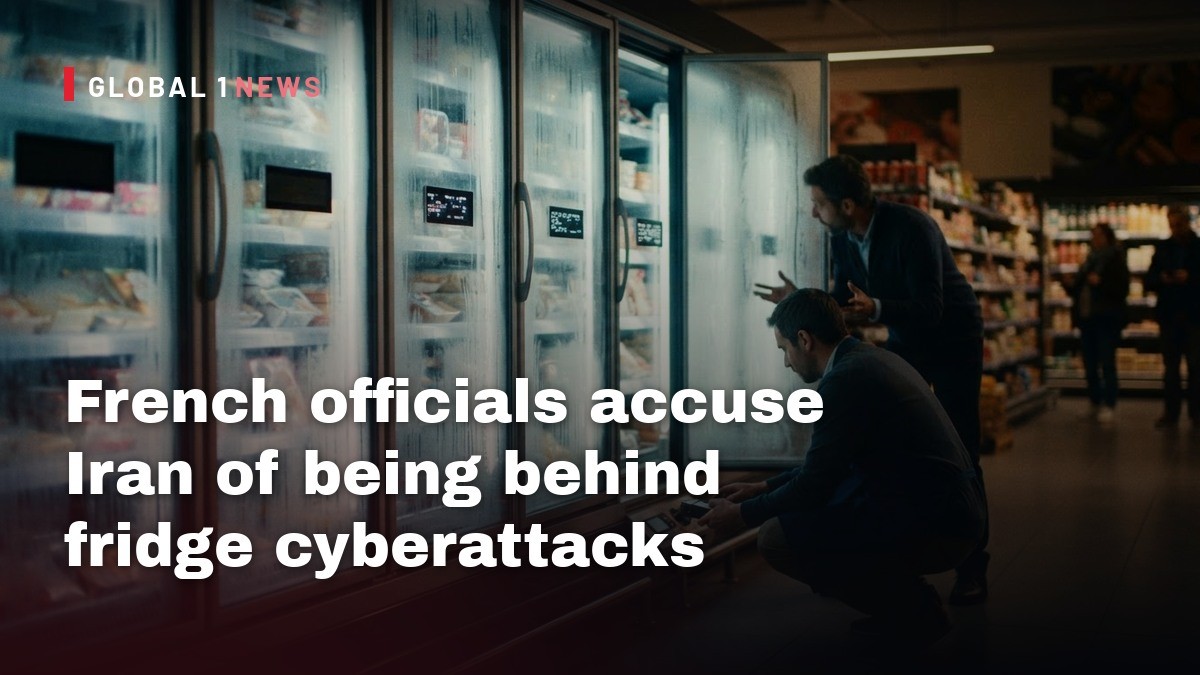
France’s foreign ministry announced on Monday that it would pursue European‑wide sanctions against Iran in response to a series of cyberattacks that targeted supermarket refrigeration units across the country in early October. The French government directly implicated the Islamic Revolutionary Guard Corps (IRGC), describing the intrusion as “unprecedented” in its scale and impact. This accusation places the fridge hacks among the most disruptive cyber operations linked to the ongoing conflict that erupted between Tehran and the West in February 2024, a war that has already seen a pattern of scattered digital strikes against civilian and infrastructural targets.
Context of the cyber‑war with Iran
The February 2024 confrontation between Iran and a coalition of Western nations has unfolded on multiple fronts, including a parallel digital battlefield. Since the war began, a series of alleged Iranian‑linked cyber incidents have been reported in various regions, each contributing to a growing sense of vulnerability among critical infrastructure operators. The French claim that the IRGC orchestrated the fridge attacks adds a new dimension to this pattern, extending the scope of Iranian cyber activity from high‑profile utilities and transport systems to everyday consumer environments.
Earlier episodes cited by French officials include a disruption of the Los Angeles transit system in March, interference with water treatment facilities in the United States in July, and interference with maritime shipments bound for the United States in August. While the precise technical details of those incidents remain undisclosed, the chronology suggests a sustained campaign of low‑level but broadly distributed attacks aimed at sowing inconvenience and eroding public confidence in essential services.
The fridge attacks: scale and impact
According to the French foreign ministry, the October 11 attacks targeted the refrigeration units of supermarkets across France. The term “unprecedented” used by the ministry underscores the novelty of the target class: commercial refrigeration is not traditionally considered a high‑value target for state‑level cyber operations. Yet the coordinated nature of the intrusion, affecting multiple locations simultaneously, points to a level of planning and capability that exceeds typical criminal ransomware or hacktivist activity.
While the source material does not provide quantitative data on the number of units compromised or the duration of the outage, the French government’s decision to pursue sanctions at the European level indicates that the disruption was deemed significant enough to merit a coordinated policy response. The attacks likely forced supermarkets to discard perishable goods, triggered supply‑chain adjustments, and generated public concern over food safety and price stability.
France’s diplomatic response
Foreign Minister Jean‑Noël Barrot publicly announced that France would seek to impose sanctions against Iran at the European Union level. This move reflects a broader strategy by European capitals to present a unified front against perceived Iranian aggression, leveraging collective economic measures to increase pressure on Tehran. By framing the fridge attacks as part of a pattern of disruptive cyber operations, France aims to justify a coordinated sanction regime that could encompass restrictions on Iranian financial transactions, technology transfers, and access to European markets.
The announcement also serves a domestic political purpose. By attributing the attacks to the IRGC, the French government signals to its electorate that it is taking decisive action to protect national infrastructure and consumer welfare. The narrative aligns with broader European concerns about state‑sponsored cyber threats, reinforcing the perception that Iran’s cyber capabilities pose a tangible risk to civilian life.
Implications for European cyber policy
The French call for EU‑wide sanctions could accelerate ongoing discussions within the European Commission on how to respond to state‑backed cyber aggression. Existing EU frameworks, such as the EU Cybersecurity Act and the recent Digital Services Act, provide mechanisms for coordinated response, but the addition of targeted sanctions would represent a more direct punitive tool. If adopted, such measures could set a precedent for future cyber‑related sanctions, expanding the scope beyond traditional economic or military sanctions to include digital aggression.
Moreover, the incident may prompt European member states to reassess the resilience of their supply‑chain and critical‑infrastructure sectors. Supermarket refrigeration, while not traditionally classified as critical infrastructure, is essential for food security and public health. The attacks highlight a potential blind spot in existing cybersecurity standards for commercial equipment, suggesting that regulators may need to broaden the definition of critical assets to include widely distributed IoT devices.
Iran’s cyber strategy: a broader pattern?
The French statement positions the fridge attacks within a continuum of Iranian cyber operations that have targeted both domestic and foreign assets. The earlier disruptions to Los Angeles transit, U.S. water treatment plants, and maritime shipping illustrate a strategy of targeting diverse sectors to create widespread inconvenience and uncertainty. By extending attacks to consumer‑grade equipment, Tehran may be testing the limits of attribution and response, exploiting the difficulty of tracing low‑level IoT intrusions back to a state actor.
Iran’s use of the Revolutionary Guard Corps as the alleged executor of these attacks aligns with its historical practice of employing paramilitary and intelligence units for cyber operations. The IRGC has been implicated in various cyber activities since the early 2010s, often operating under the guise of non‑state actors. The French accusation therefore reinforces the perception that the IRGC functions as a de‑facto cyber‑warrior arm of the Iranian state.
Potential economic repercussions
Sanctions imposed at the EU level could have ripple effects across multiple sectors. Restrictions on Iranian technology imports could affect European firms that source components from Iran or rely on Iranian markets for revenue. Conversely, Iranian retaliation—whether through further cyber attacks or asymmetric economic measures—could target European interests abroad, potentially extending the cyber conflict to other domains such as finance, energy, or logistics.
For French supermarkets, the immediate economic impact may include losses from spoiled inventory and the cost of replacing compromised refrigeration units. In the longer term, heightened consumer anxiety could influence purchasing behavior, prompting a shift toward alternative shopping channels such as online grocery delivery, which may be perceived as less vulnerable to physical infrastructure attacks.
Future outlook and risk mitigation
The fridge attacks underscore the evolving nature of cyber threats, where state actors increasingly target everyday technologies to achieve strategic objectives. As European policymakers consider sanctions, parallel efforts to strengthen cyber resilience will be essential. This could involve updating security standards for commercial IoT devices, mandating regular firmware updates, and encouraging manufacturers to embed robust authentication mechanisms.
From a diplomatic perspective, France’s move may catalyze a more coordinated EU stance on cyber aggression, potentially leading to a unified sanctions regime that could deter future Iranian incursions. However, the effectiveness of sanctions will depend on the ability of member states to enforce them uniformly and on the willingness of third‑party nations to align with the EU position.
In the meantime, businesses and consumers alike will need to remain vigilant. The incident serves as a reminder that cyber threats are no longer confined to abstract data breaches or high‑profile infrastructure; they can manifest in the very appliances that keep food fresh on supermarket shelves. As the digital battlefield expands, the line between national security and everyday convenience continues to blur, demanding a comprehensive response that blends diplomatic pressure, regulatory reform, and technical safeguards.
This article was produced with AI-assisted research and editorial support. Reporting is based on the source material cited below. Sources: South China Morning Post; scmp.com; Global1.News (09 November 2026).
By Kenji Tanaka, Staff Writer
What's Your Reaction?
 Like
0
 Dislike
0
 Love
0
 Funny
0
 Wow
0
 Sad
0
 Angry
0

Japan Correspondent at Global1.News. Tokyo-based voice covering Japanese politics, technology, economy, and culture. Tracks the intersection of tradition and innovation in one of the world's most dynamic societies.











Comments (0)