
Disaster Diplomacy: Can Latin America's Quakes Turn Rivals into Partners?
A Region Shaken: The Summer of 2026 In a recent DW News report, the question of whether earthquakes can turn enemies into friends was put to the test, examining the fragile nature of solidarity in the wake of catastrophe.
A Region Shaken: The Summer of 2026
In a recent DW News report, the question of whether earthquakes can turn enemies into friends was put to the test, examining the fragile nature of solidarity in the wake of catastrophe. The video's central thesis-that a shared disaster can bring rivals together, but lasting peace requires more than a moment of unity-resonates with chilling clarity across Latin America this summer. Within a span of just seven weeks, two of the most powerful earthquakes in modern South American history have struck Venezuela and Colombia, leaving thousands dead and testing the diplomatic fabric of a region often divided by ideology.
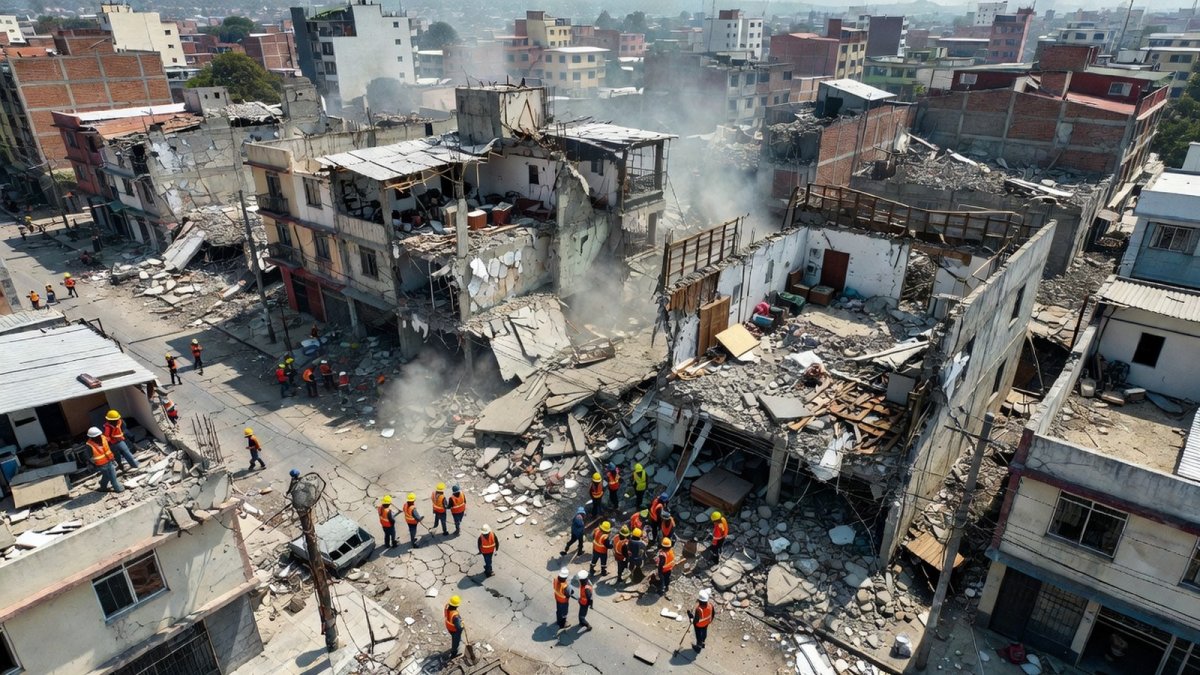
The first catastrophe hit on June 24, 2026, when two large strike-slip earthquakes struck northwestern and central Venezuela a mere 30 seconds apart. The Mw 7.2 foreshock near Veroes Municipality in Yaracuy state was immediately followed by a devastating Mw 7.5 mainshock off the coast of La Guaira state near Catia La Mar. As of August 2026, the death toll has surpassed 6,400, with approximately 86,300 people injured or hospitalized and tens of thousands still missing. The destruction is staggering-La Guaira state alone suffered an 80% building collapse rate, making this the strongest quake to hit Venezuela since the 1900 San Narciso earthquake.
Venezuela's Political Earthquake
The seismic shock in Venezuela was matched by a political tremor in Caracas. Acting President Delcy Rodríguez waited nearly four hours before addressing the nation-a delay that many analysts in Mexico City interpreted as a sign of internal chaos. When she finally spoke, she ordered a $200 million assistance fund, mobilized debris-removal operations, and announced special credit lines for businesses struggling to survive the aftermath. But the most significant shift was diplomatic: a government long wary of the United Nations and international scrutiny suddenly turned to the global community for help.
The USGS PAGER system had warned that the toll could exceed 10,000, and the scale of the disaster forced a pragmatic recalculation in Caracas. The UN coordinated humanitarian assistance, and in a move that would have been unthinkable just months earlier, the US State Department announced a formal response to the crisis. This thaw in US-Venezuela relations around disaster aid represents one of the most concrete examples of disaster diplomacy in the Western Hemisphere in decades. For Mexicans watching from across the Caribbean, the irony was not lost: the same government that had spent years denouncing "Yankee imperialism" was now accepting American rescue teams and medical supplies.
Colombia's Deadly August Morning
Just as Venezuela began to dig out from the rubble, Colombia was struck on August 10, 2026. A Mw 7.4-7.5 earthquake hit the Chocó department at 07:34 COT, with the epicenter located just 20 km from San José del Palmar at an intermediate depth of approximately 110 km. The quake was felt across much of western and central Colombia, with tremors reported in Ecuador, Panama, and even parts of Venezuela-a grim reminder of how interconnected the region's seismic fate truly is.
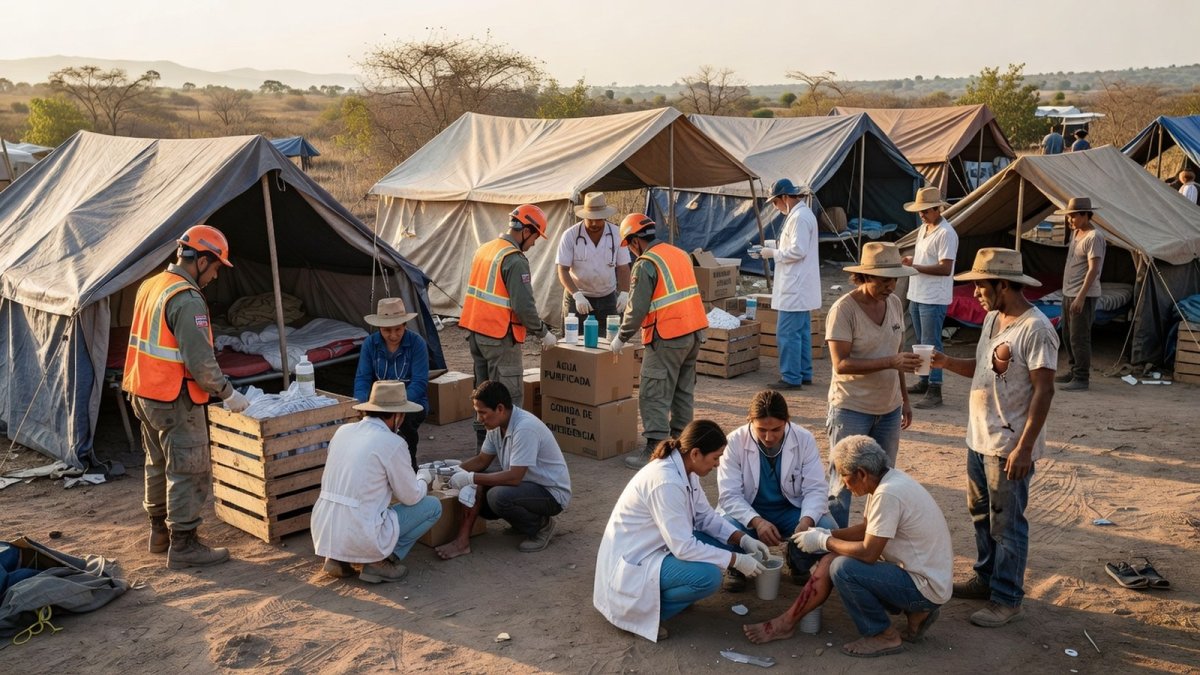
The human cost is still climbing. At least 319 people have been confirmed dead, with more than 4,600 injured and over 260 missing. More than 294,200 people have been affected, and the infrastructure damage is catastrophic: 134,000+ homes damaged and 14,493 completely destroyed. This is the strongest earthquake to hit Colombia in a decade, the largest since the 1979 Tumaco earthquake. Newly inaugurated right-wing President Abelardo de la Espriella declared a national emergency within an hour of the quake and established an emergency command post in the affected region. The death toll has climbed from an initial estimate of 111 to over 300 as rescue operations continue in the remote, mountainous terrain of Chocó-one of Colombia's poorest and most neglected departments.
The Topos: Mexico's Heart in the Rubble
For Mexicans, the images from Chocó and La Guaira are painfully familiar. The 1985 Mexico City earthquake that killed over 10,000 people and the 2017 Puebla quake that devastated the capital and surrounding states forged a national identity rooted in seismic resilience. Out of that trauma emerged the Topos-the "moles"-a brigade of volunteer rescue workers who have become internationally renowned for their bravery and expertise in urban search and rescue.
As Rosa has reported for Global1.News, Mexican Topos rescue volunteers have already deployed to Colombia following the August 10 earthquake. Their presence in the disaster zone is more than just humanitarian aid; it is a symbol of Mexico's commitment to regional solidarity. The Topos have responded to earthquakes in Turkey, Haiti, Nepal, and across Latin America, carrying with them the hard-won lessons of Mexico City's collapse. Their distinctive red jumpsuits and helmets have become a beacon of hope in the darkest moments of catastrophe, representing a form of people-to-people diplomacy that transcends the often-rocky relationships between governments.
Disaster Diplomacy: A Fragile Bridge
The DW News video that anchors this story examines the historical record of disaster diplomacy, and the evidence is sobering. The 1999 earthquakes in Turkey and Greece created a window of warmth between two historic rivals, leading to what became known as "earthquake diplomacy." The 2005 Kashmir earthquake briefly brought India and Pakistan to the table. More recently, the 2023 Turkey-Syria earthquakes opened channels of communication between adversaries in a brutal civil conflict. In each case, the solidarity was real, but the peace proved fragile.
In Latin America, the current moment presents a similar test. Venezuela and Colombia share a 2,200-kilometer border and a history of tension, from the Venezuelan migration crisis that has displaced over 7 million people to ideological clashes between Caracas and Bogotá. The fact that Colombia's earthquake was felt in Venezuela-and that Venezuela's June quake sent tremors toward Colombia-creates a shared experience of vulnerability that could, in theory, foster cooperation. But the political realities are complex. Colombia's new president, Abelardo de la Espriella, represents a sharp rightward turn from the previous administration, and his government has taken a harder line on Venezuela than his predecessor.
Mexico's Strategic Position
Mexico occupies a unique position in this emerging diplomatic landscape. The administration in the Palacio Nacional has maintained a policy of non-intervention while quietly building bridges with both Caracas and Bogotá. Mexico's relationship with Venezuela has been complicated-Mexico condemned the Maduro regime's 2024 election irregularities but has avoided the aggressive sanctions posture of the United States. With Colombia, Mexico shares deep cultural and economic ties, and the two nations have cooperated on issues ranging from drug policy to trade.
The disaster diplomacy dynamic also has direct implications for Mexico-US relations. Historically, cooperation on disaster response-from hurricanes in the Gulf of Mexico to border region emergencies-has created moments of genuine partnership between the two countries. The US announcement of $26.5 million in total assistance to Colombia ($11 million additional on top of initial aid) demonstrates that Washington sees disaster response as a strategic tool in Latin America. For Mexico, this raises questions about how to balance its own humanitarian commitments with the geopolitical realities of its northern neighbor.
The Limits of Solidarity
Yet the DW News analysis offers a crucial warning: disaster aid alone does not create lasting peace. The video's evidence suggests that while a shared catastrophe can create a "honeymoon period" of cooperation, the underlying structural tensions-territorial disputes, ideological conflicts, economic competition-remain largely untouched. The Greece-Turkey rapprochement of 1999 eventually faltered over Cyprus and Aegean disputes. The India-Pakistan thaw after the Kashmir earthquake did not resolve the fundamental conflict over the region.
In Latin America, the same pattern threatens to repeat. The US-Venezuela thaw around disaster aid is real, but it exists alongside ongoing sanctions, political prisoners, and deep disagreements about democratic governance. Colombia's emergency response has been efficient, but the underlying issues of inequality and state neglect in Chocó-a region that has long been marginalized-will not be solved by earthquake relief. The question for the region is whether this moment of shared vulnerability can be converted into something more durable: institutional cooperation on disaster preparedness, joint early-warning systems, and a regional framework for humanitarian response.
Building a Culture of Prevention
Mexico has much to offer in this regard. The country's experience with earthquakes has produced sophisticated building codes, early-warning systems, and a culture of preparedness that is the envy of many nations. The 2017 earthquake, which struck on the anniversary of the 1985 disaster, demonstrated both the resilience and the ongoing vulnerabilities of Mexican infrastructure. Mexican engineers, seismologists, and urban planners have developed expertise that could be shared with Colombia and Venezuela as they begin the long process of reconstruction.
But the political will for such cooperation remains uncertain. Venezuela's government, even in crisis, has been reluctant to accept too much international involvement, fearing that aid could come with political strings attached. Colombia's new right-wing government has its own ideological commitments that may not align with the left-leaning governments of Mexico and Venezuela. The window of opportunity opened by these twin disasters is real, but it is narrow.
What This Means for the Region
For the people of La Guaira and Chocó, the geopolitics of disaster diplomacy are abstract. What matters is whether the rescue teams arrive in time, whether the hospitals have supplies, whether the reconstruction will be just and equitable. The Mexican Topos understand this better than most-they do not ask about politics when they pull a survivor from the rubble. They ask about the family, the neighborhood, the community.
Yet the political dimension cannot be ignored. The way Venezuela and Colombia respond to this crisis-and the way the international community, including Mexico and the United States, engages with them-will shape the region's trajectory for years to come. If disaster diplomacy can move beyond the immediate moment of solidarity to create lasting institutions of cooperation, then perhaps the DW News video's cautious optimism is justified. If not, the region will have missed an opportunity born of tragedy.
Mexico's role in this moment is both humanitarian and strategic. By sending the Topos to Colombia, by offering technical expertise to Venezuela, and by using its diplomatic weight to facilitate rather than obstruct aid, Mexico can model a form of regional leadership that transcends ideological divisions. The question is whether the governments involved-in Caracas, Bogotá, Washington, and even Mexico City-have the vision to see beyond the immediate crisis and build something that lasts.
The earth beneath Latin America is restless, and the tectonic plates that shape the region's geography also shape its politics. The earthquakes of 2026 have revealed both the fragility of the ground we stand on and the resilience of the people who inhabit it. Whether that resilience can be translated into lasting peace and cooperation is the great test of this moment. The DW News video asks whether disaster aid can turn enemies into partners. The answer, as the evidence suggests, is that it can-but only if we are willing to do the hard work of building trust long after the cameras have left and the rubble has been cleared.
By Rosa Martinez, Staff Writer
This article was produced with AI-assisted research and editorial support. Reporting is based on sources cited in the article.
What's Your Reaction?
 Like
0
Like
0
 Dislike
0
Dislike
0
 Love
0
Love
0
 Funny
0
Funny
0
 Wow
0
Wow
0
 Sad
0
Sad
0
 Angry
0
Angry
0
Latin America/Andes Correspondent at Global1.News. Based in Bogota, covering politics, environment, energy, and social movements across the Andean region. Passionate about environmental journalism and communities protecting their land.









Comments (0)