
Iran open to negotiations to end ‘no war, no peace’ situation: President
Iranian President Masoud Pezeshkian reiterated on Monday that Tehran remains willing to negotiate an end to the country’s “no war, no peace” stalemate with the United States.
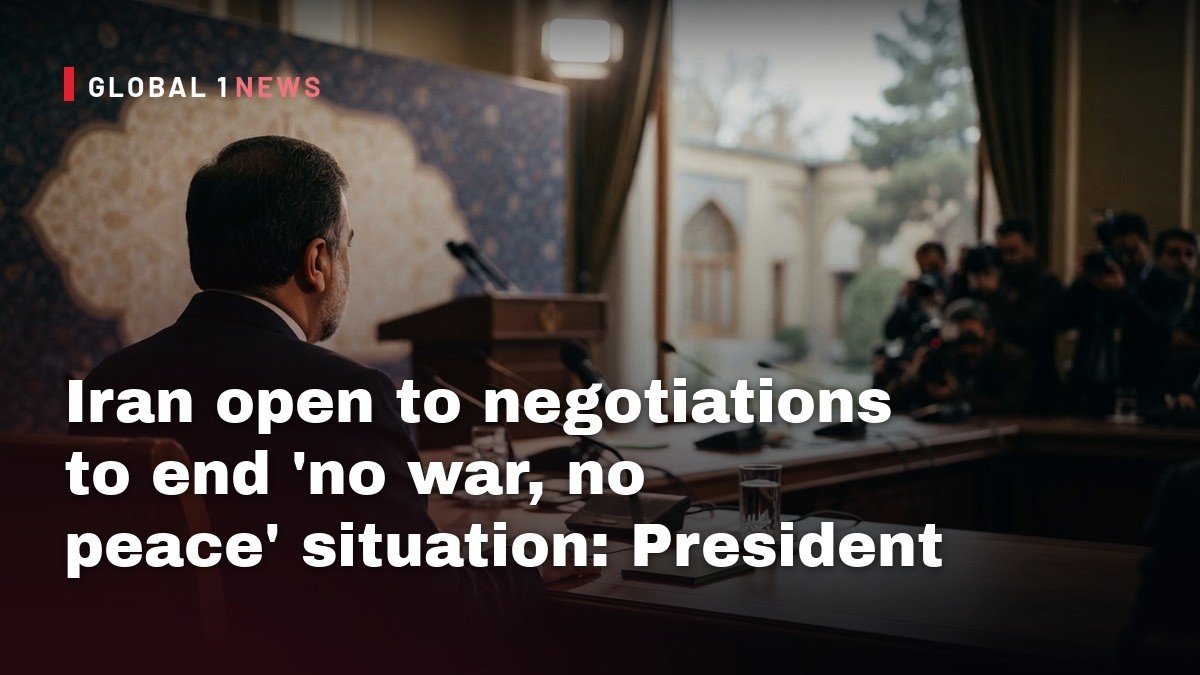
Iranian President Masoud Pezeshkian reiterated on Monday that Tehran remains willing to negotiate an end to the country’s “no war, no peace” stalemate with the United States. Speaking at a ceremony in Moscow during the 8th Summit of the Gas Exporting Countries Forum, he emphasized a desire for dialogue grounded in mutual respect, while warning that Iran would not capitulate to “force and bullying.” The president’s remarks, published on the Iranian presidency’s website, echo a broader diplomatic push to move the region away from the brink of armed confrontation that has haunted the Middle East since the U.S.–Israeli military offensive against Iran began in February 2026.
President Pezeshkian’s Call for Dignified Negotiations
In his address, President Pezeshkian framed negotiations as a matter of dignity. “We can negotiate with dignity and resolve the issue with dignity,” he said, underscoring that any talks must respect Iran’s sovereign rights. He stressed that logic, not force, should dictate how disputes are settled when a nation’s rights can be secured through dialogue. This language signals Tehran’s intent to re‑engage with Washington on the basis of equal conditions, a stance he linked to his earlier remarks at the United Nations General Assembly where he called for negotiations based on “justice and equal conditions.”
The president also made clear that Iran would not “surrender to force and bullying.” By pairing a willingness to negotiate with a firm refusal to yield under pressure, Pezeshkian sought to balance openness with resolve, a diplomatic tightrope that reflects the delicate regional balance after the February 2026 offensive.
Supreme Leader’s Directive to End the “Neither War nor Peace” State
According to the presidency’s statement, the president’s remarks were rooted in a direct instruction from Supreme Leader Mojtaba Khamenei. The Supreme Leader reportedly told officials to work toward ending the “neither war nor peace” condition that has defined Iran’s relationship with the United States for years. This directive adds weight to Pezeshkian’s public overture, suggesting that the highest echelons of Iranian leadership are now prioritising a diplomatic resolution over continued strategic ambiguity.
For ordinary Iranians, the phrase “no war, no peace” has come to symbolize a state of perpetual uncertainty, where economic hardship and security concerns coexist. The Supreme Leader’s call for a shift signals a potential opening for the public to see tangible progress if negotiations can indeed move beyond rhetoric.
The Islamabad Memorandum: A Fragile Foundation
In June 2026, Iran and the United States signed a 14‑point memorandum in Islamabad, mediated by Pakistan, that was intended to lay the groundwork for a lasting settlement. The agreement, however, has been hampered by divergent interpretations of its provisions and renewed military tensions. Pezeshkian’s recent comments highlight the memorandum’s fragility: while it created a diplomatic channel, the lack of full implementation has left both sides wary.
The president’s emphasis on “logic dictates resolving disputes through negotiations rather than war” can be read as an appeal to revive the spirit of the Islamabad memorandum. Yet he also warned that Iran would not accept pressure that threatens its rights, suggesting that any future talks must address the underlying power asymmetries that have plagued the agreement.
Economic Pressures and the Push for Energy Resilience
Pezeshkian used the occasion of the GECF summit to draw attention to Iran’s internal challenges. He warned of “plots by Iran’s adversaries” aiming to undermine the country, and called for strengthening domestic production to meet national needs. By linking energy self‑sufficiency with diplomatic leverage, the president underscored how economic resilience is intertwined with the ability to negotiate from a position of strength.
The call for “energy conservation and more efficient consumption” reflects the strain that sanctions and the ongoing conflict have placed on Iran’s economy. With the nation seeking to overcome “economic and energy‑related challenges,” the president’s message to the international community is clear: Iran will pursue domestic solutions while still demanding a fair diplomatic settlement.
Human Cost of the Ongoing Standoff
Beyond the high‑level diplomatic language, the “no war, no peace” reality has exacted a heavy toll on civilians across the region. The February 2026 U.S.–Israeli offensive sparked a wave of displacement, loss of livelihoods, and heightened insecurity for families living near contested borders. While the source material does not provide specific casualty figures, the continued state of tension has forced many to live under the constant threat of escalation.
For Palestinians, the broader context of heightened U.S. involvement in the region compounds existing hardships. The prospect of a negotiated settlement that includes Iran could influence the balance of power in the Middle East, potentially opening space for renewed diplomatic initiatives concerning the Palestinian cause. Yet the human cost remains a stark reminder that any diplomatic breakthrough must prioritize the protection of civilians and the restoration of basic rights.
International Law and the Quest for Justice
Pezeshkian’s insistence on negotiations “based on justice and equal conditions” invokes principles of international law that call for sovereign equality and the prohibition of coercive measures. By framing the dispute as one of rights rather than mere strategic interests, Iran positions its demands within the legal framework that underpins the United Nations Charter.
The president’s reference to “not surrendering to pressure” aligns with the legal principle that states may not be compelled to abandon legitimate claims through force. This stance resonates with broader calls from human‑rights organisations for any settlement to respect the rights of all peoples in the region, including the right to self‑determination and protection from collective punishment.
Prospects for a New Diplomatic Chapter
The president’s remarks, delivered at a high‑profile energy forum, signal a strategic attempt to link Iran’s economic interests with its diplomatic agenda. By coupling calls for energy conservation with a plea for dignified dialogue, Pezeshkian is seeking to broaden the conversation beyond the narrow confines of security to include economic sustainability and regional stability.
Whether Tehran’s openness will translate into concrete talks depends on several variables: the willingness of Washington to address Iran’s core concerns without imposing undue pressure, the ability of mediators—potentially Pakistan again—to bridge gaps in interpretation of the Islamabad memorandum, and the broader geopolitical climate, especially the stance of regional powers such as Saudi Arabia and the United Arab Emirates.
For the people of the Middle East, the promise of negotiations offers a glimmer of hope amid years of uncertainty. If dialogue can move from rhetoric to actionable steps, it may not only end the “no war, no peace” limbo but also lay the groundwork for a more just and stable regional order that respects human rights and international law.
This article was produced with AI-assisted research and editorial support. Reporting is based on the source material cited below. Sources: Middle East Monitor; middleeastmonitor.com; Global1.News (10 November 2026).
By Fatima Al-Rashid, Staff Writer
What's Your Reaction?
 Like
0
 Dislike
0
 Love
0
 Funny
0
 Wow
0
 Sad
0
 Angry
0
Gulf/MENA Correspondent at Global1.News. Based in Doha, covering Gulf politics, energy markets, diplomacy, and development across the Middle East and North Africa. Tracks the economic transformation of the Gulf states.









Comments (0)