
Data center in Kyiv, Ukraine, suffers "critical damage" and goes offline after Russian bomb attack
When a Russian bomb hits a data centre, the fallout isn’t just a headline‑grabbing photo – it’s a stark reminder that our digital supply chain is still vulnerable to kinetic warfare.

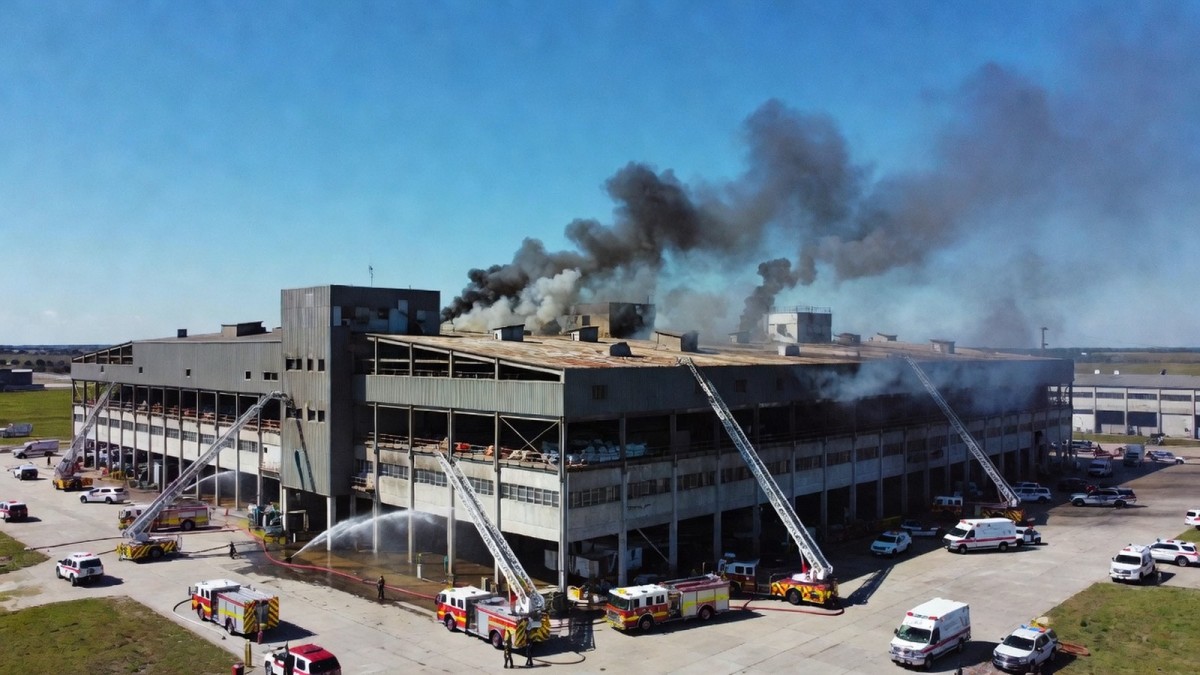
When a Russian bomb hits a data centre, the fallout isn’t just a headline‑grabbing photo – it’s a stark reminder that our digital supply chain is still vulnerable to kinetic warfare. The Parkovyi Data Center in Kyiv, Ukraine’s only Uptime‑certified Tier III facility, went completely offline after a series of attacks last month. The owners posted on Facebook that the site suffered “critical damage” as of 1 October 2026 and that restoration is impossible. Their first relief was that staff are safe and customer data has been shifted to backup sites in the EU. That’s the good news. The bad news is the hard reality for independent hosting providers: a single strike can erase a whole tier of services, and the ripple effects can cripple regional cloud ecosystems.
Why Tier‑III matters to us
Tier III certification signals redundant power and cooling, plus a level of fault tolerance that many customers demand for mission‑critical workloads. Parkovyi’s 2,715 sqm footprint made it a sizeable hub in a market that otherwise relies on older, less resilient sites. For a founder running a boutique hosting business, losing a Tier III partner means you either scramble for another certified facility – which is scarce in Eastern Europe – or you downgrade your service guarantees, risking client churn.
From a risk‑management perspective, the loss of a single Tier‑III node forces you to re‑evaluate your redundancy strategy. If you’ve been leaning on a single “best‑in‑class” data centre to meet SLA commitments, you now have a glaring single‑point‑of‑failure. The lesson is clear: diversify your geographic footprint, even if it means paying higher rates on hyperscalers or building out your own edge nodes.
The cost of “impossible” restoration
The owners of Parkovyi bluntly said restoration is impossible. That phrase carries weight. It implies structural damage that can’t be patched overnight – likely to the building’s core, power distribution, or cooling loops. For providers that have been using Parkovyi as a primary colocation point, the financial hit isn’t just the lost rack space; it’s the cost of migrating workloads under duress, potential data egress fees, and the scramble to secure alternative capacity.
In practice, you’ll see a surge in demand for any spare capacity in neighbouring EU sites. Prices will spike, and the market will favour larger players with deep inventory. Independent hosts must be ready to negotiate short‑term contracts or tap into community‑driven capacity pools before the market tightens.
Backup sites aren’t a silver bullet
The Facebook post reassured customers that data is “deployed on backup sites in the EU.” That’s the textbook response, but it glosses over the latency and compliance challenges of cross‑border replication. For latency‑sensitive apps – think fintech or real‑time IoT – a hop to Western Europe can add milliseconds that break user experience.
Moreover, the regulatory landscape in the EU is a minefield. Data residency rules can force you to keep certain workloads within specific jurisdictions. If your backup sites sit in a different legal regime, you may need to re‑architect your data handling processes, adding both time and cost.
What this says about the geopolitical risk model
Since 2014, the region has been a flashpoint for cyber and kinetic attacks on digital infrastructure. The recent bombing underscores that the threat vector has expanded from purely cyber‑espionage to physical destruction. For founders, this means the traditional threat model – firewalls, DDoS mitigation, and ransomware insurance – is no longer sufficient.
Risk assessments now need to factor in “RuNet” aggression: the possibility that a hostile state will target data centres directly. That changes the calculus for insurance premiums, capital allocation for disaster recovery, and even the choice of where to locate your own infrastructure.
Practical steps for independent providers
First, audit your current redundancy map. Identify any single‑point‑of‑failure sites, especially those in high‑risk zones like Ukraine. Second, negotiate multi‑region contracts with carriers that can shift traffic on the fly – think of leveraging anycast routing to reroute around a downed node.
Third, build a “cold‑standby” stash of hardware that can be deployed in a secondary colocation within weeks. It’s an upfront cost, but it buys you breathing room when the market tightens after a shock. Finally, keep an eye on emerging edge locations in the Caribbean and Central America – they’re less likely to be in the crosshairs and can serve as a low‑latency bridge to the US.
Why hyperscalers aren’t the answer
When a Tier III site goes dark, the instinct is to rush to the big cloud providers. Their massive scale can absorb sudden demand, but the price tags are steep, and you lose the control that independent hosting prides itself on. Moreover, hyperscalers often bundle services that lock you into proprietary stacks, making migration back to a boutique environment costly.
For founders who built their business on transparent pricing and hands‑on support, the temptation to “just go big” should be weighed against the loss of differentiation. A hybrid model – core workloads on your own hardware, burst capacity on the cloud – can give you the best of both worlds while keeping costs in check.
Bottom line for founders
The Parkovyi blow‑up is a wake‑up call. Physical attacks on data centres are no longer hypothetical; they’re happening now, and they can cripple a market’s entire digital backbone. As a founder, you must treat geographic diversification as a core part of your product roadmap, not an after‑thought. Build redundancy, keep backup sites truly ready, and maintain a small reserve of hardware to pivot when the market tightens.
In short, don’t let a single bomb dictate your service level. Harden your supply chain, negotiate smart contracts, and keep your eyes on emerging, low‑risk regions for the next wave of infrastructure. That’s how you stay in the game when the geopolitical winds shift.
— Allan Ali, Founder
This article was produced with AI-assisted research and editorial support. Reporting is based on the source material cited below. Sources: Data Center Dynamics; datacenterdynamics.com; Global1.News (01 October 2026).
By Allan Ali, Global1.News
What's Your Reaction?
 Like
0
Like
0
 Dislike
0
Dislike
0
 Love
0
Love
0
 Funny
0
Funny
0
 Wow
0
Wow
0
 Sad
0
Sad
0
 Angry
0
Angry
0

Publisher of Global1.News. Automation architect, systems builder, and the guy making sure the truth gets published.













Comments (0)