
US Republicans Weren’t Happy With Trump’s Hosting of Xi
President Donald Trump’s decision to host Chinese President Xi Jinping for a state dinner in Washington sparked a rare chorus of dissent among Republican senators, exposing deep fissures within the party over how to confront Beijing.
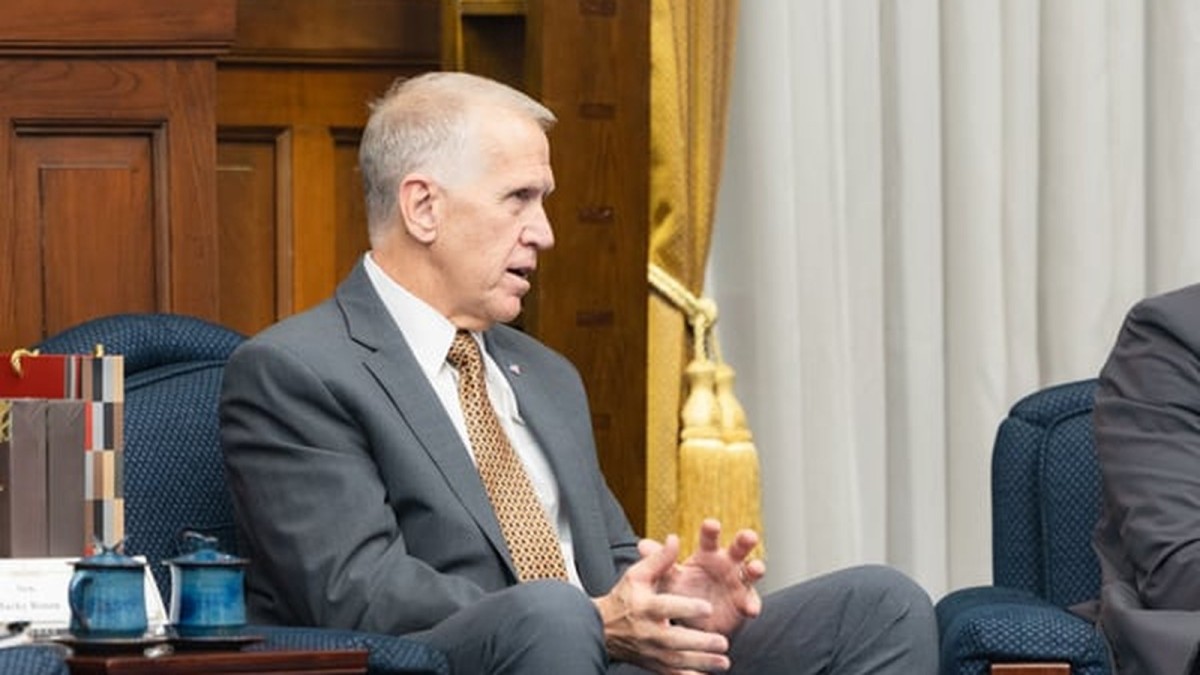
President Donald Trump’s decision to host Chinese President Xi Jinping for a state dinner in Washington sparked a rare chorus of dissent among Republican senators, exposing deep fissures within the party over how to confront Beijing. While the White House framed the encounter as a reciprocal gesture for Trump’s May visit to China, several senior GOP lawmakers publicly condemned the move, labeling Xi a “brutal, unelected, and oppressive dictator” and questioning the optics of honoring a leader they regard as a despotic rival.
Senatorial Opposition: From Colorful Rhetoric to Policy‑Focused Critique
Louisiana Senator John Kennedy, known for his flamboyant speaking style, was among the first to voice disapproval on the Will Cain show. He dismissed Xi alongside the leaders of Iran, North Korea and Russia, likening the quartet to “the same hooker in different dresses” and branding them “a colony of reptiles,” with Xi as the “chief reptile” and “quarterback.” Kennedy’s remarks, while vivid, underscored a broader Republican sentiment that the four authoritarian heads share a common threat to U.S. interests.
More measured, yet equally forceful, criticism came from Mississippi Senator Roger Wicker, chairman of the Senate Armed Services Committee. From the Senate floor, Wicker warned that inviting Xi for a “lavish welcome” ignored “the troubling issues we have with President Xi and the Chinese Communist Party.” He urged the president to use the summit to demand answers on a series of human‑rights and security concerns, ranging from alleged Chinese intelligence support for Iran to the plight of Uyghurs, Tibetan Buddhists, Christians, Falun Gong practitioners, and the imprisonment of Hong Kong publisher Jimmy Lai.
Security Concerns Highlighted by the Armed Services Committee
Wicker’s position as chair of the Armed Services Committee gave his objections particular weight. The committee oversees aeronautical and space activities, weapons development, and the Department of Defense, making its chair’s perspective on China’s military posture especially salient. He reminded his colleagues that China’s “massive military arsenal is aimed directly at the United States of America,” a point that resonated with many on the committee who monitor the growing capabilities of the People’s Liberation Army.
In addition to human‑rights issues, Wicker cited a recent media report that China had supplied Iran with satellite imagery that contributed to the death of American troops. He suggested that the president press Xi for clarification on that incident, linking Beijing’s intelligence cooperation with Tehran to the broader strategic competition between Washington and Beijing.
North Carolina’s Thom Tillis: Timing and Perception of Despotic Hospitality
North Carolina Senator Thom Tillis added a timing dimension to the criticism. Speaking to CBS News on the day of the summit, Tillis called Trump’s hosting of Xi a “WTF moment,” questioning why the Chinese leader received a red‑carpet welcome that surpassed those given to traditional U.S. allies. He warned that the United States was “spending more time with despots and less time with democratic leaders,” suggesting a shift in Trump’s China policy after years of a hard‑line stance.
Tillis argued that Xi’s visit was not about learning democratic or capitalist practices, but rather about understanding how opposition forces might eventually align with Beijing’s worldview. This framing implied that the summit could embolden Chinese narratives about the United States, a concern that resonates with Republican anxieties about Beijing’s soft‑power influence.
White House Defense: Reciprocity and Economic Interdependence
The Trump administration, through spokeswoman Anna Kelly, downplayed the intra‑party criticism by emphasizing reciprocity. Kelly noted that Trump was “reciprocating” the hospitality Xi showed during the president’s May visit to China, positioning the state dinner as a diplomatic norm rather than an endorsement of Xi’s domestic policies.
Economic context also featured in the administration’s narrative. The article cites that from 1990 through 2020, the United States invested $284 billion in China, not counting venture capital, and that over 84,000 U.S.‑invested companies operate in the country. Moreover, more than 3 million Chinese students have studied in the United States since the late 1970s. These figures illustrate the depth of economic and educational ties that the administration argues make a state dinner a pragmatic gesture of continued engagement.
The CCP’s Economic Evolution and Its Implications for U.S. Policy
The source material explains that the Chinese Communist Party (CCP) has shifted from a pure command economy to a “fusion economy” that blends state‑owned enterprises, privately owned domestic firms, and foreign‑owned companies. This hybrid model, driven in part by foreign investment, has accelerated China’s modernization by exposing its workforce to new products, manufacturing standards, and management practices.
From a Japanese perspective, this evolution mirrors the broader Asian trend of integrating market mechanisms while retaining strong state control. The article suggests that foreign‑owned enterprises have been pivotal in raising living standards for many Chinese citizens, creating a constituency that may view foreign engagement positively, even as the CCP tightens political control.
Political Calculus: Balancing Hard‑Line Rhetoric with Strategic Engagement
The divergent Republican reactions highlight a strategic dilemma. On one hand, senators like Kennedy and Tillis articulate a hard‑line narrative that frames China as an authoritarian rival demanding containment. On the other, figures such as Wicker, while critical, also recognize the necessity of confronting China on specific issues—human rights, intelligence cooperation, and military expansion—through direct dialogue.
This dual approach reflects a broader bipartisan consensus that engagement must be coupled with firm demands. The Senate Armed Services Committee’s involvement indicates that security considerations remain paramount, while the human‑rights agenda signals an effort to pressure Beijing on moral grounds without abandoning diplomatic channels.
Implications for Future U.S.–China Relations
The episode underscores that state visits and high‑level summits are not merely ceremonial; they become flashpoints for internal political debate. The Republican backlash may influence how future administrations balance reciprocal hospitality with domestic political constraints, especially as the GOP grapples with its own identity on foreign policy.
For Japan and the wider Asia‑Pacific region, the U.S. internal discord signals potential volatility in the alliance’s China strategy. Japanese policymakers, accustomed to aligning with Washington on a united front against Beijing’s assertiveness, will likely monitor how Republican criticism shapes American diplomatic posture. A more confrontational stance could translate into heightened security cooperation, while a continued emphasis on economic interdependence may sustain a cautious engagement approach.
In sum, the state dinner for Xi Jinping revealed deep fissures within the Republican Party, juxtaposing colorful denunciations with substantive policy concerns. As the United States navigates its complex relationship with China, the balance between hard‑line rhetoric and pragmatic dialogue will remain a defining feature of American foreign policy—and a critical variable for Japan’s own strategic calculations in the evolving Indo‑Pacific landscape.
This article was produced with AI-assisted research and editorial support. Reporting is based on the source material cited below. Sources: The Diplomat; thediplomat.com; Global1.News (01 October 2026).
By Kenji Tanaka, Staff Writer
What's Your Reaction?
 Like
0
Like
0
 Dislike
0
Dislike
0
 Love
0
Love
0
 Funny
0
Funny
0
 Wow
0
Wow
0
 Sad
0
Sad
0
 Angry
0
Angry
0

Japan Correspondent at Global1.News. Tokyo-based voice covering Japanese politics, technology, economy, and culture. Tracks the intersection of tradition and innovation in one of the world's most dynamic societies.















Comments (0)