
Trump's Ban On Canadian Liquor, Dairy And Motorcycles Takes Effect
An order excluding Canadian liquor, dairy, molasses and large motorcycles from US importation took effect at 12:01 a.m. Eastern on Tuesday, 29 September, converting a 50 per cent tariff into an outright ban on about $967 million of goods, 87 per cent of it alcohol.
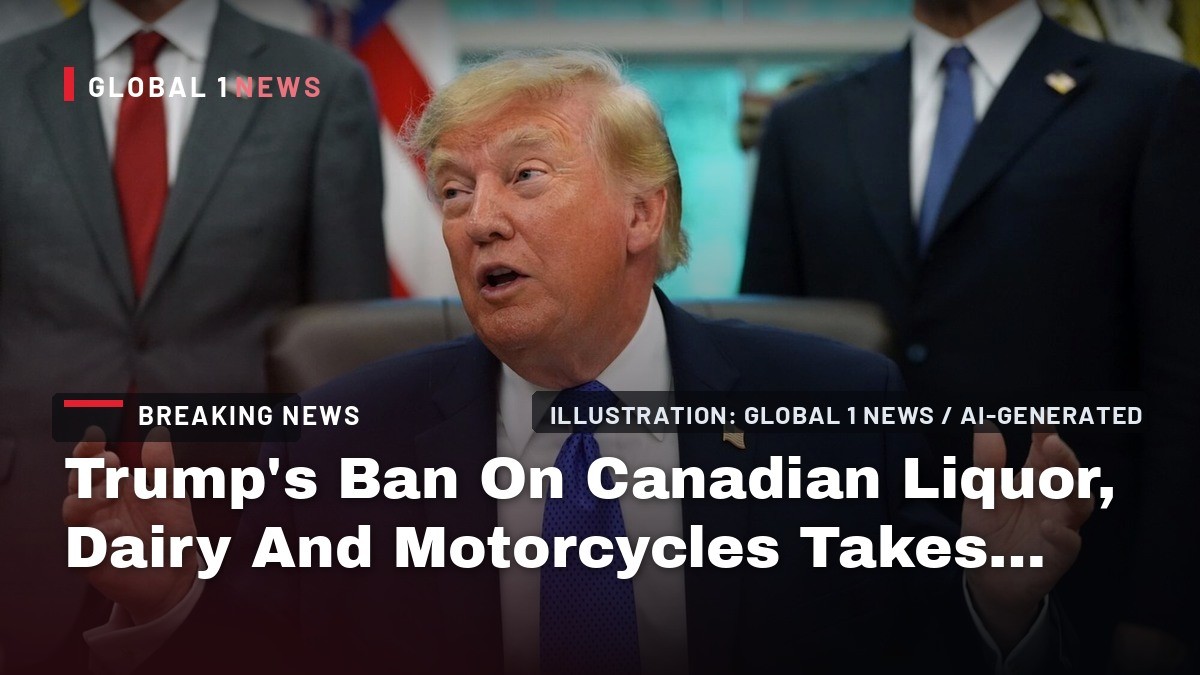
At 12:01 a.m. Eastern time on Tuesday, the United States stopped taking Canadian whisky, Canadian beer, Canadian whey protein and Canadian motorcycles. Not taxed them. Stopped taking them. That distinction is the whole story.
Washington calls it a response to discrimination. Ottawa calls it unjustified. And Washington spent Monday insisting a deal was still within reach — even as the gate swung shut.
Trump's Ban On Canadian Liquor, Dairy And Motorcycles Takes Effect
WASHINGTON — A US order excluding a long list of Canadian goods from importation took effect at 12:01 a.m. Eastern time on Tuesday, 29 September, converting a punishing 50 per cent tariff into something far harder to negotiate around: outright refusal.
It reaches alcoholic beverages, dairy products and motorcycles. President Donald Trump signed the exclusion orders on 8 September, the same day Canada's counter-tariffs on C$27.6 billion of US goods took effect. And on Monday, hours before the ban began, Trump told reporters in the Oval Office that he expected Canada to come to him.
The Ban Is In Effect, And It Is Not A Tariff
For most of this trade fight, the instrument has been money: a percentage added to the price of a good crossing the border. Section 338 of the Tariff Act of 1930 allows something different. It permits the president to exclude products from importation altogether, and that is what the 8 September proclamations do.
The legal mechanics matter commercially. A 50 per cent duty leaves an importer a choice — absorb the cost, pass it to the buyer, or walk away. An exclusion removes the choice. Goods on the list are not expensive to bring into the United States. They are not brought in.
Trade attorney Patrick Childress, a partner at Holland & Knight and a former US trade official, put the practical effect in one line: "For a lot of these goods, the 50% was already acting as a de facto ban by making importation from Canada into the United States uneconomical."
What Washington Actually Banned — And What It Costs
The alcohol list is the widest of the three categories and covers dozens of products — malt beer, wine, cider, whisky, vodka, vermouth, tequila, rum and other spirits, in both packaged and unpackaged form. Non-alcoholic beer is included as well, a detail that catches producers who assumed the fight was about proof strength.
The dairy side is narrower but pointed. It centres on whey — the milk byproduct left over from cheese-making, including whey protein concentrate — which has quietly become a significant export line for Canadian processors. Statistics Canada reported more than $700 million in dairy exports to the United States in 2024, though it remains unclear how much of that trade falls inside the banned classifications.
Cane and invert molasses are covered. So are motorcycles and mopeds fitted with reciprocating internal-combustion engines with a cylinder capacity exceeding 800 cubic centimetres — a description that reads like customs language and lands like a wall for the manufacturers it names.
Jacob Jensen, director of trade policy at the American Action Forum, calculates that the ban covers $967 million worth of Canadian imports, based on 2025 figures. Of that, 87 per cent is alcoholic beverages. Set against the scale of the relationship, the numbers stop being dramatic: two-way US-Canada trade runs to roughly $880 billion a year, and the ban, as the Associated Press put it, amounts to barely a ripple in it.
That is the paradox at the centre of this dispute. The measure is legally severe and economically modest, which is precisely why it can be sustained. Washington has found a lever that inflicts visible pain on named industries without disturbing the broader flow of goods either country depends on.
A Depression-Era Law Built For Exactly This
Section 338 is not a modern contrivance. Congress wrote it in 1930, in the same tariff statute that gave the world Smoot-Hawley, and it has sat largely unused for most of the century since. It provides a remedy for discrimination: where a foreign country burdens American commerce in a way it does not burden the commerce of other nations, the president may impose duties of up to 50 per cent — or exclude the offending products entirely. Several Democratic lawmakers proposed repealing the provision last year, arguing it handed any president a destabilising economic weapon.
Trump invoked it on 20 July this year through Proclamation 11046, imposing additional duties on Canadian alcohol, dairy and motor vehicles on the finding that Canada discriminates against US producers. The administration's evidence was specific: Ontario's Liquor Control Board ceased purchasing US products on 4 March 2025 and pulled them from its catalogues and shelves, Quebec directed its own liquor authority to do the same, and although Alberta and Saskatchewan later lifted their bans, most provinces did not.
Six Weeks From Near-Deal To Midnight
The timetable explains how both governments can now claim the other walked away. On 18 August, Proclamation 11056 suspended the new duties for three days after Canada "expressed a commitment" to remove the discrimination at issue. The suspension was a genuine opening.
It did not hold. The 8 September proclamation states flatly that on 21 August Canada "reneged on its commitment, ceased negotiating in good faith, and did not remove the discrimination." At 12:01 a.m. on 22 August, the suspension lapsed and the 50 per cent duties took effect.
Canada's answer followed within days. Ottawa announced counter-tariffs of 15, 25 or 50 per cent on C$27.6 billion of US imports — matching, in the government's phrase, dollar for dollar and rate for rate — covering more than 700 product lines across steel and aluminium, dairy, appliances, agricultural equipment, pulp and paper, plastics and electronics.
Ottawa's Answer: $27.6 Billion, Dollar For Dollar
The Canadian response is deliberately structured rather than sweeping. Steel and aluminium products previously carrying a 25 per cent counter-tariff moved to 50 per cent. Appliances and dairy products, cheese among them, sit at 25 per cent. Two orders in council issued on 4 September, the United States Surtax Order (2026) and an amendment to the existing steel and aluminium order, implement the package, which took effect on 8 September.
Canada's published rationale is protective rather than punitive: the stated objective is "to protect Canadian workers, producers and manufacturers harmed by U.S. tariffs by putting them on a better competitive standing against U.S. products in the Canadian market."
Alongside the tariffs sits a support package, including $3.5 billion in Rapid Response Supports for Workers and Employers and a Canada Strong Diversification Fund administered through the Strategic Response Fund. Existing counter-tariffs on US autos remain, as does a remission framework for exceptional relief.
"A Wall Is A Lot More Difficult To Circumvent"
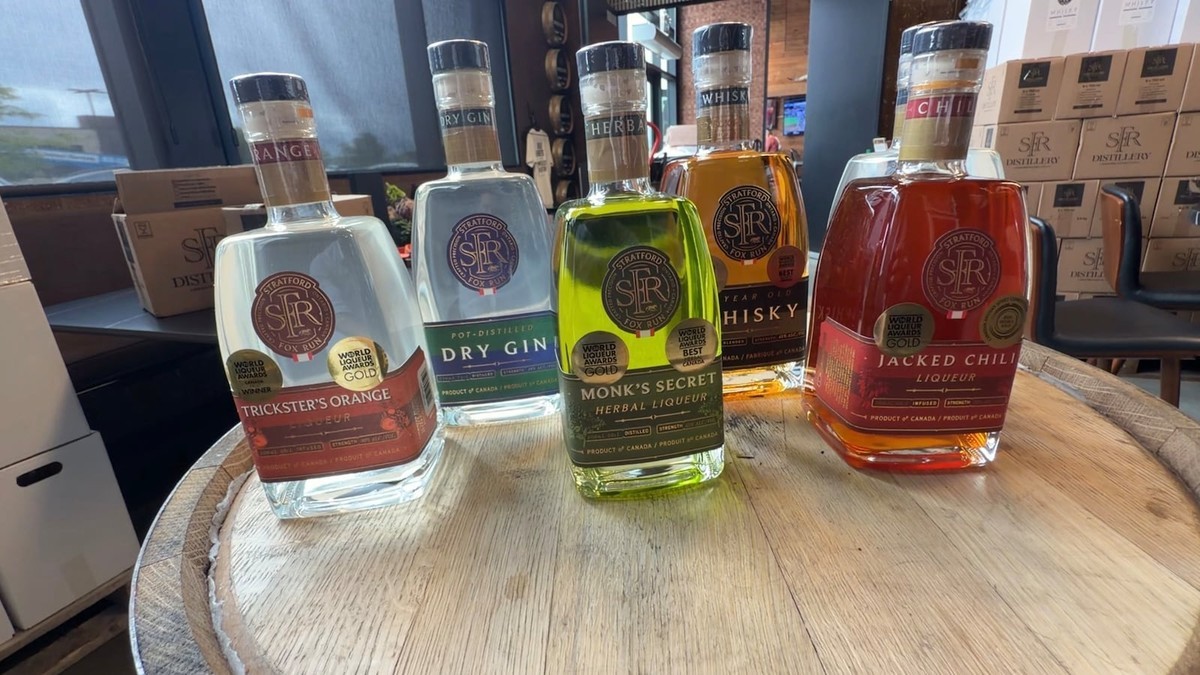
Canadian exporters have spent the past week doing arithmetic they did not expect to need. Adam Brierley, general manager and master distiller at SFR Distillery in Ottawa, had planned a push into the US market for a flagship whiskey developed as a bourbon alternative — a product that reached Ontario shelves precisely because US bourbon had been pulled from them.
"As of Tuesday, it will actually be illegal for us to export our goods to the United States because of the decisions they've made down there," Brierley said. His replacement strategy is Europe: trade shows, distributors, and the hope of shipping whiskey by the container.
International trade lawyer Barry Appleton framed the difference between a tariff and a ban plainly. "With an import ban you're talking about a wall, and a wall is a lot more difficult to be able to circumvent," he said, calling the move "a major escalation" for a small share of the economy with a large impact inside the affected sectors.
What Both Sides Are Saying
US Trade Representative Jamieson Greer has been blunt about the administration's reasoning. Canada, he said on 8 September, "walked away from a near-final trade deal that offered better treatment than any other trading partner, and instead Canada chose to embark on senseless retaliation against the United States." The president, he added, "will continue to leverage the tools at his disposal."
Trump's own framing on Monday was more personal. He said he thought the Canadian side would contact him "in the next three or four weeks," and that the United States would "win everything." "They're gonna come in and they're gonna say, 'Sir, we are sorry,'" he told reporters. "They've treated the United States very, very badly. I think a deal will be made but it's gonna be fair." Senior trade adviser Peter Navarro called Canadians "the most difficult and arrogant of the traders."
Canada's response has been procedural and cool. "We take note of the coming into force of the Administration's previously announced trade measures," said Gabriel Brunet, a spokesman for Canada-US Trade Minister Dominic LeBlanc. "Our first priority remains on protecting and supporting Canadian workers, farmers, families, and businesses from these unjustified actions."
Where Carney Is Looking Instead
Brunet's statement points at a strategy rather than a counter-move: "Our core focus is on what we can control: building strength at home, diversifying our partnerships abroad, and building Canada strong for all Canadians."
Prime Minister Mark Carney has been building that alternative for months. The United States accounted for more than 70 per cent of Canadian exports last year, and Carney has set out to double Canada's non-US trade within a decade. He has embraced the prospect of Canada becoming the European Union's first associate member, said trade talks with India are making "good progress" with a target of concluding by the G20 summit in mid-December, and struck a deal with China allowing a limited number of Chinese electric vehicles into Canada at a sharply reduced tariff in exchange for lower Chinese tariffs on Canadian canola.
His framing of the relationship has been consistent: "There is now a price to be paid for access to the United States market."

The Fight Over A Bottle Of Rye
Strip the legal citations away and the dispute began somewhere much smaller than a customs schedule. Canada's provinces control alcohol distribution, and after Washington imposed tariffs on Canadian goods in 2025, most of them removed American wine and spirits from their shelves. Ontario's liquor board stopped purchasing US products outright.
That is the discrimination Washington's proclamations describe, and the numbers behind it are not trivial. The White House found that even as total alcoholic beverage imports into Canada fell by nearly 12 per cent, imports from countries other than the United States rose by more than $170 million between March 2025 and February 2026 compared with the same period a year earlier, with the European Union accounting for more than $100 million of that increase. Saskatchewan then went further, imposing an additional 50 per cent levy on US alcoholic beverages effective 8 September — a step the White House cited as evidence that Canada had maintained or increased the measures it considers discriminatory.
The White House says a negotiated settlement remains possible. But provincial liquor boards are not run from Ottawa, and the federal government cannot simply order them to restock American shelves. That gap — between what a prime minister can promise at a negotiating table and what a province will actually do with its own inventory — is the narrow space in which this entire dispute has been fought.
Why This May Not Move The Needle
The consensus among trade specialists is that neither side has yet been hurt enough to blink. Childress expects the standoff to run for months rather than weeks, arguing the bans and tariffs so far "probably won't cause enough economic upheaval to force either party back to the negotiating table." Jensen of the American Action Forum sees pressure building from below instead. "This marks yet another escalation in the trade war that may result in further retaliation on the Canadian side," he said, predicting that affected Canadian exporters and US importers "will be highly motivated" to press both governments for a resolution.
One manufacturer has already absorbed the blow with unusual equanimity. Bombardier Recreational Products in Quebec confirmed its three-wheel Can-Am Spyder and Canyon motorcycles "will be excluded from importation into the U.S." — then noted the impact probably will not be felt until next year, because most production and shipments for the current season are already complete.
What To Watch Next
Four markers will show whether this is a plateau or the start of a slide. First, whether Canada's support package reaches exporters before order books empty. Second, whether Ottawa responds with a fourth round of countermeasures or holds its current line. Third, whether provincial liquor authorities move at all on US products — the single concession Washington has demanded most clearly. And fourth, when renewal talks for the US-Mexico-Canada Agreement begin. That pact, the one that lets most goods cross North American borders duty free, could see negotiations run to 2036.
Trump said Monday he expects Canada to call within three or four weeks. No such call has been announced by either government, and on the American side the calculation is explicit: the ban is narrow enough to survive a long fight, and broad enough to be felt by the industries Canada most wants to protect.
Folks, the lesson here is older than the statute. A tariff is a negotiating position. A ban is a fact. As of 12:01 a.m. Tuesday, the United States is dealing in facts.
By Jessica Ali, Staff Writer
This article was produced with AI-assisted research and editorial support. Sources: The White House proclamations of 20 July, 18 August and 8 September 2026; Office of the United States Trade Representative; Government of Canada Department of Finance list of products subject to counter-tariffs; Government of Canada news release of 25 August 2026; Borden Ladner Gervais and Dentons trade analyses; the Associated Press; BNN Bloomberg; CBC News; CTC News; CBS News; NBC News; CNBC via Yahoo Finance; CTV News Ottawa; and the Tariff Act of 1930, Section 338 (19 U.S.C. 1338).
What's Your Reaction?
 Like
0
Like
0
 Dislike
0
Dislike
0
 Love
0
Love
0
 Funny
0
Funny
0
 Wow
0
Wow
0
 Sad
0
Sad
0
 Angry
0
Angry
0

Editor-in-Chief at Global1.News. Atlanta-based journalist who cuts through the BS and tells it like it is. Lead anchor, host, and the voice you hear when the spin stops and the truth starts.















Comments (0)