
Tennessee Halts Executions for the Year After Christa Pike Survives Two Lethal Doses
Tennessee halted executions for the rest of 2026 after two doses of pentobarbital failed to end Christa Pike's life at Riverbend Maximum Security Institution in Nashville. Governor Bill Lee ordered a third-party review and has not named who will run it.
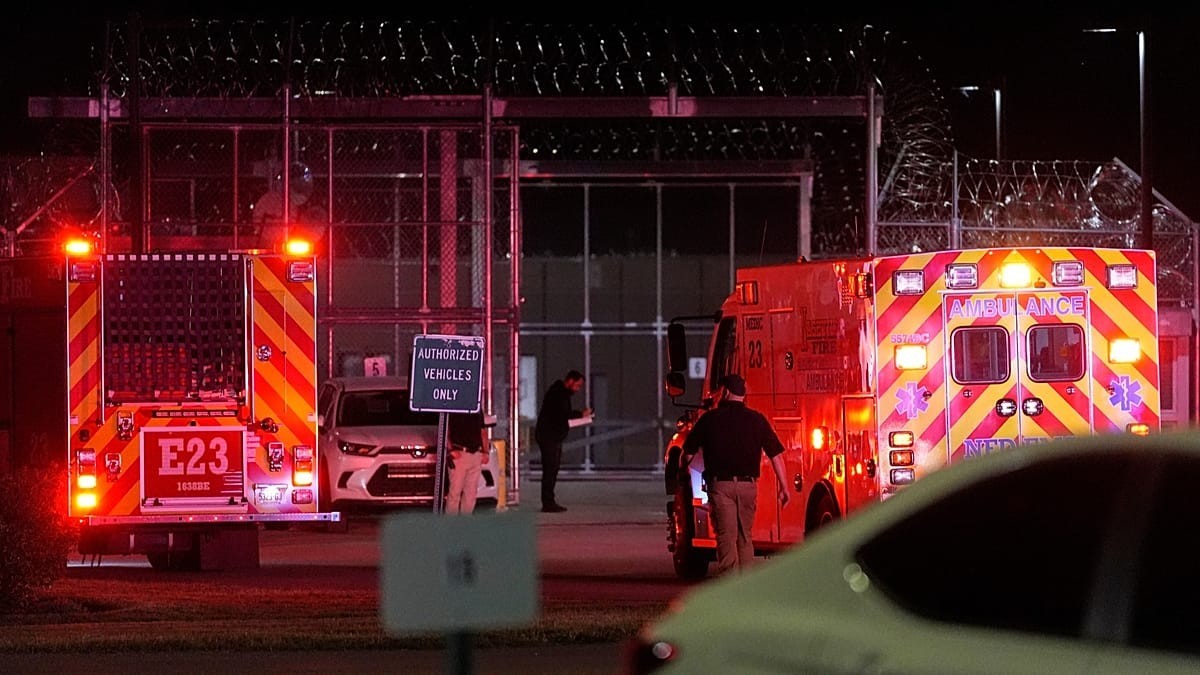
Tennessee planned to execute Christa Gail Pike on Wednesday night. The state had a warrant, a gurney and a drug protocol. It did not have a working ending.
Officials gave Pike, 50, two doses of pentobarbital at Riverbend Maximum Security Institution in Nashville. She was still breathing when the curtain closed. She was still snoring when the microphone was cut.
By midnight, Governor Bill Lee had stopped the clock. No more executions in Tennessee this year. A third-party review is now open, and the state has not said who will run it.
Tennessee Halts Executions for the Year After Christa Pike Survives Two Lethal Doses
Nashville, Tennessee - The execution was set for 10 a.m. Wednesday. It did not happen then. It did not happen by 8:53 p.m., when media witnesses were told to leave.
What Happened at Riverbend
Pike was scheduled to die by lethal injection at 10 a.m. About an hour before, a divided panel of the US Court of Appeals for the Sixth Circuit issued a last-minute stay, saying it needed time to consider whether Pike's allegations of childhood sexual abuse had been fully weighed at her sentencing. The attorney general's office appealed to the Supreme Court, arguing that stopping the execution at the last moment traumatised Colleen Slemmer's family and rewarded what it called "abusive delay tactics" by Pike's attorneys. The justices later vacated the stay and cleared the way.
Officials gave Pike two doses, her attorneys said in court filings late Wednesday. By 8:26 p.m., witnesses reported the second dose had gone in. Pike was still audible. Her lawyers filed an emergency motion to the Tennessee Supreme Court saying she was in "unnecessary agony." Their filing said: "Ms. Pike has not lost consciousness and still has a heartbeat and is audibly snoring."
The Department of Correction said its protocol allows for no additional procedures beyond what was carried out. It said Pike was transported to an off-site medical facility. More than 12 hours later, the state had not released a condition update.
A Protocol That Ran Out of Steps
Tennessee's protocol calls for a secondary set of drug syringes if the inmate is not deceased after the first set. Each set holds four syringes: one of sterile saline, two of 50 millilitres of pentobarbital, and another of saline. The Department of Correction said it followed every step of its lawful, established protocol. But the protocol does not spell out what happens if the subject is alive after the second set. That gap became the story on Wednesday night.
Pike's attorneys said in a statement that the state "once again failed to carry out a lawful execution." They listed what they called the concerns she had raised: difficult vein access, blown veins, degraded pentobarbital, no emergency medical care available when things go wrong, all under a protocol that remains veiled in secrecy. The degraded-drug claim is her attorneys' allegation, not a finding, and no official finding exists on what caused the two doses to fail to end her life.
Tennessee switched from a three-drug series to pentobarbital in 2024, more than two years after the state halted the execution of Oscar Smith and acknowledged it had failed to ensure its drugs were tested properly. The Department of Correction said the chemical in the protocol has consistently been effective.
The Governor Stops the Clock
Shortly before midnight Central Time, Lee said he was opening an investigation into what went wrong. It will be carried out by a third party. He did not say who. He also said the remaining execution scheduled in Tennessee for 2026 would not happen this year.
Lee said: "Carrying out a lawfully imposed sentence is among the State's most serious responsibilities, and the people of Tennessee expect it to be done in a manner that is not only legal and constitutional, but is effective." He said he had ordered "a comprehensive, third-party review to determine exactly what occurred."
On Thursday, at a ribbon-cutting ceremony, Lee said: "I'm highly disappointed, along with Tennesseans, about what happened last night." He said he did not know Pike's condition. He called the failed execution "deeply disturbing" and "a tragedy." He said: "There is no one that wanted what happened last night to happen. It shouldn't have happened."
What the Witnesses Saw
Media witnesses watched from a separate room. Officials raised the curtains to the execution chamber at 7:27 p.m. Pike was strapped to a gurney. She gave what were described as her last words: "I'm going to leave this world the way I spent most of my life and that is in love." She described herself as at peace.
Kim Chandler, a reporter for the Associated Press who witnessed it, said: "She said she had love for the people who were out here hating on her. She closed her statement with saying, 'I'm at peace. I'm ready to be free.' Then something about celebrating her freedom, and then she closed with, 'This is a happy day.'"
Pike remained awake. At one point she raised her head and asked prison officials if her arm was supposed to feel that way. It was not clear what she was referencing. Tori Gessner, a WKRN journalist and media witness, said she heard Pike complain of pain: "My arm feels like it's about to burst open." Gessner also said: "Nothing about today was normal."

The Case That Put Her on Death Row
Pike was sentenced to death in 1996. She committed the killing at 18. Prosecutors said Pike feared Colleen Slemmer was trying to steal her boyfriend. They said she lured Slemmer, 19, to a wooded area on 12 January 1995. Prosecutors said Pike cut Slemmer with a box cutter and beat her with a large chunk of asphalt.
Pike and her boyfriend were convicted of the fatal stabbing and beating of Slemmer, their classmate at a job training facility in Knoxville. Tadaryl Shipp, Pike's boyfriend, was 17 at the time. He admitted he carved a pentagram into Slemmer's body. He received life in prison with the possibility of parole and was not eligible for the death penalty at 17. Shadolla Peterson was the third co-conspirator. Neither of the other two faces the death penalty. Pike was the only one sentenced to death.
The case drew widespread attention, in part because of the pentagram. Other elements stoked fears of Satan worship during the "satanic panic" of the 1980s and 1990s.
An Outlier Sentence, Her Lawyers Argued
After the killing, Pike was diagnosed with bipolar disorder and post-traumatic stress disorder. In her clemency petition she said she only wanted to fight Slemmer but killed her in a frenzied attack when she couldn't "put the brakes on." She said in a statement: "I was a mentally ill 18-year-old kid. It took me numerous years to even realize the gravity of what I'd done."
Assistant Federal Defender Stephen Ferrell said Pike's death sentence is an outlier because other 18-year-olds in Tennessee have had such sentences vacated. Her attorneys argued that the failure to present her history of suffering from sexual violence and mental health issues to the jury would be "a form of gender-based violence prohibited under international law."
Before the execution, her attorneys filed challenges with the Supreme Court of Tennessee. They stated she had "small compromised veins," which could lead to extravasation, an accidental leakage of intravenous fluid into surrounding tissue resulting in extreme pain. They asked for hanging as an alternative method. Senior Judge Mark Ward rejected that, finding her diagnosis failed to create a "substantial risk" that IV access would cause "an objectively intolerable risk of harm."
The Mother Who Waited Three Decades
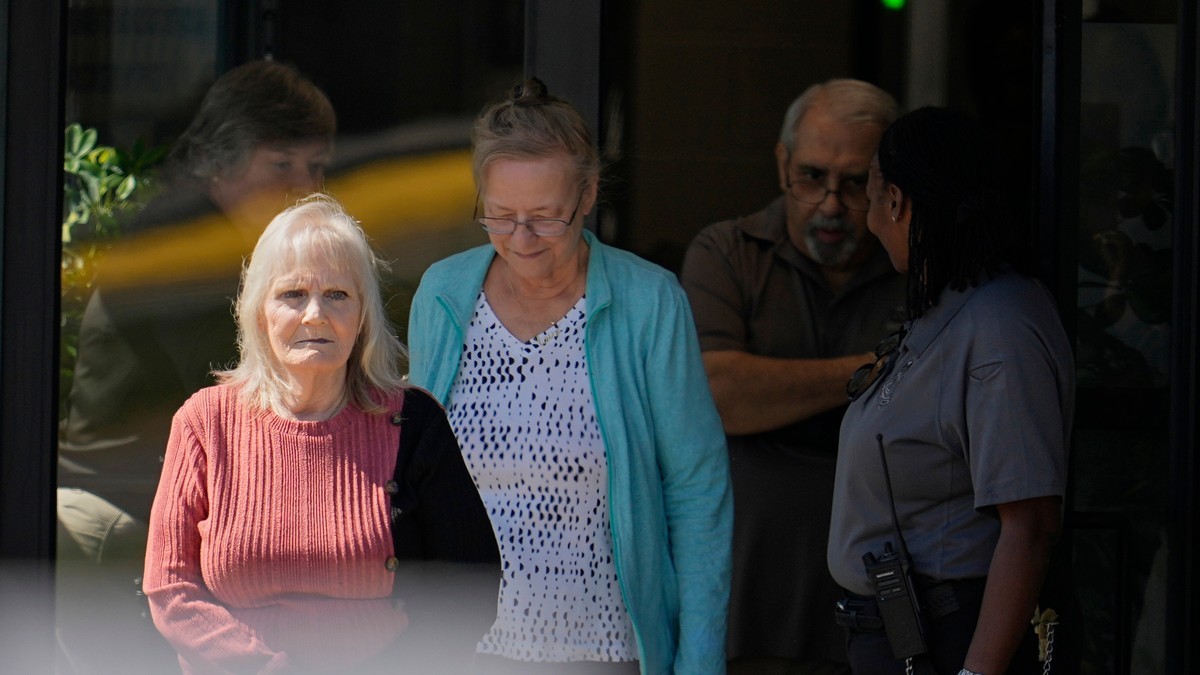
May Martinez, Slemmer's mother, travelled to Nashville hoping to witness the execution of her daughter's killer. She told the Associated Press on Saturday that she had waited decades: "Every time I think about it, I think about Colleen feeling that pain and trying to get up and run." Martinez could not be immediately reached by telephone for comment after the execution was halted.
Martinez has also said she laments that Pike has overshadowed her daughter over the years. She told WBIR-TV in 2021: "I just want Christa down so I can end it, relieve my daughter, so she finally can be resting." She said: "There's not a day goes by that I don't think about Colleen or how she died and how rough it was."
The attorney general's office had argued that halting the execution at the last moment traumatised Slemmer's family and rewarded "abusive delay tactics" by Pike's attorneys. Prosecutors had defended the sentence through three decades of appeals.
The Second Failure This Year
It was the second time in 2026 that Tennessee officials attempted and failed to execute a prisoner. In May, the execution of Tony Carruthers was called off after executioners tried and failed for over an hour to place an IV to administer pentobarbital. Carruthers, convicted of kidnapping and killing three people in 1994, was given a one-year reprieve.
Pike would have been the first woman executed in Tennessee in more than 200 years. She would have been the 30th person executed in the US this year, after Florida carried out an execution on Tuesday. Since the Supreme Court reinstated the death penalty in 1976, 18 women have been put to death in the US, about 1% of all executions, according to the Death Penalty Information Center. As of June 2026, Pike was one of 45 women on death row in the US.
Robin M. Maher, executive director of the Death Penalty Information Center, said what Pike experienced is "singular and unparalleled." Seven other people have survived medical problems due to an execution team's failure to access a vein, she said. No one has stayed alive after receiving the drugs used in such executions.
What Human Rights Bodies Say
On 7 September 2026, UN experts in Geneva urged the Government of the United States and Tennessee authorities to immediately halt Pike's execution and commute her death sentence. They said significant mitigating evidence concerning her history of severe childhood sexual and gender-based violence, neurological impairments, mental health conditions and developmental immaturity were not adequately presented to the jury by her court-appointed counsel.
The experts said: "Pending abolition, States that retain the death penalty may impose it only subject to the strictest safeguards under international law." They said failure to respect those safeguards "renders a death sentence arbitrary and its execution unlawful under international law." They said Pike was reportedly held in solitary confinement for roughly 28 years, often alone for 22 to 23 hours a day, and that the duration of her isolation "amounts to torture."
On Thursday, UN human rights chief Volker Türk urged Tennessee not to make a new attempt to execute Pike. The UN rights office said on X: "The case of Christa Pike lays bare multiple reasons why the death penalty should be abolished." It said he "calls on the state authorities not to pursue any further attempt to execute Pike."
What Happens Next
Lee's halt covers the remainder of 2026 only. It does not abolish or permanently suspend capital punishment in Tennessee. The pause overlaps with the planned 3 December execution of Gary Wayne Sutton, 61, for the 1992 murders of siblings Tommy Griffin and Connie Branam. Advocates have argued there was no direct evidence linking him to the crime and his family has asked for a pardon.
The third-party review is open and Lee has not named who will conduct it. Nothing has been decided about Pike's sentence, and no authority has disclosed her condition or her prognosis. The state did not respond to requests for comment.
Abraham Bonowitz, co-founder of Death Penalty Action, said: "The incompetence of the Tennessee DOC sets the bar at the lowest level. There are no other words. This is an outrage. How do they sleep at night?"
By Jessica Ali, Staff Writer
This article was produced with AI-assisted research and editorial support. Sources: Associated Press, BBC, NPR, PBS NewsHour, USA TODAY and The Tennessean, JURIST, Euronews, and the United Nations human rights office.
What's Your Reaction?
 Like
0
Like
0
 Dislike
0
Dislike
0
 Love
0
Love
0
 Funny
0
Funny
0
 Wow
0
Wow
0
 Sad
0
Sad
0
 Angry
0
Angry
0

Editor-in-Chief at Global1.News. Atlanta-based journalist who cuts through the BS and tells it like it is. Lead anchor, host, and the voice you hear when the spin stops and the truth starts.













Comments (0)