
Mexico's National Pawnshop Ends a Year-Long Strike
The 364-day strike at Nacional Monte de Piedad ended on 30 September 2026 after the union and the institution signed an integral award before the STPS. Its more than 300 pawn branches reopen on 7 October, with 45 days free of interest for clients.
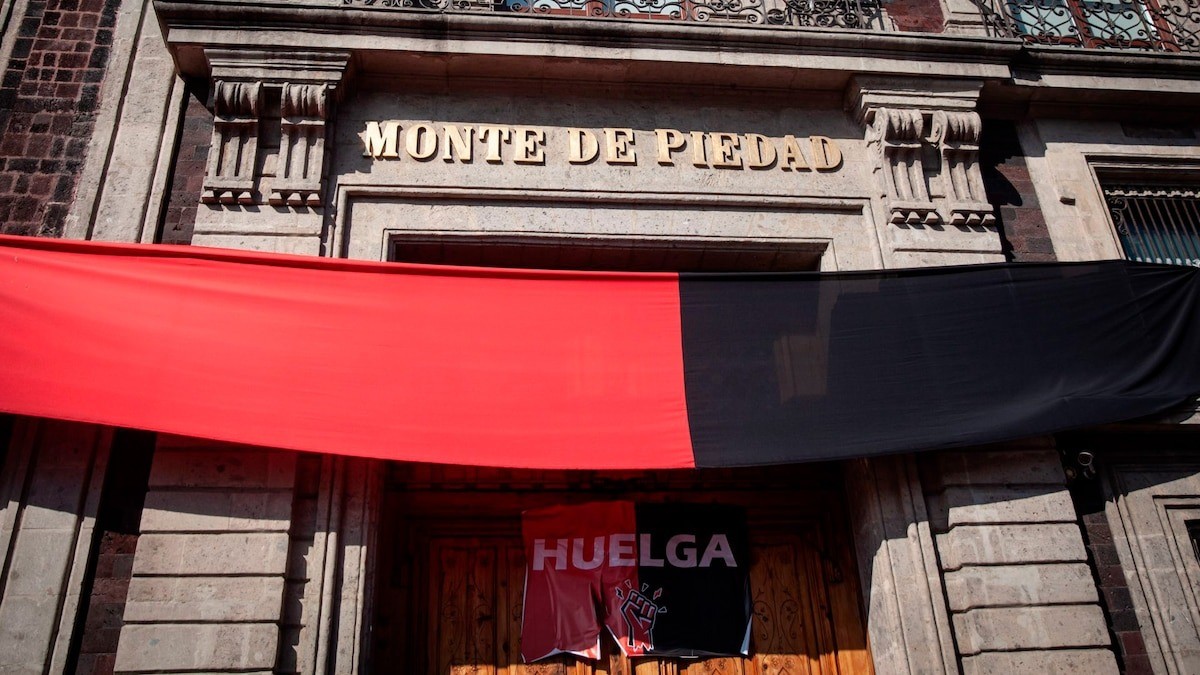
The strike at Nacional Monte de Piedad is over. On the afternoon of 30 September 2026, one day before the stoppage would have marked its first full year, the union and the institution signed an integral award at the Secretaría del Trabajo y Previsión Social that formally ends the walkout. The pawn branches reopen on 7 October.
Mexico's National Pawnshop Ends a Year-Long Strike
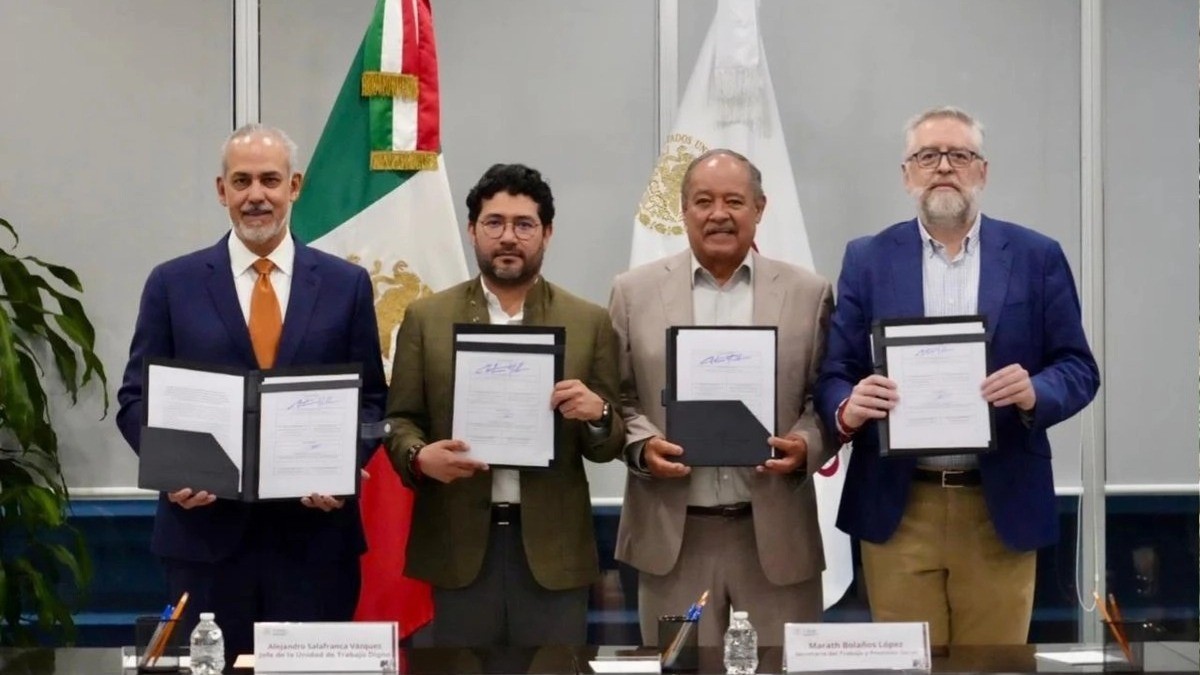
Mexico City, Mexico — The almost-year-long strike at Nacional Monte de Piedad ended on 30 September 2026, when the union and the institution signed a "Dictamen Integral" before the Secretaría del Trabajo y Previsión Social that, in the ministry's words, "da por concluida la huelga." The signing took place at 17:00 hours in the office of STPS secretary Marath Bolaños García, with the union representation present. The stoppage ran 364 days, from midnight on 1 October 2025 to the signing that afternoon. The union confirmed it would lift the strike at 23:30 hours with the removal of the red-and-black flags from the more than 300 pawn branches.
A Year Ends Without the Monte
The STPS put the closing in its own words: "A casi un año del estallamiento de la huelga, finalmente el día 30 de septiembre de 2026, ambas partes firmaron en la sede de esta Secretaría la voluntad de cumplir lo consignado en el dictamen que pone fin a la huelga." The ministry also acknowledged that "aún persistieron diferencias entre las partes" — differences between the parties persisted even at the end. Bolaños wrote on social media: "Hoy termina una huelga que duró casi un año en el Nacional Monte de Piedad. Es una buena noticia para las personas trabajadoras, sus familias y los miles de personas usuarias de esta institución." The dictamen must still be taken to the Centro Federal de Conciliación y Registro Laboral to be ratified. The union held an assembly at 19:30 to inform its workers of the details. Arturo Zayún, general secretary of the Sindicato Nacional de Trabajadores del Nacional Monte de Piedad, confirmed to La Jornada that at 23:30 hours the flags would come down. The STPS said it had facilitated more than 70 conciliation and negotiation meetings between the parties.
What the Deal Actually Contains
The dictamen provides for payment of 100% of the salarios caídos, the back wages accrued during the stoppage, delivered in two instalments — one during September and one in October. It commits the institution to compliance with the current collective bargaining agreement, to the regularización of job posts, to respect for the half hour allotted to workers for meals, and to settlement of outstanding debts with workers and with the union organisation, including payment of pending benefits. The institution's proposed 5.3% wage increase was left in suspense, because the union chose to prioritise resolving the internal structure of the dispute. The union's demands during the strike included respect for the 2024 CCT — especially the boletinación system for plazas, the escalafón and promotions — guarantees against the disappearance of union representation, rejection of confianza posts replacing unionised posts, payment of aguinaldos, savings and withheld fortnightly wages, preservation of the private medical insurance, and recognition of accumulated seniority for retirement.
The Court Fight That Ran Alongside
The legal track ran alongside the picket line for most of the year. On 20 February 2026 a federal judge granted an amparo to the institution and declared the strike "inexistente," finding the union had not met its own statutory requirements to call and vote on the stoppage, according to the institutional communiqué and PesoMXN. The union filed a recurso de revisión before a Collegiate Court, which kept the strike in effect. The Supreme Court of Justice of the Nation then agreed to take up the case — the amparo en revisión 33/2026 promoted by the union — by eight votes against one, Excélsior reported. The STPS intervention intensified after its 2 May 2026 call exhorting the parties to resume negotiations and present concrete proposals. That judicial finding that the stoppage was nonexistent was appealed and was still pending when the strike was lifted.
Why the Strike Happened
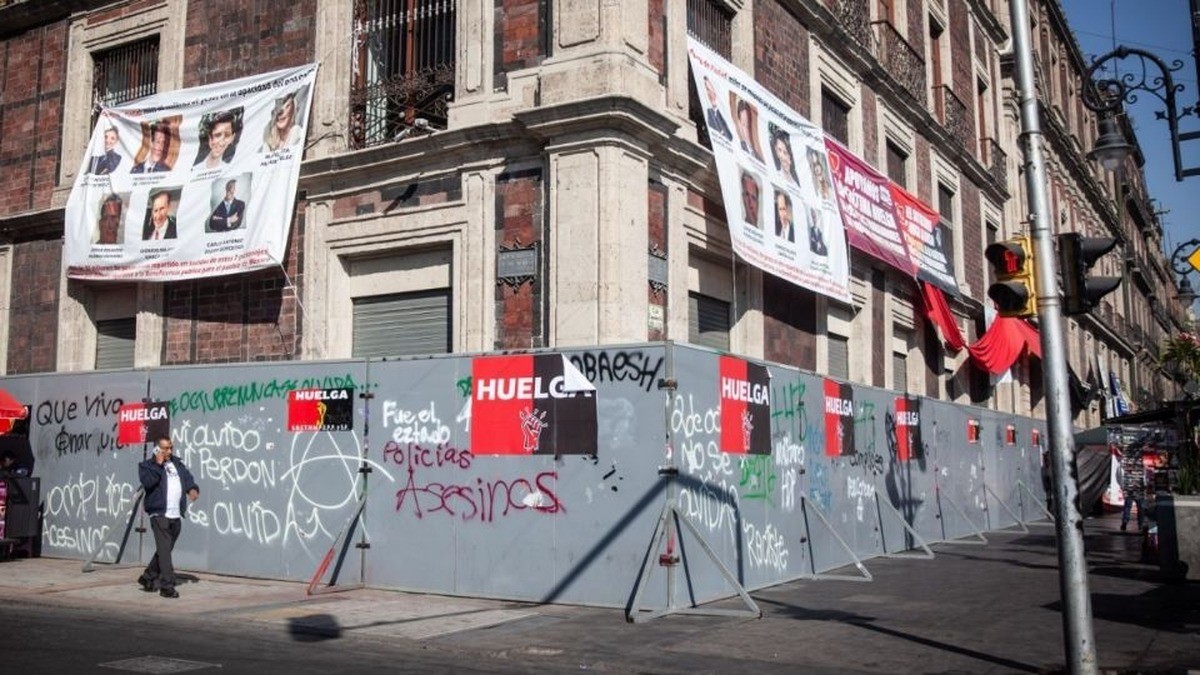
Per the union, the strike erupted at 24:00 on 30 September 2025 over eight violations of the CCT, among them the disregard of the joint Escalafón and Efficiency commissions, which carry out workers' promotions and advancements, La Jornada reported. The union complained that the administration unilaterally published and awarded around 300 vacancies, which is prohibited, assigning them to the National Independent Union of Workers of Monte de Piedad without the exams required by the Federal Labour Law and the CCT, according to El Sol de México. Management's position, as reported by PesoMXN, is that the core disagreement was not about cutting benefits but about redesigning how openings and promotions are assigned — moving to a more automated and transparent system based on skills and open application, replacing a setup in which the union had direct influence. The institution said it presented more than five concrete proposals over the conflict; the labour authority proposed three more; and the union leadership made no proposal of its own and rejected all the solutions put forward.
The 2024 Deal Both Sides Read Differently
The dispute centred on the interpretation of the agreement signed in March 2024 — reached after what the wire described as four years of dispute and endorsed by more than 80% of employees — which contemplated an 18% wage increase, the reinstatement of workers unjustifiably dismissed, and full payment of back wages for the dismissed and the strikers, among other labour benefits, according to EFE. There had also been a strike in 2024, which lasted about a month. Zayún's framing of the conflict was blunt: "The businesspeople who make up the administration are determined to turn the Monte de Piedad into a business. That's why they want to eliminate us." During the strike he also said the institution continued charging interest to clients on pledged items while the branches were closed, which he called an injustice to customers seeking to recover their goods.
A Union Split in Two
In mid-September 2026 the Sindicato Independiente de Trabajadores, which says it represents close to 400 employees, asked for the strike to end and for a return to work, opening a new front in the conflict. The Sindicato Nacional de Trabajadores del Nacional Monte de Piedad, holder of the collective agreement, maintained the movement. Gerardo Ríos of the Sindicato Independiente told Milenio Televisión the conflict arose over the boletines escalafonarios for promotions sent to all unionised workers, and said Arturo Zayún, the majority union's leader, ordered that they not be carried out. He said 200 members of the majority union submitted the boletines against 100 from the independent organisation. Ríos also told Milenio Televisión that each employee stopped receiving between 150,000 and 400,000 pesos in wages, grocery vouchers and benefits over the almost 12 months of the stoppage.
Five Million Customers on the Outside
The human perimeter of the stoppage was measured in customers as much as in workers. Infobae reported on 11 May 2026: "El Nacional Monte de Piedad suma más de siete meses de huelga, 305 sucursales cerradas y cinco millones de personas sin el servicio de empeño en todo el país." Zayún said in May 2026 that there were already "between four and five million NMP customers who do not pawn their belongings," El Sol de México reported. The STPS, which called the institution "una institución emblemática del país," said the strike had substantially affected workers, their families, pignorantes and clients. In a typical month the institution processes around 600,000 transactions, so the closure was a bottleneck for households that use a pawn loan as bridge financing for income shocks, medical bills, school tuition or emergencies, PesoMXN noted. Financial analysts warned that borrowers unable to pawn their valuables were being pushed towards predatory informal lenders who charge exorbitant interest rates, exacerbating poverty cycles and increasing the financial vulnerability of Mexico's working class.
The Workers' Ledger
Around 2,300 workers nationwide were affected, according to EFE; around 1,800 unionised workers, per El Imparcial, Veracruz Daily Post and El Sol de México; Zayún cited 1,850 workers who had not received salaries for seven months. Ríos said the strike led to the suspension of first-level medical service for employees and their parents, and that the lack of that benefit led to the death of nine colleagues — six of them mothers or fathers of workers who depended on the medical service. In Orizaba, section five has 14 workers at the Poniente 7 branch and two more at the Cri-Cri Avenue branch; a union secretary there said the pawnshop continued receiving money for renewals and redemptions although it had "lost millions of pesos in revenue," the Veracruz Daily Post reported. Workers in La Paz remained unpaid and turned to entrepreneurship to make ends meet, according to El Sudcaliforniano.
What Reopens on 7 October
Nacional Monte de Piedad resumes operations at its branches on Wednesday 7 October 2026 — seven days after the signing. From that day clients may go to any branch to pawn, renew, pay or recover their garments and items, and receive guidance on the status of their contracts. The institution will grant clients 45 días naturales without any interest charge, counted from 7 October and running to 21 November 2026, as well as discounts on the interest generated during the closure, according to each client's history. Additional benefits are to be announced in the coming days via official channels. Branch opening hours will be the usual ones: Monday to Friday 8:30 to 17:00; Saturdays 9:00 to 14:00. Telephone and digital service channels remain available for queries about the reopening. José Antonio Murillo Garza, director general of Nacional Monte de Piedad, said clients' pledged items remain intact and thanked users, staff and civil-society organisations for their patience.
A 251-Year-Old Institution
Murillo Garza noted the institution resumes its service after 251 years of offering pawn loans. Founded on 25 February 1775 by Pedro Romero de Terreros, conde de Santa María de Regla, as the Sacro y Real Monte de Piedad de Ánimas, with 300,000 gold pesos of his own money, it is described as the oldest financial institution in the Americas. It is an Institución de Asistencia Privada — non-profit, with no shareholders, governed by a Board of Trustees — with founding mandates to help whoever needs it through pawn lending, to assist any person without discrimination, and to combat usury and operate in perpetuity. Its head office building, acquired in 1836, faces the Plaza de la Constitución on the corner of Monte de Piedad street and Avenida 5 de Mayo; before it housed the pawnshop it was the house of the Mexica ruler Moctezuma and later of Hernán Cortés. In 2024 the institution granted 6,861,639 pawn loans across 302 branches in the 32 states, and its social investment arm channelled support to 576 civil-society organisations, benefiting more than 600,000 people.
The Questions Left Open
The branch count is the institution's own figure; some outlets say 301, 304 or 305; EFE says "cerca de 300"; La Jornada says "más de 300." What is not settled is the backlog: no party has published how many pledged items are still sitting in the vaults, or how long it will take to clear the queues that form when more than 300 branches open on the same morning. The 5.3% wage increase the institution had offered remains unagreed, parked for a later stage of bargaining. Zayún said the task now is to "reconstruir el Nacional Monte de Piedad con ideas frescas, nuevas y con toda la voluntad" of those who work in its branches, stressing employees' sense of belonging to an institution he called "benemérita."
By Jessica Ali, Staff Writer
This article was produced with AI-assisted research and editorial support. Sources: La Jornada, Infobae, Expansión, LatinUS/EFE, El Sol de México, El Imparcial, Veracruz Daily Post, El Sudcaliforniano, Mexico Business News, PesoMXN, Excélsior, Milenio Televisión, Nacional Monte de Piedad.
What's Your Reaction?
 Like
0
Like
0
 Dislike
0
Dislike
0
 Love
0
Love
0
 Funny
0
Funny
0
 Wow
0
Wow
0
 Sad
0
Sad
0
 Angry
0
Angry
0

Editor-in-Chief at Global1.News. Atlanta-based journalist who cuts through the BS and tells it like it is. Lead anchor, host, and the voice you hear when the spin stops and the truth starts.













Comments (0)