
Meta and YouTube say they will run ads for ‘Musk’ documentary after all
When the Hollywood Reporter announced that TikTok, Meta, YouTube and X had all blocked ads for Alex Gibney’s new documentary “Musk,” the reaction in the hosting world was a collective sigh.
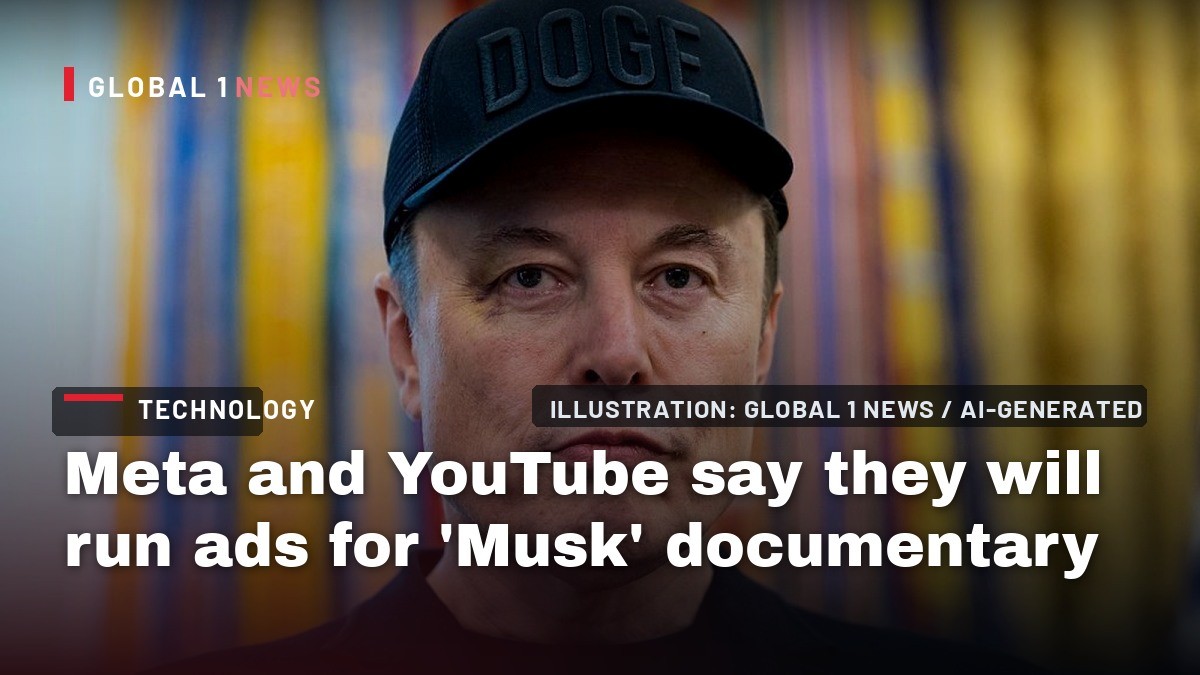
When the Hollywood Reporter announced that TikTok, Meta, YouTube and X had all blocked ads for Alex Gibney’s new documentary “Musk,” the reaction in the hosting world was a collective sigh. Not because the ad was “political” – that’s the usual excuse – but because it highlighted how the very platforms we rely on to reach customers can turn on a dime, jeopardising any marketing plan that isn’t backed by a massive cash reserve. The recent reversal by Meta and YouTube, after TechCrunch pressed for clarification, only underscores the fragility of the ad‑ecosystem that independent operators have to navigate.
Why the “political content” label matters for founders
The ad was flagged as “political content” by Meta, TikTok and YouTube, even though the trailer is simply a documentary teaser. Both Meta and TikTok have publicly said they’ll stop taking political ads in the EU, and TikTok claims it never runs them at all. That blanket policy, applied without nuance, means any piece of media that mentions a high‑profile figure like Elon Musk can be caught in the cross‑fire. For a founder trying to promote a SaaS product, a single rejected ad can waste budget, delay launch timelines and force a scramble for alternative channels.
In practice, the “political” tag is a black‑box. The platforms don’t explain the exact criteria, leaving advertisers to guess. The result is a risk‑averse approach: either over‑spend on platform‑agnostic channels (search, email) or accept the uncertainty of a system that can pull the plug overnight. That uncertainty is a cost of doing business with hyperscalers that most independent hosting providers can’t afford.
Platform hypocrisy: error correction vs. systemic bias
Meta’s spokesperson admitted the ad block was “an error” and promised restoration. YouTube echoed that the trailer was “temporarily restricted” before being cleared. Those quick fixes are comforting on the surface, but they reveal a deeper problem – the ad‑review engines are opaque, and the “error” label is a convenient way to deflect responsibility. When a platform can simply say “oops” and move on, there’s little incentive to improve the underlying logic that caused the block in the first place.
For independent hosting firms, this is a cautionary tale. We rely on the same ad platforms to acquire customers for our managed‑hosting services, and we have no recourse when a decision is made behind a firewall. The only real safeguard is diversification – building direct relationships, leveraging content marketing, and, where possible, owning the traffic pipeline.
The Musk factor: brand risk and platform politics
The documentary’s subject, Elon Musk, is a lightning rod. X’s outright refusal to run the ad, citing Musk’s own jab that “Dogshit is worth more respect than Gibney,” is a reminder that platform owners can inject personal bias into policy enforcement. When the owner of a platform decides that a piece of content is “unacceptable,” the ad‑system follows suit without a transparent appeals process.
This personal‑bias risk is not limited to Musk’s platforms. Any platform with a charismatic founder or a politically charged board can decide, on a whim, to block content that threatens its narrative. Independent operators must treat every platform as a potential point of failure and plan for rapid re‑routing of campaigns.
Impact on distribution partners and the broader media ecosystem
The Hollywood Reporter noted that Universal Pictures was hesitant to distribute the documentary internationally, fearing backlash from the Trump administration. While that is a separate political calculus, it illustrates how external pressures can cascade into distribution decisions, ad spend, and ultimately revenue for the film. The same chain reaction can affect tech startups that partner with media firms for co‑marketing.
If a distribution partner pulls back because of political risk, the downstream effect is a loss of exposure for any tech product tied to that campaign. It’s a reminder that the risk matrix extends beyond the ad platform to the entire ecosystem of partners, distributors, and even regulators.
What this says about “best practices” in ad compliance
Industry “best practices” often advise tagging political content, using clear language, and submitting for review well in advance. In reality, those steps did not prevent the block for the “Musk” trailer. The ad was eventually cleared, but only after a public outcry and a media outlet’s investigation. That tells us the current compliance playbook is more about damage control than prevention.
From a founder’s perspective, the pragmatic approach is to assume any content featuring polarising figures will be flagged. Build redundancy into your launch plan: have parallel campaigns on email, SEO, and owned media ready to go live the moment a platform rejects your ad. Treat platform approval as a “nice‑to‑have” rather than a “must‑have.”
Actionable steps for independent hosting providers
First, audit your current acquisition channels. Identify which campaigns rely on Meta, TikTok or YouTube and calculate the proportion of spend that would be lost if a similar block occurred. Second, develop a rapid‑response playbook: a template email to partners, pre‑written social posts, and a list of alternative ad networks that are less prone to political gating.
Third, invest in owned traffic. Content marketing, webinars, and community building on platforms you control (Discord, Reddit, or a self‑hosted forum) provide a safety net when the big platforms go dark. Finally, keep a close eye on policy changes. Meta’s 2023 decision to stop accepting political ads in the EU is a precedent; any shift in policy can become a new choke point.
Bottom line: don’t let platform whims dictate your growth
The “Musk” documentary saga is a textbook example of how a high‑profile ad can be caught in the cross‑fire of platform politics, policy ambiguity and personal bias. For independent hosting providers and founders, the lesson is clear: the ad ecosystem is a fragile bridge, and you can’t afford to have your entire traffic flow cross it. Diversify, own your channels, and build a contingency plan that treats every platform decision as a potential roadblock.
In the end, the only thing that should dictate your marketing spend is the ROI you can measure, not the whims of a platform that can label a documentary trailer “political” on a whim. Keep your servers humming, your customers happy, and your acquisition strategy resilient – that’s the real way to stay afloat in a world where the giants keep changing the rules.
— Allan Ali, Founder
This article was produced with AI-assisted research and editorial support. Reporting is based on the source material cited below. Sources: TechCrunch; techcrunch.com; Global1.News (27 September 2026).
By Allan Ali, Global1.News
What's Your Reaction?
 Like
0
Like
0
 Dislike
0
Dislike
0
 Love
0
Love
0
 Funny
0
Funny
0
 Wow
0
Wow
0
 Sad
0
Sad
0
 Angry
0
Angry
0

Publisher of Global1.News. Automation architect, systems builder, and the guy making sure the truth gets published.










Comments (0)