
Dr. Ju: The Emergency Doctor Who Gave the Ultimate Gift of Life
In the quiet corridors of a community hospital in Chachoengsao province, a doctor who spent her days fighting for the lives of others has, in her final act, given life to strangers she will never meet.
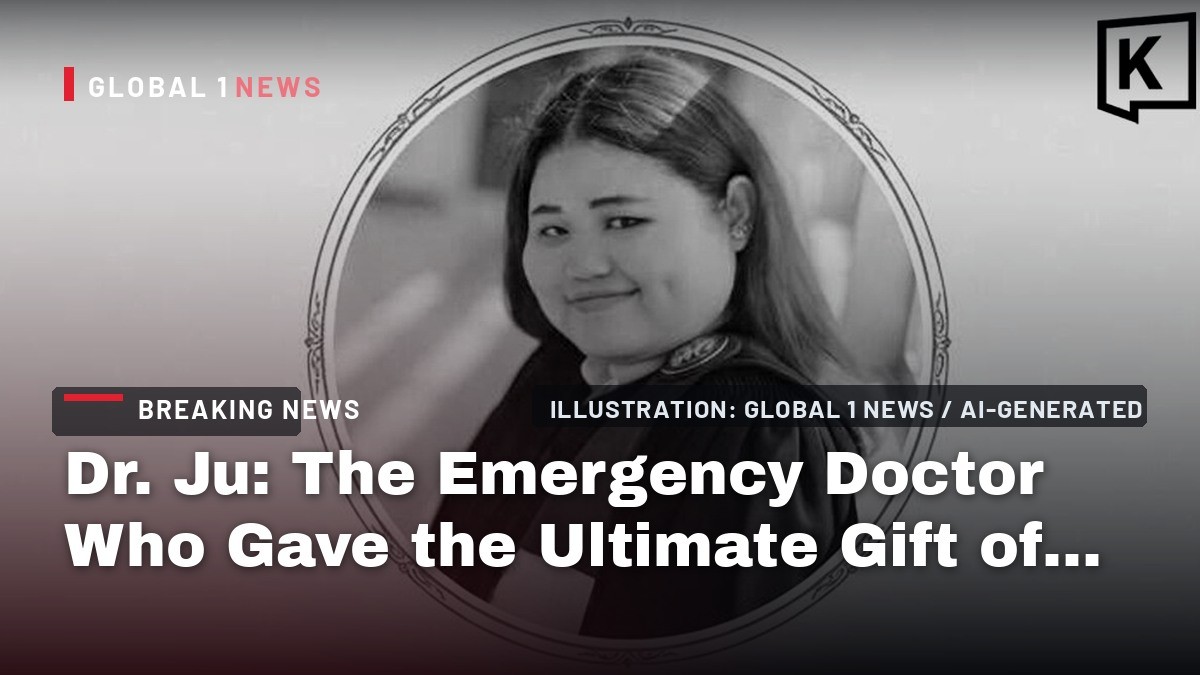
In the quiet corridors of a community hospital in Chachoengsao province, a doctor who spent her days fighting for the lives of others has, in her final act, given life to strangers she will never meet. Dr. Ketjutha Makrod, known affectionately as "Dr. Ju," an emergency medicine specialist at Sanam Chai Khet Hospital, passed away this week after falling critically ill while on duty. Her family's decision to donate her organs has transformed profound grief into a legacy of hope, with the Thai Red Cross Society remembering her not only as a dedicated physician but as a true "giver of new life."
A Sudden Illness That Shook a Community
Dr. Ju had been doing what she did best—working and treating patients as usual—when she suddenly became ill. According to the Thai Red Cross Society, which expressed its condolences on Tuesday, her condition deteriorated with alarming speed, plunging her into a critical state within a matter of days. The news sent ripples of shock through the medical community and the district of Sanam Chai Khet, where she was a familiar and trusted presence in the emergency room.
The Thaiger reported that Dr. Ju collapsed while on duty, a scenario that resonates deeply with Thai doctors who understand the relentless demands of community hospital service. Sanam Chai Khet Hospital, the community hospital serving the district in Chachoengsao province east of Bangkok, is exactly the kind of facility where emergency physicians like Dr. Ju often work long hours with limited resources, driven by a sense of duty that goes far beyond a job description. Her sudden illness and death have left colleagues and patients grappling with the fragility of life.
A Family's Decision Made in the Darkest Hour
In the midst of their overwhelming grief, Dr. Ju's relatives made a decision that the Thai Red Cross described as an act of remarkable strength. They chose to donate her organs, hoping to pass on the gift of life to patients still waiting for transplants. The organisation noted that the family made this choice without hesitation, during what it called the most difficult hours they had ever faced.
The Thai Red Cross Society paid tribute to the family for their courage, acknowledging that organ donation decisions are never easy, especially when they must be made quickly amid the shock of losing a loved one. For Dr. Ju's parents, siblings and friends, the choice to donate her organs was not merely a medical formality but an extension of the compassion that defined her life as a doctor. In Theravada Buddhist tradition, the act of giving—dana—is considered one of the highest forms of merit-making, or tham bun, and the family's decision embodies this principle in its most selfless form.
What Dr. Ju's Donation Means for Patients in Need
The Thai Red Cross confirmed that Dr. Ju's kidneys, eyes, heart valves, skin and bones have since been donated to help several people in need. Each of these gifts represents a tangible transformation: a kidney recipient freed from the cycle of dialysis, a person regaining their sight through corneal transplantation, a patient with heart disease receiving a new valve, and burn victims or those undergoing reconstructive surgery helped by donated skin and bone. The organisation said these organs and tissues have now reached several patients on the waiting list, giving them an opportunity to continue their lives.
For Thai readers, this news carries particular weight: the gap between Thai patients needing transplants and the number of available donors remains significant, and demand still far outstrips supply. Dr. Ju's case highlights how a single donor can impact multiple lives—her decision, made by her family on her behalf, has the potential to touch dozens of people through the various tissues and organs she gave. The Thai Red Cross emphasised that recipients would always remember that someone had helped give them another chance to live, a reminder of the profound interconnectedness that organ donation creates between strangers.
A Doctor Remembered for Her Goodness
The Thai Red Cross Society expressed its deepest condolences to Dr. Ju's family and friends, while also paying tribute to her character and her work. "Although she is no longer here, her goodness will be remembered for a very long time," the organisation said in its tribute. Dr. Ju will be remembered not only as a beloved daughter, a good friend and a dedicated doctor, but also as a "giver of new life." These words carry special resonance in a culture where the memory of the deceased is honoured through the good deeds they performed during their lifetime.
For her colleagues at Sanam Chai Khet Hospital, Dr. Ju's death represents the loss of a skilled emergency physician who had chosen to serve in a community hospital setting. In Thailand, doctors who work in provincial and district hospitals are often held in particularly high regard, as they provide essential care to communities far from the advanced medical centres of Bangkok. Dr. Ju's commitment to this work, treating patients in the emergency room day after day, speaks to a devotion that goes beyond professional obligation—it reflects the Buddhist value of compassion, or metta, extended to all who come through the hospital doors seeking help.
The Cultural Meaning of Organ Donation in Thailand
Dr. Ju's story arrives at a time when Thailand is having an increasingly open conversation about organ donation. While the practice is legally established and supported by the Thai Red Cross, cultural and religious considerations continue to shape public attitudes. Some Thai Buddhists have historically expressed concerns about organ donation, wondering whether the body should remain intact for the dying process and for merit-making ceremonies. However, many Buddhist scholars and monks have clarified that organ donation is not only permissible but praiseworthy, as it represents the ultimate act of generosity—giving parts of one's own body to relieve the suffering of others.
The Thai Red Cross has been working to normalise organ donation through public education campaigns and registration systems. Anyone in Thailand can register an intention to donate eyes and organs at eyeorgandonate.redcross.or.th, or through the Red Cross eye and organ donation app. Dr. Ju's case, however, raises an important point: many donations come not from pre-registered donors but from families who make the decision at the moment of loss. The Thai Red Cross's praise for Dr. Ju's family underscores the importance of family conversations about donation wishes, so that loved ones can act with confidence and clarity during times of crisis.
What Dr. Ju's Legacy Teaches Thai Society
The story of Dr. Ju is more than a single act of generosity—it is a mirror held up to Thai society, reflecting the values that many hold dear but few have the opportunity to demonstrate so profoundly. Her life as an emergency physician at a community hospital speaks to the quiet heroism of doctors who serve outside the spotlight of Bangkok's major medical institutions. Her death, and her family's subsequent decision, speaks to the strength that ordinary people find in extraordinary circumstances, guided by faith, love and a desire to make meaning out of tragedy.
For Thai medical students and young doctors, her example is a reminder that the essence of medicine lies in service to others. For families who may one day face a similar decision, her story shows how grief can be transformed into a gift that transcends family and community. And for the recipients of her organs—people whose names we may never know—she has given something no amount of money could buy: another chance at life.
A Final Act of Merit That Will Not Be Forgotten
As the Thai Red Cross noted, Dr. Ju's death has brought profound sadness to her family, friends and colleagues. The sudden loss of a doctor, struck down while doing her duty, is a tragedy that no words can fully capture. Yet in the midst of this sorrow, there is also a story of hope—of kidneys that now filter blood in new bodies, of eyes that will see the faces of loved ones again, of heart valves that will keep beating, and of skin and bone that will help heal wounds and restore mobility. These are not abstract medical procedures; they are the continuation of Dr. Ju's life in the lives of others.
The Thai Red Cross's tribute, delivered on Tuesday, captures the essence of what Dr. Ju's story means. In a culture that honours ancestors and remembers the departed through their deeds, Dr. Ju's memory will indeed endure—not only in the hearts of those who knew her but in the bodies of those who received her gifts. Her family's decision, made in the darkest hours of their lives, has ensured that her legacy is not one of loss alone but of life, generously shared with strangers who will carry her memory forward with every breath they take.
This article was produced with AI-assisted research and editorial support. Sources: Khaosod English; The Thaiger.
By Ann Srisawat, Staff Writer
What's Your Reaction?
 Like
0
Like
0
 Dislike
0
Dislike
0
 Love
0
Love
0
 Funny
0
Funny
0
 Wow
0
Wow
0
 Sad
0
Sad
0
 Angry
0
Angry
0

Southeast Asia Correspondent at Global1.News. Based in Bangkok, covering Thai and Southeast Asian politics, economy, technology, and culture. Deep regional perspective on one of the world's most dynamic regions.














Comments (0)