
Ceuta's Migrant Children Face Crisis: A Mirror for Mexico
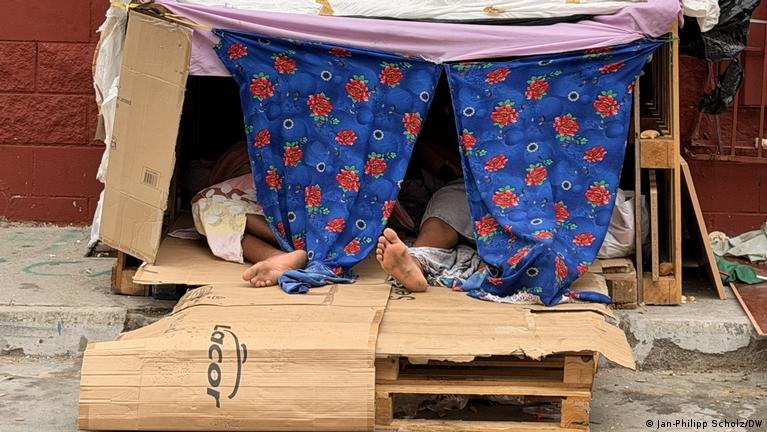
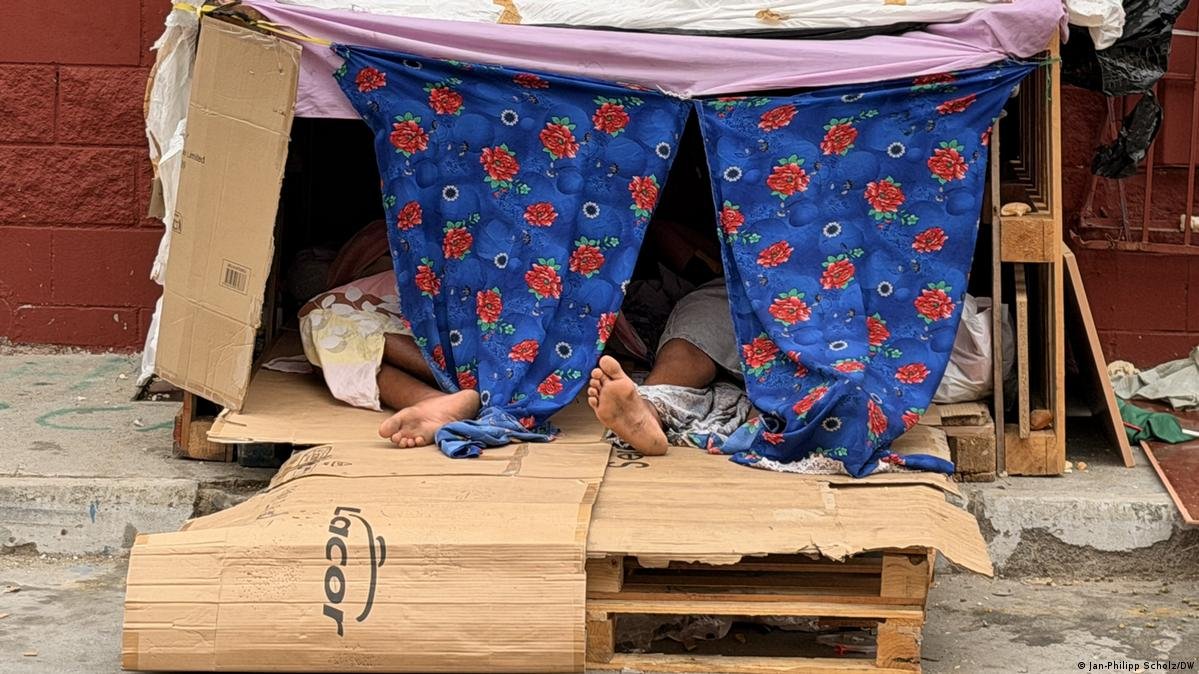
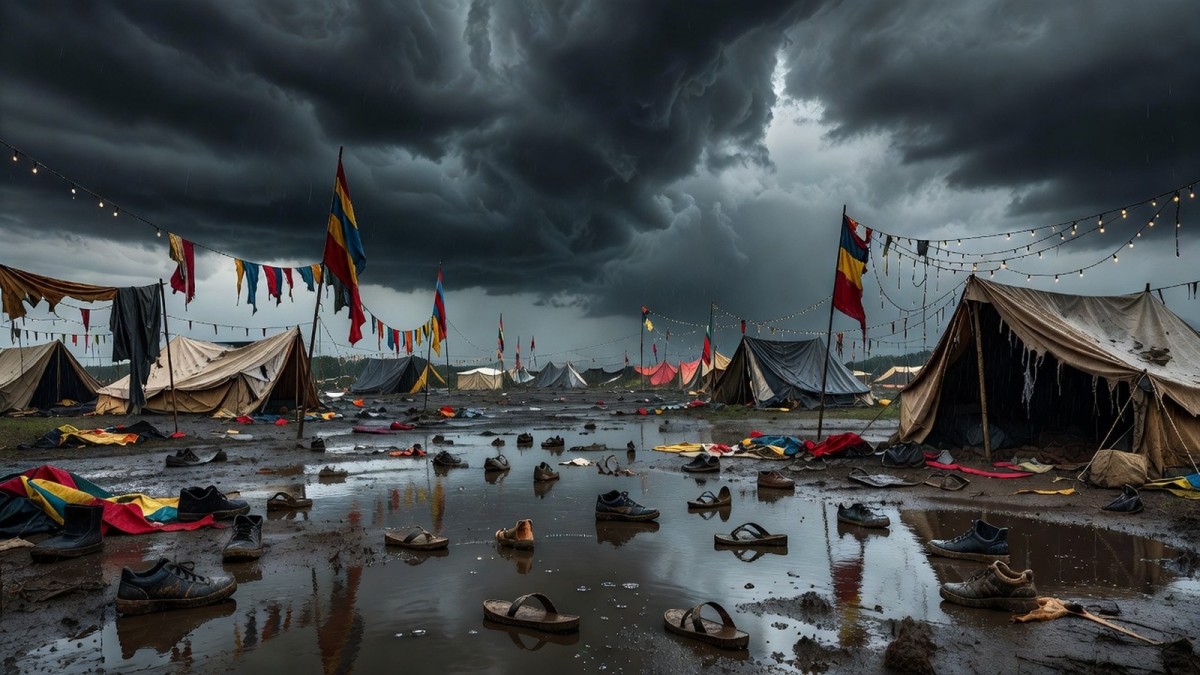
In a recent DW News report from Ceuta, the Spanish exclave on Africa's northern coast, the camera pans over a landscape of cardboard tents and dirty blankets at the Tarajal industrial park. Here, thousands of children are living on the streets, survivors of a mass border crossing that has become one of Europe's worst child-protection emergencies in decades.
In a recent DW News report from Ceuta, the Spanish exclave on Africa's northern coast, the camera pans over a landscape of cardboard tents and dirty blankets at the Tarajal industrial park. Here, thousands of children are living on the streets, survivors of a mass border crossing that has become one of Europe's worst child-protection emergencies in decades. The images are hauntingly familiar to anyone who has followed the migrant crisis at the Mexico-US border: children alone, shelters overflowing, and governments trading blame while minors pay the price.
Ceuta's Migrant Children Face Crisis: A Mirror for Mexico
Ceuta, Spain – August 2026 — Since late July 2026, when an estimated 72,000 to 80,000 people breached the border from Morocco in a single mass movement, Ceuta has been transformed. Most of those who crossed have since been returned to Morocco, but local authorities say around 9,000 people remain—and of those, an estimated 3,000 to 5,000 are unaccompanied minors. They sleep in makeshift encampments, under the watch of no one, in what Ceuta's president, Juan Jesus Vivas, calls a "high-risk situation." For Mexican readers, the scene is a mirror of the child detention centers and border camps that have dotted the US side of the Rio Grande for years.
Amina's Story: Fear in the Shadows of Tarajal
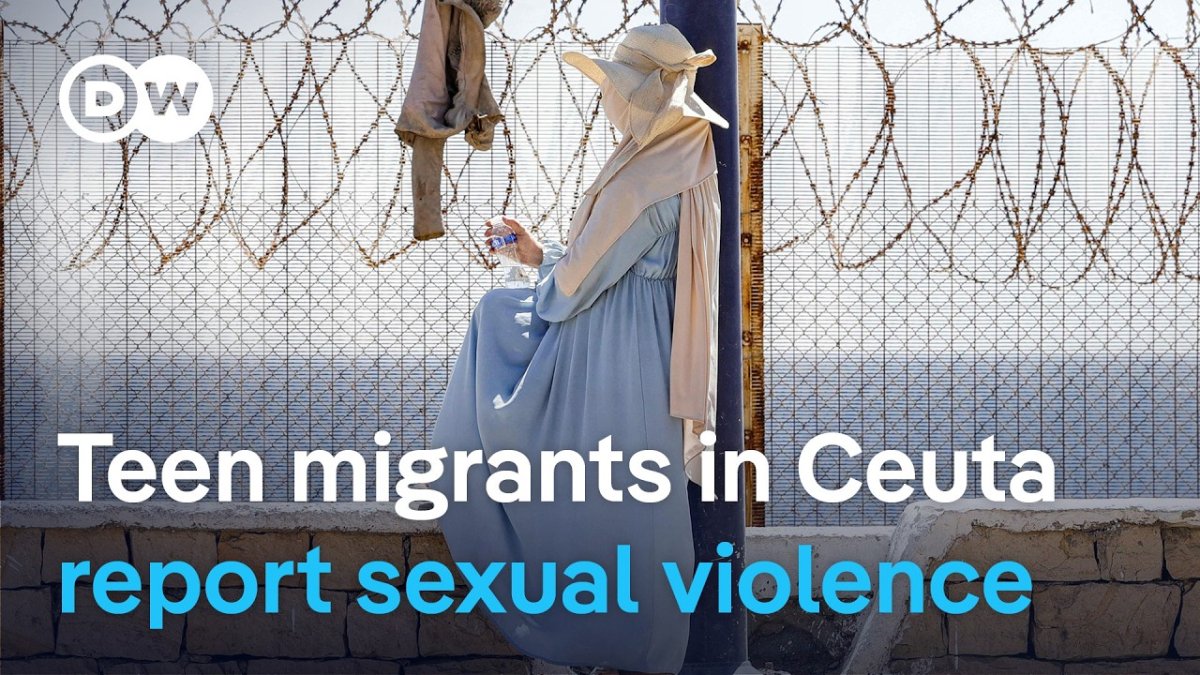
Amina, a 14-year-old Moroccan girl who asked that her real name not be used, described the daily terror of life in the encampment. "What's worst is that we don't have toilets," she told DW News. "We have to go somewhere in the bushes, but I don't dare go alone." Her words capture the specific vulnerability of girls in this crisis—a vulnerability that is not abstract, but measured in the rising number of sexual assault cases reported to police.
Local authorities are investigating at least 15 suspected cases of rape and abuse against minors, but they concede the actual number is likely far higher. In the past week alone, cases of sexual violence against children have risen sharply. Dr. Susana Ascaso, an emergency doctor at Ceuta University Hospital, described treating a 12-year-old girl just yesterday. "She said that other migrants had harassed her and touched her inappropriately," Dr. Ascaso said. "She arrived here completely terrified and in tears. She was with a woman who had found her on the street. That woman saved the girl."
The situation is a stark reminder of what happens when child protection systems collapse under pressure. In Mexico, the DIF (Sistema Nacional para el Desarrollo Integral de la Familia) and the INM (Instituto Nacional de Migración) are mandated to house and protect unaccompanied minors, but shelters in Tapachula, Tijuana, and Ciudad Juárez have repeatedly been overwhelmed, leading to similar scenes of children sleeping in public spaces while waiting for asylum resolutions.
Shelters at 5,000% Capacity: A System in Collapse
Ceuta's president, Juan Jesus Vivas, did not mince words when describing the scale of the failure. "As far as minors are concerned, we are currently 5,000% over capacity," he said. "That means nobody can look after them adequately." The shelters in Ceuta, designed for a few hundred children, are now holding thousands. The overflow has spilled into the streets, where children as young as seven are fending for themselves.
Ibrahim, a 7-year-old from Sudan, told DW News he would not give up until he could provide "a better life for his parents back home." His determination is heartbreaking, but it also underscores the impossible position these children are in. They have crossed an international border alone, often fleeing poverty, conflict, or family breakdown, and they now find themselves in a legal and humanitarian limbo. Nabila Benzina, Ceuta's regional minister for health and social affairs, called this the "worst moment in Ceuta's history," and she has pleaded for more police "especially to protect young women, but also for the general protection of the population."
The comparison to the US-Mexico border is unavoidable. In 2021, the United States saw record numbers of unaccompanied minors arriving at its southern border, with Customs and Border Protection facilities holding children in conditions that a federal court later deemed unsafe. In Mexico, the INM has faced similar criticism for its handling of migrant children, with reports of overcrowding and inadequate care in facilities from Chiapas to Baja California. The pattern is consistent: when political systems fail to manage migration humanely, children bear the brunt.
Malika's Choice: A Mother's Impossible Calculation
Malika, a Moroccan cleaning woman who earns just €7 ($8) per day, came to Ceuta with her four children. She is especially worried about her 12- and 14-year-old daughters because of the recent surge in sexual assaults. When one of her children developed a high fever, she could not get medical help. She resorted to compresses of water and vinegar, a home remedy that speaks to the absence of basic services in the encampment.
Malika's story is a reminder that this is not just a crisis of unaccompanied minors—it is also a crisis of families who have been pushed to the edge. In Mexico, mothers from Honduras, Guatemala, and El Salvador make similar calculations every day, weighing the dangers of the journey north against the desperation of staying home. The image of a mother applying vinegar compresses to a feverish child in Ceuta is interchangeable with scenes from migrant shelters in Monterrey or the Sonoran Desert.
The human impact extends beyond the physical. Amina, the 14-year-old who dreams of becoming an architect, said she will not go back to Morocco. "The schools here are really bad," she said. "I want a different future for myself." Her ambition is a testament to the resilience of these children, but it also highlights the tragedy of their situation: they have risked everything for a chance at a better life, and they are now trapped in a place where their basic safety cannot be guaranteed.
Political Blame-Shifting: Madrid, Brussels, and the Far Right
The political response to the crisis has been characterized by finger-pointing and legal wrangling. On August 13, Interior Minister Fernando Grande-Marlaska declared that anyone who illegally enters Ceuta or Melilla "knows they will be sent back... They will not reach the peninsula, nor the European continent." But on August 19, the Spanish government U-turned, announcing it would allow 500 migrant children to relocate to the mainland. The reversal came after days of pressure from child protection advocates and the Ceuta regional government.
The European Commission has added another layer of complexity. Spokesperson Markus Lammert said that under EU law, all irregular migrants remaining in Ceuta should be returned to Morocco, "including unaccompanied minors." This position has been seized upon by Spain's conservative People's Party, whose deputy finance spokesperson Juan Bravo asked: "If Morocco has asked for the children to be returned and if Europe says the illegal immigrants should all be returned, whether children or not, what more does the government need?"
Meanwhile, several Spanish regions where the far-right Vox party is part of the government have refused to take in migrant children. This refusal echoes the resistance seen in some US states to accepting unaccompanied minors from the border, and it reflects a broader political trend in which child welfare is subordinated to anti-immigration posturing. The Spanish government has allocated €25 million to help Ceuta cope with the crisis, but money alone cannot solve a problem that requires political will and human compassion.
The Legal Labyrinth: Guardianship, Transfer, and the Best Interest of the Child
The Spanish youth ministry, in coordination with the Ceuta government, is now devising an urgent plan under which NGOs and child protection agencies would take charge of the most vulnerable children—girls in particular—without transferring guardianship to Spain's regional governments. Rubén Pérez Correa, the secretary of state for children, has been in Ceuta since Sunday to help resolve the situation. The plan is a pragmatic response to the political deadlock, but it raises fundamental questions about the legal status of these children.
Under international human rights law, the "best interest of the child" is supposed to be the primary consideration in any decision affecting a minor. This principle, enshrined in the UN Convention on the Rights of the Child, is also the basis for Mexico's own child protection framework. The Ley General de los Derechos de Niñas, Niños y Adolescentes, which governs how the DIF and INM handle unaccompanied migrant children, explicitly prioritizes family unity and the child's best interest. Yet in practice, both Mexico and Spain have struggled to live up to these standards.
In Mexico, unaccompanied minors are supposed to be placed in DIF shelters and given access to legal representation, but the system is chronically underfunded. In 2025, the INM reported that it had processed over 40,000 unaccompanied children, many of whom were held in facilities that lacked adequate mental health services or educational programs. The situation in Ceuta is a stark illustration of what happens when these systems are overwhelmed: children are left to sleep on the streets, exposed to violence and exploitation.
A Shared Human Rights Challenge: From Ceuta to Ciudad Juárez
The crisis in Ceuta is not an isolated European problem—it is a global human rights challenge that Mexico knows intimately. The parallels between Ceuta and the Mexico-US border are striking: unaccompanied minors fleeing poverty and violence, shelters operating far beyond capacity, political leaders using children as pawns in immigration debates, and far-right parties refusing to accept responsibility for child welfare.
In Mexico, the response to unaccompanied minors has been a mix of humanitarian effort and institutional failure. The DIF, which is responsible for child welfare, has often been overwhelmed by the sheer number of children arriving from Central America. In 2024, the Mexican government reported that over 30,000 unaccompanied minors were in its custody, and human rights organizations documented cases of children being held in adult detention centers—a violation of Mexican law and international standards.
The situation in Ceuta also raises questions about non-refoulement, the principle that no one should be returned to a country where they face serious harm. The European Commission's insistence that all irregular migrants, including children, should be returned to Morocco ignores the fact that many of these children are not Moroccan—they come from Sudan, Syria, and other conflict zones. Returning them to Morocco, where they have no family or legal status, would violate their rights under international law.
What Mexico Can Learn from Ceuta's Crisis
For Mexican readers, the Ceuta crisis is a warning about the consequences of failing to protect migrant children. Mexico has been both a source and a transit country for unaccompanied minors, and it has also been criticized for its treatment of children in migration. The images from Ceuta—children sleeping under dirty blankets, girls afraid to use the bathroom alone, a 12-year-old arriving at the hospital in tears—should serve as a call to action.
The Spanish government's initial refusal to transfer children to the mainland, followed by its U-turn, mirrors the mixed signals that Mexican authorities have sent about their willingness to protect migrant children. The far-right Vox party's refusal to accept children into its regions is a reminder that anti-immigrant politics can override basic human decency. In Mexico, similar dynamics have played out in states like Texas, where governors have bused migrant children to other states in protest of federal policies.
Ultimately, the crisis in Ceuta is a test of whether Europe—and the world—can live up to its stated values. The children in Tarajal are not statistics; they are individuals with names, dreams, and fears. Amina wants to be an architect. Ibrahim wants to help his parents. Malika's daughters want to be safe. These are the human faces of a crisis that demands a humane response, not political posturing.
As Ceuta's president Juan Jesus Vivas said, "Nobody can look after them adequately" in the current conditions. The question is whether Spain, the European Union, and the international community will step up to change that. For Mexico, the answer should be clear: the protection of children is not a matter of politics, but of principle. The children of Ceuta deserve better, and so do the children of Tapachula, Tijuana, and every other place where migration meets vulnerability.
By Rosa Martinez, Staff Writer
This article was produced with AI-assisted research and editorial support. Reporting is based on sources cited in the article.
What's Your Reaction?
 Like
0
Like
0
 Dislike
0
Dislike
0
 Love
0
Love
0
 Funny
0
Funny
0
 Wow
0
Wow
0
 Sad
0
Sad
0
 Angry
0
Angry
0

Latin America/Andes Correspondent at Global1.News. Based in Bogota, covering politics, environment, energy, and social movements across the Andean region. Passionate about environmental journalism and communities protecting their land.











Comments (0)