
Canada's Budget Promised Relief. The Jobs Report Landed the Next Morning.
Canada's second federal budget promises a 50 per cent grocery top-up and a $45 billion housing bet against a $62.3 billion deficit, while October's jobs report showed unemployment rising to 6.7 per cent the morning after it was tabled.
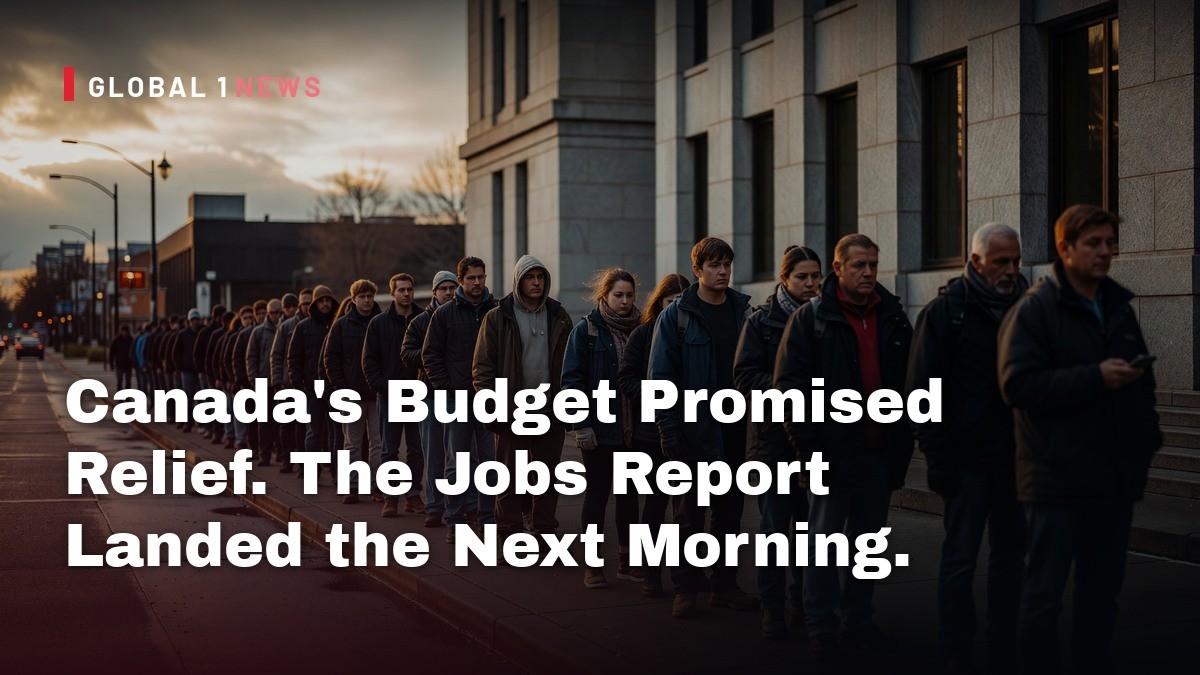
Thursday afternoon in the House of Commons, the government put a document on the table and called it a plan. Statistics Canada published its October Labour Force Survey the following morning, and a budget built on September's reading had to live with October's numbers. Folks, that gap is the whole story.
Canada's Budget Promised Relief. The Jobs Report Landed the Next Morning.
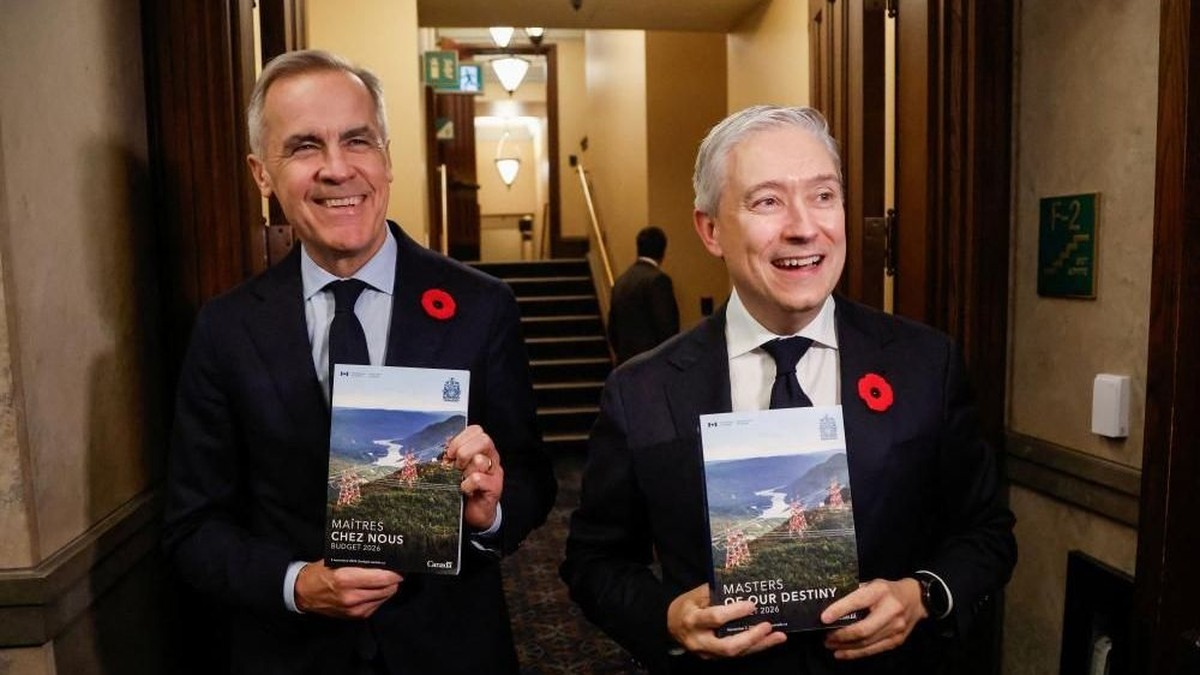
Ottawa, Canada — Finance Minister Francois-Philippe Champagne tabled Budget 2026 in the House of Commons on Thursday 5 November 2026, the second federal budget of Mark Carney's government, under the theme "masters of our destiny: maitres chez nous." The document points to an unemployment rate of 6.5 per cent, near its lowest level in two years, as evidence the plan is working. Statistics Canada's October Labour Force Survey, released on 6 November 2026, put the unemployment rate at 6.7 per cent, up 0.2 percentage points, with employment down 4,700. Economists polled by Reuters had expected a gain of 13,600 jobs and for the rate to hold steady.
A Deficit of $62.3 Billion, and a Slow Slide Down
Start with the number at the centre of the fiscal table. Budget 2026, Table A1.4, puts the budgetary balance at a $62.3 billion deficit for 2026-27, after $39.3 billion the year before. The year after is projected at $62.5 billion, so the shortfall ticks up before it comes down. From there the line bends: $57.6 billion in 2028-29, $53.4 billion in 2029-30, $52.9 billion in 2030-31. Six years of projections, and not one of them shows a surplus. The document carries $142 billion in new spending over five years, which the BBC attributes to better-than-expected oil revenues. That is a slow slide, not a cliff, and the government wants the shape of it read as discipline. The deficit-to-GDP ratio was 1.2 per cent last year, holds at 1.8 per cent this year and next, then falls to 1.6, 1.4 and 1.3. Federal debt stays between 39.9 and 40.4 per cent of the economy. The budget also cites the IMF Fiscal Monitor from October 2026, which puts Canada's all-levels-of-government deficit at 2.5 per cent of GDP.
What the Grocery Top-Up Actually Pays
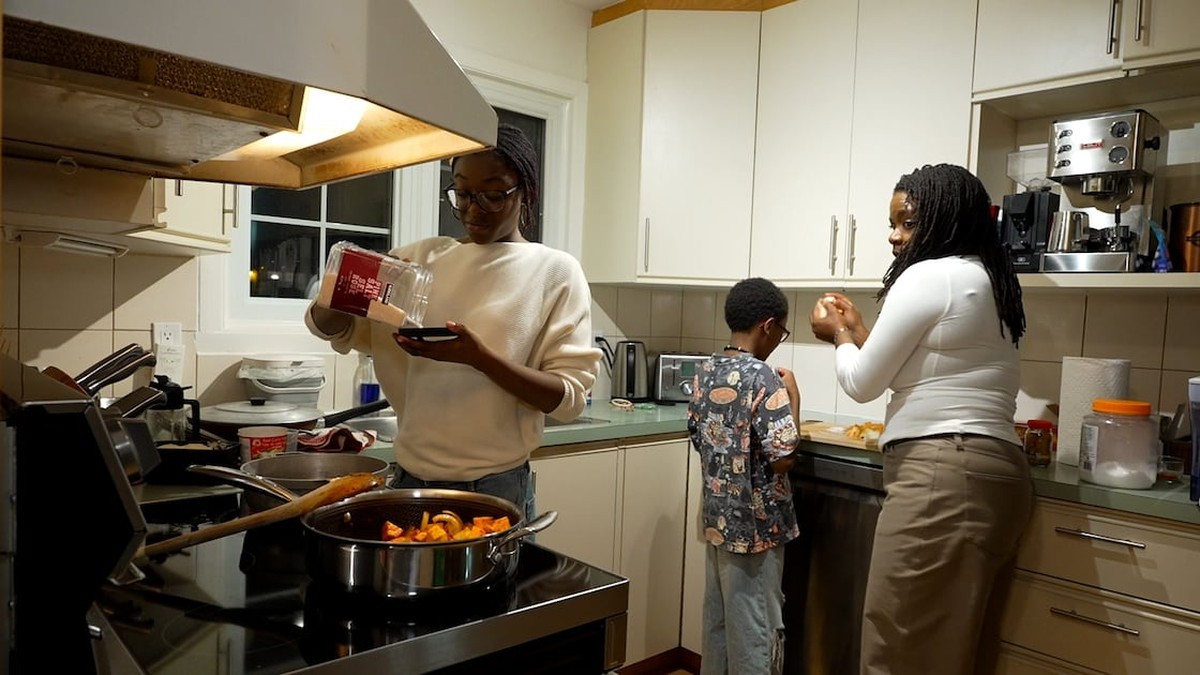
Read the fine print on the grocery measure, because the headline number is doing a lot of work. The 2027 Canada Groceries and Essentials Benefit Supplement is a one-time 50 per cent increase for the 2026-27 benefit year, delivered in early 2027. The amount is up to $339 for a single person without children and up to $679 for a couple with two children. That is the top-up. The budget's own table gives the Canada Groceries and Essentials Benefit, including the 2027 Supplement, a maximum of $2,570 for a family of four with children up to age 12, with more than 12 million beneficiaries. Two different numbers, measuring two different things, and they get blended together in a hurry. This is a supplement for one benefit year, not a new permanent structure. It lands in early 2027, which is after the winter, after the heating bills, and after every political fight between now and then.
The Workers Benefit Grows, and Arrives Later
The Build Canada Workers Benefit is the most interesting mechanic in the affordability chapter, and the least generous in its timing. The minimum earnings threshold drops from $3,000 to $500, and from $1,150 to $200 for the disability supplement. The maximum benefit rises to $1,859 for single individuals without children and $3,143 for families, up from $1,709 and $2,943. About 1.9 million low-income workers gain, including 180,000 new recipients, starting with the 2027 taxation year. The lowest earners could receive up to $675 more, or nearly $1,000 more for those eligible for the disability supplement. Then comes the trade. Advance payments are halved for the 2027 taxation year beginning in July 2027 and eliminated from the 2028 taxation year, with workers receiving their full entitlement after filing. Look at the timing. The gain is real, it is back-loaded, and a worker who counted on that advance in July is going to feel the difference.
Caregivers Move From Tax Credit to Cash
The Canada Caregiver Credit becomes fully refundable, and that single word is the whole change. Refundable means cash in hand rather than a tax offset. The budget puts $845 million in additional support over four years starting in 2027-28, and $245 million per year ongoing. 585,000 caregivers would receive support. The value is up to $1,260 annually for 2027, indexed thereafter. That is the move from tax credit to cash, and the point of it is the caregivers who currently receive no benefit at all. The same chapter carries a four-year extension to the Canada-Ontario early learning and child care arrangement, worth nearly $12 billion to Ontario from 31 March 2027 to 31 March 2031. Folks, caregivers and parents are two of the constituencies every government wants to be seen helping, and both get something here. Both get it later rather than sooner. The dollars are small next to the housing chapter, and the change is structural, which is the reverse of how the grocery top-up was built.
A $45 Billion Housing Bet on a Ten-Year Clock
Build Canada Homes gets the biggest number in the affordability story: total capitalisation of $45 billion, with an additional $13 billion over ten years on a cash basis starting in 2028-29, and a stated path to 200,000 new homes in the next decade. The non-market piece is the part to watch. The budget sets a target of tripling the pace of starts to 24,000 a year over the next decade, from a base where non-market housing is about 4 per cent of Canada's housing stock. Alongside it sits a plan to end homelessness within 10 years, with $11.2 billion over four years starting in 2027-28 and $17.8 billion in future years. There is also $100 million over three years for e-permitting and artificial intelligence in municipal approvals. Look at the clock. The big money starts in 2028-29 and runs a decade, the homelessness plan is a ten-year promise, and none of it shows up as a housing start this winter.
The Fiscal Anchor, and the Watchdog Who Doubts It
Two anchors hold this budget in place. The first is a promise to balance day-to-day operating spending with revenues by 2027-28, a year ahead of the Budget 2025 target. The second is to keep the deficit-to-GDP ratio on a declining path. On the government's own numbers there is a $3.5 billion operating deficit this year, and operating spending is balanced by revenues from 2027-28 onward. The document says: "Budget 2026 reduces the growth of spending from over eight per cent per year during the last decade to less than two per cent since Canada's new government took office." The civil service is on track to shrink by 10 per cent. Then there is the watchdog. Parliamentary Budget Officer Annette Ryan has warned that the government's classification of operating spending can be arbitrary and could change over time, and has projected the operating budget will not be balanced until 2029-30. That is the crack in the anchor, and it is not a small one.
The Growth Assumption Underneath Everything
Everything in the table rests on a growth number, and the growth numbers here are modest. The budget assumes 1.0 per cent GDP growth in 2026, 1.7 per cent in 2027 and 2.0 per cent in 2028. It also carries two alternative scenarios, and they are worth reading side by side. A "global supply disruptions" scenario with persistent Middle East conflict pushes the deficit as high as $66.1 billion next year. A positive "higher investment" scenario gives a $61.4 billion deficit next year. That is the width of the room the government has given itself. Against the modest base, the document points to Canada's economy growing 3.3 per cent annualised in the second quarter of 2026, business capital investment up 9 per cent annualised, and 214,000 private sector and self-employed workers added over the past year. It also says real disposable income per capita is up 1 per cent over the past year. Here is what matters: a 1.0 per cent year is a thin cushion for a shortfall of this size.
Poilievre Calls It a Credit Card Budget
The opposition did not need a spreadsheet. Conservative Leader Pierre Poilievre said his party could not support a "costly credit card budget that Canadians can't afford," accused the prime minister of going on "the single biggest borrowing binge in the history of our country," and argued that growing spending will cause inflation and make essentials more expensive. In a CBC video he said the Liberals should have called the budget "mastered by debt." Finance critic Michael Chong said the document should be titled "masters of increasing debt and interest payments" and that Ottawa needs a "credible fiscal anchor." NDP Leader Avi Lewis called the budget one "for billionaires" and tied the title to the "Masters of the universe investors" at an investment summit the prime minister hosted this fall. Green Leader Elizabeth May said there are no measures to reduce greenhouse gas emissions and that the government is "on the wrong side of history." Champagne's answer, at a Thursday media briefing: "Which G7 countries can tell you that they have a lower deficit last year, this year, and for future years?"
Quebec's Health-Care Bill and the Bloc's Answer
Quebec's number one priority, in the Bloc Quebecois' telling, is health care, and the Bloc does not think this budget pays for it. Leader Yves-Francois Blanchet said the budget falls short on health care and provides the equivalent of $3 billion less per year in health-care transfers to the province over the next five years. His summary: "It's huge." The budget's own health line items are real, but narrower than a transfer fight. There is a $2 billion Health Infrastructure Fund for community mental health and addictions facilities, spread over two years starting in 2027-28. That is infrastructure for addictions and mental health, not a top-up to the transfers themselves, and it arrives on a schedule that begins after the current fiscal year closes. That is the fight: a budget can fund facilities and still lose a province on the arithmetic of the transfers. Blanchet has made that arithmetic the story, and the Bloc's votes will be counted against it.
What to Watch Before the Spring
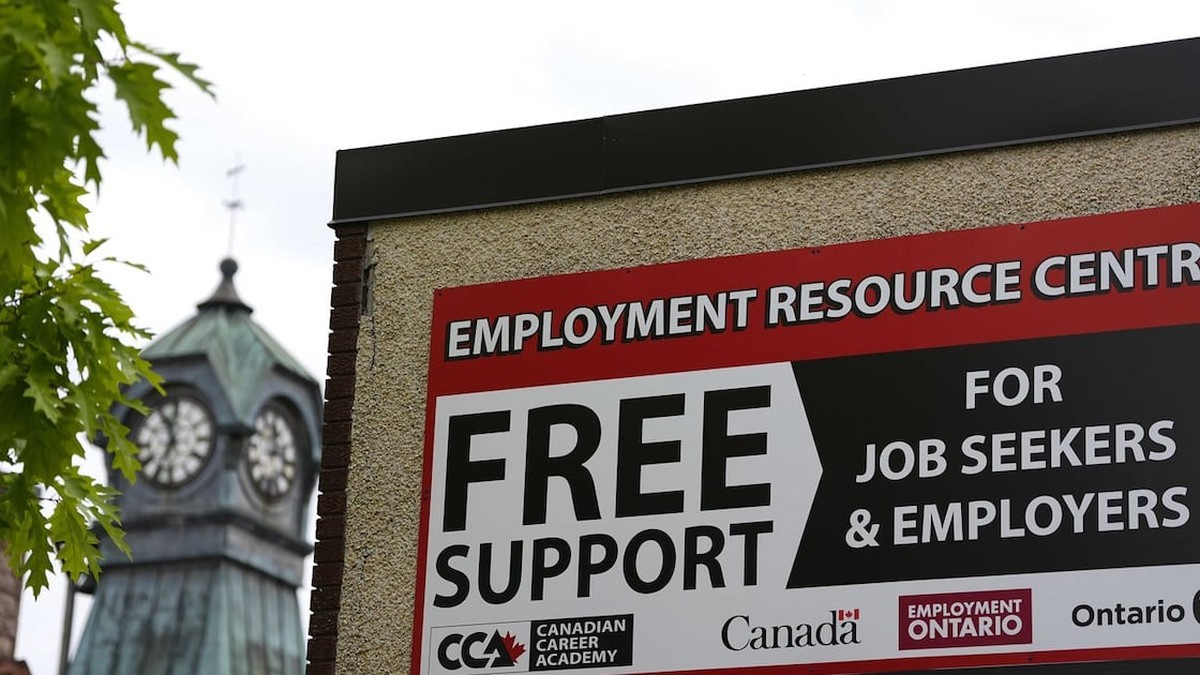
Three things to watch between now and the spring. First, the labour market. RBC Economics says conditions loosened again in October and slack persists, that new U.S. tariffs implemented since 22 August have not and are not expected to lead to widespread layoffs in Canada, and that it expects the unemployment rate below 6 per cent in the second half of 2027. Second, the quality of the work. Average hourly wages rose 2.2 per cent year over year, up $0.83 to $37.89. Private sector employees fell by 53,000, the first decline since February, while public sector employees rose by 50,000. Among 1.5 million unemployed people in October, 23.7 per cent were in long-term unemployment of 27 weeks or more, up from 21.5 per cent a year earlier. Third, the fuel file. The temporary federal excise suspension gives full pass-through relief to 31 January 2027, then half relief to 31 March 2027, and the saving on a 50-litre tank is $5.75. That is a countdown, not a policy, and it lands in the same months the budget's numbers get tested.
By Jessica Ali, Staff Writer
This article was produced with AI-assisted research and editorial support. Sources: Budget 2026 (Department of Finance), Statistics Canada Labour Force Survey, BBC News, CBC News, The Canadian Press, Parliament Today, RBC Economics. Photographs: BBC News, BNN Bloomberg, CTV News.
What's Your Reaction?
 Like
0
 Dislike
0
 Love
0
 Funny
0
 Wow
0
 Sad
0
 Angry
0

Editor-in-Chief at Global1.News. Atlanta-based journalist who cuts through the BS and tells it like it is. Lead anchor, host, and the voice you hear when the spin stops and the truth starts.














Comments (0)