
US Operates Clandestine Shipping Corridor Through Strait of Hormuz, Keeping Gulf Oil Flowing Amid Iran War
The Strait of Hormuz, the narrow waterway that carries the lifeblood of the global energy economy, has become the quiet front line of the U.S.-Iran conflict. While the broader war remains a bloody stalemate, the U.S.
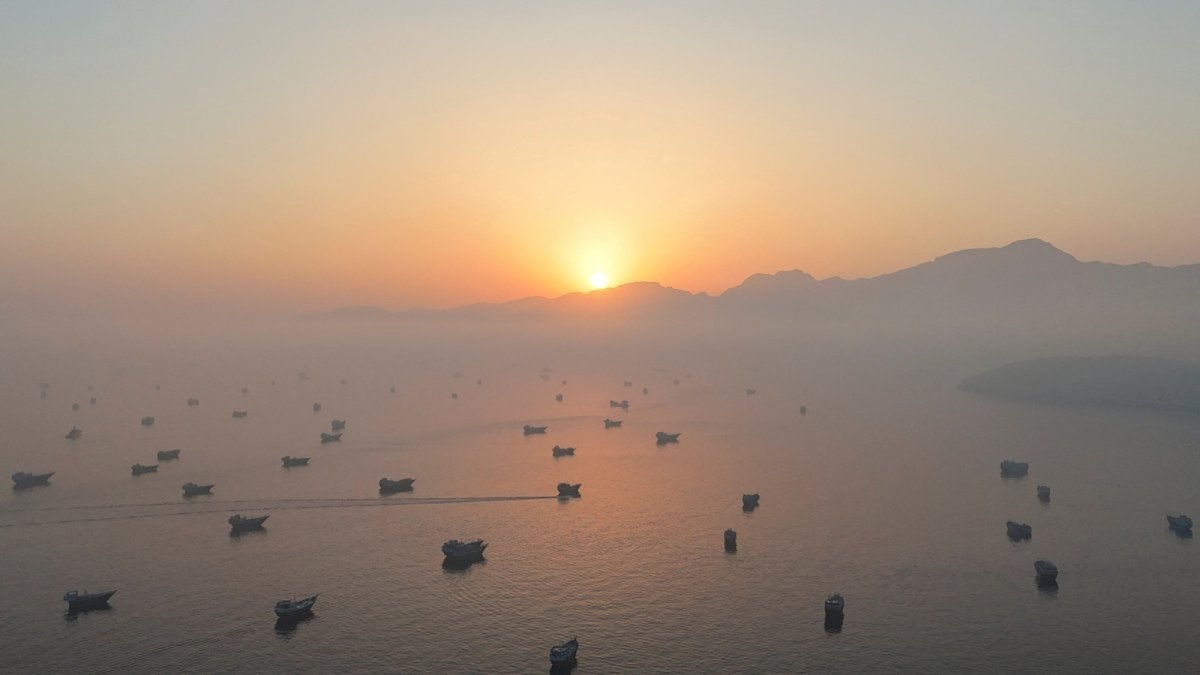
The Strait of Hormuz, the narrow waterway that carries the lifeblood of the global energy economy, has become the quiet front line of the U.S.-Iran conflict. While the broader war remains a bloody stalemate, the U.S. military has quietly engineered a clandestine shipping corridor through the strait, keeping millions of barrels of Gulf oil moving each day and preventing the catastrophic price spike that many feared.
The operation, confirmed by two U.S. officials to Axios on Wednesday, represents a significant tactical achievement for Washington. It comes as President Donald Trump publicly declared that "the strait is open" and that "a lot of boats are coming through," even as negotiations with Tehran remain frozen. The corridor is a testament to American naval power, but it also underscores the fragility of a region where every tanker movement is a potential flashpoint.
US Operates Clandestine Shipping Corridor Through Strait of Hormuz, Keeping Gulf Oil Flowing Amid Iran War
Washington, August 20, 2026 — The U.S. military has established a covert shipping corridor through the Strait of Hormuz, allowing an estimated 10 million barrels of oil per day to transit the strategic waterway despite the ongoing war with Iran. The operation, coordinated by a task force run from the Army's 82nd Airborne Division headquarters at Fort Bragg, North Carolina, has been underway for several weeks, according to two U.S. officials who spoke to Axios.
The corridor is a logistical lifeline for the Gulf states — the United Arab Emirates, Bahrain, and Kuwait — whose export economies depend on tanker access to global markets. It is also a strategic rebuke to Iran, which has long threatened to close the strait as leverage in its confrontation with the West. President Trump told Axios, "There is a tremendous amount of oil coming out of the Strait of Hormuz," while also confirming that Washington is not currently negotiating with Tehran.
A Southern Lane Under American Control
The operation relies on a southern channel along the coast of Oman, a route that keeps tankers as far as possible from Iranian coastal defenses. According to the officials, the U.S. military organizes vessels into scheduled inbound and outbound groups, assigning checkpoints for ships to report their movements. Each night, 15 to 20 tankers pass through the strait using this lane, with U.S. Air Force fighter jets patrolling overhead to detect potential missile and drone attacks.
One U.S. official was blunt about the strategic reality: "We have been controlling the southern lane of the Strait of Hormuz for two months now," adding that Iran's Islamic Revolutionary Guard Corps (IRGC) "doesn't control the strait." This is a significant claim, given that the IRGC has historically used fast attack boats and anti-ship missiles to threaten shipping in the waterway. The operation became possible only after a two-week U.S. Central Command (CENTCOM) campaign that damaged Iran's radar and maritime surveillance capabilities, blinding Tehran's ability to track and target vessels in the corridor.
Oil Flows, But at a Cost
The volume of oil moving through the strait is substantial but still roughly half the pre-war level. Before the conflict, about 20 million barrels per day of crude oil and refined products passed through Hormuz. Today, shipments have recently approached 10 million barrels per day on average, with some peak nights seeing between 15 million and 20 million barrels transported. This is a remarkable recovery, but it is not without risk. Iranian forces have continued to target shipping routes with drones and cruise missiles, and one U.S. official said American forces shot down eight Iranian drones and two cruise missiles on Monday night alone.
The market has taken notice. Brent crude was trading around $91.90 per barrel on Wednesday, while U.S. crude futures climbed about 1.05% to roughly $85.80 per barrel. President Trump, speaking to reporters, claimed the price is actually falling, noting, "They were talking about $350 a barrel, but today it's $84-$85." He also sought to downplay the strait's long-term importance, saying, "The Hormuz Strait is not going to be quite as important as it was in the past," citing "record numbers of pipelines" being built as alternatives.
The Strategic Calculus: What Each Side Wants
For Washington, the corridor serves multiple purposes. It keeps global energy markets stable, preventing a price spike that would cripple the world economy and hand Tehran a strategic victory. It also demonstrates to Gulf allies — Saudi Arabia, the UAE, and Kuwait — that the U.S. remains a reliable security guarantor even as it fights a war with Iran. The operation is a tangible proof point of American commitment, something that has been questioned in the region since the U.S. withdrawal from the JCPOA in 2018 and the subsequent "maximum pressure" campaign.
For Tehran, the calculus is more complex. Iran has long threatened to close the strait as a nuclear option in any confrontation, but doing so would alienate its neighbors and potentially trigger a broader regional war. The IRGC's continued harassment of shipping — the drone and missile attacks — appears designed to raise the cost of the U.S. operation without provoking a full-scale escalation. Iran is also negotiating with Oman over navigation arrangements through the strait, a sign that Tehran may be seeking a face-saving compromise rather than a total closure.
Historical Echoes: From the Tanker War to Today
The current operation evokes memories of the 1980-88 Iran-Iraq War, when the "Tanker War" saw attacks on oil shipping in the Gulf and the U.S. Navy escorted reflagged Kuwaiti tankers in Operation Earnest Will (1987-88). That operation was a precursor to today's corridor, demonstrating that the U.S. has long been willing to use naval power to keep the strait open. More recently, in 2019, after the U.S. withdrawal from the JCPOA, there was a series of tanker seizures and attacks attributed to Iran in and around the strait, underscoring the persistent threat.
The June 2026 U.S.-Iran memorandum of understanding, signed to end the war that began earlier this year, was supposed to resolve these issues. But talks have since stalled amid disputes over its implementation and navigation through the Strait of Hormuz. The corridor is, in effect, a unilateral American solution to a problem that diplomacy has failed to solve.
Market Implications: A Fragile Stability
The corridor's success is a double-edged sword for global energy markets. On one hand, it has prevented the worst-case scenario of a complete closure of the strait, which would have sent oil prices to $350 a barrel, as Trump noted. On the other hand, the current flow of 10 million barrels per day is still half the pre-war level, and the risk of a major incident remains high. Kpler shipping data shows that six commodity vessels crossed the strait on Tuesday, down from nine a day earlier and below the 10-day daily average of 11. Some vessels may pass through with transponders switched off, meaning the actual number could be higher, but the volatility is clear.
For Gulf producers, the corridor is a lifeline, but it also exposes their dependence on U.S. military power. The UAE, Bahrain, and Kuwait are all benefiting from the U.S. operation, but they are also acutely aware that their security is contingent on American willingness to sustain this effort. This dynamic is likely to shape their diplomatic posture in the coming months, as they balance their economic needs against the risk of Iranian retaliation.
Regional Dynamics: A New Balance of Power
The corridor also has implications for the broader regional balance of power. Saudi Arabia, which has its own pipeline infrastructure that bypasses the strait, may see this as an opportunity to increase its market share at the expense of its Gulf neighbors. The UAE, which has invested heavily in its own pipeline capacity, is also well-positioned. But for Kuwait and Bahrain, which lack such alternatives, the U.S. corridor is essential.
Iran, meanwhile, is watching these developments with concern. The U.S. operation has effectively neutralized Tehran's most potent lever — the threat to close the strait — and has done so without a formal diplomatic agreement. This is a significant loss of face for the IRGC, which has long positioned itself as the defender of Iran's maritime sovereignty. The continued negotiations with Oman suggest that Tehran is looking for a way to save face, but the U.S. corridor makes it clear that the strait will remain open regardless of the outcome.
What Comes Next: A Fragile Status Quo
The corridor is, as Axios notes, "a notable success even as the broader war remains at a stalemate." But it is also a fragile arrangement. The U.S. military is sustaining a high operational tempo, with fighter jets patrolling overhead and naval assets coordinating tanker movements. Any major incident — a successful Iranian missile strike on a tanker, for example — could quickly unravel the operation and send oil prices soaring.
For now, the status quo appears to hold. Trump's comments suggest that Washington is content to maintain the corridor as a de facto solution, even as formal negotiations remain stalled. But the underlying issues — Iran's nuclear program, its regional proxy networks, and the broader U.S.-Iran confrontation — remain unresolved. The corridor is a tactical victory, but it is not a strategic solution. The strait will remain a flashpoint for the foreseeable future, and the world will continue to watch every tanker movement with bated breath.
This article was produced with AI-assisted research and editorial support. Sources: Axios, Anadolu Agency, Daily Sabah, Reuters, The Jerusalem Post.
By Malik Hassan, Staff Writer
What's Your Reaction?
 Like
0
Like
0
 Dislike
0
Dislike
0
 Love
0
Love
0
 Funny
0
Funny
0
 Wow
0
Wow
0
 Sad
0
Sad
0
 Angry
0
Angry
0

Middle East Correspondent at Global1.News. Based in Beirut, covering politics, conflict, energy, and society across the Middle East. Brings context and depth to a region often reduced to headlines.













Comments (0)