
Can General Eisenkot End Netanyahu's Era? Israel Votes 27 Oct
In a recent BBC News report, the Global Story episode turned its focus to a seismic shift in Israeli politics, profiling a man who has emerged from the shadow of military command to become the principal challenger to Prime Minister Benjamin Netanyahu. The episode, which aired on 17 August 2026, features extensive commentary from David Remnick, editor of The New Yorker, who spent considerable time with former IDF Chief of Staff Gadi Eisenkot for a major profile. The internatio
In a recent BBC News report, the Global Story episode turned its focus to a seismic shift in Israeli politics, profiling a man who has emerged from the shadow of military command to become the principal challenger to Prime Minister Benjamin Netanyahu. The episode, which aired on 17 August 2026, features extensive commentary from David Remnick, editor of The New Yorker, who spent considerable time with former IDF Chief of Staff Gadi Eisenkot for a major profile. The international media has already dubbed Eisenkot the "anti-Netanyahu," a label that speaks to the deep polarization of Israeli society and the profound questions surrounding the upcoming general election scheduled for 27 October 2026. This is not merely a routine political contest; it is widely viewed as a national referendum on Netanyahu's leadership in the wake of the devastating Hamas attack on 7 October 2023, an event that shattered the country's sense of security and triggered the longest and most controversial war in Israel's history.
The electoral stakes could not be higher. A Channel 12 News poll published on Monday, 10 August 2026, shows Eisenkot's new party, Yashar—Hebrew for "Straight" or "Upright"—leading with 24 Knesset seats, a single seat ahead of Netanyahu's Likud at 22. This marks a significant moment in the campaign, as it is the first time a challenger has consistently outpaced the incumbent in a major national poll. The numbers reflect a dramatic shift in public mood. An earlier Channel 12 survey found that 43% of respondents considered Eisenkot the most suitable candidate for prime minister, compared to just 34% for Netanyahu. The 7 October attack, which saw Hamas militants breach the Gaza border, kill over 1,200 Israelis, and take hundreds of hostages, has fundamentally altered the political landscape. For many voters, the question is no longer about economic policy or social issues, but about who can be trusted to ensure the nation's survival. Eisenkot, with his decades of military experience and his personal sacrifice—his son and two nephews were killed fighting in Gaza—represents a stark contrast to a prime minister who has been mired in corruption trials and political scandal.
The General Who Could End Netanyahu's Era
Jerusalem – 20 August 2026 — A former military chief who lost a son in Gaza has surged to the top of Israeli opinion polls, threatening to end Benjamin Netanyahu's long dominance of the country's politics. With the general election set for 27 October, Gadi Eisenkot's Yashar party is leading the prime minister's Likud in the latest surveys.
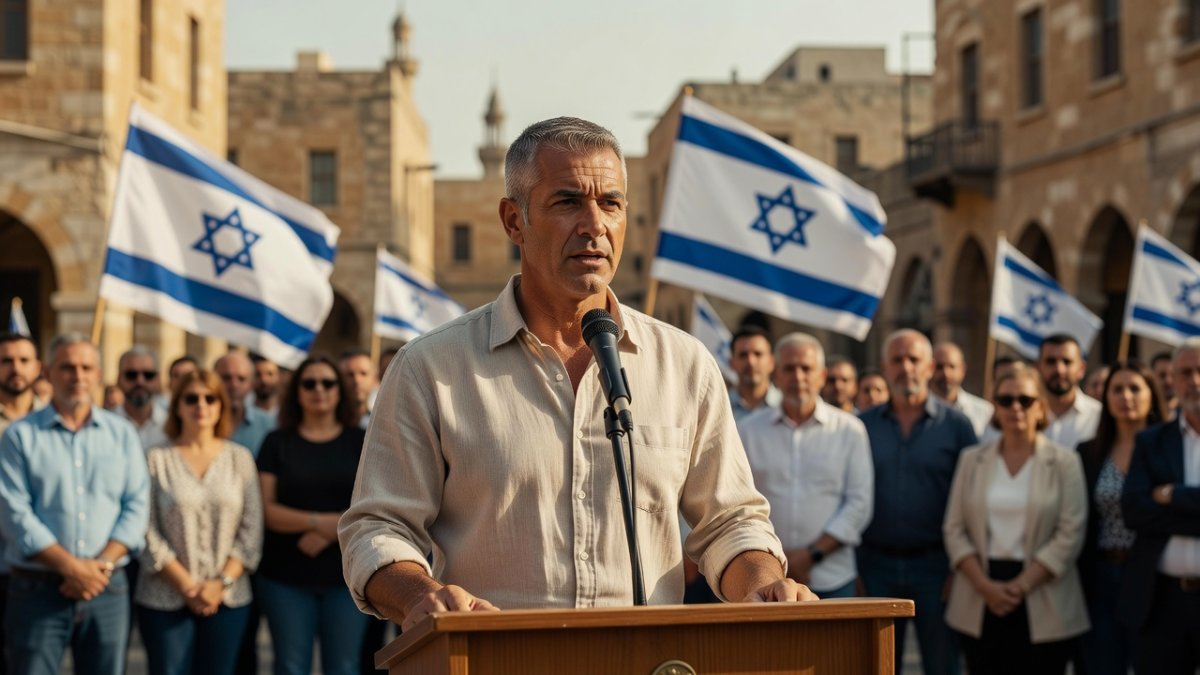
From IDF Chief of Staff to Political Challenger
Gadi Eisenkot, 66, is not a typical politician. He served as the Chief of Staff of the Israel Defense Forces (IDF) from 2015 to 2019, a period marked by intense conflict and strategic recalibration. He is credited with developing the "Dahiya Doctrine," a military strategy named after the Beirut suburb that served as a Hezbollah stronghold. The doctrine, which Eisenkot articulated during his tenure, calls for devastating and disproportionate Israeli responses against enemy population centres whenever Israeli communities come under long-range attack. This approach, which has been both praised for its deterrent effect and criticized for its potential for civilian casualties, underscores Eisenkot's hardline security credentials. However, his views on the Palestinian issue are equally stark. In the aftermath of 7 October, Eisenkot dismissed calls for a future Palestinian state as "irrelevant," arguing that the immediate priority must be the security of Israeli citizens. This position, while aligning him with the right-wing consensus on security, also sets him apart from more centrist figures who advocate for a two-state solution as a long-term goal.
Eisenkot's entry into politics is relatively recent, but his personal story has resonated deeply with the Israeli public. His son, Gal Eisenkot, was killed during the ground offensive in Gaza, along with two of his nephews. This personal tragedy, which Eisenkot has spoken about with raw emotion, has generated widespread public sympathy and has been a powerful driver of his campaign. In a political culture where military service is a defining credential, Eisenkot's sacrifice has elevated him to a moral authority that his opponents struggle to match. He has positioned himself not as a politician seeking power, but as a national leader answering a call of duty. His platform, which he has outlined in a series of rallies and media appearances, is built on a promise to restore public trust in the institutions of the state, which he argues have been eroded by years of Netanyahu's divisive rule. This message, combined with his military gravitas, has made him a formidable force in the run-up to the October vote.
A 10-Point Platform for Change
At the heart of Eisenkot's campaign is a 10-point platform that directly challenges the Netanyahu government's record and proposes a fundamental reset of Israeli governance. The first and most prominent pledge is the establishment of an independent state commission of inquiry into the 7 October attack. Eisenkot has argued that only a fully independent body, with the power to subpoena witnesses and compel testimony, can uncover the truth about the intelligence and military failures that allowed the Hamas assault to succeed. This is a direct rebuke to Netanyahu's coalition, which has instead proposed a state commission whose members would be chosen by politicians, a move widely seen as an attempt to control the narrative and shield the prime minister from accountability. The issue has galvanized the public, with tens of thousands of Israelis taking to the streets in Tel Aviv and Jerusalem in recent weeks to demand an independent inquiry. Eisenkot has made this a central theme of his campaign, telling supporters that "the truth is the foundation of national recovery," and that without a full accounting, the country cannot begin to heal.
The second pillar of Eisenkot's platform is the development of a "new long-term national security doctrine." While he has not provided exhaustive details, he has indicated that this doctrine would move beyond the reactive strategies of the past, focusing on proactive intelligence gathering, technological superiority, and a comprehensive approach to the threats posed by Iran and its proxies. Eisenkot has also pledged to introduce a universal national service law, extending compulsory military or national service to ultra-Orthodox Jews and Arab citizens. This is a deeply contentious issue in Israeli politics. The current coalition agreement, brokered by Netanyahu, includes exemptions for many Haredi men from military service, a policy that has long been a source of resentment among secular Israelis who bear the burden of conscription. Eisenkot has attacked this deal as a betrayal of the national interest, arguing that in a time of existential threat, every citizen must share in the responsibility of defense. He has also promised to "protect judicial independence, the rule of law, minority rights and a free press," a direct appeal to voters who fear that Netanyahu's government has sought to weaken the Supreme Court and muzzle critical media. This platform, which combines security hawkishness with a commitment to democratic institutions, is designed to appeal to a broad swath of the electorate, from disillusioned Likud voters to centrists and even some on the left.
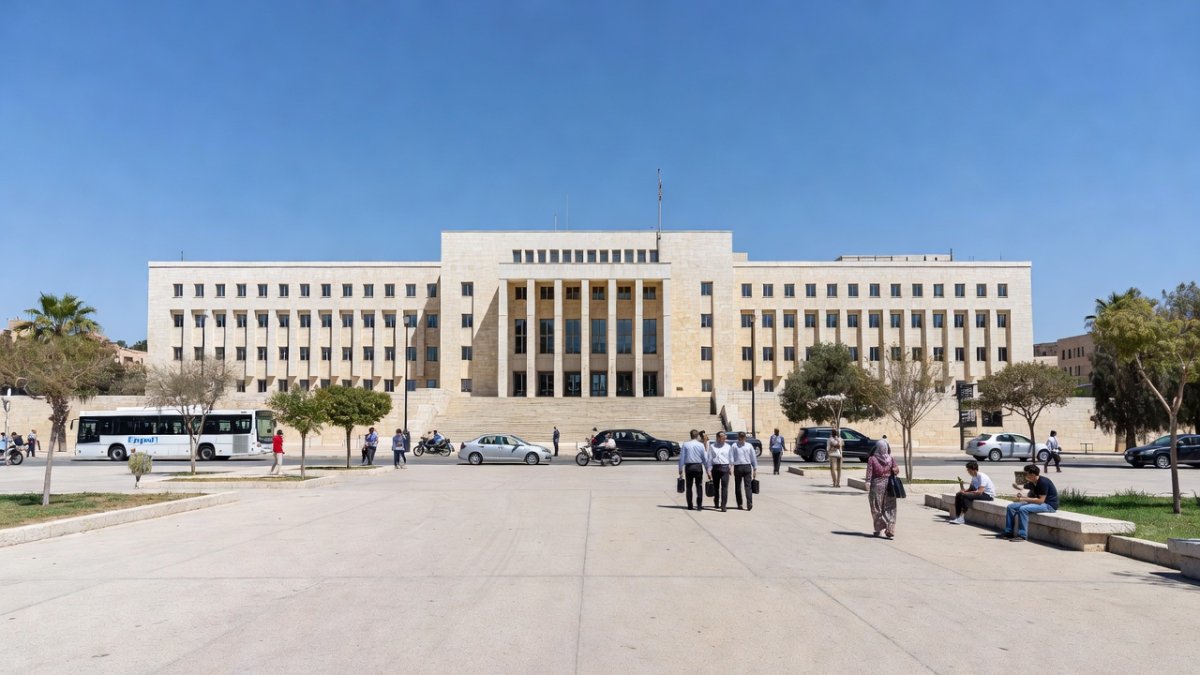
What the Polls Say — and Do Not Say
The Channel 12 News poll, published on Monday, provides the most detailed snapshot yet of the electoral landscape. According to the survey, Yashar leads with 24 seats, followed by Likud at 22. Naftali Bennett's B'Yachad party is in third place with 15 seats, while the Democrats, led by Yair Golan, are at 11. Avigdor Liberman's Yisrael Beytenu holds 10 seats, and Itamar Ben-Gvir's Otzma Yehudit is at 8. The ultra-Orthodox parties, United Torah Judaism and Shas, are at 8 and 7 seats respectively, while Bezalel Smotrich's Religious Zionist Party is at 5. The Arab parties, Hadash-Ta'al and Ra'am, led by Mansour Abbas, each poll at 5 seats. The arithmetic is striking: anti-Netanyahu parties, including the Zionist opposition and the Arab parties, collectively command 70 seats in the 120-member Knesset, while the governing coalition holds just 50. This suggests a significant majority of the electorate is seeking a change in leadership.
However, political analysts are quick to caution that a lead in seats does not guarantee a governing majority. Israeli elections are proportional, and coalitions are built after the vote through often torturous negotiations. The poll numbers are a snapshot of current sentiment, not a prediction of the final outcome. Netanyahu, a master of political survival, has repeatedly defied the odds, and his skills in coalition-building are legendary. Historically, challengers have risen in the polls only to falter under the pressure of a campaign, and Netanyahu has a track record of exploiting divisions among his opponents. The anti-Netanyahu bloc is ideologically diverse, ranging from the left-wing Democrats to the right-wing Yisrael Beytenu, and it is far from certain that they could form a stable coalition even if they win a majority of seats. Eisenkot's Yashar party, as a new entity, lacks the established party machinery and grassroots organization of Likud, which could be a disadvantage in the final weeks of the campaign. The polls, while encouraging for Eisenkot, are not a mandate, and the path to the prime minister's office remains fraught with uncertainty.
The New Yorker Profile and International Attention
The international media's fascination with Eisenkot is a double-edged sword. On one hand, the profile by David Remnick in The New Yorker, which was the subject of the BBC Global Story episode, has elevated Eisenkot's status on the world stage, presenting him as a serious statesman with a coherent vision for Israel's future. Remnick, a Pulitzer Prize-winning journalist and a sharp critic of Netanyahu, has portrayed Eisenkot as a figure of integrity and gravitas, a stark contrast to the scandal-plagued prime minister. The label "anti-Netanyahu" is apt in this context, as it captures the essence of Eisenkot's appeal: he represents everything that Netanyahu is not—measured, disciplined, and seemingly above the petty fray of partisan politics. However, this label also carries risks. It frames Eisenkot's campaign primarily in opposition to Netanyahu, rather than as a positive vision in its own right. If Netanyahu were to step aside, Eisenkot's raison d'être would be diminished, and his coalition of supporters might fragment.
The international dimension of the campaign is further complicated by the role of the United States. A striking finding from the Channel 12 poll is that 63% of respondents said that US President Donald Trump undermines Israel's security more than Netanyahu, with only 25% blaming the prime minister. This is a remarkable shift in public opinion, reflecting a growing disillusionment with Trump's erratic policies toward the region, including his pressure on Israel to make concessions to the Palestinians and his withdrawal of support for certain military operations. For Eisenkot, this presents both an opportunity and a challenge. He has positioned himself as a leader who can maintain a strong relationship with Washington while also asserting Israel's independence. However, if Trump were to actively campaign against Eisenkot, as he has done with other foreign leaders, it could inject an unpredictable variable into the election. The international attention, while flattering, also subjects Eisenkot to greater scrutiny, and his every statement is now analyzed for its implications for Israel's foreign relations. The BBC episode, by bringing this story to a global audience, has ensured that the world will be watching the October election with bated breath.

Analysis — What an Eisenkot Victory Would Mean
If Eisenkot were to emerge victorious on 27 October, the implications would be profound, both for Israel and for the broader Middle East. As a former chief of staff, Eisenkot would bring a security-first perspective to the prime minister's office, but one that is tempered by a deep understanding of the costs of war. His personal losses in Gaza would likely make him more cautious about committing Israeli troops to prolonged ground operations, but also more determined to dismantle the threat posed by Hamas and Hezbollah. His "new long-term national security doctrine" could signal a shift away from the reactive, tit-for-tat strategies of the past, toward a more comprehensive approach that integrates diplomatic, economic, and military tools. This could have significant implications for the conflict with Iran, which has been escalating in recent months. Eisenkot has been a vocal advocate for a credible military threat against Iran's nuclear program, but he has also emphasized the need for international cooperation and a clear exit strategy. A victory for Eisenkot could also reshape Israel's approach to the Gaza Strip, potentially leading to a more sustainable ceasefire and a long-term plan for reconstruction, though his dismissal of a Palestinian state suggests that he would not pursue a two-state solution.
Regionally, an Eisenkot victory would be watched closely in Moscow, Tehran, and the Gulf capitals. Russia, which has deepened its ties with Iran and has been critical of Israeli actions in Gaza, would likely adopt a wait-and-see approach, assessing whether Eisenkot's government would be more or less predictable than Netanyahu's. Iran, which has been bracing for a potential Israeli strike on its nuclear facilities, would face a new and uncertain adversary. Eisenkot's reputation as a strategist who is willing to use overwhelming force, as articulated in the Dahiya Doctrine, could serve as a deterrent, but it could also escalate tensions if he is perceived as more hawkish than Netanyahu. The Gulf states, which have normalized relations with Israel under the Abraham Accords, would likely welcome a leader who is seen as more stable and less divisive, potentially paving the way for deeper economic and security cooperation. However, the uncertainty of coalition arithmetic remains a critical wildcard. Yashar, even with 24 seats, would need partners to form a government, and those partners could include parties with very different agendas. The process of coalition-building could take weeks, and the resulting government might be fragile, subject to the whims of smaller parties. The campaign has already revealed a deeply fractured society, and an Eisenkot victory would not automatically heal those divisions. It would, however, represent a decisive break from the Netanyahu era, and a signal that Israeli voters are ready for a new chapter.
As the 27 October election approaches, the world is watching a nation at a crossroads. The rise of Gadi Eisenkot is not just a political story; it is a reflection of a society grappling with trauma, seeking accountability, and yearning for a sense of security that has been shattered. The BBC Global Story episode, with its focus on Eisenkot's character and vision, has captured the essence of this moment. Whether Eisenkot can translate his lead in the polls into a governing majority remains to be seen, but his emergence has already changed the terms of the debate. For the first time in over a decade, Netanyahu faces a challenger who is not just a politician, but a national figure with the moral authority to question his leadership. The outcome of this election will determine not only the future of Israel's government, but also the direction of the entire region. In a world of uncertainty, one thing is clear: the era of Netanyahu's unchallenged dominance is over, and the battle for Israel's soul has begun.
By Irina Volkov, Staff Writer
This article was produced with AI-assisted research and editorial support. Sources: BBC News Global Story, The Jerusalem Post, News24, France 24.
What's Your Reaction?
 Like
0
Like
0
 Dislike
0
Dislike
0
 Love
0
Love
0
 Funny
0
Funny
0
 Wow
0
Wow
0
 Sad
0
Sad
0
 Angry
0
Angry
0
Russia/Eastern Europe Correspondent at Global1.News. Covering Russian politics, energy, security, and the shifting dynamics of the post-Soviet space. Provides clear-eyed analysis on one of the world's most opaque regions.












Comments (0)