
Canadian wool producers untangle supply chains as U.S. tariffs strain century-old ties
Canadian wool producers untangle supply chains as U.S. tariffs strain century-old ties OTTAWA — The last time Judy Enright Smith welcomed her American wool supplier to her Ottawa shop, she wore an "Elbows Up" T-shirt. It was a small act of defiance, but for the owner of the Wabi Sabi yarn shop, it signals a deeper shift in how she views a trading relationship that has unravelled since U.S. President Donald Trump imposed sweeping tariffs on Canadian goods.
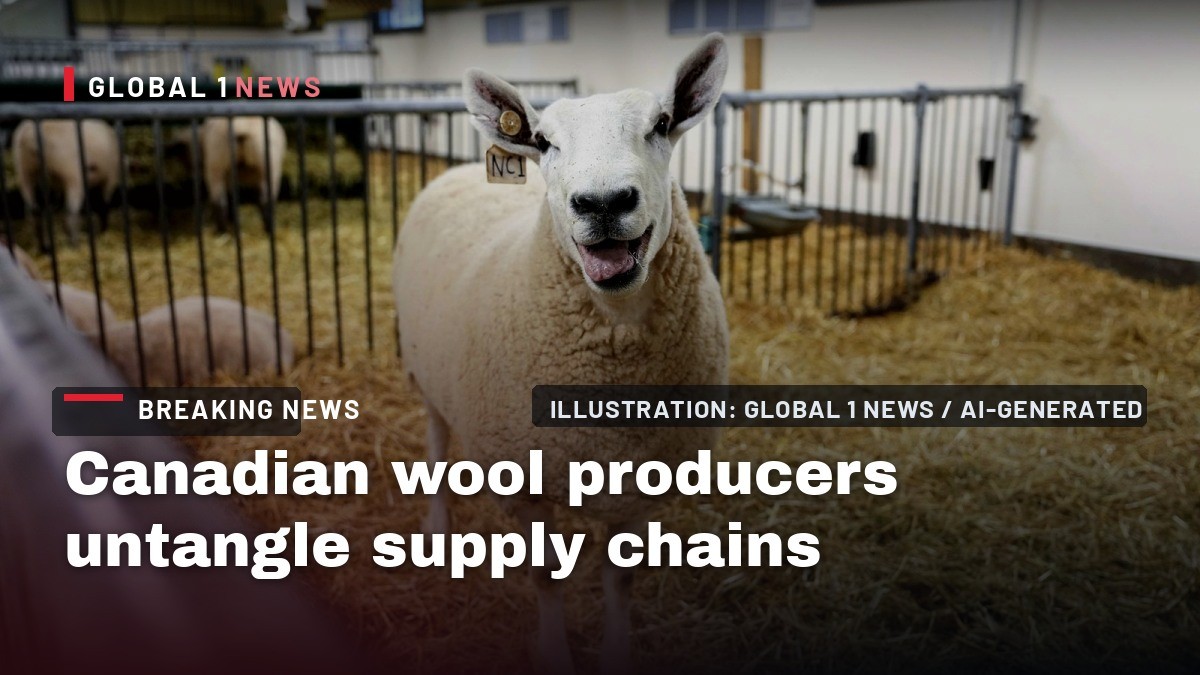
Canadian wool producers untangle supply chains as U.S. tariffs strain century-old ties
OTTAWA — The last time Judy Enright Smith welcomed her American wool supplier to her Ottawa shop, she wore an "Elbows Up" T-shirt. It was a small act of defiance, but for the owner of the Wabi Sabi yarn shop, it signals a deeper shift in how she views a trading relationship that has unravelled since U.S. President Donald Trump imposed sweeping tariffs on Canadian goods.
"At first, it was business," Enright Smith said. "Now, it's personal."
Her frustration echoes across Canada's wool and yarn sector, where producers, mill operators and retailers are grappling with 50 per cent U.S. tariffs on greasy wool imports and certain finished wool products. The levies, part of Trump's broader trade campaign against Canada, have forced many in the industry to rethink decades-old cross-border supply chains — or abandon them altogether.
Greasy wool is the raw, unwashed product sheared from sheep, still carrying strands of hay, barnyard debris and lanolin, the oily substance that can be extracted for cosmetics while the wool itself is cleaned and processed. Canada lacks the industrial-scale processing capacity of the United States and other countries, meaning Canadian producers have long relied on foreign mills to transform greasy wool into yarn and finished goods. Domestic production remains largely mid-sized or artisanal.
A rupture in a long-standing relationship
Matthew Rowe, chair of the Canadian Wool Council, said the tariffs have landed at a particularly painful moment. Wool prices are rising globally, and just as Canadian producers stood to benefit, their largest market effectively closed.
"Just as that's happening, our biggest single market — the U.S. — is kind of closed to us now," Rowe said. "If you're relying on cross-border supply chains to get something produced, it just doesn't make economic sense anymore with these tariffs."
More Canadian producers are now shipping raw wool to China and the Czech Republic to sidestep U.S. tariffs and trade tensions. Rowe described the shift as "an unfortunate rupture" in a trading relationship built over generations, one that has left many in the industry feeling a sense of betrayal.
"We don't want all our wool in one bag, to modify the expression," he said. "We need to spread around our opportunities, but I think that doesn't lessen the hurt, and even the sense of betrayal, that many of the people in our value chain are feeling."
Retailers make moral calculations
For Enright Smith, the decision to stop stocking U.S. labels is no longer purely economic. She said some of those American products remain popular with her customers, but she can no longer justify carrying them.
"I don't mind losing American customers because they basically voted for the guy," she said of Trump.
She recounted how her American supplier sent a message to Canadian clients at the start of the trade war, warning that they would be "hurting the little guy" if they stopped doing business with the company out of frustration with Trump. Enright Smith read that as a self-serving attempt to blame Canadians for commercial damage caused by the president's "blunt-force campaign" to reshape the trading relationship.
This year, when her American supplier reaches out to make a sale, she plans to say no. She is instead looking to Europe to help fill the gap and searching for more Canadian-made wool products to stock her shelves.
One mill's exception offers a lesson
Not every Canadian wool business is equally exposed. Briggs and Little, a New Brunswick mill that first opened in 1857, is one of the few operations in the country that processes wool entirely on-site. It buys its wool from a co-operative in Carleton Place, Ont., and manufactures its products domestically, limiting the direct impact of U.S. tariffs.
But even the oldest operating Canadian mill is not entirely insulated from Trump's tariff agenda. Office manager Leah Little said the company relies on some U.S.-made parts and materials that are now subject to tariffs.
"We do hope this mess is resolved before we need to replace any of our machinery parts that are not available in Canada," she said.
Rowe called Briggs and Little "more the exception than the rule" for Canadian wool and yarn producers — and "a great option" for knitters looking to buy local.

A shepherd's vision for a new system
Anna Hunter, a shepherd and wool mill owner at Long Way Homestead in Ste. Genevieve, Man., has spent years thinking about how to reimagine the Canadian wool industry. She stopped shipping to the United States last year when Trump cancelled the de minimis exemption for imports, which had allowed shipments under US$800 to enter duty and tariff free.
That decision came on top of the COVID-19 pandemic's disruption of global supply chains, which Hunter said left Canadian wool producers particularly vulnerable.
"All of a sudden, Canadian wool wasn't moving anywhere than the United States. It was sitting in warehouses and because there was no resilience in how we sold, or where we sold our wool, there was no market," she said.
When wool appeared again on the latest 50 per cent tariff list, Hunter said she wondered: "How many more hits will Canadian wool have to take before we start talking about creating a new system?"
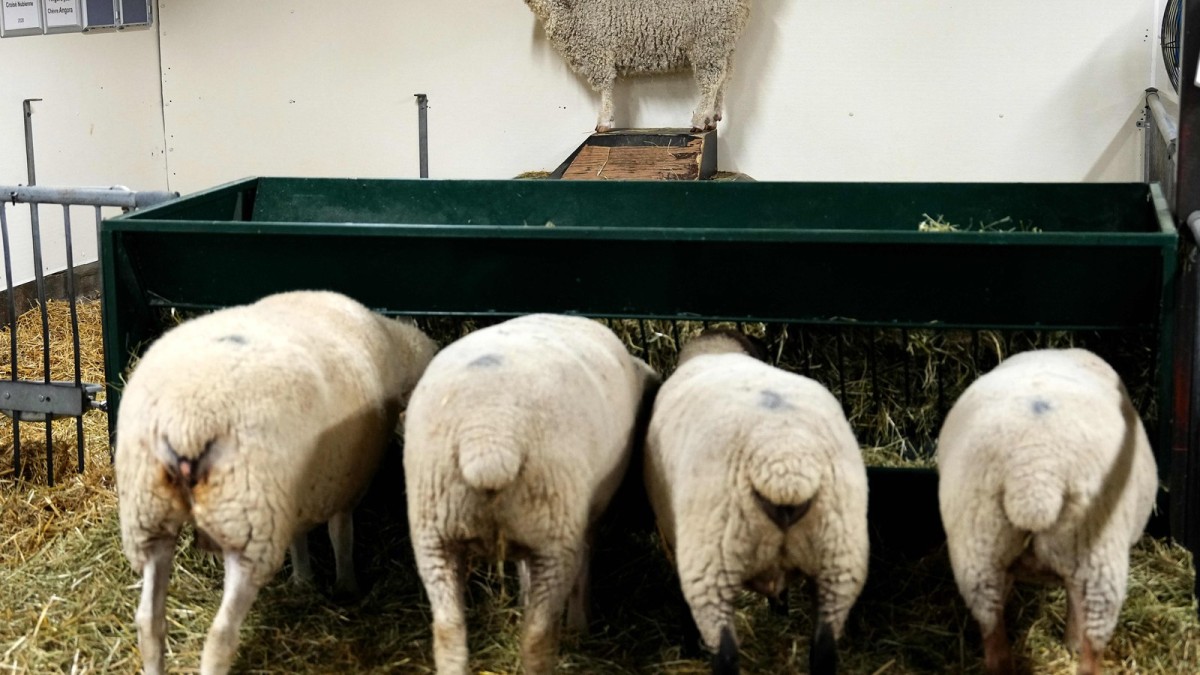
Hunter currently processes about 5,000 pounds of wool a year — a fraction of what her sheep produce. She envisions a new domestic wool industry built on decentralized regional processing facilities, each designed to handle different varieties of wool and support a more robust Canadian textile sector.
She argues that decoupling Canadian wool from the United States will require a fundamental shift in how government and consumers view the fibre. Wool, she said, must no longer be treated as a byproduct of the sheep industry but as a commodity worthy of investment in its own right.
"We're going to have to really wrestle with how our clothing system has become completely disconnected from agriculture and from our own economy," Hunter said.
The challenge of unwinding integration
Hunter's frustration points to a broader conundrum facing much of the North American economy: decades of deepening integration cannot be easily unwound. Supply chains, customer relationships and processing networks built over generations do not pivot overnight.
"For those of us who are deeply passionate about the sheep industry and about Canadian wool, it does matter," she said. "And we do need to reckon with it — not just because of this madness coming out of the White House, but because we want to see a future with Canadian wool thriving and being an important part of our agricultural commodities and a part of our textile industry."
Rowe said his organization is advocating for expanded domestic mill capacity and new supply chains to shore up Canadian production. But he acknowledged that untangling ties between the Canadian and U.S. wool industries is "almost jarring" to do.
An uncertain fall season ahead
If the tariff dispute is not resolved soon, Rowe warned, it will be a particularly difficult autumn for producers as shoppers begin thinking about winter wardrobes. For many in the industry, a single fall season can account for a year's worth of profit.
The stakes are high for a sector that has long operated in the shadow of larger agricultural commodities. Canadian wool producers now face a choice: find new markets, build new processing capacity, or watch an industry that has endured for generations continue to shrink.
Enright Smith, for her part, is preparing for a season without her American supplier's products. She said she is turning to Europe to help fill the gap and actively looking for more Canadian-made wool products to stock her shelves.
For Hunter, the path forward lies in convincing governments and consumers to treat wool as a commodity worthy of investment on its own, rather than a byproduct of the sheep industry. The work of building that new system, she said, begins with Canadians choosing to buy local — and with producers no longer depending on a single cross-border market.
Tags: Canada-U.S. trade, tariffs, wool industry, agriculture, Donald Trump, Canadian manufacturing, small business, textile industry, supply chains
By Alex Thompson, Staff Writer
This article was produced with AI-assisted research and editorial support. Sources: The Canadian Press via Global News (globalnews.ca), Sept. 5, 2026.
What's Your Reaction?
 Like
0
Like
0
 Dislike
0
Dislike
0
 Love
0
Love
0
 Funny
0
Funny
0
 Wow
0
Wow
0
 Sad
0
Sad
0
 Angry
0
Angry
0

Canada Correspondent at Global1.News. Based in Toronto, covering Canadian politics, energy, trade, and US-Canada relations. Provides the Canadian perspective on North American and global affairs.















Comments (0)