
Canada's Quiet Expansion of Licence Plate Surveillance
In a recent CBC News report, the rapid spread of AI-powered surveillance cameras across North America has been thrust into the spotlight, with automatic licence plate recognition (ALPR) technology at the centre of a growing debate over privacy and policing.
In a recent CBC News report, the rapid spread of AI-powered surveillance cameras across North America has been thrust into the spotlight, with automatic licence plate recognition (ALPR) technology at the centre of a growing debate over privacy and policing. While the report highlights the aggressive expansion of Atlanta-based Flock Safety in the United States, it also raises pressing questions for Canadians about how similar technology is being deployed in our own cities, often with far less public scrutiny. As Canadian police services expand their use of ALPR systems, the line between targeted investigation and mass surveillance is becoming increasingly difficult to discern.
Canada's Quiet Expansion of Licence Plate Surveillance
Toronto, Ontario — The debate raging in the United States over automated licence plate readers is beginning to resonate in Canada, where municipal police forces are quietly expanding their own surveillance capabilities. Although Flock Safety, the company at the centre of the U.S. controversy, has confirmed it has no partnerships in Canada, domestic use of similar technology is growing, prompting privacy experts and civil liberties advocates to question the legal and social implications of a system that tracks every vehicle on public roads.
The CBC report, published on Saturday, detailed how Flock Safety has deployed more than 100,000 cameras across the United States, used by roughly 5,000 law enforcement agencies and 1,000 businesses. The company’s absence from the Canadian market, however, does not mean Canadians are immune from this type of surveillance. Instead, the focus is shifting to homegrown companies like Montreal-based Genetec, which supplies ALPR technology to major police services from Ottawa to Vancouver, raising the question of whether Canada is sleepwalking into a surveillance state without the robust public debate seen south of the border.
The U.S. Backlash and Flock's Policy Shift
The American experience with Flock Safety offers a cautionary tale for Canadian policymakers. Over the summer, the company faced intense backlash from civil liberties groups, culminating in protests at its Boston office in August. The ACLU launched a "Get the Flock Out" campaign, and there were growing incidents of citizens disabling or destroying cameras. The situation escalated to the point where a North Carolina police officer was arrested over the alleged illegal use of Flock cameras, and multiple motorists reported being mistakenly stopped by police following false ALPR matches.
Under this mounting pressure, Flock announced operational changes in mid-August, reducing its default data retention period from 30 days to just 7 days, with exceptions only for evidence tied to active investigations. However, civil liberties groups were quick to dismiss the move as insufficient, arguing that the core issue is not how long data is stored, but the very act of collecting location data on every citizen who drives past a camera. This debate is critical for Canada, where the technology is expanding even as the ethical and legal frameworks governing its use remain fragmented.
The contrast between the two countries is stark. In the U.S., the debate is highly politicized and visible, with citizens actively resisting the technology. In Canada, the expansion has been more measured but also more discreet, often framed as a necessary tool for fighting auto theft and violent crime rather than as a fundamental shift in the relationship between the state and the individual.
Canadian Police Services Are Already On Board
Despite Flock's absence, Canadian law enforcement has embraced ALPR technology with increasing enthusiasm. The Ottawa Police Service, for example, recently expanded its ALPR capacity from just 5 patrol vehicles to 65, a significant investment in vehicle surveillance. In Toronto, police utilize an Axon Fusus ALPR system that can identify vehicles by licence plate, make, model, and colour, recording precisely when and where vehicles are detected. Toronto police have stated that the system does not use facial recognition and that only a limited number of specially trained officers can search the data, but the sheer volume of information being collected is unprecedented.
Other major services, including the Waterloo Regional Police, the Winnipeg Police Service, and the Vancouver Police Department, have also integrated ALPR technology into their daily operations. These systems are often promoted as a means to provide "real-time alerts" for stolen vehicles or vehicles linked to Amber Alerts, allowing officers to intercept suspects quickly. However, privacy advocates argue that the convenience of these systems comes at a significant cost to the privacy rights of law-abiding citizens, who are now having their movements logged and stored in police databases every time they drive.
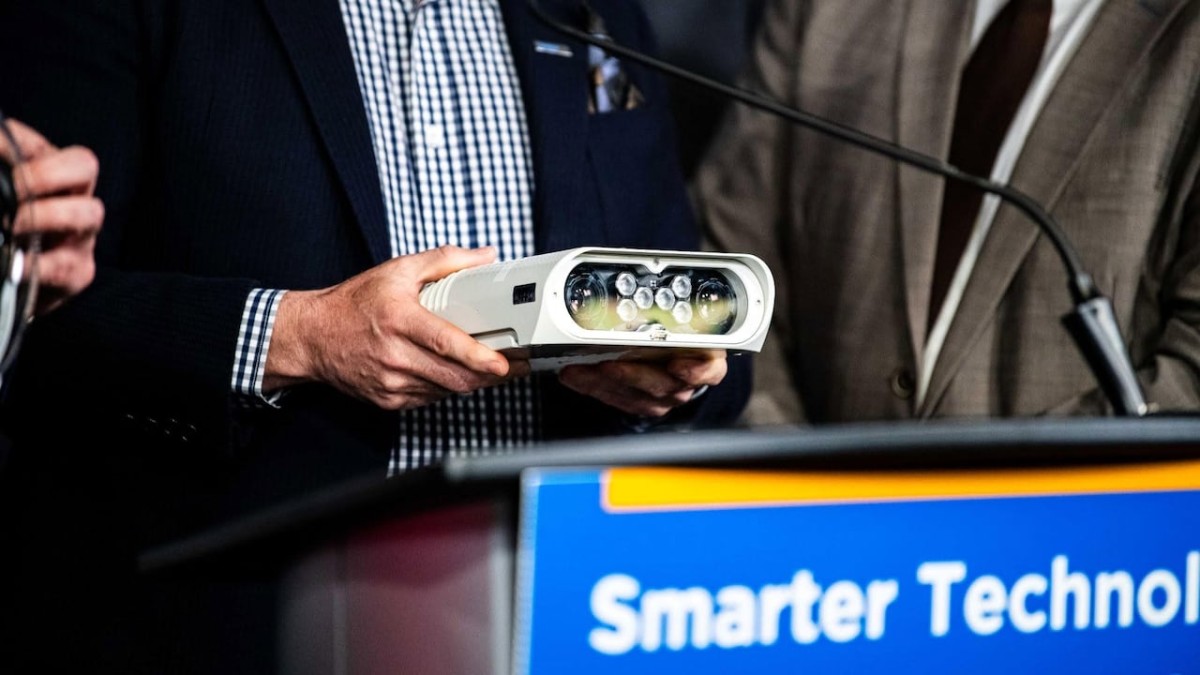
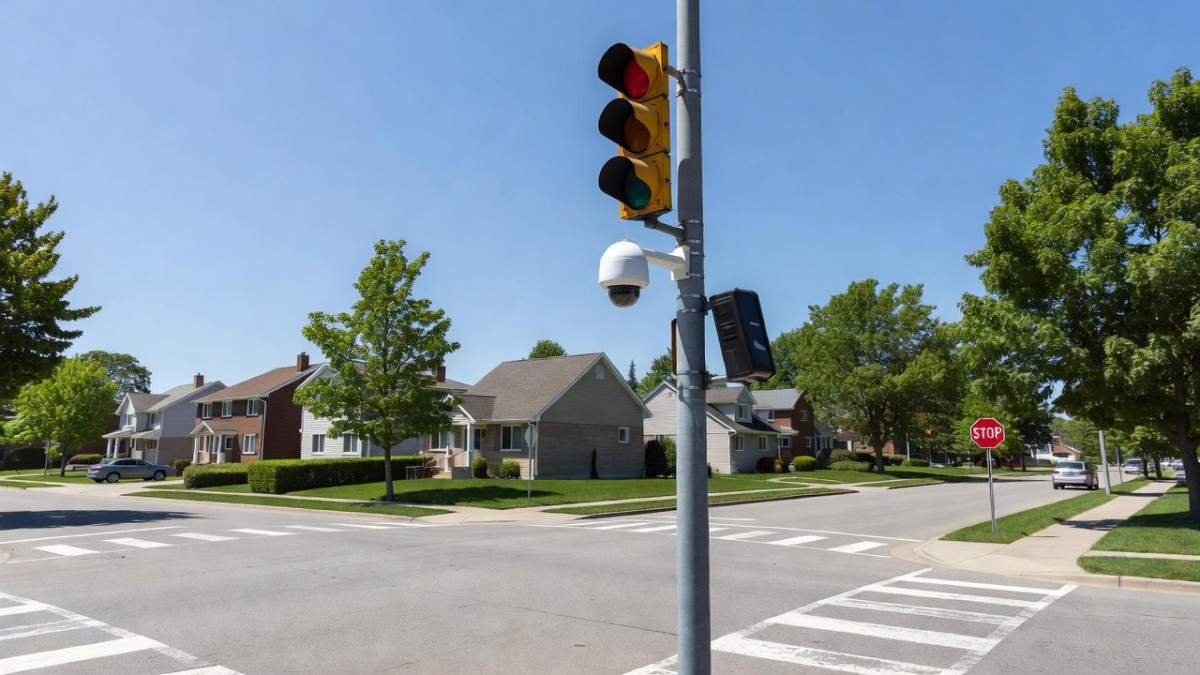
The expansion is not limited to police cruisers. In Brampton, Ontario, the city has completed the installation of a comprehensive camera network at 50 traffic intersections. This system, selected in partnership with Peel Regional Police, combines 360-degree cameras from Axis Communications with an ALPR platform supplied by Canadian company Genetec. Unlike red-light cameras, these devices do not issue tickets; instead, they are designed to support criminal investigations. Peel Regional Police Chief Nishan Duraiappah has promoted the network as a strengthening of "collective safety," and Mayor Patrick Brown has championed it as a crime-fighting investment.
The Brampton Network: A Case Study in Integration
The Brampton project serves as a prime example of how ALPR technology is being integrated into the broader fabric of Canadian municipal policing. Since the first 19 intersections went live the previous year, police say the system has provided real-time alerts and aided in more than 200 investigations. The success of the programme in Brampton is likely to encourage other municipalities to follow suit, creating a patchwork of surveillance coverage across the country that operates without a cohesive national standard.
This integration is precisely what worries experts like Kevin Walby, a professor of criminal justice at the University of Winnipeg. Walby notes that newer ALPR systems that collect, search, and potentially share vehicle information give law enforcement "incredible power over what they know about you and who they can share that information with." He warns of "mission creep," where systems designed for one purpose—such as finding stolen cars—are gradually connected to other police databases, AI analytics, and even other camera networks, creating a comprehensive tracking grid.
Walby acknowledges that Canada is not yet at the level of integration seen in some U.S. jurisdictions, but he stresses that the technological capability is there. He points out that Canada’s privacy landscape is different from the U.S., which he describes as "a wild west for privacy." In Canada, federal and provincial privacy laws, along with privacy commissioners, provide a layer of oversight that is often absent in American states. This institutional framework, Walby argues, could push back against the most egregious uses of the technology, but only if it is applied rigorously.
Legal Challenges and the Charter of Rights
The legal questions surrounding ALPR in Canada are not merely academic. Bryan Carpay of the Justice Centre for Constitutional Freedoms argues that the expansion of ALPR constitutes "massive state surveillance" that collects data on everyone, not just criminal suspects. He points to the Supreme Court of Canada’s 1992 decision in R. v. Wise, which recognized a privacy interest in the electronic tracking of a vehicle’s movements on public roads. Carpay argues that police should require reasonable grounds and obtain warrants before engaging in blanket surveillance, rather than relying on the passive collection of data from every vehicle that passes a camera.
This argument touches on Section 8 of the Canadian Charter of Rights and Freedoms, which protects citizens against unreasonable search and seizure. The question for the courts will be whether the passive, continuous collection of licence plate data constitutes a "search" under the Charter. If it does, police forces may need to justify the practice under strict legal standards, potentially requiring them to limit data retention or restrict access to the information. The Supreme Court’s decision in R. v. Wise, while predating the widespread use of ALPR, established that individuals have a reasonable expectation of privacy in their movements, even on public roads.
Police forces, for their part, emphasize that their use of ALPR is governed by privacy laws, internal policies, and safeguards. Genetec, the Montreal-based supplier, says its systems can support Amber Alerts, automatically delete data unrelated to investigations, restrict access to authorized personnel, and encrypt communications. These technical safeguards are designed to address privacy concerns, but critics argue that they rely too heavily on the goodwill of police services and do not provide sufficient independent oversight.
Privacy Oversight and the Clearview Precedent
Canada’s privacy commissioners have not been idle on this front. Federal and provincial privacy commissioners have previously scrutinized surveillance technology, issuing binding orders against Clearview AI in British Columbia, Alberta, and Quebec. These orders, which forced the U.S. facial recognition company to cease operations in those provinces, demonstrate that Canadian privacy regulators are willing to take a hard line against invasive technologies. Ontario’s information and privacy commissioner has also published guidance on ALPR, setting out expectations for how police services should handle the data they collect.
This regulatory environment provides a stark contrast to the United States, where Flock Safety has been able to operate with minimal oversight. The existence of privacy commissioners in Canada means that citizens have a formal avenue to complain about the use of ALPR, and these bodies have the power to investigate and issue binding orders. However, the effectiveness of this oversight depends on the willingness of police services to comply and on the resources available to the commissioners to conduct thorough investigations.
The challenge for Canada is to balance the legitimate law enforcement benefits of ALPR—such as solving crimes and locating missing persons—against the fundamental right to privacy. The technology is undeniably effective; in Brampton alone, it has aided in hundreds of investigations. But the cost is a society where every trip to the grocery store, every visit to a doctor’s office, and every commute to work is logged in a police database. For many Canadians, this is a trade-off they are unwilling to make without a full public debate.
What Happens Next
As Canadian police services continue to expand their use of ALPR, the pressure is mounting for clearer rules and greater transparency. The federal government has yet to introduce comprehensive legislation governing the use of surveillance technology by law enforcement, leaving a patchwork of provincial and municipal policies. Privacy commissioners have called for national standards, but progress has been slow.
The coming months are likely to see increased scrutiny of ALPR programmes in Canadian cities. Civil liberties groups are becoming more organized, and the lessons from the U.S. backlash against Flock Safety are not lost on Canadian activists. The question is whether Canadian police services will voluntarily adopt stricter safeguards, such as shorter data retention periods and independent audits, or whether they will wait for the courts or privacy commissioners to force their hand.
For now, the cameras are watching. The debate over who watches the watchers is only just beginning in Canada, and the outcome will shape the future of privacy in this country for decades to come.
By Alex Thompson, Staff Writer
This article was produced with AI-assisted research and editorial support. Reporting is based on sources cited in the article.
What's Your Reaction?
 Like
0
Like
0
 Dislike
0
Dislike
0
 Love
0
Love
0
 Funny
0
Funny
0
 Wow
0
Wow
0
 Sad
0
Sad
0
 Angry
0
Angry
0

Canada Correspondent at Global1.News. Based in Toronto, covering Canadian politics, energy, trade, and US-Canada relations. Provides the Canadian perspective on North American and global affairs.















Comments (0)