
Burnham Bars Rapists, Groomers and Child Sex Offenders from Early Release
Prime Minister Andy Burnham has barred rapists, grooming gang offenders and serious child sex offenders from the SDS40 early release scheme in England and Wales, pausing September releases until October 2026 amid prison overcrowding.
Prime Minister Andy Burnham has moved swiftly to bar rapists, grooming gang offenders and serious child sex offenders from the controversial early release scheme that has already placed more than 38,000 criminals on British streets.
Burnham Bars Rapists, Groomers and Child Sex Offenders from Early Release
London, UK – 4 August 2026 — Prime Minister Andy Burnham announced today that rapists, serious child sex offenders and grooming gang offenders will be excluded from the SDS40 early release scheme across England and Wales.
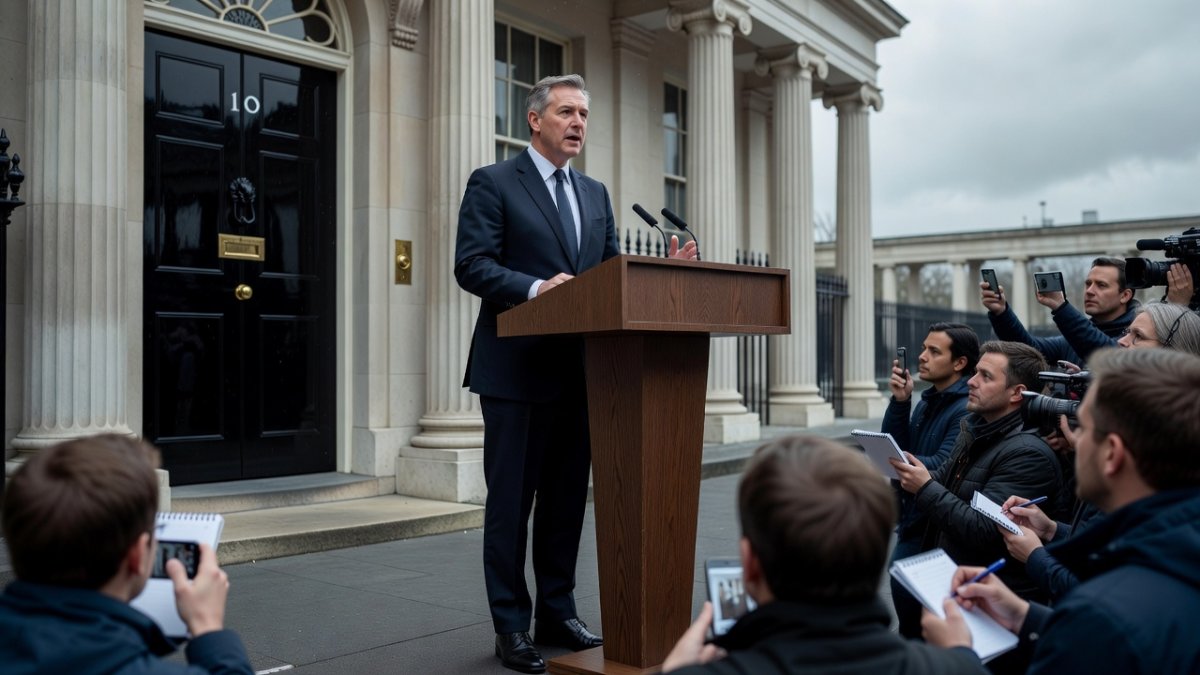
Burnham Announces Exclusion of Serious Offenders
The Prime Minister, who took office on 20 July 2026 succeeding Sir Keir Starmer, ordered the changes following an urgent review. Releases scheduled for September under the scheme have been paused and will now restart in October 2026. This delay gives probation staff in England and Wales additional time to prepare for the supervised returns.
The urgent review that produced the exclusions was triggered by mounting concern that two of the three men convicted over the 2019 killing of PC Andrew Harper could qualify for release under the original September tranche. Burnham's decision to pause all September releases and shift them to October 2026 therefore reflects both operational necessity and political calculation, allowing probation services time to absorb the revised criteria while removing rapists, serious child sex offenders and grooming gang offenders from eligibility.
Mechanically the exclusions are now fixed across England and Wales, yet the Prime Minister has acknowledged that further tightening would risk systemic collapse given the estate's existing pressures. The Sentencing Act changes that had lowered the threshold to one third for around 6,000 offenders have been reversed for this cohort, with the Ministry of Justice and National Probation Service tasked with ensuring the October restart does not repeat the controversies that have dogged the scheme since its 2024 launch.
With Andy Burnham only two weeks into his premiership after succeeding Sir Keir Starmer on 20 July 2026, the tightening of SDS40 arrives at a moment when Labour’s authority on law and order is under immediate scrutiny. The scheme’s earlier iterations have already released more than 38,000 offenders, fuelling a public mood that mixes fatigue with outright anger in communities where grooming gang cases and sexual violence remain raw. Burnham’s move therefore functions as an early signal that the new government intends to draw firmer lines, yet it also exposes the narrow room for manoeuvre created by the prison capacity crisis.
Political stakes are sharpened by cross-party debate that has surrounded SDS40 since 2024. Opposition parties are poised to test whether the exclusions represent genuine recalibration or simply a pause before further releases resume. In northern cities and the Thames Valley alike, victims’ families and local campaigners are watching to see whether the Prime Minister can restore confidence without triggering the very overcrowding warnings already issued by Justice Secretary Alex Norris.

What This Means for the UK
The pause until October 2026 will force probation teams in the North to reassess workloads at facilities such as HMP Durham, already operating at 159 per cent capacity with roughly 1,140 prisoners in space designed for 720. Similar pressures will affect services around HMP Manchester and other northern sites where the original SDS40 releases had been scheduled for September. In the Midlands and London, officers will gain breathing space to prepare supervised returns, yet the delay also prolongs uncertainty for victims in those regions who had expected clearer timelines.
Communities across England and Wales will feel the effects differently. Victims of sexual violence in urban centres may welcome the exclusion of grooming gang offenders and rapists, while rural probation services already stretched by recall volumes face continued strain. The decision places Prime Minister Andy Burnham on a narrow path: he must demonstrate that public safety has not been traded for capacity relief, even as the wider estate remains under unprecedented pressure.
Victims’ groups across England and Wales have welcomed the exclusions as a necessary correction, particularly in areas such as Greater Manchester and the Thames Valley where grooming gang convictions and high-profile cases like that of PC Andrew Harper have left lasting scars. The pause until October 2026 offers these organisations breathing space to press for clearer communication protocols, yet it also prolongs uncertainty for families who had expected finality on release dates.
Scotland and Northern Ireland operate separate justice systems and are unaffected by the SDS40 adjustments, a distinction that underscores the fragmented nature of UK criminal justice policy. In England and Wales the decision may bolster public confidence in urban centres where sexual violence survivors have organised most visibly, but rural probation services already managing high recall volumes face continued strain, raising questions about whether the safeguards will translate into tangible reassurance on the ground.
The Mechanics of SDS40 and the Prison Capacity Crisis
Under the SDS40 scheme introduced in September 2024, eligible prisoners become eligible for release after serving 40 per cent of their sentence rather than the previous halfway point. Further changes to the Sentencing Act then lowered the threshold to one third for around 6,000 offenders due in September. The Ministry of Justice has now shifted those releases to October 2026, giving staff additional time to arrange supervision while the exclusions for rapists, grooming gang offenders and serious child sex offenders remain fixed.
The 2024 scheme already contained specific protections for victims of domestic abuse, yet the prison estate continues to operate far beyond design limits. HMP Durham’s March 2026 figures illustrate the scale: 159 per cent capacity in a facility built for approximately 720. Across England and Wales the same pattern of overcrowding has forced repeated adjustments, with the original SDS40 framework repeatedly altered to balance early release against public protection.
The wider prison estate picture reveals Victorian-era facilities operating far beyond design limits, with HMP Durham’s March 2026 occupancy of 159 per cent emblematic of a system that has repeatedly adjusted SDS40 to stave off collapse. Comparisons with earlier capacity measures show that each iteration has bought only temporary relief, as the Ministry of Justice has yet to identify meaningful headroom without further early releases.
Officials have indicated that without the October restart the estate would face acute shortfalls within weeks, yet the exclusions for serious sexual offenders limit the scale of relief available. This tension illustrates how successive governments have balanced public protection against infrastructure constraints, leaving the current administration to navigate the same trade-offs with diminished political capital.
Reaction from Victims and Government Figures
Lissie Harper, widow of PC Andrew Harper, described the possible early release of two of his killers as deplorable and an affront to justice, calling it an utter betrayal. She stated that the level of disrespect shown to Andrew and other victims, and to their loved ones, was beyond contempt. Her intervention highlights how the revised scheme must now satisfy families who have already endured the original SDS40 releases of more than 38,000 offenders.
Justice Secretary Alex Norris has warned that a prison capacity crisis would be likely if fewer prisoners were allowed early release. With the Prime Minister only two weeks into office, the exclusions for serious sexual offenders represent an early test of whether the Government can maintain public confidence while still easing pressure on the estate. Opposition voices are expected to scrutinise whether the October restart delivers the safeguards promised.
Lissie Harper’s campaigning through Harper’s Law has already secured legislative change following her husband’s death, and her description of the original early-release proposals as an utter betrayal carries particular weight for survivor groups now scrutinising the revised scheme. Opposition parties have seized on the episode to question whether Burnham’s exclusions go far enough, framing the pause as an admission that the 2024 framework was flawed from the outset.
The political significance for Burnham’s early premiership lies in whether he can maintain cross-party pressure on victim safeguards while managing an estate that recalled more prisoners than it released in the first quarter of 2026. Any perception that the October cohort still contains risks will quickly erode the modest confidence gained by the exclusions.
Rising Recalls and Strain on Probation Services
Prison recalls rose by 28 per cent in the first quarter of 2026, with 12,977 people released between January and March while 13,193 were recalled, producing 101 recalls for every 100 releases. These figures show that the National Probation Service is already managing more returns than new releases, a reversal that places additional demands on officers responsible for supervision across England and Wales.
The 2024 scheme’s domestic abuse protections were intended to shield victims, yet the surge in recalls has stretched resources further. When releases resume in October 2026, probation teams will need to absorb the delayed cohort without compromising monitoring standards. Any weakening of oversight risks undermining the very public confidence the exclusions for rapists and grooming gang offenders are meant to restore.
Probation officer shortages have compounded the 28 per cent rise in recalls, leaving teams across England and Wales stretched when managing the 101 recalls recorded for every 100 releases between January and March 2026. These figures translate into heightened monitoring demands in communities already wary of reoffending, particularly where domestic abuse protections introduced in 2024 have not prevented the surge in returns.
The operational reality of the October restart will test whether the National Probation Service can absorb the delayed cohort without diluting supervision standards. Any weakening risks undermining the very public confidence the exclusions for rapists and grooming gang offenders are intended to restore, especially in regions where recall volumes have already outstripped new releases.
The Bottom Line — What Comes Next
Releases under the revised scheme are now expected to begin in October 2026, with the Ministry of Justice continuing to monitor capacity across the estate. The exclusions for rapists, grooming gang offenders and serious child sex offenders will remain in place, yet victims’ groups will watch closely to ensure the safeguards are not later diluted under renewed pressure.
Parliamentary scrutiny will focus on whether the delay has genuinely improved preparation for supervised returns. Public confidence in the justice system across England and Wales will ultimately depend on whether the October cohort demonstrates that the balance between capacity management and victim protection can be sustained without further reversals.
Parliamentary scrutiny will intensify once the October releases begin, with select committees likely to examine whether the exclusions have been applied consistently and whether probation workloads have been adequately resourced. Victims’ groups will monitor the cohort closely for any sign that the safeguards are later diluted under renewed capacity pressure.
The longer-term sentencing review debate now carries added urgency, as the government must demonstrate that the revised SDS40 framework can deliver both capacity relief and credible victim protection without further reversals. Public confidence across England and Wales will hinge on whether the October tranche proves the balance can be sustained.
By Erica Thornton, Staff Writer
This article was produced with AI-assisted research and editorial support. Reporting is based on sources cited in the article.
What's Your Reaction?
 Like
0
Like
0
 Dislike
0
Dislike
0
 Love
0
Love
0
 Funny
0
Funny
0
 Wow
0
Wow
0
 Sad
0
Sad
0
 Angry
0
Angry
0

US Politics and Policy Correspondent at Global1.News. Based in Washington DC, covering American politics, policy, elections, and the courts. Knows how the system works and tells you what it actually means.















Comments (0)