
Four Dead, Four Injured in Calgary Stoney Trail Wrong-Way Crash
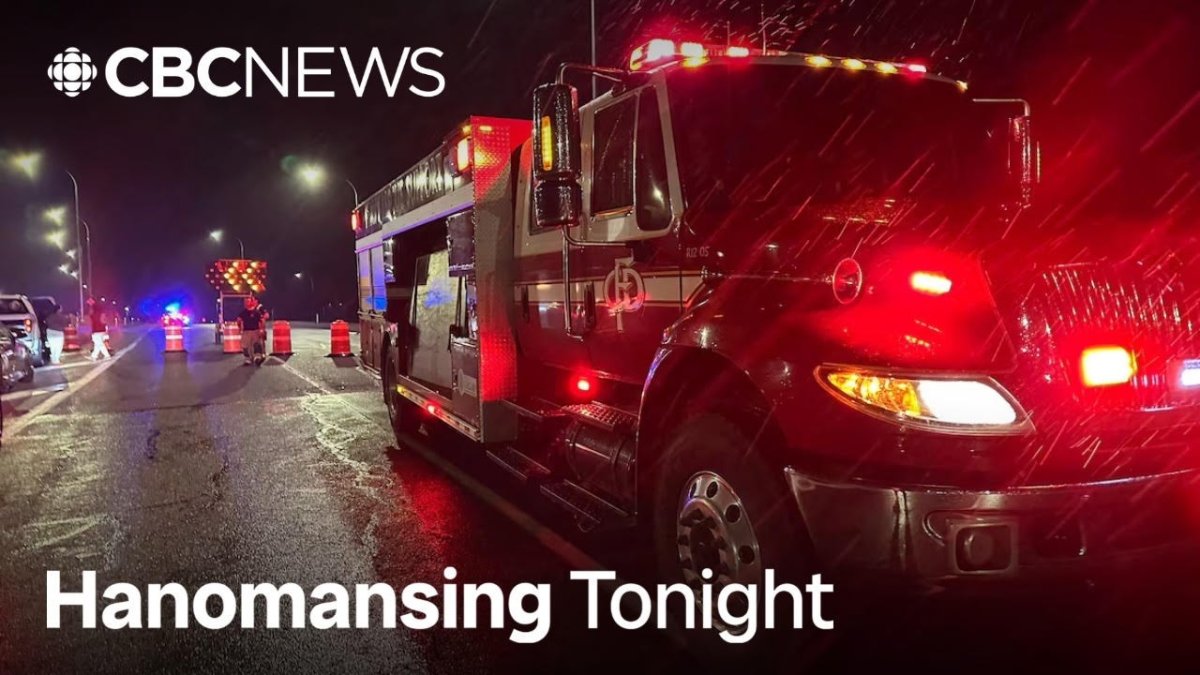
In a recent CBC News report on Hanomansing Tonight, authorities detailed a multi-vehicle crash that occurred late Sunday night on Calgary's Stoney Trail just north of 90th Avenue S.W. near the Tsuut'ina Parkway interchange in southwest Calgary. Police responded to the scene around 11 p.m. MT after multiple 911 calls reported a vehicle travelling southbound in the northbound lanes.
Sequence of Events in the Collision
The 30-year-old driver of a 2011 Mercedes-Benz C350 proceeded the wrong way with a woman and child as passengers. This silver vehicle struck an oncoming 2016 Subaru Impreza driven by a 43-year-old man who travelled alone. Both cars ignited upon impact.
A Chevrolet Equinox driven by a 52-year-old woman with three youth passengers then collided with the Mercedes-Benz. All three occupants of the Mercedes-Benz and the Subaru driver were pronounced dead at the scene. The Equinox driver and her passengers sustained injuries, with one youth suffering a life-altering but non-life-threatening condition.

Calgary Police Service traffic investigators confirmed that 911 callers described a white or silver vehicle driving against traffic minutes before the collision. Staff Sgt. Andy Woodward noted the challenge of intercepting such drivers, stating that a police vehicle would need to be in the precise location at the exact time, which did not occur.
Wrong-way driving on divided highways remains a persistent concern across Canadian jurisdictions, where divided roadways like ring roads are designed to separate opposing traffic flows yet still experience occasional incursions. Provincial transportation departments have examined signage enhancements and rumble strips as preventive measures, though enforcement relies heavily on real-time reporting from the public. In Alberta, such incidents prompt reviews of highway design standards that align with broader national efforts to reduce head-on collisions through improved lighting and barrier systems.
Police response times in these scenarios depend on the density of patrol resources and the accuracy of initial witness descriptions, factors that vary between urban centres and rural stretches of provincial highways. Calgary Police Service has previously highlighted how divided highways present unique interception difficulties compared to standard roadways, leading to reliance on coordinated dispatch and air support in some cases. This approach reflects ongoing adaptations in traffic enforcement strategies that balance immediate intervention with post-incident investigation protocols.
Emergency Response by Calgary Fire Department
Calgary Fire Department crews arrived to find two of the three vehicles fully engulfed in flames. They immediately initiated an aggressive fire attack while conducting rapid searches of the involved vehicles and providing emergency care to those who could be reached.
Despite these efforts, four people remained deceased at the scene. The response highlighted coordination between Calgary Fire Department and Calgary Police Service at the Tsuut'ina Parkway interchange location on the ring road.
Stoney Trail serves as Calgary's primary ring road, and the crash led to a full closure during the investigation. This disruption affected commuters travelling through southwest Calgary on a major provincial highway link.
Fire departments in major Canadian cities maintain specialised training for vehicle extrication and fire suppression on high-speed corridors, where rapid access can be complicated by traffic volumes and limited shoulder space. Alberta's municipal fire services often integrate with provincial emergency management frameworks that emphasise inter-agency communication during multi-vehicle events. These protocols help ensure that initial suppression efforts transition smoothly into scene preservation for subsequent investigations.
The role of ring roads in urban centres like Calgary involves balancing high-capacity movement of goods and people with the need for resilient emergency access points. Closures on such infrastructure can cascade into regional delays, affecting supply chains tied to Alberta's resource economy and daily commutes for thousands of residents. Provincial highway authorities routinely assess these vulnerabilities when planning maintenance and incident response strategies.
Ongoing Police Investigation and Contributing Factors
Calgary Police Service traffic unit continues to examine impairment and excessive speed by the Mercedes-Benz driver as potential factors. Autopsies scheduled for this week will provide confirmation on these elements.
Witnesses with additional information can contact the traffic unit at (403) 266-1234 or Crime Stoppers at 1-800-222-8477. The investigation remains active as officers review evidence from the silver Mercedes-Benz and other vehicles.
Impaired driving investigations in Canada fall under the Criminal Code, with provinces like Alberta applying additional administrative sanctions such as immediate roadside prohibitions and licence suspensions. Transport Canada supports data collection on contributing factors to inform national road safety strategies, including analysis of speed and substance involvement in fatal collisions. These efforts aim to identify patterns that could guide future enforcement priorities without prejudging individual cases.
Public tip lines and Crime Stoppers programs play a documented role in completing traffic investigations across Canadian municipalities, where dashcam footage and bystander observations can supplement physical evidence. Alberta's approach integrates these community inputs with forensic examination of vehicle data recorders and scene reconstruction. Such methods reflect a commitment to thorough analysis that supports both accountability and prevention measures.
Highway Safety Context Across Canadian Jurisdictions
This incident forms part of a series of wrong-way collisions on Canadian divided highways in recent years. Such events have prompted discussions on highway design, signage standards, and detection technology at both provincial and federal levels.
Alberta maintains jurisdiction over its highways, including Stoney Trail, while Transport Canada sets national guidelines for road infrastructure. Municipal police forces like the Calgary Police Service handle local enforcement, distinct from the RCMP's role in other provinces.
Impaired driving remains a Criminal Code offence with provincial licensing consequences. Alberta's approach to road safety intersects with federal efforts to reduce fatalities through stricter penalties and public awareness campaigns.
National statistics compiled by Transport Canada indicate that wrong-way incidents, though relatively infrequent, contribute disproportionately to severe outcomes on high-speed divided roads. Provincial governments have responded with pilot programs testing wrong-way detection systems that use sensors and cameras to alert drivers and authorities. These initiatives build on existing federal-provincial collaboration to standardise infrastructure improvements across jurisdictions.
Alberta Transportation has participated in reviews of ring road safety features, including median barriers and exit ramp configurations that aim to minimise entry errors. Broader Canadian policy discussions often reference the need for consistent public education on highway navigation, particularly in growing urban areas where ring roads serve as critical connectors. Such measures complement enforcement by addressing both human factors and engineering solutions.
Implications for Alberta Communities and Daily Life
The loss of four lives and injuries to four others, including youths, underscores the direct effects on Calgary families. One youth faces long-term recovery needs that will involve Alberta Health Services and provincial healthcare resources.
Wrong-way incidents strain emergency services and highlight vulnerabilities in urban ring road systems used daily by thousands of Albertans. The closure of Stoney Trail disrupted freight movement and personal travel in a city central to Canada's energy sector economy.
Public safety discussions in Parliament often reference similar provincial cases when considering updates to transportation policy. This event reinforces the need for continued investment in detection systems that could alert drivers and authorities in real time.
Traffic fatalities in Alberta prompt community-level responses that include support from victim services organisations and integration with provincial health networks for ongoing care. Families affected by such losses may access counselling and rehabilitation programs funded through Alberta Health Services, reflecting a coordinated approach to recovery that extends beyond the immediate incident. These resources form part of broader efforts to address the ripple effects on households and neighbourhoods.
Ring road disruptions in Calgary can influence regional logistics, particularly for industries reliant on timely transport along the Trans-Canada Highway corridor. Alberta's economy, anchored in energy and agriculture, depends on reliable highway infrastructure, leading policymakers to weigh incident response improvements against economic continuity. Community forums in the province frequently examine these intersections to inform future infrastructure investments.
Calls for Witnesses and Community Support
Calgary Police Service encourages anyone with dashcam footage or observations from the area north of 90th Avenue S.W. to come forward. Timely tips assist in completing the investigation into the Mercedes-Benz driver's actions.
Community organisations in Calgary provide support for those affected by traffic fatalities. The measured response from first responders demonstrates the professional standards maintained by the Calgary Fire Department and Calgary Police Service during high-impact incidents.
Victim assistance programs across Canada operate through provincial frameworks that connect families with counselling, financial aid navigation, and peer support networks following road tragedies. In Alberta, these services often collaborate with municipal police to ensure seamless handoff from investigation to recovery support. Such integration helps maintain focus on both accountability and community healing in the aftermath of collisions.
Public appeals for information in traffic cases underscore the value of community engagement in Alberta's law enforcement model, where anonymous reporting options encourage broader participation. Calgary Police Service maintains dedicated traffic units trained to synthesise witness accounts with technical evidence, contributing to comprehensive case resolution. This process aligns with national standards for transparent and thorough investigations into highway incidents.
What Happens Next
Autopsies are expected this week to confirm factors in the collision. The Calgary Police Service traffic unit investigation continues as officers seek additional witnesses and dashcam footage from the area.
Injured survivors, including one youth with a life-altering injury, face ongoing treatment through Alberta Health Services. The crash may renew provincial and municipal discussion of wrong-way detection technology and highway safety measures.
These steps will guide the next phases of evidence review and support for those affected. Coordination between police, health services, and transportation authorities remains central to addressing the incident.
As Canadian communities reflect on this loss, continued public vigilance in reporting highway hazards and support for victim services underscore shared responsibility for safer roads across provinces.
By Alex Thompson, Staff WriterThis article was produced with AI-assisted research and editorial support. Reporting is based on sources cited in the article.
What's Your Reaction?
 Like
0
Like
0
 Dislike
0
Dislike
0
 Love
0
Love
0
 Funny
0
Funny
0
 Wow
0
Wow
0
 Sad
0
Sad
0
 Angry
0
Angry
0

Canada Correspondent at Global1.News. Based in Toronto, covering Canadian politics, energy, trade, and US-Canada relations. Provides the Canadian perspective on North American and global affairs.















Comments (0)