
Yemeni troops retake key areas near Bab el-Mandeb from Houthis
The Bab el‑Mandeb Strait, linking the Red Sea to the Gulf of Aden, channels a significant share of world trade, and any disruption reverberates through oil markets and maritime logistics.
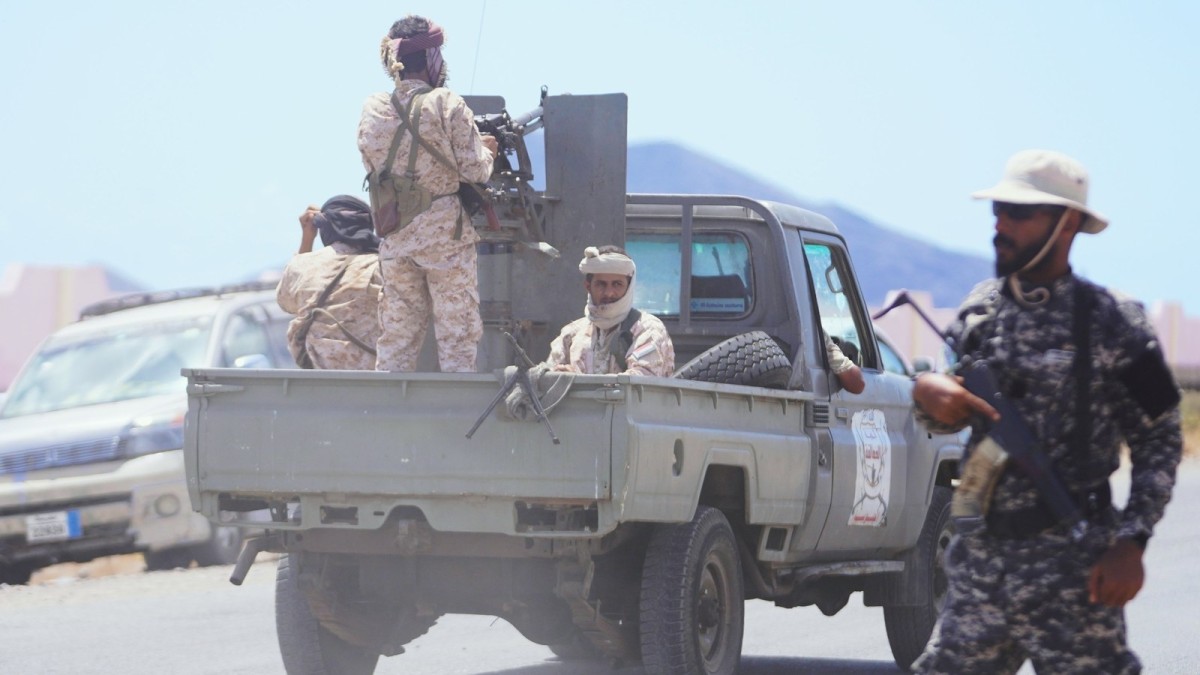
As the Red Sea’s strategic chokepoint at Bab el‑Mandeb once again becomes a flashpoint, the latest surge of fighting in Yemen underscores how the Saudi‑backed government’s push to reclaim territory dovetails with broader Sunni‑Shia competition, great‑power rivalry and the imperatives of global energy security. The Bab el‑Mandeb Strait, linking the Red Sea to the Gulf of Aden, channels a significant share of world trade, and any disruption reverberates through oil markets and maritime logistics. This week’s developments, marked by a coordinated offensive that retook key towns near the strait, also reveal the deepening entanglement of regional powers and the United States in Yemen’s protracted civil war.
Operational Overview: Recapturing Dhubab, Bab and Hadeid
The Yemeni government’s forces, bolstered by a Saudi‑led coalition, announced on Monday the successful retaking of the town of Dhubab, situated just north of the Bab el‑Mandeb Strait. According to unnamed officials, the operation also secured the neighbouring towns of Bab and Hadeid, with witnesses reporting the arrival of government tanks and infantry. The offensive was launched early Monday under the protective umbrella of coalition air power, signalling a decisive escalation after a period of relative lull following a four‑year cease‑fire.
Coalition spokesman Maj. Gen. Turki al‑Malki quantified the aerial component, stating that around one hundred fighter jets were deployed to provide “air protection” for the strait and to strike Houthi positions. He claimed that coalition forces destroyed “hundreds of Houthi targets,” although precise figures were not disclosed. The ground advance, described by officials as part of a broader operation dubbed “Yemen Dawn,” aims to restore state institutions and ultimately liberate the rebel‑held capital of Sanaa.
Houthi Counter‑Strikes: Missile and Drone Campaigns
In a prerecorded statement, Brig. Gen. Yahya Saree, the Houthi military spokesman, asserted that the rebels responded with a coordinated missile and drone barrage targeting Saudi infrastructure. According to Saree, ballistic and cruise missiles, alongside unmanned aerial vehicles, were launched at King Khalid International Airport in Riyadh, an oil refinery in Rabigh on the Red Sea coast, and additional sites including Abha airport, military facilities in Khamis Mushait, and “critical sites” in Najran and Jizan. The Houthi claim of striking multiple Saudi cities underscores their capacity to project force beyond Yemen’s borders, complicating the coalition’s defensive calculus.
U.S. Secretary of State Marco Rubio, speaking to reporters, framed the Saudi‑backed government’s counter‑offensive as a legitimate response to these attacks. He reiterated the existence of a defense agreement between the United States and Saudi Arabia, while declining to elaborate on the specifics of coordination for the current operation. Rubio emphasized that Saudi Arabia “has a right to defend itself” after being targeted by Houthi missiles and drones.
U.S. Involvement: Intelligence and Planning Support
While the United States formally withdrew from the Saudi‑led coalition in recent years, regional officials and unnamed U.S. sources confirmed that Washington continues to provide critical support. This assistance includes intelligence sharing, target identification and operational planning for the current offensive. The U.S. Embassy in Riyadh has also issued warnings to American citizens, urging vigilance against potential drone or missile attacks, reflecting ongoing concern over the conflict’s spill‑over risks.
The continuity of U.S. support, despite the formal exit from the coalition, illustrates a nuanced approach: Washington seeks to contain Iranian‑aligned Houthi advances without committing large‑scale forces, balancing its strategic interests in the Red Sea corridor against domestic pressures to limit involvement in Yemen’s costly war.
Regional Alliances: Pakistan, Türkiye and Saudi Defense Pact
Monday also saw a diplomatic development that could reshape the coalition’s manpower calculus. Pakistan and Türkiye, in coordination with Saudi Arabia, agreed to deploy military forces to the kingdom under a trilateral defense pact. A joint statement from Pakistan’s Foreign Ministry, issued after an emergency meeting in Riyadh, did not disclose troop numbers or deployment timelines, but the pledge signals a willingness among Saudi allies to reinforce their defensive posture amid heightened Houthi activity.
The three nations jointly condemned alleged attacks on the holy cities of Mecca and Medina, as well as continued strikes on Saudi urban centres and economic infrastructure. Although the statement did not attribute responsibility, the collective denunciation underscores a shared perception of threat from the Houthi campaign, which they portray as part of a broader Iranian‑backed axis challenging Saudi security.
Strategic Implications for the Bab el‑Mandeb Strait
The Bab el‑Mandeb Strait remains a linchpin of global trade, with a notable share of maritime traffic—particularly oil and container vessels—transiting its waters. Control of the Yemeni side of the strait has fluctuated throughout the conflict. In early September, the Houthis seized the historic port city of Mokha and several Red Sea islands, thereby extending their reach to the strait’s Yemeni coastline. Their capture of these points enabled them to claim influence over the Bab el‑Mandeb, a claim that carries weight given the strait’s role in moving a substantial portion of world commerce.
The recent coalition recapture of Dhubab, Bab and Hadeid restores a degree of government presence along the northern coast, potentially re‑establishing “air protection” over the maritime corridor as asserted by Maj. Gen. al‑Malki. However, the fluidity of frontlines—exemplified by the Houthis’ simultaneous seizure of Turbah and surrounding villages on the outskirts of Taiz—means that security of the strait remains precarious. Any renewed Houthi capability to launch missile or drone attacks from coastal positions could again jeopardise shipping, prompting insurers and energy traders to reassess risk premiums.
Humanitarian Toll and Domestic Impact
The renewed violence has exacted a heavy humanitarian price. The World Health Organization reports at least 959 fatalities and over 4,200 injuries in the latest flare‑up. The United Nations migration agency notes that roughly 174,000 Yemenis have been displaced internally, while more than 3,000 have fled across the Gulf of Aden to Djibouti. These figures add to a cumulative death toll exceeding 150,000 since the conflict’s inception in 2014, underscoring the protracted nature of Yemen’s humanitarian crisis.
Health infrastructure, already strained by years of war, faces further degradation. Yemen’s Health Ministry warned that facilities in coastal, western and southern Taiz province have either closed or operate at minimal capacity. The Institute for the Study of War cautioned that the Houthi capture of Turbah—a key logistical hub linking Taiz to the port city of Aden—could hamper government resupply efforts, potentially deepening the crisis in a region already grappling with shortages of medicine, clean water and basic services.
Outlook: Prospects for a Prolonged Conflict or a Shift Toward Negotiation
The current offensive, framed by President Rashad al‑Alimi as a “strategic offensive” aimed at liberating Sanaa, signals a renewed commitment by the Saudi‑backed government to reclaim all territories held by the Houthis. Al‑Alimi’s televised address called for international support, positioning the operation as part of a broader effort to eradicate what he termed a “terrorist militia coup.” Meanwhile, Houthi media reported multiple airstrikes on their positions, indicating that the conflict’s intensity is likely to persist in the near term.
Nevertheless, the involvement of additional regional partners—Pakistan and Türkiye—alongside continued U.S. intelligence assistance may tip the balance in favour of the coalition, at least in terms of operational capacity. Yet, the underlying sectarian and geopolitical fault lines—Sunni‑Shia rivalry, Iranian influence, and great‑power competition for Red Sea dominance—remain unresolved. Unless a diplomatic breakthrough addresses these deeper drivers, the Bab el‑Mandeb will continue to be a theatre where local battles have outsized global repercussions, and the Yemeni population will bear the brunt of a conflict that shows few signs of abating.
This article was produced with AI-assisted research and editorial support. Reporting is based on the source material cited below. Sources: Daily Sabah Middle East; dailysabah.com; Global1.News (06 October 2026).
By Malik Hassan, Staff Writer
What's Your Reaction?
 Like
0
Like
0
 Dislike
0
Dislike
0
 Love
0
Love
0
 Funny
0
Funny
0
 Wow
0
Wow
0
 Sad
0
Sad
0
 Angry
0
Angry
0

Middle East Correspondent at Global1.News. Based in Beirut, covering politics, conflict, energy, and society across the Middle East. Brings context and depth to a region often reduced to headlines.














Comments (0)