
Biya's Geneva Decrees Stir Cameroon Concerns
Cameroon's 93-year-old President Paul Biya has signed military reshuffle decrees from Geneva after nearly two months away from home, a move that has intensified public unease across the Central African nation. The veteran leader, who left Yaounde on 7 June for what officials called a brief private
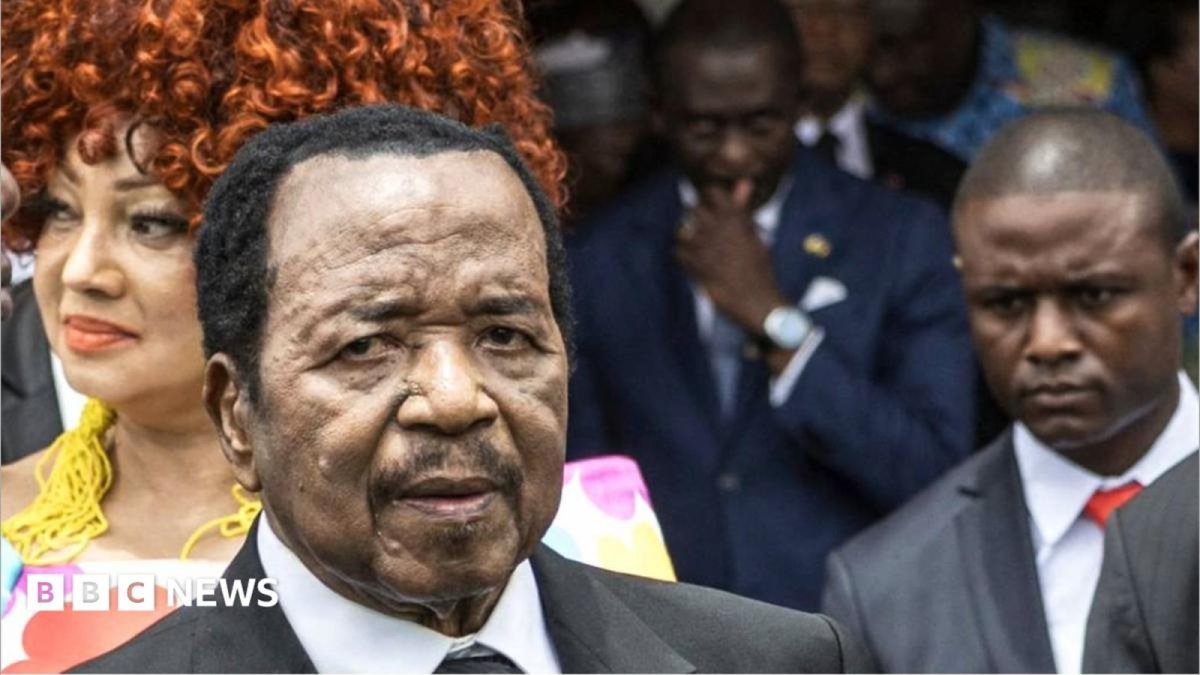
Cameroon's 93-year-old President Paul Biya has signed military reshuffle decrees from Geneva after nearly two months away from home, a move that has intensified public unease across the Central African nation. The veteran leader, who left Yaounde on 7 June for what officials called a brief private stay in Switzerland, promoted five colonels to brigadier general on 3 August and reappointed one to head the elite presidential guard. Citizens and analysts now question how long such remote governance can continue amid ongoing regional tensions.
Biya's Geneva Army Shake-Up Raises Questions
Yaounde, Cameroon - Paul Biya's latest decrees from Switzerland highlight his enduring control even as questions mount over his extended absence from Cameroon.
The reshuffle from a Swiss hotel room
On 3 August, President Biya signed orders from Geneva that appointed new officials to key army positions and elevated five colonels to the rank of brigadier general. Among them, Raymond Jean Charles Beko'o Abondo received immediate reappointment as commander of the presidential guard, a role he has held since 2013 and one that directly safeguards the head of state.
Such military adjustments are familiar under Biya's long rule, often timed during periods of heightened public attention or perceived vulnerability. The timing this week, however, drew particular notice because the president remains thousands of kilometres from Yaounde while exercising core command functions.
The presidential guard is one of the most sensitive instruments of personal security for any long-ruling head of state, and its commander's continued tenure underscores how Biya has cultivated a narrow circle of trusted officers whose loyalty is tested over more than a decade. Reappointing the same figure from abroad signals that the inner protective layer around the presidency is being deliberately insulated from domestic turbulence or generational shifts within the wider military.
Signing such orders from a Geneva hotel rather than a Yaounde office also carries symbolic weight in a system where authority has long been concentrated in one individual. It projects an image of uninterrupted personal oversight even while the leader remains physically distant, reinforcing the message that key decisions flow from the president alone rather than from any institutional process located inside the country.
A pattern of shake-ups at moments of weakness
Similar leadership changes followed the August 2023 coup in neighbouring Gabon that ended the Bongo family's 55-year rule and sent ripples through Central Africa. Cameroon responded with its own military adjustments shortly afterward to steady the security apparatus.
During last year's presidential campaign for an eighth term, Biya again reordered the top ranks of the armed forces. In June this year he issued further promotions across the defence and security services, showing a consistent approach of tightening control when scrutiny intensifies.
The shock of the Gabon coup rippled through Central African capitals because it ended a multi-decade family hold on power and reminded neighbouring regimes that sudden military intervention remains possible when succession arrangements appear unclear. Cameroon's subsequent military adjustments can be read as an attempt to reassure domestic and regional audiences that its own security structures would not face similar tests.
The timing of earlier promotions during the campaign for an eighth term further illustrates how Biya's team has used personnel changes to project steadiness at moments when questions about continuity naturally intensify. By linking these moves to electoral cycles and neighbouring events, the pattern suggests a deliberate strategy of tightening control whenever external or internal pressures highlight the risks of prolonged leadership.
The power vacuum question
A vice-presidential post created in April remains vacant, and Biya has yet to form the new cabinet he promised after last year's election. During his nearly 60-day absence he has continued signing decrees, including those authorising government loan agreements with international financial institutions.
These actions from abroad have left many wondering how executive authority functions when the president operates from a Swiss hotel rather than the capital. The lack of a named successor or acting arrangement adds to the uncertainty felt in daily political life.
An unfilled vice-presidency leaves the constitutional line of succession without a designated figure who could assume interim duties, creating a structural gap that becomes more visible the longer the president remains abroad. Without an acting arrangement, routine governance questions quickly turn into broader debates about who actually holds day-to-day authority when decrees continue to arrive from outside the capital.
The signing of international loan agreements from Geneva adds another layer, showing that financial commitments binding the state are still being executed remotely. Cameroonians following these developments often turn to private conversations and online spaces to speculate about possible transition scenarios, since official channels provide little detail on how or when the vacant post might be filled.
Health rumours and a media gag
Speculation about Biya's health has circulated widely during the absence, though the government has repeatedly rejected claims that he has been hospitalised. Two years ago, authorities banned media outlets from reporting on the president's health, drawing sharp criticism from press freedom organisations.
The restrictions have limited open discussion inside Cameroon, forcing conversations onto social media platforms where users openly criticise the lack of transparency about his activities and return date.
Press freedom groups have long argued that the reporting ban prevents Cameroonian outlets from helping citizens assess the fitness of their longest-serving leader. The policy has pushed open discussion onto social media, where users share unverified updates and openly question the lack of transparency surrounding both the current absence and any potential return date.
These constraints have created an information environment in which official statements are met with widespread scepticism, and the absence of independent verification fuels further speculation. Over time, the combination of formal gag orders and informal online debate has widened the gap between what the public is allowed to read and what it privately discusses about leadership continuity.
The government's defence
Communication Minister Rene Emmanuel Sadi told RFI that the president remains alive, continues working from Geneva, and will return to Cameroon soon. He rejected opposition claims that the prolonged stay creates any vacancy at the top of the state.
Officials maintain that Biya retains full authority regardless of location, pointing to the steady flow of signed decrees as evidence that governance has not paused.
By emphasising that the president is alive and active, the government attempts to close off speculation about incapacity while avoiding any detailed timeline for return. The steady flow of signed documents is presented as the central indicator that authority has not been delegated or interrupted, reinforcing the claim that remote decision-making is compatible with stable rule.
This argument seeks to reassure both domestic audiences and international partners that core state functions remain intact even during extended stays abroad, while carefully leaving the date of any homecoming unspecified.
Opposition warnings
Opposition CRM party vice-president Mamadou Mota described the situation as a glaring institutional vacuum, arguing that executive power must be exercised inside the nation rather than through remote decisions. He warned that governing by decree from abroad risks weakening the country's institutional foundations.
These concerns resonate in a nation already managing separatist conflict in the English-speaking regions and security threats in the far north, where steady leadership at home matters for daily stability.
For opposition voices, the practice raises questions about whether democratic accountability can be maintained when major decisions bypass domestic institutions and public scrutiny. Mota's warning that executive power cannot be exercised through "smoke signals or telepathy from hotel suites on the other side of the world" captures a frustration shared well beyond his party.
Such warnings resonate beyond party politics because they touch on broader issues of how power is legitimised in a system already facing armed conflicts in multiple regions. Regional leaders observing the situation are reminded that prolonged absences without clear succession mechanisms can quickly become sources of uncertainty for neighbouring states as well.
What Biya's absence means for the region
Cameroon, Central Africa's largest economy, shares borders with Nigeria, Chad, the Central African Republic, Equatorial Guinea, Gabon and Congo, making its internal stability a regional concern. Neighbours watched closely after the Gabon coup, and Biya's extended stay in Geneva has revived similar questions about succession and continuity.
With Biya in power since 1982 and one of the world's longest-serving leaders, the current episode underscores how Central African states continue to grapple with questions of longevity in office and the mechanics of transition when information remains tightly controlled.
As Central Africa's largest economy, Cameroon's internal stability directly affects trade routes, security cooperation, and migration patterns across its six borders. Neighbours that watched the Gabon transition closely now view Biya's extended Geneva stay as another test of how the region manages leadership longevity and the absence of transparent succession plans.
The episode also feeds into wider continental conversations about ageing heads of state and the mechanics of eventual transition. With information tightly controlled inside Cameroon, external observers are left to interpret the steady stream of decrees as either a sign of continuity or a warning that institutional questions remain unresolved.
By Amara Diop, Staff Writer
This article was produced with AI-assisted research and editorial support. Reporting is based on sources cited in the article.
What's Your Reaction?
 Like
0
Like
0
 Dislike
0
Dislike
0
 Love
0
Love
0
 Funny
0
Funny
0
 Wow
0
Wow
0
 Sad
0
Sad
0
 Angry
0
Angry
0

West Africa/Sahel Correspondent at Global1.News. Dakar-based journalist covering politics, security, climate, and development across Francophone and Anglophone West Africa. Tells the stories of a region undergoing profound transformation.












Comments (0)