
BIR Files P2.23-Billion Tax Evasion Case Against POGO Firm Hongsheng Gaming
In a recent ANC 24/7 report on The World Tonight, the Bureau of Internal Revenue (BIR) has filed a P2.23-billion tax evasion case against Hongsheng Gaming Technology, Inc., an offshore gaming operator with deep ties to the Bamban, Tarlac POGO scandal, in a move that signals a tougher crackdown on businesses that dodge their obligations to the Filipino people.
In a recent ANC 24/7 report on The World Tonight, the Bureau of Internal Revenue (BIR) has filed a P2.23-billion tax evasion case against Hongsheng Gaming Technology, Inc., an offshore gaming operator with deep ties to the Bamban, Tarlac POGO scandal, in a move that signals a tougher crackdown on businesses that dodge their obligations to the Filipino people. The complaint, lodged before the Department of Justice this week, covers taxable years 2021 to 2023 and forms part of the BIR's Run After Tax Evaders (RATE) Program. For ordinary Filipinos who pay their taxes honestly, this case represents a long-overdue reckoning for an industry that profited from Philippine soil while shortchanging the public coffers that fund schools, hospitals, and infrastructure.
BIR Files P2.23-Billion Tax Evasion Case Against POGO Operator Hongsheng Gaming, Linked to Dismissed Mayor Alice Guo
Manila, Philippines – This Week — The Bureau of Internal Revenue (BIR) formally charged Hongsheng Gaming Technology, Inc. with tax evasion amounting to P2,227,759,311.21 (approximately P2.23 billion) before the Department of Justice on Thursday, marking one of the largest tax fraud cases filed against an offshore gaming operator in recent years. The complaint, which covers taxable years 2021 to 2023, alleges that Hongsheng substantially underdeclared its income, failed to declare correct value-added tax (VAT) liabilities for several taxable quarters, and neglected to withhold and remit the required final withholding tax for its foreign employees. The BIR's investigation uncovered significant discrepancies between the company's declared revenues and information found in official records gathered from various government agencies, painting a picture of systematic tax evasion that deprived the national government of billions in much-needed revenue.

The Story: What Exactly Happened
The BIR's complaint against Hongsheng Gaming Technology, Inc. is the culmination of a multi-year investigation that traced the company's financial records against data from multiple government agencies. According to the BIR, Hongsheng's declared revenues bore little resemblance to the actual income it generated from its offshore gaming operations, which were conducted at the Baofu compound in Bamban, Tarlac. The company also failed to remit VAT for several taxable quarters, a violation that strikes at the heart of the country's consumption tax system. Most damning, however, was the company's failure to withhold and remit final withholding tax for its foreign employees — a legal obligation that applies to all employers operating in the Philippines, regardless of their business model.
The total deficiency of P2.23 billion breaks down across three major tax types: income tax, value-added tax, and final withholding tax. This figure represents not just unpaid dues, but the compounded penalties and interest that accrue when a taxpayer deliberately conceals its true financial position. The BIR's investigation revealed that Hongsheng's underdeclaration was not a simple bookkeeping error but a deliberate scheme to minimize its tax exposure while continuing to reap profits from its Philippine operations. The case now moves to the Department of Justice, which will determine whether there is probable cause to file criminal charges against the company and its officers.
The Bamban POGO Connection: Guo, Baofu Compound, and Zun Yuan
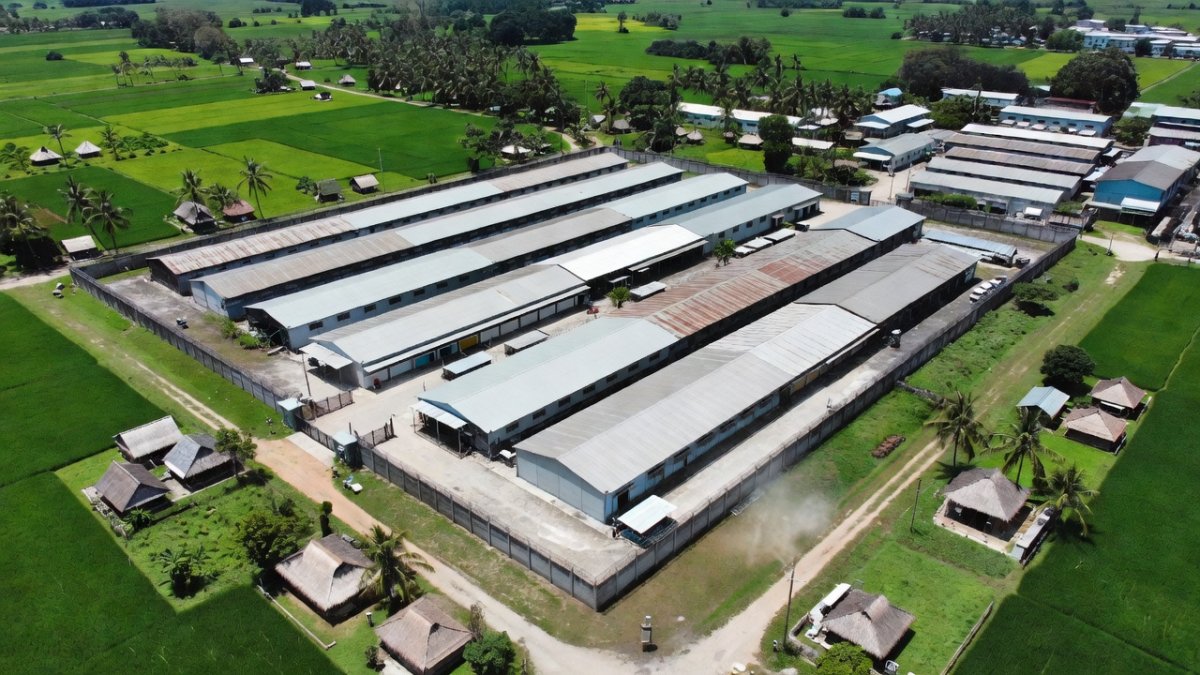
Hongsheng Gaming Technology, Inc. is inextricably linked to the Bamban, Tarlac POGO scandal that has dominated Philippine headlines for over a year. The company operated at the Baofu compound in Bamban, a sprawling complex that authorities raided in 2023 over alleged fraudulent cryptocurrency investment operations. The raid uncovered evidence of large-scale scamming activities, leading to the compound's eventual shutdown. But Hongsheng's story did not end there — the company allegedly changed its business name to Zun Yuan Technology Inc., which Senate President Sherwin Gatchalian earlier described as a "fake company" because its owners and their addresses are non-existent. Zun Yuan was subsequently shut down in 2024 over allegations of human trafficking and serious illegal detention, adding another layer of criminality to the compound's sordid history.
The company's connection to dismissed Bamban, Tarlac Mayor Alice Leal Guo has been a central focus of Senate investigations and court proceedings. The Philippine Amusement and Gaming Corp. (PAGCOR) listed Hongsheng among its canceled offshore gaming operators, with its registered address in Anupul, Bamban, Tarlac — the same municipality Guo once governed. In recent weeks, Guo has faced fresh legal trouble: a new arrest warrant from the Pasig Regional Trial Court over three counts of Anti-Graft and Corrupt Practices Act violations, on top of a life sentence she received in connection with the POGO scandal. The Court of Appeals earlier ordered the freeze of 90 bank accounts and assets belonging to Guo and her associates, and a court has ordered the forfeiture of the P6-billion Baofu compound in favor of the government. The BIR's tax evasion case against Hongsheng adds yet another legal front in the government's campaign to hold those involved in the POGO scandal accountable.
Philippine Context: POGO Ban, RATE Program, and the BIR's Crackdown
The filing of this tax evasion case comes at a pivotal moment in the Philippines' relationship with offshore gaming operators. President Ferdinand Marcos Jr. signed into law a measure banning all Philippine Offshore Gaming Operators (POGOs) amid mounting evidence of illicit activities and threats to national security. The ban, which took effect in recent months, represents a dramatic reversal of policy for an industry that once contributed billions of pesos to government coffers but became synonymous with fraud, human trafficking, and money laundering. The BIR's case against Hongsheng is part of this broader reckoning, signaling that even as POGOs are banned, the government will pursue those who profited from their operations and evaded their tax obligations.
The case is also a flagship effort under the BIR's Run After Tax Evaders (RATE) Program, which strengthens enforcement against tax evasion and schemes that undermine government revenues. The RATE program has been a cornerstone of the BIR's enforcement strategy, targeting high-profile tax evaders across various industries to send a clear message that tax evasion will not be tolerated. By filing this case against Hongsheng, the BIR is demonstrating that its enforcement efforts extend to the offshore gaming sector, which has historically operated in a regulatory gray area. The case also underscores the BIR's commitment to using data from multiple government agencies to cross-reference taxpayer declarations and uncover discrepancies that might otherwise go unnoticed.
Impact on Filipinos: What Tax Evasion Costs Ordinary People
For the average Filipino, the P2.23 billion that Hongsheng allegedly evaded represents more than just a number on a government ledger — it represents real services that could have been delivered to communities across the country. That amount could fund the construction of hundreds of classrooms in public schools, equip rural health units with essential medical supplies, or support the government's social assistance programs for the poorest families. Every peso of tax revenue lost to evasion is a peso that cannot be spent on the infrastructure projects, healthcare services, and educational programs that Filipinos rely on every day. The BIR's case against Hongsheng is therefore not just about punishing a single company — it is about protecting the public purse and ensuring that those who do business in the Philippines contribute their fair share to the nation's development.
Tax evasion also creates an uneven playing field for honest businesses. Sari-sari store owners, jeepney drivers, and small business operators who diligently pay their taxes are effectively subsidizing the tax cheats who operate in the shadows. When large corporations and offshore gaming operators evade taxes, the burden of funding public services falls disproportionately on ordinary Filipinos who cannot afford sophisticated tax avoidance schemes. The BIR's RATE program, and cases like the one against Hongsheng, are designed to restore fairness to the tax system and ensure that everyone — regardless of their size or connections — pays what they owe. For overseas Filipino workers (OFWs) who send remittances home and pay taxes on their earnings, this case is a reminder that the government is working to protect the value of their contributions to the national economy.
Reactions and Responses: Mendoza, Gatchalian, and the Palace
BIR Commissioner Charlito Martin Mendoza delivered a pointed message in announcing the case: "Honest taxpayers deserve a level playing field. No business should be able to operate in the Philippines, earn income here, and evade the taxes required by law. The BIR will pursue these cases wherever the evidence leads us." Mendoza's statement reflects the BIR's determination to follow the money trail, regardless of where it leads or who is implicated. The Commissioner's words also signal a broader commitment to tax enforcement that extends beyond this single case, with the RATE program expected to target additional POGO-linked entities in the coming months.
Senate President Sherwin Gatchalian, who has been at the forefront of the Senate's investigation into the POGO scandal, has previously described Zun Yuan Technology Inc. — the alleged successor to Hongsheng — as a "fake company" with non-existent owners and addresses. Gatchalian's characterization underscores the difficulty of holding these entities accountable when they operate under multiple names and conceal their true ownership structures. The Palace has remained tight-lipped on the specific case, but President Marcos Jr.'s signing of the POGO ban demonstrates the administration's commitment to dismantling the offshore gaming industry and pursuing those who profited from its illicit activities. The Department of Justice will now review the BIR's complaint and determine whether to file criminal charges against Hongsheng and its officers.
What to Watch For: DOJ Review, Criminal Charges, and Asset Forfeiture
The Department of Justice's review of the BIR's complaint will be the next critical step in this case. If the DOJ finds probable cause, criminal charges for tax evasion could be filed against Hongsheng Gaming Technology, Inc. and its responsible officers, potentially resulting in imprisonment and substantial fines. The case could also pave the way for additional asset forfeiture proceedings, building on the Court of Appeals' earlier order freezing 90 bank accounts and assets belonging to Guo and her associates. The forfeiture of the P6-billion Baofu compound in favor of the government sets a precedent that could be applied to other properties and assets linked to the POGO scandal.
Beyond the immediate case, the BIR's action against Hongsheng sends a powerful signal to other POGO-linked firms that may have engaged in similar tax evasion schemes. The RATE program is expected to expand its focus on the offshore gaming sector, using the same data cross-referencing techniques that uncovered Hongsheng's discrepancies. For the broader business community, this case serves as a warning that the BIR is willing to pursue even the most complex and well-connected tax evaders. The government's post-POGO era will be defined not just by the ban itself, but by the enforcement actions that follow — ensuring that those who profited from the industry's excesses are held accountable for their financial crimes.
The Hongsheng case represents a watershed moment in the Philippines' fight against tax evasion and its broader campaign to clean up the offshore gaming industry. As the DOJ reviews the evidence and the legal process unfolds, Filipino taxpayers can take some comfort in knowing that the government is actively pursuing those who sought to cheat the system. The P2.23 billion at stake is not just a sum of money — it is a symbol of the government's commitment to fairness, accountability, and the rule of law. For the honest taxpayers who have long shouldered the burden of funding public services, this case is a step toward a more equitable tax system where everyone pays their fair share.
By Bella Reyes, Staff Writer
This article was produced with AI-assisted research and editorial support. Reporting is based on sources cited in the article.
What's Your Reaction?
 Like
0
Like
0
 Dislike
0
Dislike
0
 Love
0
Love
0
 Funny
0
Funny
0
 Wow
0
Wow
0
 Sad
0
Sad
0
 Angry
0
Angry
0

Philippines/Southeast Asia Correspondent at Global1.News. Manila-based journalist covering Philippine politics, environment, maritime security, and social issues. Passionate about marine conservation and the communities protecting the Philippines' natural heritage.














Comments (0)