
US Exit from Iraq Sparks Concern Over Stability as Iran Tensions Rise
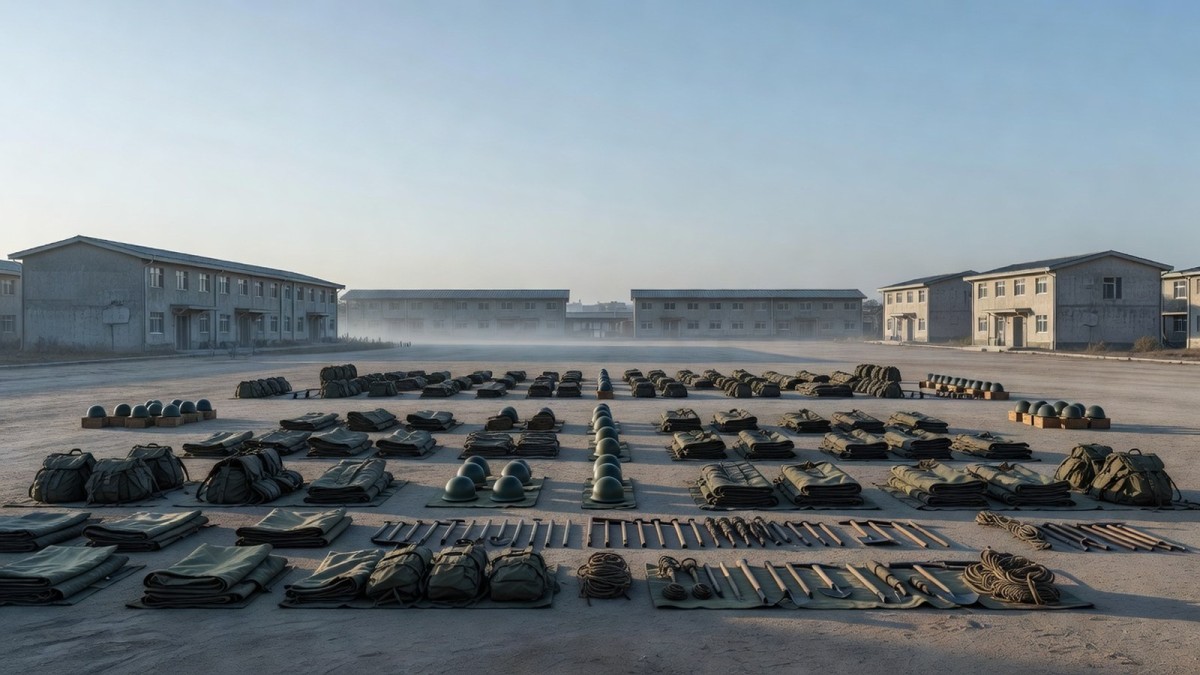
In a DW News segment aired on 30 September 2026, the departure of American forces from Iraq was framed as a pivotal moment for the country’s sovereignty and a potential flashpoint for renewed conflict in the region.
In a DW News segment aired on 30 September 2026, the departure of American forces from Iraq was framed as a pivotal moment for the country’s sovereignty and a potential flashpoint for renewed conflict in the region. The report, which featured insights from Hayder Al‑Shakeri, a research fellow at Chatham House, and James Franklin Jeffrey, a former U.S. ambassador to Iraq, highlighted the mixed reactions among Iraqis and the strategic calculations that underlie Washington’s decision. As the United States completes a withdrawal that began under the Biden administration in 2024 and was executed by the Trump administration, the question now is whether Iraq can navigate a path toward greater autonomy without opening the door for extremist resurgence, especially as Tehran’s influence looms large.
Background of the Withdrawal
The decision to pull U.S. troops out of Iraq was first negotiated in 2024 during the presidency of Joe Biden. At that time, the United States sought to honor a request from Baghdad for a reduction in the American military footprint, while also aiming to re‑balance its forces across the broader Middle East. The plan was to gradually reduce the presence of roughly 2,500 service members who had been stationed in the country for nearly a decade.
When Donald Trump assumed the presidency, his administration accelerated the timeline, completing the withdrawal by the end of 2026. The DW report notes that the exit was carried out amid heightened tensions with neighboring Iran, a factor that shaped both the speed and the political messaging of the pull‑out. The United States framed the move as a step toward respecting Iraqi sovereignty, while also signaling a shift in its regional strategy.
For many Iraqis, the end of a continuous American military presence is seen as a long‑awaited opportunity to reclaim full control over their national security affairs. Families in Baghdad’s colonia neighborhoods and shopkeepers at the bustling tianguis in Basra expressed relief that foreign troops would no longer dominate their streets. Yet, the same communities also voiced anxiety that the vacuum left behind could be filled by groups that thrive on instability.
Perspectives from Experts
Hayder Al‑Shakeri, a research fellow at the London‑based think tank Chatham House, emphasized that the withdrawal is a “new chapter” for Iraq, but warned that the country’s fragile institutions could be tested. In the DW footage, Al‑Shakeri explained that the Iraqi security forces have made progress since the 2014 fight against ISIS, yet they still rely heavily on U.S. training, intelligence sharing, and logistical support. Without that external assistance, he argued, Baghdad may struggle to contain insurgent elements that could exploit the reduced foreign presence.
James Franklin Jeffrey, who served as U.S. ambassador to Iraq during the 2011 drawdown of American troops, offered a historical lens. He recalled that the 2011 withdrawal left a power vacuum that contributed to the rise of ISIS a few years later. Jeffrey cautioned that “the lessons of 2011 are still relevant,” suggesting that a premature or poorly coordinated exit could repeat past mistakes. He noted that the current context is complicated by Iran’s growing influence, which adds another layer of risk to any security gaps that emerge.
Both experts agreed that the success of Iraq’s transition hinges on the capacity of its own institutions—particularly the Ministry of Interior and the Iraqi Armed Forces—to fill the roles previously occupied by U.S. advisers. They also highlighted the importance of political stability in Baghdad, where the coalition government continues to navigate sectarian divides and demands from powerful militias.
Potential for Extremist Resurgence
The DW report underscored the concern that extremist groups could regain strength in the wake of the U.S. pull‑out. While ISIS has been largely defeated, remnants continue to operate in remote desert areas and along the Syrian border. The loss of American surveillance drones and intelligence networks could make it harder for Iraqi forces to detect and disrupt these cells.
Al‑Shakeri warned that “an opening for extremist groups to regain strength” is a realistic scenario if the Iraqi security apparatus does not receive adequate support from regional partners or the international community. He pointed to the fact that Iran-backed militias, such as Kata’ib Hezbollah, maintain a significant arsenal and could fill the void left by U.S. forces, potentially shifting the balance of power toward Tehran.
Jeffrey added that the United States’ own experience in Afghanistan showed how quickly insurgent movements can regroup when foreign troops depart. He suggested that Iraq’s government should prioritize securing critical infrastructure—oil fields, power plants, and major transport corridors—because any disruption could fuel public discontent and create fertile ground for radical recruitment.
Iran’s Role in the New Landscape
The timing of the withdrawal coincides with a period of heightened tension between Tehran and Washington. Iran has long viewed the U.S. presence in Iraq as a strategic foothold, using its network of allied militias to project influence. With the American troops gone, Iran may seek to deepen its political and military ties with Baghdad, a prospect that worries both Iraqi nationalists and U.S. policymakers.
In the DW interview, Al‑Shakeri described Iran’s approach as “a calculated attempt to fill the vacuum.” He noted that Tehran has already increased the flow of weapons and advisors to Iraqi militias, and that the Iranian Revolutionary Guard Corps (IRGC) continues to operate covertly within Iraqi borders. This dynamic could embolden Iran-backed groups to assert greater control over local security, potentially marginalizing the central government.
Jeffrey warned that the United States must remain vigilant even after the physical withdrawal. He suggested that Washington could continue to provide “targeted assistance” to Iraqi forces, particularly in counter‑terrorism and intelligence sharing, to prevent Iran from gaining unchecked dominance. He also highlighted the importance of diplomatic engagement through the State Department and the Department of Defense to maintain pressure on Tehran.
Implications for the Iraqi People
Beyond the geopolitical calculations, the withdrawal has a direct impact on everyday Iraqis. In neighborhoods of the capital, families recall the presence of U.S. soldiers as a mixed memory—some saw them as protectors against bombings, while others viewed them as foreign occupiers. The departure now forces Iraqi communities to confront the reality of self‑reliance in security matters.
Economic considerations also loom large. The United States has been a major purchaser of Iraqi oil, and the security of oil pipelines has often depended on American protection. With the U.S. pull‑out, the Iraqi government must ensure that its energy sector remains stable, especially as the country seeks to attract foreign investment to rebuild its war‑torn economy.
Human rights groups, including the Comisión Nacional de los Derechos Humanos in Mexico, have expressed solidarity with Iraqi civilians who risk being caught in renewed cycles of violence. They stress that any escalation could trigger a new wave of displacement, adding pressure to an already strained refugee system that includes many migrants traveling through Iraq toward Europe.
Looking Ahead: What Comes Next?
As the DW segment concluded, both Al‑Shakeri and Jeffrey emphasized that the next months will be decisive for Iraq’s trajectory. Al‑Shakeri called for a “coordinated international effort” to bolster Iraq’s security sector, suggesting that partners such as the European Union, the United Nations, and regional actors like Saudi Arabia could play constructive roles.
Jeffrey urged the United States to maintain a “strategic presence” through diplomatic channels, intelligence cooperation, and limited special‑operations support, even as the boots on the ground leave. He argued that such a calibrated approach would help prevent a repeat of the 2011‑2014 vacuum that gave rise to ISIS.
For the people of Iraq, the hope is that the withdrawal becomes a genuine step toward self‑determination rather than a prelude to renewed conflict. The coming weeks will test the resilience of Iraq’s institutions, the resolve of its political leaders, and the capacity of the international community to support a fragile but hopeful nation on the brink of a new era.
By Rosa Martinez, Staff Writer
This article was produced with AI-assisted research and editorial support. Reporting is based on the source material cited below. Sources: DW News video report (30 September 2026); DW News; Global1.News
What's Your Reaction?
 Like
0
Like
0
 Dislike
0
Dislike
0
 Love
0
Love
0
 Funny
0
Funny
0
 Wow
0
Wow
0
 Sad
0
Sad
0
 Angry
0
Angry
0
Latin America/Andes Correspondent at Global1.News. Based in Bogota, covering politics, environment, energy, and social movements across the Andean region. Passionate about environmental journalism and communities protecting their land.









Comments (0)