
B.C. Premier Declares Provincial State of Emergency as Okanagan Wildfire Forces Mass Evacuations
British Columbia has declared a provincial state of emergency in response to the rapidly expanding Bald Range wildfire in the Okanagan region.
B.C. Premier Declares Provincial State of Emergency as Okanagan Wildfire Forces Mass Evacuations
The Story
British Columbia has declared a provincial state of emergency in response to the rapidly expanding Bald Range wildfire in the Okanagan region. Premier David Eby announced the measure on Saturday afternoon, describing the fire's behaviour as a significant shift in the province's wildfire situation this summer.
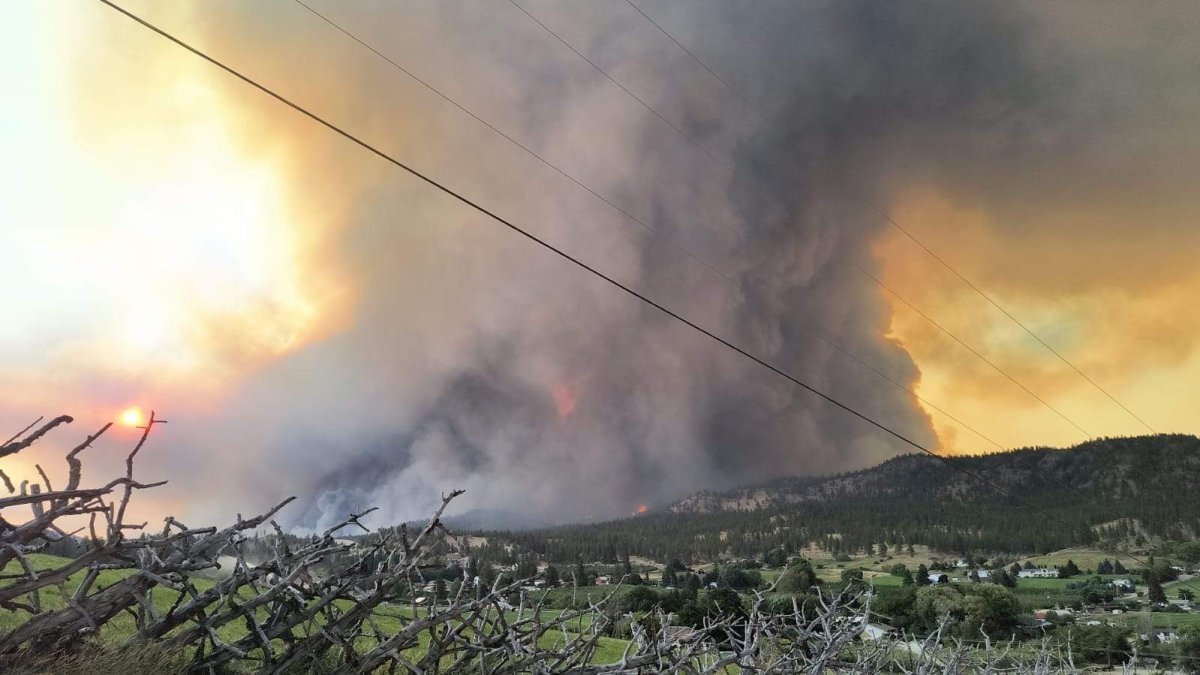
The declaration comes as more than 20,000 people across the province have been forced from their homes, making it the largest evacuation event in B.C. so far this summer. The Bald Range fire, burning west of Summerland, spread rapidly toward the community on Friday and continued to grow overnight, prompting evacuation orders covering the entire community of Summerland, population 12,000, as well as a further 8,000 people in and around Peachland.
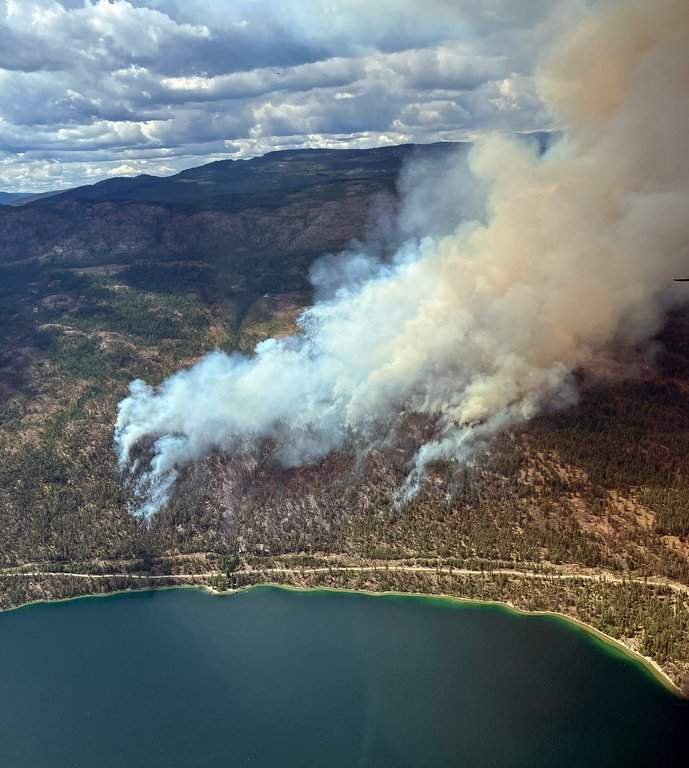
The Bald Range wildfire was first reported Friday afternoon about 15 kilometres west of Summerland. Within a few hours it grew past 5,000 hectares, and by Saturday morning the BC Wildfire Service estimated its size at 9,500 hectares. The BC Wildfire Service says the fire is displaying aggressive rank 5 behaviour, with an organized flame front, a fast rate of spread and moderate to long-range spotting. Gusty winds fuelled the quick growth and complicated the firefight for aircraft.
BC Wildfire Service director of provincial operations Cliff Chapman described the fire as one of the most challenging the agency has faced. There have been 70 new wildfires in B.C. over the past seven days, with 105 active fires burning across the province as of Saturday morning. More than 2,000 personnel are involved in the response.
The State of Emergency
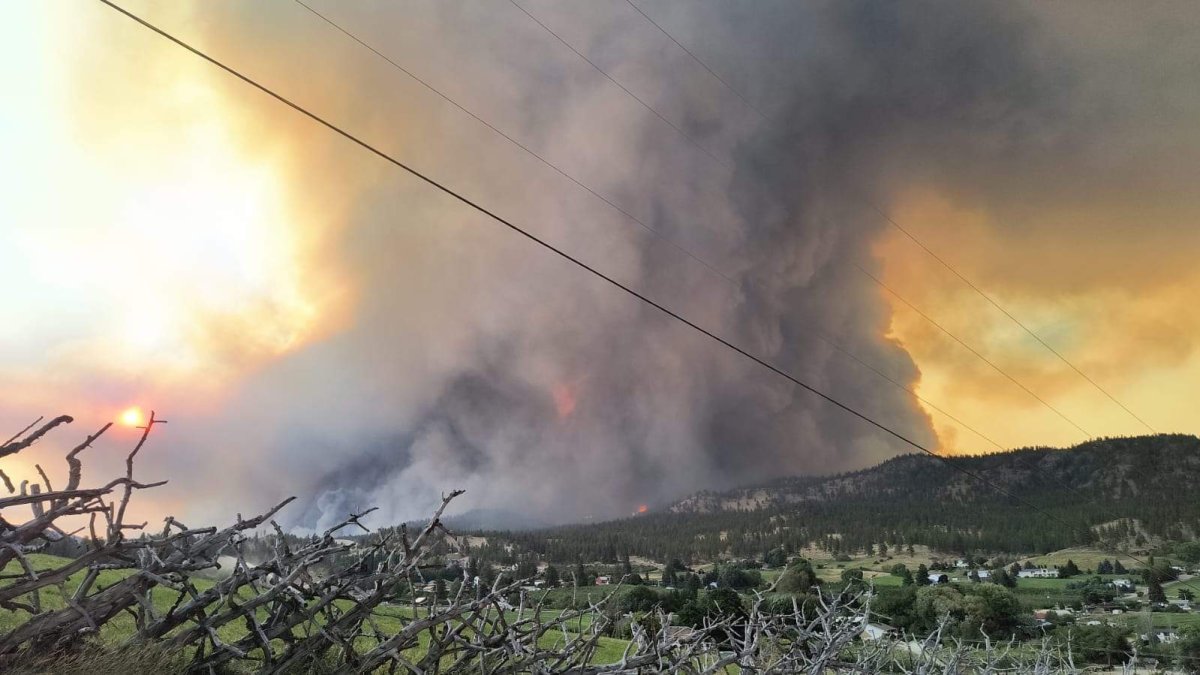
Eby said the lead commander on the fire, who had been up all night, described the situation as "like a bomb going off in the Summerland region." Homes and other properties have been destroyed, and some people became trapped as conditions changed rapidly and had to be rescued.
"Right now our full focus is saving lives and supporting rescue efforts," Eby said. The premier said he has spoken with Prime Minister Mark Carney, who pledged the federal government's full support for the province. Eby said the top priority is protecting human life.
Regional District of Okanagan-Similkameen information officer Erick Thompson called it one of the "quickest-moving, fastest-growing" wildfires the region has ever seen. He stated that the most important thing people can do is leave their property and urged residents not to remain, especially if they have children. He acknowledged heavy traffic and crowded reception centres while encouraging people to check on neighbours.
Evacuations and Rescue Efforts
Air evacuations are underway for people cut off by the fire, and emergency crews continue search-and-rescue operations. Crews worked through the night alongside local fire departments, RCMP, search-and-rescue teams and other emergency responders, while firefighting aircraft were repurposed to evacuate people trapped behind fire lines.
The province said 18 aircraft have been used to rescue more than 50 people from the fire. Highway 97 was closed as the blaze spread and evacuation routes were affected. In some cases, people became isolated by the flames and had to be rescued, according to Eby.
Central Okanagan Search and Rescue worked alongside the RCMP to evacuate several hundred homes in the Princeton Avenue area of Peachland after being redirected when Highway 97 closed. It warned that navigation apps were directing motorists onto the Summerland-Peachland Forest Service Road toward the wildfire. Interior Health is contacting families directly with updates on loved ones' temporary locations, and some residents had to be evacuated by helicopter because the fire cut off roadway access.
Healthcare and Community Response
Emergency Management Minister Kelly Greene said the state of emergency will give the province additional powers that can be used quickly if needed, including securing accommodations or imposing local travel restrictions. No travel restrictions are currently in place, but the province is asking people to avoid non-essential travel to Summerland and other affected communities.
Interior Health, the regional health authority serving British Columbia's southern Interior, said it is relocating 48 residents from Dr. Andrew Pavilion and moving another 190 residents from Summerland Seniors Village to alternate locations outside the affected area. The health authority advised anyone requiring emergency care to seek treatment at Penticton Regional Hospital.
The Central Okanagan emergency management centre stated that an evacuation order is not a suggestion but a life-safety measure. Resident Corey Charlesworth, who lives on Jones Flat Road near Summerland, rushed home from work in Kelowna after a neighbour warned him. He described watching the fire grow rapidly from 50 hectares to 5,000 hectares and expressed concern for residents and livestock in nearby ranching areas.
Farmers and Ranchers Face Tough Choices
Some B.C. farmers and ranchers are defying evacuation orders to protect homes, orchards and livestock built up over generations. B.C.'s Ministry of Agriculture said that as of Thursday there were 221 registered agricultural premises in the province under evacuation order due to wildfire activity.
Premier David Eby has acknowledged the tough choices facing farmers. "I can't think of anything more difficult for a farmer than being faced with an evacuation notice while knowing that your animals are potentially in distress," he said at a news conference on Thursday. A provincial program allows farmers at risk to temporarily move animals to stockyards, feedlots, "buddy farms", and rodeo grounds.
Tom Davison's family orchard near Vernon, operated by Davison Orchards for five generations, was protected by firefighting equipment his son-in-law invested in after a 2021 wildfire. Kaylee Jameson is one of nine people who stayed behind at Sweet Pea Farms near Vernon to protect more than 100 animals, stating she was not leaving without her horses, dog and cats.
Kevin Boon, general manager of the BC Cattlemen's Association, said moving cattle by truck is stressful and some ranchers stay because it is easier to move large herds over land. Ranchers reduce risk by keeping grass trimmed and trees away from structures, and many own excavators, Caterpillars or water trucks. The association has liaisons who work with BC Wildfire Service incident commanders.
What Happens Next
BC Wildfire Service officials warn that conditions across the southern Interior remain extremely volatile, with new fires able to spread rapidly. The province continues to urge anyone under an evacuation order to leave immediately and those under an alert to prepare to go.
Residents are advised to rely on official sources such as DriveBC for road information rather than navigation apps, which have directed some motorists toward closed routes including the Summerland-Peachland Forest Service Road. Neighbour checks and community support remain central to the response as evacuations proceed.
Tags: wildfire, British Columbia, state of emergency, Okanagan, evacuation, Summerland, Peachland, Bald Range fire
By Alex Thompson, Staff Writer
This article was produced with AI-assisted research and editorial support. Reporting is based on sources cited in the article.
What's Your Reaction?
 Like
0
Like
0
 Dislike
0
Dislike
0
 Love
0
Love
0
 Funny
0
Funny
0
 Wow
0
Wow
0
 Sad
0
Sad
0
 Angry
0
Angry
0

Canada Correspondent at Global1.News. Based in Toronto, covering Canadian politics, energy, trade, and US-Canada relations. Provides the Canadian perspective on North American and global affairs.














Comments (0)