
'You can be believed and understood': Joanne Young speaks after verdict
When Joanne Young stepped outside Winchester Crown Court on 19 November 2026, the gravity of her testimony was palpable. The case in context The trial, which concluded at Winchester Crown Court, marked a watershed moment in British criminal jurisprudence.
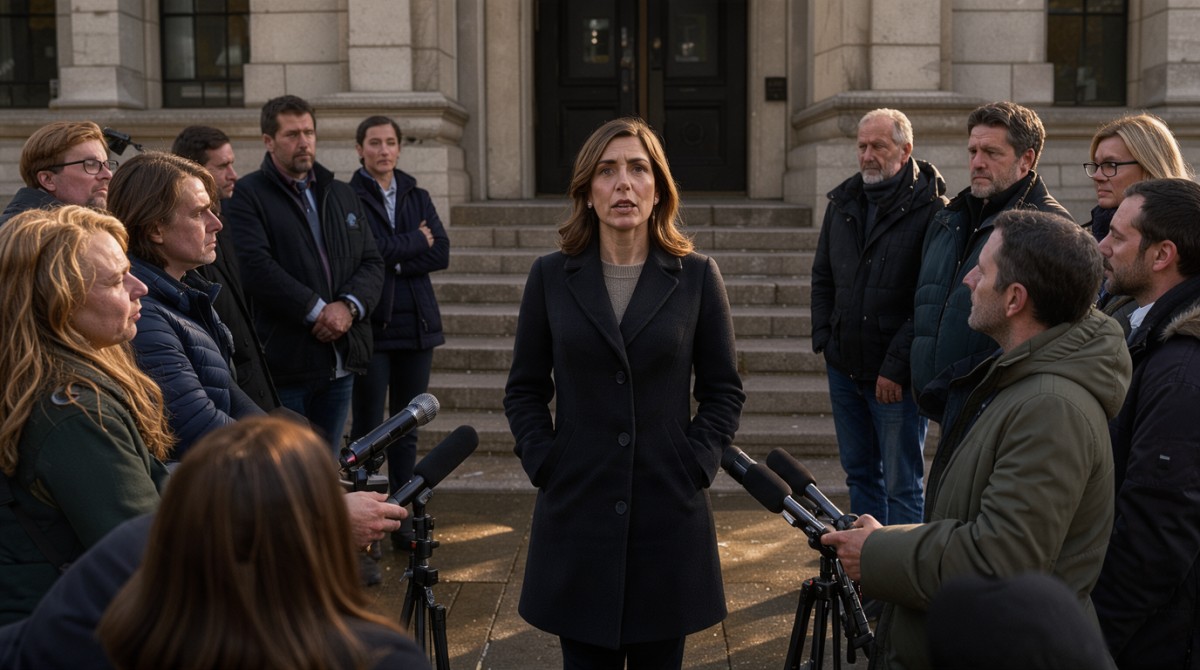
When Joanne Young stepped outside Winchester Crown Court on 19 November 2026, the gravity of her testimony was palpable. Having waived her right to anonymity, she addressed a crowd of reporters and members of the public, urging anyone who recognised “their own experience” to know they were not alone, and that there were people who would believe them. Her words resonated far beyond the courtroom walls, shining a stark light on a case that, for the first time in the United Kingdom, saw a husband prosecuted not only for drugging his wife but also for facilitating a network of sexual abuse that spanned more than a decade.
The case in context
The trial, which concluded at Winchester Crown Court, marked a watershed moment in British criminal jurisprudence. Four men were found guilty of sexually abusing Joanne Young, a woman whose private life was shattered by a systematic campaign of control, drugging and exploitation. The defendants—Norman Macksoni, Richard Wilkins, Connor Sanderson‑Doyle and Mohammed Hassan—were convicted of multiple sexual offences, with Wilkins and Macksoni each receiving a conviction for a single count of rape. Their guilt was established by a jury that deliberated on the evidence presented, which included testimony about the husband’s role in the abuse.
Philip Young, aged 50, had already pleaded guilty to a series of charges relating to drugging and raping his wife over a 13‑year period at their home in Swindon, Wiltshire. His admission set the factual foundation for the wider conspiracy, confirming that the abuse was not an isolated incident but part of a prolonged, orchestrated pattern that involved external perpetrators. The court’s verdict therefore not only punished the individual offenders but also sent a clear signal that the legal system is prepared to confront complex, multi‑perpetrator abuse cases.
The mechanics of the abuse
According to the evidence presented, Philip Young’s method of control hinged on the administration of drugs to his wife, a tactic that rendered her vulnerable and impaired her capacity to consent. Over the course of 13 years, this drugging facilitated a series of sexual assaults, both within the marital home and through the involvement of external men who were recruited to exploit Young’s compromised state. The court heard that the husband’s actions were not merely a private betrayal but a calculated strategy to enable a broader network of abuse.
The involvement of Macksoni, Wilkins, Sanderson‑Doyle and Hassan illustrates how domestic abuse can extend beyond the immediate household, drawing in external actors who become complicit in the exploitation. While the specific details of how each man was recruited or how the abuse was coordinated were not disclosed in the public record, the convictions demonstrate that the jury found sufficient evidence of their participation in the sexual offences committed against Joanne Young.
Legal significance
This trial represents the first of its kind in the UK, where a husband’s drug‑induced incapacitation of his spouse was prosecuted alongside the actions of external perpetrators. The legal precedent set here may influence future cases involving similar dynamics of control, where the line between domestic abuse and organised sexual exploitation blurs. By holding both the primary abuser and his accomplices accountable, the court affirmed that the law can address the full spectrum of abuse, even when it is orchestrated over many years.
Moreover, the convictions underscore the importance of victim testimony and the willingness of survivors to waive anonymity. Joanne Young’s decision to speak publicly not only amplified her own voice but also reinforced the principle that the justice system values the courage of survivors who step forward, even when doing so may expose them to public scrutiny.
Victim impact and societal response
Joanne Young’s remarks outside the court highlighted a broader societal issue: the pervasive fear among victims that their experiences will be dismissed or doubted. By urging others to recognise their own experiences and seek support, she positioned herself as an advocate for change, urging a shift in public attitudes towards belief and empathy. Her statement, “you’re not alone and there are people who will believe you,” resonated with advocacy groups that have long called for a cultural shift in how sexual violence is perceived and addressed.
The public reaction to the verdict has been one of both shock and relief. Many commentators have noted the harrowing nature of a marriage that lasted over a decade under the shadow of drug‑induced control, while also praising the judicial outcome as a step forward in protecting women from similar predatory dynamics. The case has sparked discussions about the need for more robust support mechanisms for victims of domestic and sexual abuse, particularly those involving drug‑facilitated crimes.
Broader implications for policy
The revelations from this case have prompted calls for policy reforms aimed at preventing drug‑facilitated abuse within intimate relationships. Experts suggest that law enforcement agencies require clearer guidelines for identifying and investigating cases where a spouse may be using substances to incapacitate a partner. Additionally, there is a growing demand for improved training for prosecutors and judges to recognise the nuanced ways in which control can be exerted through chemical means.
Beyond the criminal justice system, the case highlights the need for enhanced public health interventions. Health professionals are urged to be vigilant for signs of drug‑induced incapacitation in domestic settings, and to provide appropriate referrals to support services. The intersection of health, law and social services is increasingly seen as a critical front in the fight against complex abuse patterns such as those uncovered in the Young case.
Future of survivor advocacy
Joanne Young’s willingness to forgo anonymity may inspire other survivors to step forward, particularly those who have endured prolonged abuse at the hands of a trusted partner. Survivor advocacy groups have welcomed her openness, noting that public testimonies can help dismantle the stigma that often silences victims. The case also underscores the importance of peer support networks, where survivors can share experiences and find validation.
Looking ahead, the momentum generated by this trial could translate into stronger legislative protections for victims of drug‑facilitated sexual offences. Campaigners are likely to leverage the public attention to push for clearer statutory definitions of consent that account for incapacitation, as well as harsher penalties for those who exploit such vulnerabilities. The broader societal conversation sparked by Young’s statement may thus catalyse lasting reforms.
Conclusion: A landmark moment in the fight against sexual violence
The convictions at Winchester Crown Court represent more than just legal retribution; they signal a societal acknowledgement of the insidious ways in which intimate partners can manipulate and exploit their victims. Joanne Young’s courageous decision to speak publicly, coupled with the jury’s willingness to hold multiple perpetrators accountable, marks a pivotal moment in the UK’s ongoing struggle to confront and eradicate sexual violence.
As the nation reflects on this case, the message is clear: the legal system is evolving to recognise the complex realities of abuse, and survivors are increasingly empowered to claim their voices. The hope, articulated by Young herself, is that those who see their own experiences reflected in her story will find the strength to come forward, confident that they will be believed and supported. The ripple effect of this trial may yet shape a future where such abuses are identified earlier, prosecuted more effectively, and, ultimately, prevented altogether.
This article was produced with AI-assisted research and editorial support. Reporting is based on the source material cited below. Sources: BBC News UK; bbc.co.uk; Global1.News (19 November 2026).
By Erica Thornton, Staff Writer
What's Your Reaction?
 Like
0
 Dislike
0
 Love
0
 Funny
0
 Wow
0
 Sad
0
 Angry
0

US Politics and Policy Correspondent at Global1.News. Based in Washington DC, covering American politics, policy, elections, and the courts. Knows how the system works and tells you what it actually means.














Comments (0)