
Russia's Refining Falls 45% as Moscow Imports Gasoline From a Rosneft-Linked Plant
Ukrainian drones hit the Ilsky and Afipsky refineries in Krasnodar Krai, and Reuters reports Russian refining is down 45 percent since late October as Moscow turns to imported gasoline.
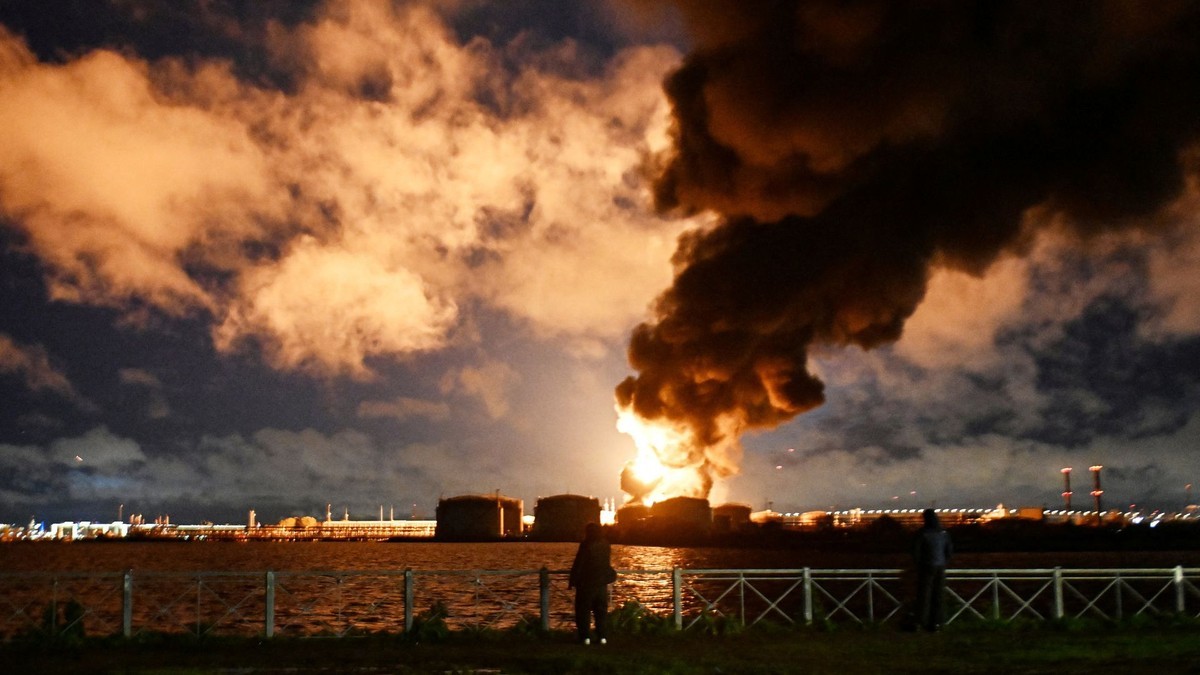
Two oil refineries caught fire in the same southern Russian district before dawn. By the next afternoon, the number that matters had landed: Russia's refineries are processing 45 percent less crude than they were three weeks ago, and Moscow is filling the gap with gasoline shipped in from abroad.
Russia's Refining Falls 45% as Moscow Imports Gasoline From a Rosneft-Linked Plant
Krasnodar Krai, Russia — November 19, 2026 — Ukrainian drones struck two refineries in Krasnodar Krai overnight on November 17 and 18. Russian authorities will not name the plants. Ukraine's General Staff named both, and then named the consequence: less diesel for the Russian army, and fewer oil rubles to buy the weapons hitting Ukrainian cities.
Two Refineries, One District, and a Fire That Lasted Hours
Residents of the Seversky district heard the first explosions at about 4:40 a.m. local time, according to the independent Russian outlet ASTRA, which cited people living in the area. The attack went on for hours, with air defense firing and sirens sounding in the city of Krasnodar itself. One resident told ASTRA that flashes and explosions could be seen and heard from the city in the direction of the plants.
The Krasnodar Krai operational headquarters confirmed fires at two enterprises. "During the UAV attack in the Seversky district, fires broke out at two enterprises as a result of falling drone debris," the headquarters said in its statement. "Drone fragments were also found at nine locations, including the courtyards of private homes and on streets."
It did not identify the facilities. The Seversky district is home to two of southern Russia's largest refineries, at the settlements of Ilsky and Afipsky, and local residents named both to ASTRA. "By the end, two plants are burning: Afipsky and Ilsky, most likely," one eyewitness said.
What the General Staff Says It Hit
Ukraine's General Staff confirmed the operation on November 18. Storage tanks were hit at the Ilsky refinery, it said, and preliminary information indicated that an oil processing unit was struck at the Afipsky plant. It did not say what weapons were used.
Together the two plants can process about 13 million metric tons of crude a year, according to the General Staff. Both sit in the south of Russia, which is the point. "Located in the south, they serve as the shortest supply route for fuel to Russian forces at the front," the statement said. "Therefore, every fire at these facilities means less diesel and gasoline for the Russian army, and fewer 'oil-rubles' - funds the Russian aggressor uses to purchase missiles and Shahed drones."
The General Staff added that Ukraine was acting under Article 51 of the UN Charter, the right to self-defense, and described the refinery campaign as a systematic measure to force Russia to end its armed aggression.
The Refining Number That Moved on Wednesday
Reuters reported the scale of the damage on November 18, citing two industry sources. Combined crude processing at Russian refineries has fallen 45 percent since late October, from more than 700,000 metric tons a day to around 400,000 — roughly 3 million barrels a day. The attacks have disrupted or halted operations at 15 of Russia's 35 major refineries, up from nine in the middle of the previous week.
The plants Reuters named as affected are in Ryazan, Yaroslavl, Kirishi and the Volga region. Russia's energy ministry did not respond to a request for comment.
The trajectory has been steep and fast. On November 10, Reuters put the loss of refining capacity at around 30 percent. On November 15, President Volodymyr Zelensky said Ukrainian forces had taken 55 percent of Russia's oil refining capacity offline. Those are three different measures taken four days apart, and only the first two come from the same reporting chain.
A 45 Percent Drop and a Month Average That Barely Moved
Read the Reuters figures carefully and they appear to contradict each other. A 45 percent fall in volumes sits beside a line saying November's average crude processing remains above 500,000 tons a day, only 5 to 10 percent below September and October levels.
Both can be true, and the reason matters. The 700,000 to 400,000 comparison is a current run rate: what the refineries were handling at the end of October against what they are handling now. The 500,000-plus figure is a month-to-date average, and the drop happened gradually across November as one plant after another was hit. A month that starts near 700,000 and ends near 400,000 averages somewhere in the middle.
The same caution applies to the headline percentage. Losing 45 percent of throughput is not the same claim as knocking 55 percent of capacity offline. The first measures what refineries actually processed, the second measures what Ukraine says it has put out of action. Neither figure has been independently verified.
Nine Injured and Ninety-Four Blocks Without Gas
The casualty count moved during the day. In the morning the regional headquarters reported four people injured and receiving medical treatment. By about 1:30 p.m. local time the same headquarters said nine people had been hurt, one of them hospitalized and the rest treated as outpatients. Drone debris damaged private homes and commercial buildings across the district.
A damaged gas pipeline cut supplies to 94 apartment buildings, according to the Kyiv Independent. In neighboring Adygea, debris fell on a five-storey residential building in the village of Enem in the Takhtamukaysky district, damaging several flats and injuring four people, the republic's head Murat Kumpilov said. That settlement lies less than 10 kilometers from the Afipsky refinery.
In the Belgorod region, Governor Aleksandr Shuvaev said three civilians had been killed in cross-border drone attacks over the previous 24 hours. None of the injuries reported in Krasnodar Krai has been publicly attributed to workers inside either refinery.
Eight Strikes on Afipsky and a Record Night
The Kyiv Post called Wednesday's strike the eighth attack on the Afipsky refinery since the start of the year, and the second this month after a strike on November 6. LIGA.net's own tally of earlier attacks is shorter: it lists five dates in 2026 — March 14, June 11, July 14, August 25 and November 6 — plus strikes in 2025 and 2023. The two counts are not measuring the same thing.
The Ilsky plant was hit three days before, overnight on November 16, when the General Staff reported strikes on its AT-4, AT-5 and AT-6 atmospheric distillation units and a motor gasoline production complex. Shortly before that, drones reached Gazprom's Salavat refinery in Bashkortostan, about 1,200 kilometers from the Ukrainian border.
Russia's defense ministry said its air defenses intercepted 184 fixed-wing drones between 8 p.m. Moscow time on Tuesday and 8 a.m. on Wednesday, over the Belgorod and Rostov regions, Krasnodar Krai, Crimea and the Sea of Azov. Reuters, citing Russian defense ministry data, reported that the week's attacks included the biggest overnight drone attack on Russia since the war began in 2022.
Moscow Now Buys Gasoline Abroad
On November 17, Ukraine's Defense Intelligence directorate published a breakdown of how Russia has been covering the shortfall. Between July 18 and October 22, Russia imported about 989,000 metric tons of petroleum products and high-octane additives by sea, delivered in 39 consignments on 30 tankers.
Gasoline accounted for 724,200 tons, or 73.2 percent of the total. Diesel came to 128,100 tons, jet fuel to 106,700 tons and MTBE additive to 30,000 tons. The ports of Vitino and Vysotsk handled 15 of the consignments, about 573,000 tons, and 79 percent of all the imported gasoline.
The route was built to be hard to trace. Thirteen of the 30 tankers are under sanctions imposed by the European Union, Britain, the United States or partner states, and two more are under Ukrainian sanctions. At least 216,000 tons, about 22 percent of the volume, arrived after ship-to-ship transfers at sea, including near Egyptian ports and off the Spanish enclave of Ceuta, with transponders switched off and declared routes changed.
The Gasoline That Came Back Through India
Intelligence identified the origin of only about a quarter of the fuel, roughly 264,000 tons, and one finding stands out. Four shipments totaling 189,000 tons of gasoline came from the Vadinar refinery in India, operated by Nayara Energy. Nayara is sanctioned by the European Union, Britain, Switzerland and Ukraine. Rosneft, the sanctioned Russian oil company, controls 49.13 percent of it.
Two further shipments of 58,500 tons of jet fuel came from Egypt's Midor refinery on behalf of the state oil corporation EGPC, with a United Arab Emirates-based firm listed as the recipient and the cargo unloaded at St Petersburg.
The pattern is broader than one plant. The Helsinki-based research group CREA counted 416,000 tons of gasoline imported by sea in August and another 234,000 tons in September, against a peak of roughly 5,000 tons a month across 2023 to 2025. The cargoes came mainly from Morocco, India and Turkey. In July, Russia took its first seaborne cargo of AI-92 grade gasoline, about 30,000 tons, from Morocco.
Thirty Liters a Day in Six Regions
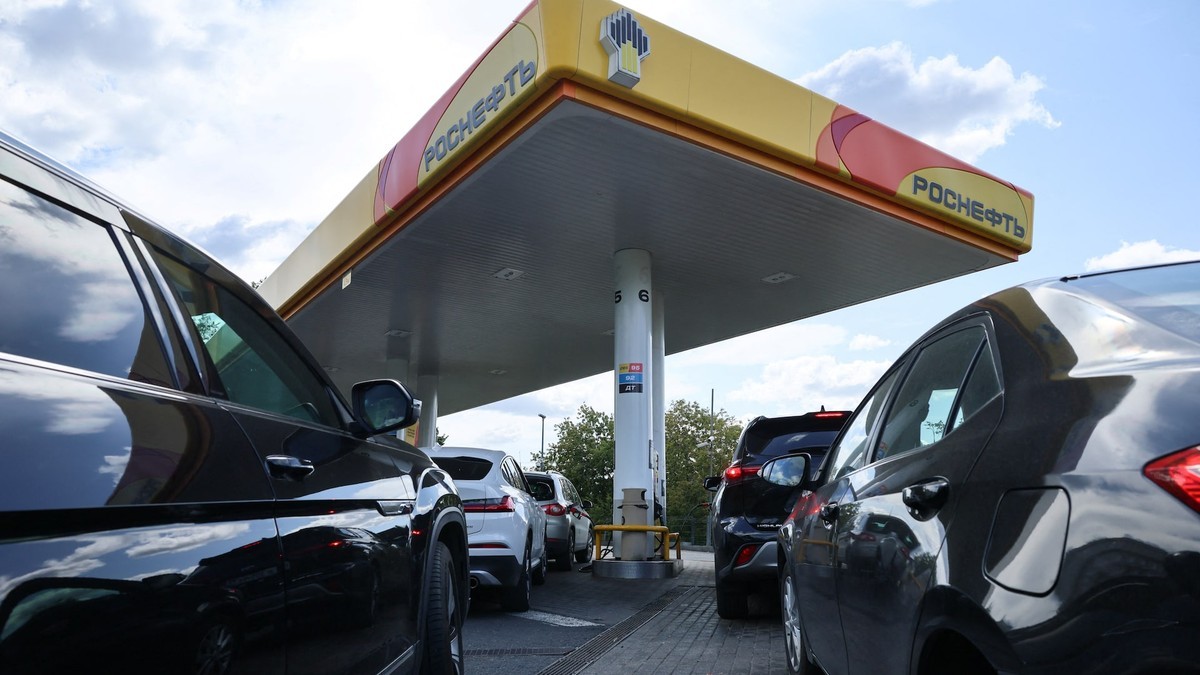
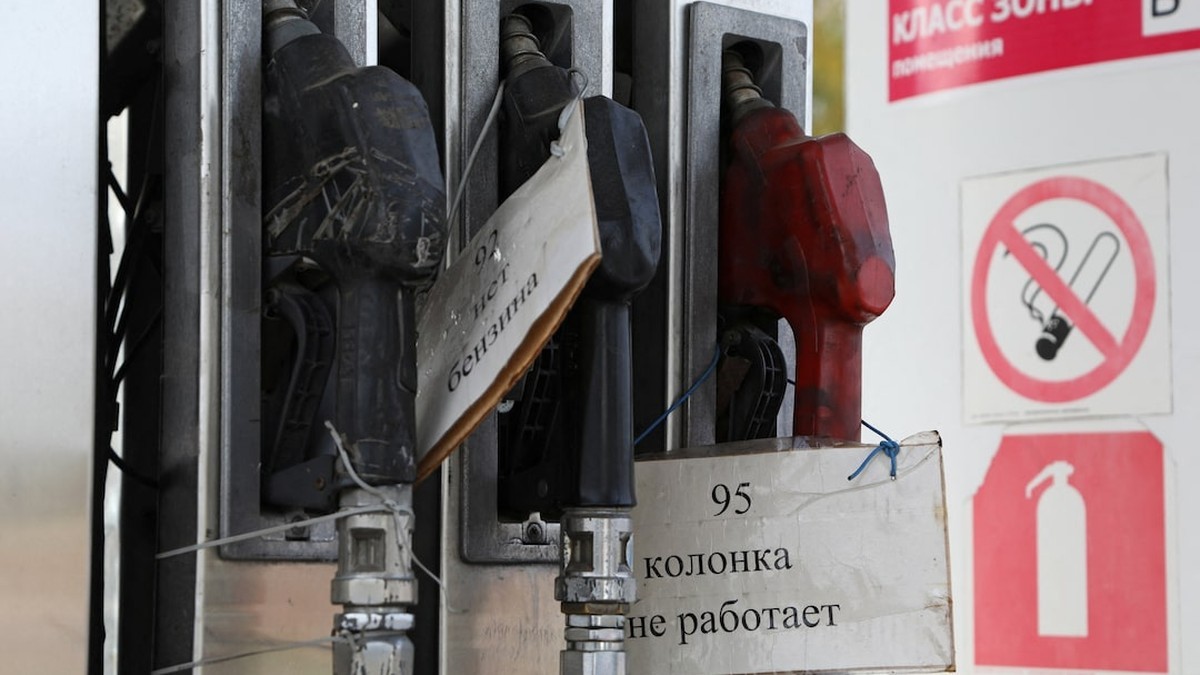
The shortage has reached the pump. At least eight regions have reported fuel shortages, including Leningrad, Nizhny Novgorod, Novosibirsk and Karelia, and at least six have imposed sales caps, most of them 30 liters a day. Even in Moscow, Rosneft stations are limiting drivers to 50 liters per vehicle and 20 liters per canister.
On the St Petersburg commodity exchange, gasoline trading fell 31 percent in the week through Friday and the widely used AI-92 grade dropped 33 percent. Sergei Vakulenko of the Carnegie Endowment estimates that the refineries hit account for about 55 percent of Russia's gasoline production and that stockpiles would cover roughly a week of national consumption.
Michael Bohnert of the RAND Corporation said the refineries at Yaroslavl and Nizhny Novgorod are at a standstill, Ryazan is running at about 10 percent of capacity and Omsk, the country's largest, at about half. Deputy Prime Minister Alexander Novak instructed officials on Tuesday to widen imports further and to bring in fuel that falls below Russia's emissions standard. "We'll be importing at least until the end of the year," he said in October.
What These Numbers Cannot Settle
Several of the figures in this story do not line up, and pretending otherwise would be dishonest. The Afipsky refinery's capacity is given as 6.25 million tons a year by the General Staff, as more than 7 million tons by the Kyiv Post, and as 9.1 million tons following a 2025 reconstruction stage by Ukrinform. No source reconciles the three.
Bohnert's estimate that Russia still refines about 3.7 million barrels a day conflicts with Reuters' current run rate of roughly 3 million. Economist Janis Kluge, who tracks station data from the GdeBenz platform, notes that the share of stations with AI-92 in stock fell from about 60 percent to 50 percent, but also that drivers are more likely to report an empty station during a crisis than a full one.
What is not in dispute is the direction. Ukraine has kept up near-daily strikes for three weeks, Russia has not published a damage assessment for either Krasnodar plant, and Moscow's answer to a refining shortfall has been to buy finished gasoline from abroad — some of it, on Kyiv's account, from a refinery Rosneft part-owns.
The Bill Comes Due in Winter
Reuters noted one immediate consequence: reduced refining could hamper Russia's ability to deliver on the diesel export arrangement President Donald Trump announced with Vladimir Putin on October 9. A country that cannot keep its own pumps full has less room to sell fuel abroad, whatever the deal says on paper.
The larger test is the calendar. Winter demand rises, refineries that are damaged are slow to repair, and the import routes Russia has built run through ports in the far northwest and the Far East, thousands of kilometers from the southern front those refineries were built to supply. Every week the campaign continues makes that logistics problem harder, not easier.
Kyiv's stated aim is not subtle. Fewer oil rubles means fewer missiles. The refinery campaign is designed to make that arithmetic visible at a Russian gasoline station, and this week it did.
By Jessica Ali, Staff Writer
This article was produced with AI-assisted research and editorial support. Sources: Reuters, the General Staff of the Armed Forces of Ukraine, the Kyiv Independent, Ukrinform, the Kyiv Post, the Moscow Times, Meduza, ASTRA, LIGA.net, RBC-Ukraine, Hromadske, the Defense Intelligence directorate of Ukraine's Ministry of Defense, CREA, the Carnegie Endowment, the RAND Corporation, and the Krasnodar Krai operational headquarters. Photographs: a burning oil terminal in St Petersburg on October 18, 2026 (AFP via Getty Images); cars queuing at a Rosneft station in Moscow on August 14, 2026 (Anastasia Barashkova/Reuters, file photo); fuel pump signs at a station in the Nizhny Novgorod Region on September 26, 2025 (Anastasia Makarycheva/Reuters, file photo). Any editorial cover card is produced in-house by Global 1 News.
What's Your Reaction?
 Like
0
 Dislike
0
 Love
0
 Funny
0
 Wow
0
 Sad
0
 Angry
0

Editor-in-Chief at Global1.News. Atlanta-based journalist who cuts through the BS and tells it like it is. Lead anchor, host, and the voice you hear when the spin stops and the truth starts.













Comments (0)