
Viridis Data launches, touting offgrid renewable powered data center solution
Viridis Data’s launch hits the headlines with a promise that sounds like a tech‑savvy version of a solar‑powered beach hut: modular data centres that run off‑grid, powered by renewable energy and cooled with a sealed, closed‑loop system.
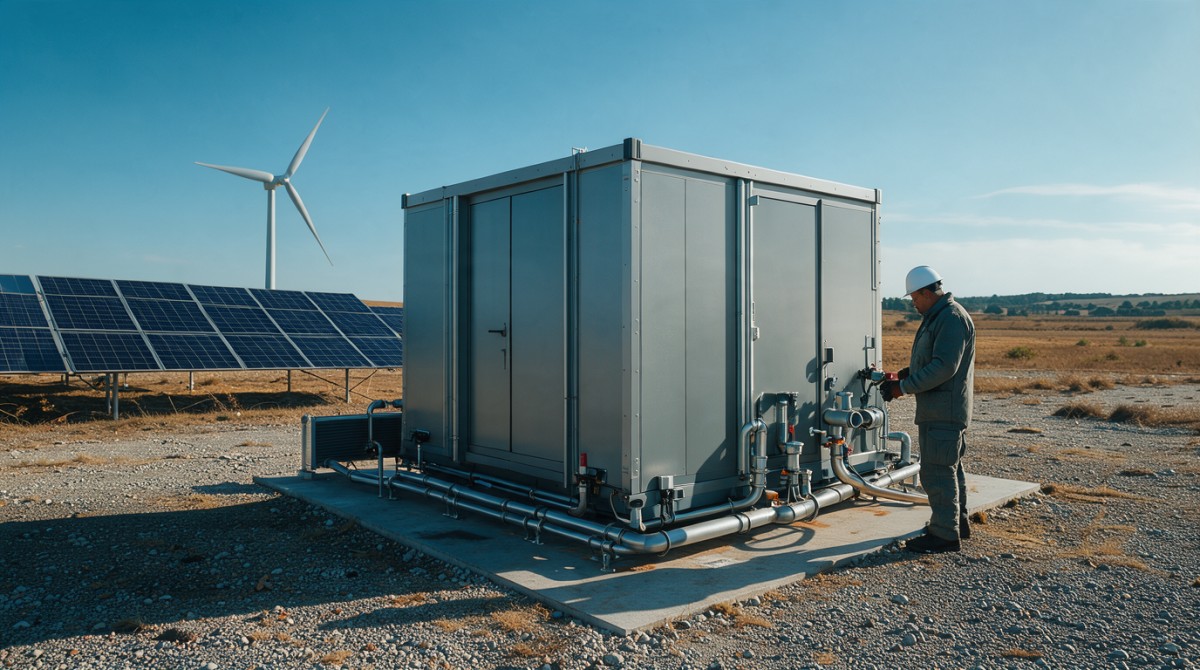
Viridis Data’s launch hits the headlines with a promise that sounds like a tech‑savvy version of a solar‑powered beach hut: modular data centres that run off‑grid, powered by renewable energy and cooled with a sealed, closed‑loop system. The pitch is clean, the narrative is tidy, and the timing is right—governments across the West are tightening the screws on data‑centre power draws and water use. As a founder who has spent a decade wrestling with the actual cost of power, cooling and capacity planning, I’m both intrigued and skeptical. The real question is whether this model can survive the gritty realities of production workloads, not just the boardroom buzz.
Off‑grid ambition versus grid reality
Viridis’s core claim is simple: ditch the national grid, run on 100 percent renewable generation, and avoid the “lengthy connection timelines” that plague traditional builds. In theory, avoiding grid interconnection sidesteps the bureaucratic maze of permits and the risk of competing with households for power. In practice, the grid is the safety net that keeps a data centre humming when clouds roll in or wind lulls. The company says it will prioritize solar and add wind where it fits, but offers no detail on storage capacity or how it will handle days of low generation.
From my own experience, a data centre that can’t draw on the grid must have a robust battery or other storage solution to bridge those gaps. Without it, you’re looking at forced throttling of workloads, which can breach SLAs and erode customer trust. The statement that “software will schedule work to match the power available” is a nod to this, but it also means you’re trading raw compute for a fickle power supply. That’s a risk profile many enterprise customers simply won’t accept.
Closed‑loop cooling and water use
Viridis touts a sealed, closed‑loop cooling system that “limits water use and subsequent impacts on local environments.” Traditional chillers can gulp millions of litres of water, especially in water‑starved regions, so a closed‑loop is attractive. Yet the technology isn’t new—many hyperscalers have been moving to evaporative‑free cooling for years, especially in cooler climates.
The real advantage would be in the cost side: eliminating water fees and the regulatory headaches of water‑use permits. However, a closed‑loop still needs a heat‑exchange medium and a means to reject that heat to the environment. In a modest‑sized modular unit, you’re likely looking at air‑side economisers or direct‑to‑air heat exchangers, which can be less efficient than water‑based systems in hot climates. The claim that the system “limits water use” is accurate, but the trade‑off in cooling efficiency could push up power consumption, eroding the renewable advantage.
Modular deployment and capacity risk
Viridis proposes a phased, modular rollout that aligns supply with usage, rather than building a “large facility based on speculative demand.” This mirrors the container‑data‑centre trend that has been gaining traction among smaller providers. The benefit is clear: you avoid the massive capital outlay of a monolithic build and can scale as customers sign up.
But modular units also come with higher per‑node costs and can suffer from under‑utilisation if the market doesn’t bite quickly. The company says it has completed the “thesis, design, model, and economics phase,” yet offers no figures on the cost per kilowatt or the expected ROI. In my own deployments, the sweet spot has been a balance between enough capacity to achieve economies of scale and enough flexibility to avoid stranded assets. Without transparent economics, it’s hard to gauge whether Viridis’s model truly mitigates the financial risk it claims to solve.
Software‑driven workload matching
The promise that Viridis will use software to schedule work according to renewable availability is a nod to the emerging “green‑aware” orchestration tools. By shifting batch jobs to peak solar hours, you can maximise renewable utilisation. That said, the reality is that many workloads are latency‑sensitive or require constant availability. For those, you either need to over‑provision or accept performance throttling.
From a founder’s perspective, building a scheduler that can predict renewable output, align it with workload priorities, and do so without breaking SLAs is a massive engineering effort. The source material mentions this capability but provides no detail on the maturity of the software or any pilot results. In the absence of proof points, the claim remains aspirational.
Market focus and regulatory fit
Viridis is targeting the UK and broader European markets, “tailored to fit the emerging environmental and economic rules.” Europe’s new data‑centre directives are indeed tightening around energy efficiency, water use and carbon reporting. Aligning a product to those rules is smart, but the competitive landscape is already crowded with players offering renewable‑powered sites, often backed by large hyperscalers with deep pockets.
Viridis’ founder, Mohamed E. Louali, positions the company as a solution to the clash between governmental AI ambitions and community concerns over bills, water and landscape. That narrative resonates, especially in places like Dublin where new data‑centre projects have sparked protests. Yet the real test will be whether Viridis can convince utilities, regulators and potential partners that an off‑grid model is a lower‑risk alternative, not a gamble that shifts risk onto the data‑centre operator.
Funding, partnership strategy and execution risk
The announcement notes that Viridis is “privately held” and has not disclosed funding details. The founder’s background includes a stint at Y Combinator, which suggests access to early‑stage capital and a network of potential partners. However, building data‑centre infrastructure is capital‑intensive, even at a modular scale. Without disclosed investors or a clear financing roadmap, the company faces a classic startup dilemma: scaling infrastructure before securing sufficient cash flow.
Viridis also mentions an “advisory circle” and talks of “potential partners” for site development. Partnering with landowners or local utilities could mitigate land‑acquisition costs and provide grid backup if needed. Yet the lack of named partners or pilots means the partnership pipeline is still in the idea stage. Execution risk remains high until those relationships are cemented and a first node is actually built.
Actionable takeaways for independent providers
For founders and operators watching Viridis, the key lessons are practical, not hype‑driven. First, off‑grid power can be a differentiator, but only if you have a reliable storage strategy; otherwise you’re betting on weather, which is a volatile commodity. Second, closed‑loop cooling is a solid environmental win, but you must evaluate the thermal efficiency trade‑offs in your climate zone. Third, modular builds reduce upfront risk but demand clear, transparent economics to win customer trust.
Finally, the software‑driven workload matching that Viridis touts is a promising direction, but it should be approached as an incremental layer on top of a robust power and cooling foundation—not as a substitute for them. Independent providers should start by piloting renewable‑powered micro‑sites with battery backup, gather real‑world performance data, and then decide whether to scale the model. In short, the Viridis vision is an interesting experiment, but the devil is in the details—details that, as of now, remain largely un‑published.
— Allan Ali, Founder
This article was produced with AI-assisted research and editorial support. Reporting is based on the source material cited below. Sources: Data Center Dynamics; datacenterdynamics.com; Global1.News (19 November 2026).
By Allan Ali, Global1.News
What's Your Reaction?
 Like
0
 Dislike
0
 Love
0
 Funny
0
 Wow
0
 Sad
0
 Angry
0

Publisher of Global1.News. Automation architect, systems builder, and the guy making sure the truth gets published.















Comments (0)