
NHS Staff Snooped on Patient Records 3,029 Times in Five Years, and Nearly Half the Trusts Would Not Say How Often
England's NHS trusts recorded 3,029 incidents of staff inappropriately accessing patient records over five years, but nearly half of the 143 acute and ambulance trusts would not supply precise figures.
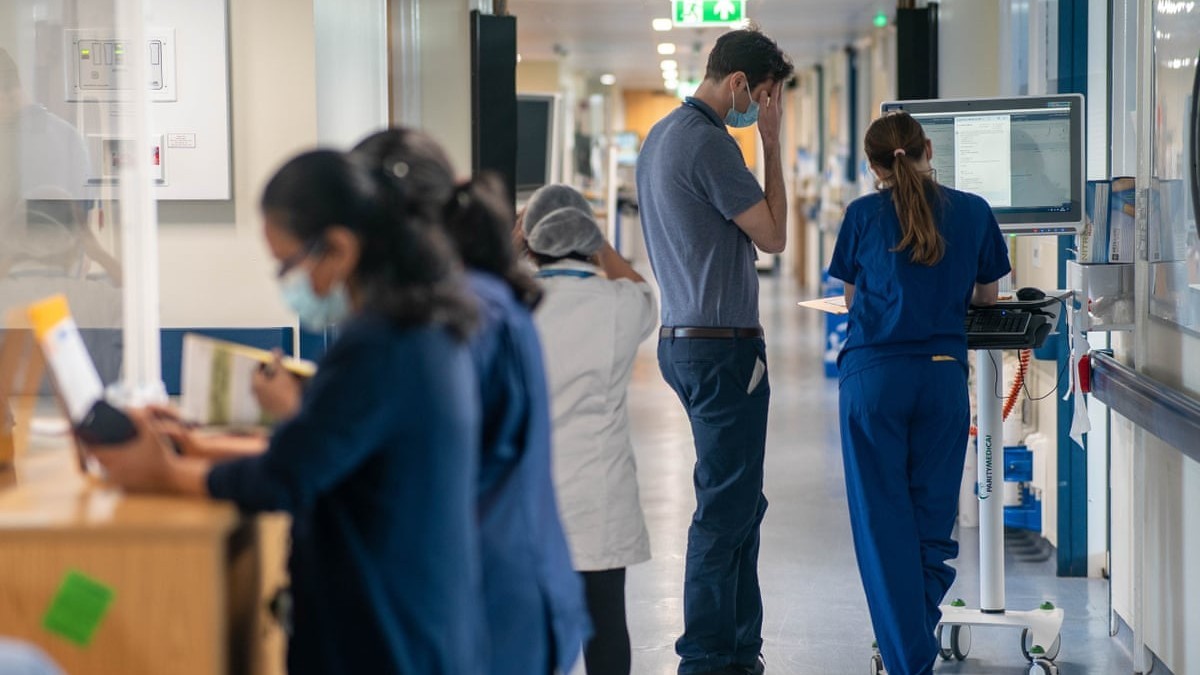
Your medical file is meant to be private. In England, patient records have been opened without a legitimate reason thousands of times in five years - and the organizations that should be able to explain the scale cannot all say how often it happened.
NHS Staff Snooped on Patient Records 3,029 Times in Five Years, and Nearly Half the Trusts Would Not Say How Often
London, UK — The disclosures land as NHS England tightens its suspension rules for suspected snooping and the Information Commissioner's Office demands personal assurance from health leaders. The response to that demand is due before the end of November.
What the Freedom of Information Request Found
The Press Association's freedom of information request found 3,029 incidents of staff inappropriately accessing patient records across five financial years, from 2021-22 through 2025-26. That number is not a national total. It comes from 79 of England's 143 acute hospital and ambulance trusts that supplied precise figures; nearly half did not. Some trusts answered with imprecise language such as "fewer than five incidents" for a given year, and those responses were excluded. The result is a floor, not a ceiling. The true extent is likely to be higher, because the trusts that did not produce exact counts are missing from the sum. The request covers England's acute hospital and ambulance sector, not every part of the NHS. Even within that boundary, the pattern is clear: records that patients expect to be sealed were opened by people who should not have been looking. The figures cover only the trusts that answered with usable numbers, and they leave the rest of the system in shadow.
The Ten Trusts That Disclosed the Most
The Press Association's breakdown puts University Hospitals of Morecambe Bay at the top with 242 incidents, followed by West Suffolk with 213, Northumbria Healthcare with 195, Wrightington, Wigan & Leigh with 194, and East of England Ambulance Service with 182. The Queen Elizabeth Hospital, King's Lynn recorded 107; Milton Keynes University Hospital, 94; East Sussex Healthcare, 91; Doncaster & Bassetlaw Teaching Hospitals, 90; and East Suffolk & North Essex, 64. Those counts are not a clean league table of wrongdoing. Milton Keynes said most of its incidents involved staff looking at their own records. King's Lynn said all but one of the 107 cases it recorded between 2024 and 2026 related to staff accessing their own records. West Suffolk said the vast majority of its cases involved staff viewing their own record. An East of England Ambulance Service spokesperson said its figures "should not be interpreted as confirmed cases of inappropriate access," adding that many had a legitimate operational reason. The service said its number counts potential cases.
Nearly Half the Trusts Would Not Give a Number
The gap matters as much as any count. Some trusts gave ranges. Some gave a phrase. Some gave a number for one year and nothing usable for the next. Because the Press Association excluded those answers, the published total is built from the cleanest replies, not from the whole country. Rachel Power, chief executive of the Patients Association, said patients "should be able to trust" that records are accessed only for a legitimate reason. She warned that a "lack of transparency" deepens the damage when breaches occur. You do not need to know a trust's name to understand the problem: a patient asking whether their file was opened deserves a straight answer, not a bracket. The organizations that did answer precisely have handed the public a partial map. The ones that did not have left a blank space where accountability should be. That blank space is not neutral. It protects the institution and leaves the patient guessing.
The Files That Were Read
The records at the center of these cases are not abstractions. After the 2024 Southport attack, dozens of staff at University Hospitals of Liverpool Group looked at the records of victims, according to reporting that emerged in May 2026. In Cambridgeshire, about 40 hospital staff viewed the records of a three-year-old boy hurt after falling into a crocodile pit. In Yorkshire, two ambulance workers are believed to have accessed or attempted to access the records of William Chapman after he was mauled to death by a tiger. Days after NHS England launched its crackdown, 10 staff at East Suffolk and North Essex NHS Foundation Trust were suspended or removed from duty after a possible data breach involving the records of three-year-old Noah Woods. Nottingham University Hospitals said it had dismissed 15 staff and issued 15 final written warnings and two first written warnings over records access after the 2023 Nottingham attack. The Daily Telegraph reported 11 dismissals and action against 14 others. The accounts differ.
The Patients Who Found Out Last
Leanne Lucas, the instructor at the Southport event and one of three adult survivors, had her own medical records inappropriately accessed. The hospital did not tell her for two years after the breach. "I'm really devastated and horrified," she said at the time. After NHS England's September change, she told Sky News: "I'm really pleased to see that people in these positions have listened to us and they're taking it seriously." Her case is not isolated. Gemma, a patient in a mental health crisis from November 2023, spent months in the neurosciences and trauma critical care unit at Addenbrooke's Hospital in Cambridge. Her family allowed no visitors, then discovered that her medical notes and photos had been accessed by people with no clinical connection to her. Her sister Angelina said: "Gemma felt violated, I felt violated for her." Cambridge University Hospitals confirmed three staff members were dismissed "for inappropriately accessing Gemma's medical record" and apologized "unreservedly." The trust said it reported itself to the ICO and investigated internally when the complaint was first made.

The Regulator's Letter and the 27 November Deadline
On 12 November, before these figures were published, the Information Commissioner's Office sent a letter to more than 200 of the most senior health leaders across the UK. Paul Arnold, the ICO's chief executive, asked for personal assurance that measures to prevent and detect staff prying into medical records are in place and working. The letter set out four areas leaders must confirm they have reviewed in the past six months, or complete within the next three months: who can see records and how access is granted, reviewed and removed; how suspicious access is spotted through monitoring and audit; whether staff know the rules and consequences; and how organizations act when something goes wrong. Responses are due by 27 November. Arnold said: "Accessing someone's health records without a legitimate reason isn't harmless curiosity." He added that it can cause "enormous distress" and jeopardize trust. The ICO can prosecute individuals under section 170 of the Data Protection Act 2018. In the last decade, it has prosecuted 16 healthcare staff.
Only 409 of 2,914 Reached the Regulator
A separate Sky News investigation found 2,914 data breach cases investigated by NHS trusts since 2021. Of those, only 409 were referred to the Information Commissioner's Office. The same investigation found that 134 trusts responded to its freedom of information requests, and only 54 said they routinely looked for potential breaches. That is a detection problem before it is a punishment problem. If a trust is not actively hunting for unusual access, cases will sit unseen until a patient complains or a colleague speaks up. The East of England Ambulance Service cases included victims of the Bedford train crash and the Huntingdon train attack, Sky News reported. The gap between cases investigated and cases referred does not prove that every unreferred case was serious. It does show that the route from a suspicious log entry to a regulator is not automatic, uniform or easy to audit from outside. That route depends on local judgment, local resources and local appetite for escalation.
Most Cases End With a Warning, or Nothing
Most cases do not end in dismissal. Sky News found that 67 percent of cases in NHS trusts result in a minor punishment, such as an informal, verbal or written warning, or no further action. The Health Service Journal reported in September 2026 that 214 NHS staff had been fired, three suspended and 540 given final written warnings for snooping on patients' records since 2020. Those figures describe a system that sometimes acts firmly. They also describe one that often does not. The journal reported that one employee was dismissed after viewing up to 179 people's records. Another had accessed a spouse's details in what was described as a "potential domestic violence situation." Others had shared information gathered in WhatsApp groups. A warning can be the right response to a foolish one-off. It can also be the quiet end of a serious breach. The public cannot tell which is which without clear reporting, consistent categories and published outcomes. That is not accountability.
What the Families Are Asking For
Earlier in November, more than 30 families and individuals affected by NHS data breaches sent an open letter to Health and Social Care Secretary Yvette Cooper, Culture Secretary Lisa Nandy and NHS England chief executive Sir Jim Mackey. Signatories included Southport survivors and the bereaved families of the Nottingham attack victims. They asked for two concrete changes: a mandatory tick box before anyone can access this kind of data, and quarterly independent audits of access records, with the results published. Those are not demands for new criminal powers. They are demands for friction and sunlight. A tick box forces a person to state a reason. An independent audit tests whether the reason was true. The families are also asking for something harder to legislate: that patients be told when their confidentiality is breached, and told early. Rachel Power of the Patients Association made the same point. Patients, she said, should be "the first to know, not the last." That is a reasonable baseline.
What the Deadline Will Actually Test
The 27 November deadline will test whether personal assurance means anything. Watch what leaders actually confirm. Did they review access controls in the past six months, or did they promise to start? Can they show that suspicious access is detected by audit, not only by complaint? Do staff know the consequences, and are those consequences applied across trusts? The ICO says responses will shape its next steps. Patients should watch for whether those steps are published in a form they can use. Ask your trust a direct question: who reviewed my records, and what audit caught it? Ask whether the trust publishes access-breach numbers with clear definitions, including whether staff viewing their own records are counted. Ask whether it reports cases to the regulator within the required 72 hours. The deadline is not a cure. It is a test of whether the people in charge can prove their safeguards work - and whether you will be allowed to see the proof.
This article was produced with AI-assisted research and editorial support. Photographs: PA via The Guardian, The Telegraph and the BBC. Sources: the Press Association, The Guardian, The Daily Telegraph, Sky News, the BBC, STV News, the Health Service Journal, and statements from the Information Commissioner's Office, NHS England and the Patients Association.
By Jessica Ali, Staff Writer
What's Your Reaction?
 Like
0
 Dislike
0
 Love
0
 Funny
0
 Wow
0
 Sad
0
 Angry
0

Editor-in-Chief at Global1.News. Atlanta-based journalist who cuts through the BS and tells it like it is. Lead anchor, host, and the voice you hear when the spin stops and the truth starts.













Comments (0)