
Chinese man arrested over illegal barbershop that turned away Thai customers
In the bustling streets of Bangkok, where the scent of incense mingles with the hum of traffic, a recent police operation has highlighted the delicate balance between Thailand’s cultural heritage and the pressures of a globalized economy.
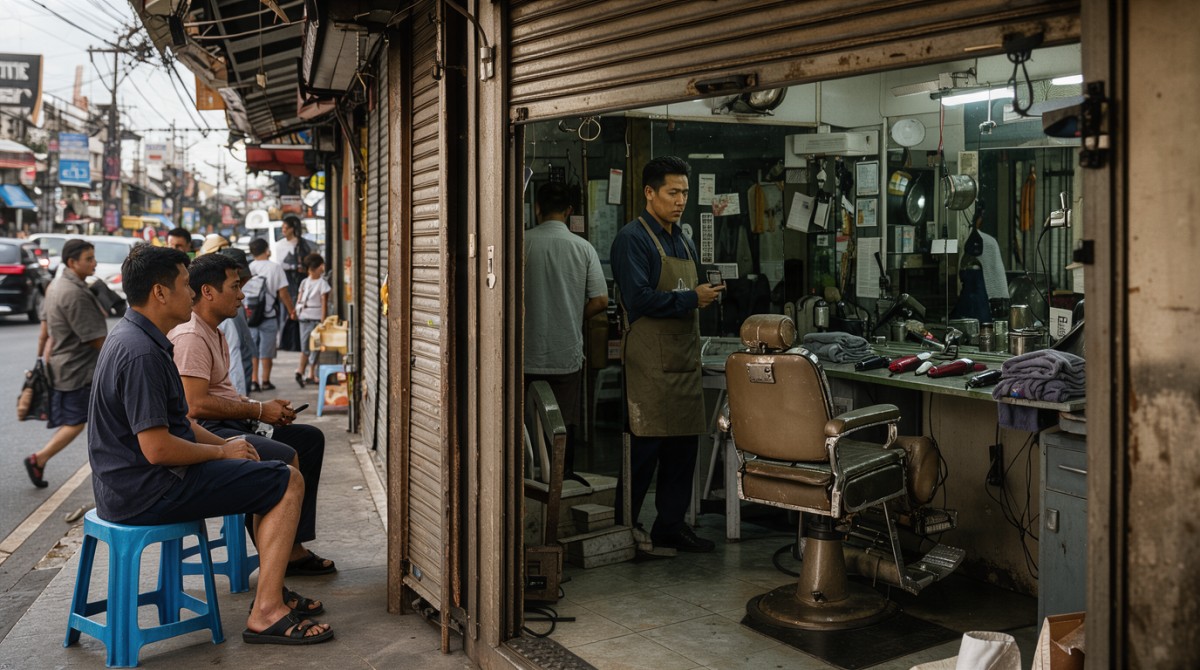
In the bustling streets of Bangkok, where the scent of incense mingles with the hum of traffic, a recent police operation has highlighted the delicate balance between Thailand’s cultural heritage and the pressures of a globalized economy. On 19 November 2026, a Chinese national was arrested for running an illegal barbershop that served only fellow Chinese customers and turned away Thai patrons. The case, uncovered after a public tip‑off, underscores the importance of protecting occupations traditionally reserved for Thai citizens, a safeguard rooted in both law and the country’s cultural identity.
Background of the case
The investigation began when a member of the public reported suspicious activity at a fourth‑floor apartment in the Ratchadaphisek area of Bangkok. Police discovered that the rented room was kept constantly shut, yet saw a steady flow of Chinese men and women entering and leaving throughout the day. This pattern raised concerns that the space was being used for commercial purposes without proper licensing.
Further probing revealed that the occupant, identified as Mr. Liu, a 30‑year‑old Chinese national, had transformed the modest apartment room into a makeshift barbershop. He accepted appointments solely through a mobile app and set prices at 800 baht for men and 1,000 baht for women. Crucially, he refused service to Thai customers, limiting his clientele to fellow Chinese nationals. This practice directly contravened Thai law, which reserves the barbering profession for Thai citizens.
Legal framework governing barbering
Barbering is classified as a restricted occupation in Thailand, meaning that only Thai nationals may legally perform the trade. The restriction is intended to preserve traditional skills and ensure that local workers retain employment opportunities in sectors that are culturally significant. The law also reflects a broader policy to manage foreign labor in a way that does not displace Thai workers.
When Mr. Liu was apprehended, he was charged with working without a valid work permit and engaging in unauthorized employment. These charges are consistent with the Immigration Bureau’s mandate to enforce labor regulations and protect the Thai workforce. The case serves as a reminder that even seemingly modest enterprises, such as a neighborhood barbershop, fall under the jurisdiction of these regulations.
Police operation and undercover tactics
To gather concrete evidence, the police conducted an undercover operation. An officer posed as a customer and booked an appointment through the same app used by Mr. Liu. When the officer arrived at the premises, he observed Mr. Liu actively cutting a client’s hair. At that moment, officers moved in, arrested Mr. Liu, and informed him of his rights. The swift action prevented any further illegal activity and ensured that the evidence collected was admissible in court.
The operation highlights the collaborative effort between the Immigration Bureau, led by Commissioner Pol. Lt. Gen. Noppasilp Poolsawat, and senior police officials. Their coordinated response demonstrates the government’s commitment to upholding labor laws while maintaining public safety. The successful raid also illustrates the effectiveness of community reporting, as the initial tip‑off was instrumental in launching the investigation.
Community impact and public response
For many Thais, the incident resonates beyond the legal dimensions. Barbering, like many personal services, is woven into daily life and local neighborhoods. The refusal to serve Thai customers can be seen as a slight to the community, especially in a city where personal relationships and mutual respect are highly valued. The incident sparked conversation on social media about the importance of supporting Thai‑run businesses and being vigilant about foreign‑run operations that may sidestep regulations.
Local residents expressed relief that the authorities acted quickly, emphasizing the need for fairness in the marketplace. The case also prompted landlords and property owners to reconsider how they screen tenants, especially when the intended use of a rented space may conflict with local laws. The Immigration Bureau’s call for vigilance underscores this growing awareness among the public.
Immigration Bureau’s call to action
Following the arrest, the Immigration Bureau issued a public reminder urging citizens, property owners, accommodation operators, and landlords to report any suspicious activity involving foreign nationals. The bureau highlighted its hotline, 1178, as a direct channel for such reports. By encouraging community participation, the bureau aims to create a collaborative environment where illegal activities are swiftly identified and addressed.
This outreach reflects a broader strategy to balance openness to foreign visitors with the protection of Thai labor rights. The bureau’s message is clear: while Thailand welcomes tourists and expatriates, it expects all residents to respect the nation’s laws and cultural norms. The emphasis on reporting is part of a preventive approach, seeking to stop illegal operations before they expand.
Implications for foreign workers and entrepreneurs
The case of Mr. Liu serves as a cautionary tale for foreign entrepreneurs seeking to establish businesses in Thailand. It underscores the necessity of obtaining proper work permits and adhering to occupational restrictions. For many foreigners, the allure of low‑cost rentals and a ready market can be tempting, but the legal framework is explicit: certain trades, including barbering, are reserved for Thai nationals.
Foreign investors and service providers are encouraged to explore sectors where they can operate legally, such as tourism, technology, or education, where the Thai government has created pathways for foreign expertise. By aligning business plans with the legal landscape, foreign nationals can contribute positively to the Thai economy without risking legal repercussions.
Looking ahead: safeguarding Thai livelihoods
As Thailand continues to navigate the complexities of a globalized economy, incidents like the illegal barbershop in Ratchadaphisek remind us of the importance of protecting traditional occupations. The government’s firm response, backed by community involvement, demonstrates a commitment to preserving Thai livelihoods while maintaining a welcoming environment for visitors.
In the weeks and months ahead, the Immigration Bureau is likely to continue its outreach, reinforcing the message that compliance with labor laws is essential for all. For Thai citizens, the case reaffirms the value of supporting local businesses that honor cultural traditions and legal standards. For foreign residents, it offers a clear reminder to respect the boundaries set by Thai law, ensuring that the country’s rich tapestry of cultures can coexist harmoniously.
This article was produced with AI-assisted research and editorial support. Reporting is based on the source material cited below. Sources: Khaosod English; khaosodenglish.com; Global1.News (20 November 2026).
By Ann Srisawat, Staff Writer
What's Your Reaction?
 Like
0
 Dislike
0
 Love
0
 Funny
0
 Wow
0
 Sad
0
 Angry
0

Southeast Asia Correspondent at Global1.News. Based in Bangkok, covering Thai and Southeast Asian politics, economy, technology, and culture. Deep regional perspective on one of the world's most dynamic regions.














Comments (0)